




|
Search DVDBeaver |
S E A R C H D V D B e a v e r |
|
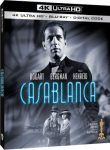
Ask a mainstream friend to come over and watch, say, Casablanca (in 4K) and if they reply "I've already seen it", then any future invitations should be permanently rescinded. Re-watching films that we love is the primary reason to have a collection, imo... not to acquiesce to the fleeting dictates of streaming and its exhaustive window-shopping limitations.
There can be quite a differentiation from films that one respects as 'great cinema' and others that are comfortable to watch multiple times by creating a sense of relaxed enjoyment - possibly seeing new subtleties in the filmmaking, or simply bonding more closely with the characters ('deepen familiarity'.) There's another reason; you may soften your suspension of disbelief over time. One can become less picky about the film's inherent flaws. This one is big for me. In summation - it's about as personal as it gets.
It's possible that you may want to 'vegetate' rather than be overwhelmed with dense emotional depth. Isao Takahata's, 1988 animated film, Grave of the Fireflies is cinema that everyone should see in their lifetime but many avoid consistent revisitation as it is so gut-wrenching. Few works of art have ever made the cost of war feel so personal, so quiet, and so... irreversible. Devastating cinema.
They ('great' and 're-watchable') need not be mutually exclusive. Great cinema I would acknowledge to directors Kubrick, Bresson, Antonioni, Hitchcock, David Lynch and plenty others. The ease of re-watchability is, obviously, a sliding scale. For re-watching I lean to 'lighter fare' rather than 'heavy' - that's just me. "One man's meat is another man's poison".
Serious PMAs (Physical Media Advocates)/Cinephiles all reach a point where they must pare/cull-down their libraries down. Either the logistics of space or the eventual acceptance that they probably won't re-watch certain films ever again (although the potential to do so can be empowering to a collector.) Trimming your physical library can be an exhaustive, unenviable, task.
I definitely prefer voting - as with our Year End Polls or Desert Island listings... as this re-watchables list is obnoxiously self-indulgent. My apologies. Essentially this is a view into my warped film tastes (with old sci-fi, noir + apocalypse flics dominating.)
We have three lists; my top 10 films that I re-watch the most, the 100 films I have seen up to a dozen times each, and rest of the films that I endorse for the unspecific 're-watch' label. I consider them "keepers". This would also include showing friends a film because they were unaware of its existence (ex. House of Sand and Fog.)
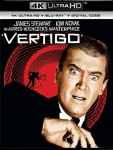
Below are in alphabetical order with the latter, most extensive, list subdivided into genres. Personally I've given more credence to the esoteric, out-of-left-field, choices rather than, what I consider, the obvious (ex. 2001: A Space Odyssey, Jaws, Vertigo etc. - that are included.) The Top 10 ARE my, truthful, most watched discs. I’ll don my fire-retardant suit.
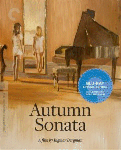
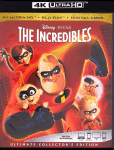
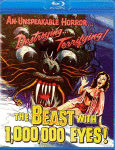
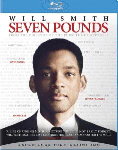
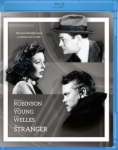
Ancillary comments; • Please accept that this is not my list of the greatest films ever made. It is only, for me and my bizarro leanings, the most 're-watchable'. Ex. I'm not saying Welles's The Stranger is superior to Citizen Kane - only that I watch the former more often. I realize the director said it was "the worst of my films." • This might be compared to Ingmar Bergman's ambivalence to his own Autumn Sonata - which is my 'most watched' film from that director. • There are films here that have been heavily panned (like Seven Pounds - rated the worst film of 2008) Overreaching? sure. I am far too forgiving, I realize. I loved the performances; Will Smith, Rosario Dawson, Woody Harrelson... • Another example: The Beast with a Million Eyes has an IMDb score of 3.8 - it's also in my Top 100. Inventive filmmaking under the restrictions of a limited budget. That kind of scrappy ingenuity that makes '50s atomic-age sci-fi so re-watchable in the first place. • I am surprised at the number of 4K UHDs on the list(s). A great sign that so much is coming out in this format. • I still have over a dozen DVDs that I re-watch. So disc-format was not a deciding factor - it's all about the films and the feelings they evoke. • My minor amount of Westerns, silent era and Giallo - is kind of an 'elephant in the room'. I agree. Ironically, I LOVE Westerns, but don't have that many I watch multiple times for whatever reason. • "Arthouse/foreign" - there are fewer that I revisit casually - the question I ask myself is 'Are they films I admire or films that I return to?' • Hitchcock and Polanski films are the second most on the list... after Woody Allen films. • My tastes for re-watching are far more pedestrian than many might have believed • Aside from Pixar's The Incredibles and Burton's Batman Returns (more a parody) there are no superhero films on my lists. I read the comics as lad, and I am a parent of two boys - we watched most of the Marvel Universe efforts as they grew up - I just never returned to them. • No 'Provocative Asian Cinema' in the top 100 but Onibaba and The Eel were close.
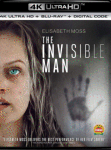
On modern films: • To be honest, I don't watch that many and it is usually takes years to re-watch enough times, however I might consider Tarantino's Once Upon a Time in Hollywood - (already 7 years old) for the category although I watched it for the first time in 2024. We'll see. This list will evolve. • I thought that the newest film was 2020's The Invisible Man with the expressive Elisabeth Moss. Actually, Old Henry (2021) with Tim Blake Nelson is the newest. I couldn't stop re-watching that film.
As with all of our list pages, we sincerely hope that this exposes you to some new film experiences. That's the whole point. Maybe you can do the same for me. Your input is always appreciated. |

(in alphabetical order) Clean and Sober (1988)
Day the World Ended
(1955) The Ghost and Mr. Chicken (1966) House of Sand and Fog
(2003)
Night of the Demon
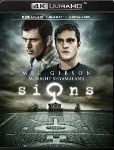
(1957) Signs (2002) (4K
UHD)
A film that has no right being on
anyone's list... yet here we are. After the bombs
fall, survival becomes a tight, ugly contest of
nerves, radiation, and a lumbering mutant that may
be the new face of nature. The real tension is
human: who gets to live, who gets to breed, and how
quickly civilization collapses into instinct. Cheap,
blunt, and strangely pure - one of the leanest
doomsday films of the atomic age.
_________________________________________________________________________________________________________________
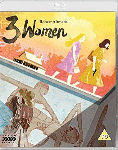
(in alphabetical order) 3 Women
(1977)
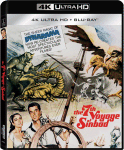
The 7th Voyage of Sinbad
(1958)
(4K UHD)
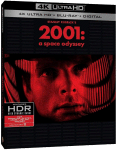
2001: A Space Odyssey (1968)
(4K UHD)
The Beast with a Million Eyes (1955) The Best
Years of Our Lives
(1946) The
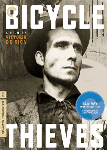
Bicycle Thief (1948)
The Big Lebowski (1998)
(4K UHD)
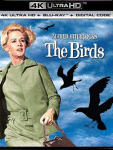
The Birds (1963)
(4K UHD) Birth
(2004)
(4K UHD) Black
Narcissus (1947)
Blue
(1993)
(4K UHD) The
Bourne Legacy (2012)
(4K UHD)
The Brides of Dracula
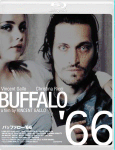
(1960) Buffalo
'66 (1998)
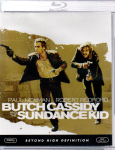
Butch Cassidy and the
Sundance Kid (1969)
Casablanca (1942)
(4K UHD)
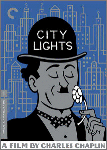
City Lights
(1931) Clean and
Sober (1988) Close
Encounters of the Third Kind (1977)
(4K UHD)
Cool Hand Luke (1967)
(4K UHD)
Cult of the Cobra (1955)
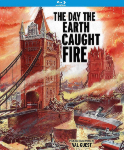
The Day the Earth Caught Fire (1961)
Day the World Ended
(1955)
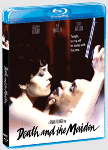
Death and the Maiden (1989) Double
Indemnity (1944) (4K
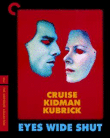
UHD) Eyes Wide
Shut (1999)
(4K UHD)
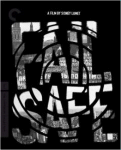
Fail-Safe
(1964)
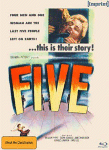
Five (1951)
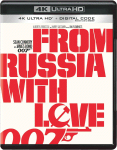
From Russia With Love (1963)
(4K UHD)
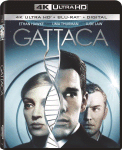
Gattaca (1997)
(4K UHD) The Ghost and Mr. Chicken (1966)
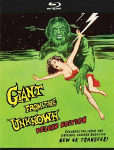
Giant From the Unknown
(1958) Great Expectations (1998)
The Green Ray (1986)
Hoosiers (2008) House of Sand and Fog (2003) In the Bedroom (2003) In the Mood For Love (2000)
(4K UHD)
The Incredible Shrinking Man (1957)
Invasion of the Body Snatchers (1956)
(4K
UHD)
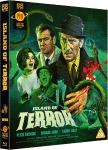
Island of Terror (1966) Jaws
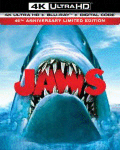
(1975)
(4K UHD)
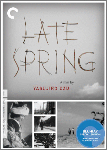
Late Spring (1949)
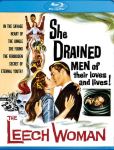
The Leech Woman
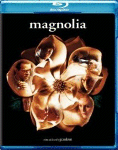
(1960) Magnolia
(1999)
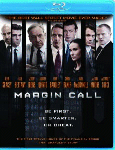
Margin Call
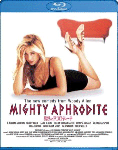
(2011) Mighty
Aphrodite (1995)
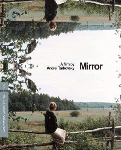
Mirror
(1975)
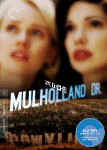
Mulholland Drive
(2001) (4K UHD)
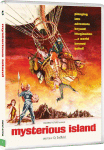
Mysterious Island
(1961)
Night of the Demon
(1957)
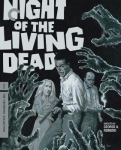
Night of the Living Dead (1966) (4K
UHD)
Nights of Cabiria
(1957)
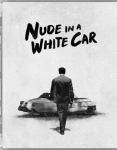
Nude in a White Car (1958)
Old Henry (2021)
(4K UHD)
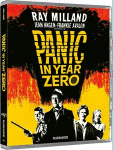
Panic in Year Zero
(1962)
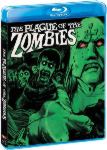
The Plague of the Zombies (1966)
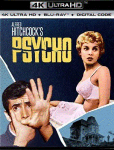
Psycho (1960) (4K
UHD)
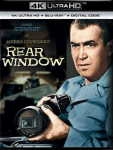
Rear Window (1954) (4K
UHD)
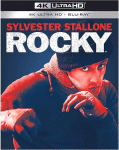
Rocky (1976)
(4K
UHD)
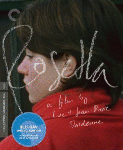
Rosetta
(1999) The Royal Tenenbaums (1994)
(4K UHD)
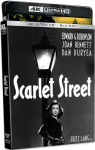
Scarlet Street (1945)
(4K UHD)
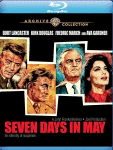
Seven Days in May
(1964)
Seven Pounds (2008)
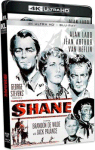
Shane (1959) (4K
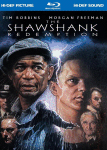
UHD) Shawshank Redemption (1994)
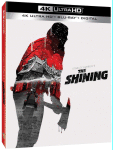
The Shining (1980) (4K
UHD) Signs (2002) (4K
UHD)
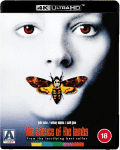
The Silence of the Lambs (1991)
(4K
UHD)
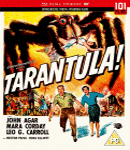
Tarantula
(1955)
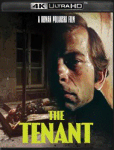
The Tenant (1976)
(4K
UHD)
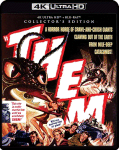
Them!
(1954) (4K
UHD)
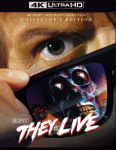
They Live (1988) (4K
UHD)
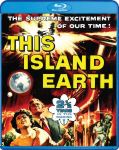
This Island Earth
(1955)
The Umbrellas of
Cherbourg
(1964)
(4K UHD)
Vertigo (1958) (4K
UHD)
Village of the Damned
(1958)
Vive L'Amour (1994)
The War of the Worlds (1953)
(4K
UHD)
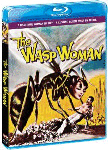
The Wasp Woman
(1959)
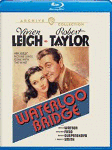
Waterloo Bridge
(1940)
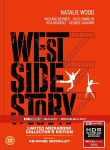
West Side Story
(1961) (4K
UHD)
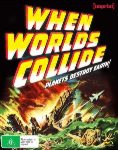
When Worlds Collide (1951)
Z For Zachariah (2015)
_________________________________________________________________________________________________________________ The Complete List (Approx. 400) (CLICK BUTTONS TO ACCESS)
The
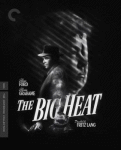
Big Heat
(4K UHD)
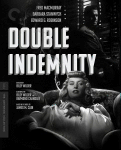
Double
Indemnity (4K
UHD)
I, the Jury
(4K UHD)
(4K
UHD)
(4K
UHD)
The
Maltese Falcon
(4K UHD)
Scarlet Street
(4K UHD)
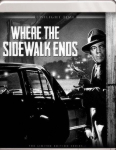
Where the Sidewalk Ends
_________________________________________________________________________________________________________________
Dark Passage (1947)
The Fountainhead
(1949)
Impact (1949)
The
Spanish Prisoner (1997)



Michael Keaton gives one of his fiercest performances as a man who checks into
rehab still trying to con everyone, including himself. Morgan Freeman gives a
masterclass in understated power: the kind of performance that anchors an entire
movie without ever demanding the spotlight.
Bogart’s voice, Bacall’s quiet steel, and San
Francisco’s fog-drenched streets do the rest. The
plastic surgery is only the most literal
trans-formation - everything else is about trust
earned in the dark, one careful step at a time.
Lean, inventive, and quietly gripping.
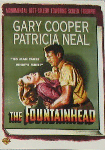
Gary Cooper’s Howard
Roark stands like one of
his own buildings -
clean, vertical, and
indifferent to the
crowd. Ayn Rand's The
Fountainhead turns
architecture into a
battleground for the
soul: the man who
refuses to dilute his
vision versus a world
that demands compromise
as the price of
belonging.
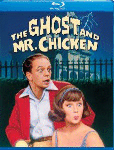
Light, fun, and ultimately charming - warm small-town family slice of 1960s
Americana with Don Knotts' pure nervous-energy gold.
They say there's no perfect film. And then there's The Ghost and Mr.
Chicken.
Jennifer Connelly and Ben Kingsley give devastating performances of moral
desperation. Quiet, merciless, and un-forgettable. House of Sand and
Fog remains one of the most quietly compelling American tragedies of the
early 2000s.
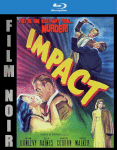
Beneath the noir twists and betrayal, the film finds
something unexpectedly pure: a small-town garage
where a wounded man is simply given work, a meal,
and a chance.
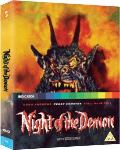
Tourneur’s atmospheric precision turns belief itself
into the weapon. Dana Andrews’s hard-nosed skeptic
is slowly, inexorably cornered by something older
and colder than science.
Crop circles as landing markers. A silent invasion crosses the line. A farmhouse
under siege. “Swing away, Merrill...
Merrill swing away” isn’t poetry. It’s the pure sci-fi moment
when grassroots humankind finally decides to fight back... against fear.
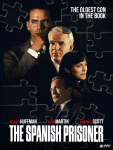
Mamet’s The Spanish Prisoner is pure
misdirection: a mild-mannered inventor, a
too-perfect stranger, and a scheme that unfolds with
the cold precision of a chess problem. By the time
you realize the game, the board has already been
tipped over. Brilliant, bloodless, and completely
ruthless pulp.

Every film on this list of 100 earns its
place, and part of the fun is that the company
they keep is deliberately mismatched. Cheap,
half-forgotten monster pictures like Giant
from the Unknown (1958) and The Leech
Woman (1960) sit right alongside Cannes
winner - Rosetta (1999) and Arthouse gem
Vive L'Amour (1994) - not because they're
equals in craft, but because both extremes
deliver the same thing on re-watch: total
commitment to what they're trying to be. The
Last Man on Earth (1964) and The Plague
of the Zombies (1966) are here for that same
lean, unfussy conviction - moody, minor-key
genre filmmaking that's aged into something more
atmospheric than its budget ever promised. Then
there's the quieter, more devastating end of the
list: In the Bedroom (2003) and Z for
Zachariah (2015) are not comfort-viewing in
any conventional sense, yet I return to their
slow-burn restraint precisely because so little
is telegraphed and so much is felt. Great
Expectations (1998) and Hoosiers
(2008) round things out as the kind of
unabashedly earnest, well-worn favorites that
never asked to be "important" - just endlessly
satisfying. That's the real throughline of the
hundred: not a ranking of objective greatness,
but an honest accounting of what I actually
reach for, across every register from B-movie
schlock to genuine heartbreak. To each his/her
own.

_blu-ray_.gif)

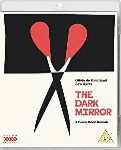
The Dark Mirror (1946)
Dark Passage (1947)
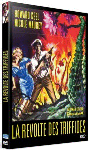
Day of the
Triffids (1963)
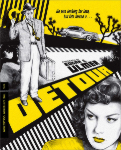
Detour (1945)
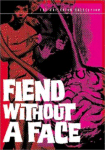
Fiend Without a
Face (1958)
The Fountainhead
(1949)
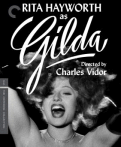
Gilda
(1946) (4K
UHD)

Impact (1949)
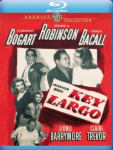
Key Largo (1948)
The Last Man on Earth
(1964)
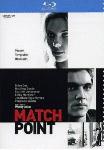
Match
Point (2005)


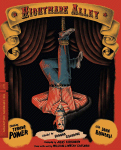
Nightmare
Alley (1947)


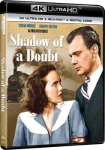
Shadow of a Doubt (1943) (4K
UHD)
The
Spanish Prisoner (1997)
The Stranger (1946)

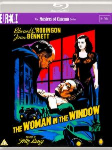
Woman in the Window
(1944)








This is the deepest, most exhaustive genre
list on the whole page, and deliberately so -
noir might be the most re-watchable style of
filmmaking ever devised, built as it is on mood,
shadow, and moral rot rather than surprise.
Alongside the canonical entries (Double
Indemnity, Out of the Past, The
Maltese Falcon) sit a run of lesser-known
gems that reward the patient collector just as
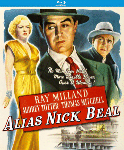
richly. Alias Nick Beal (1949) and The
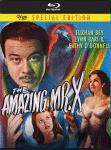
Amazing Mr. X (1948) traffic in
near-supernatural dread that most noir keeps at
arm's length, giving them an eerie, almost
gothic charge on re-watch. Blast of Silence
(1961) and Blonde Ice (1948) are lean,
mean B-pictures - the kind of unpretentious
genre efficiency that gets better the more you
notice how much they accomplish with so little.
Too Late for Tears (1949) and Woman on
the Run (1950) hold up as showcases for
women driving the plot rather than orbiting it,
a dynamic that still feels sharp decades later.
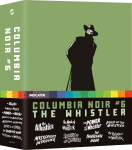
And The Whistler Series (1944–1948) earns
its spot as pure comfort viewing - modest, moody
programmers you can drop into at any entry point
and instantly feel at home in. What unites all
of it, obscure or classic, is that noir never
really asked to be liked; it asked to be
atmospheric, fatalistic, and visually alive -
which is exactly why it never wears out.
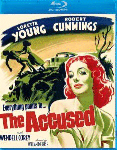
The Accused
Alias Nick Beal
The Amazing Mr. X
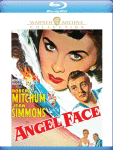
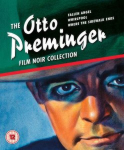
Angel Face
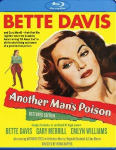
Another Man's
Poison
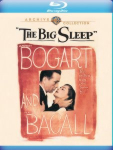
The Big
Sleep
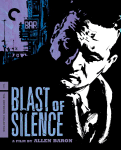
Blast of Silence
Blonde Ice
The Blue Dahlia
Boomerang
Brute Force
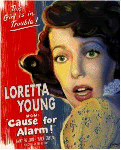
Cause For Alarm!
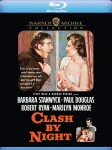
Clash by Night
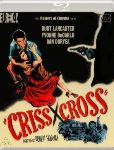
Criss Cross
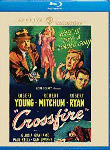
Crossfire
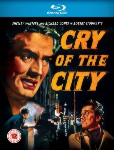
Cry of the City
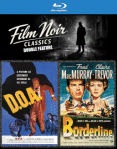
D.O.A.
The Dark Mirror
Dark Passage

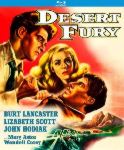
Desert Fury
Detour
Fallen Angel
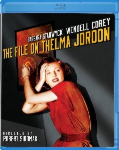
The File on
Thelma Jordan
Framed
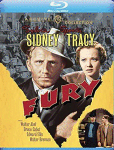
Fury
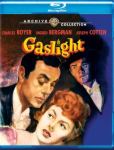
Gaslight (1944)
Gilda(4K
UHD)
The Glass
Key

Gun Crazy
High Sierra
Highway Dragnet
The
Hitch-Hiker
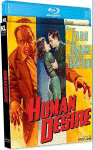
Human Desire
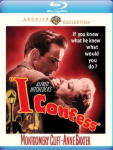
I Confess
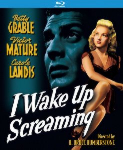
I Wake Up Screaming
I Walk Alone
Impact


Key Largo
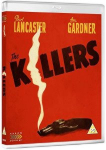
The Killers
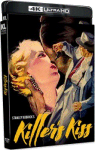
Killer's Kiss
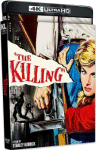
The Killing
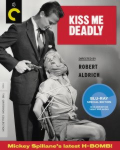
Kiss Me Deadly
Kiss of Death
The Lady From Shanghai
Laura
Leave Her To Heaven
The Letter


M (1951)
Naked Alibi
The Naked Kiss
Niagara
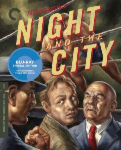
Night and the City
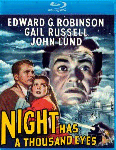
Night Has a Thousand Eyes
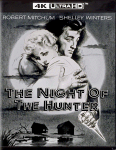
The Night of the Hunter (4K
UHD)
Nightmare
Alley
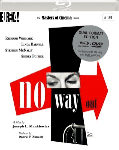
No Way Out
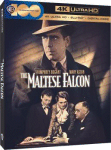
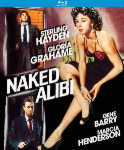
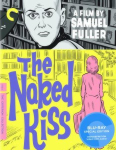
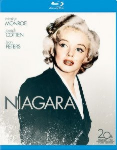
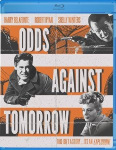
Odds Against Tomorrow
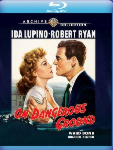
On Dangerous Ground
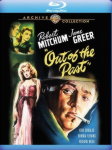
Out of the Past
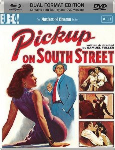
Pickup on South Street
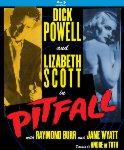
Pitfall
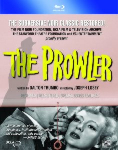
The Prowler
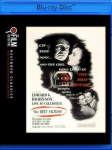
The Red House
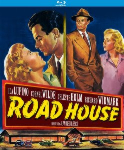
Road House
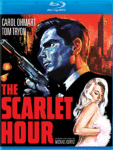
The Scarlet Hour
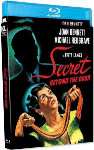
Secret Beyond the Door
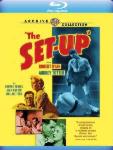
The Set-up
Shadow of a Doubt (4K
UHD)
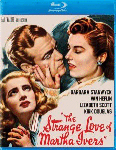
The Strange
Love of Martha Ivers
The Stranger
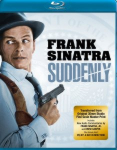
Suddenly
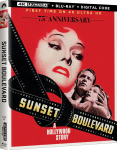
Sunset
Boulevard(4K
UHD)
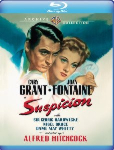
Suspicion
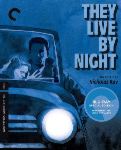
They Live By Night
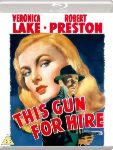
This Gun For Hire
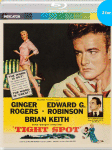
Tight Spot
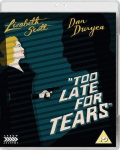
Too Late For Tears
The Whistler Series
Woman in the Window
Woman on the Run
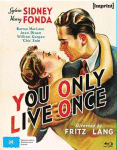
You Only Live Once

| This is, by a wide margin, the genre list
that says the most about my "warped film
tastes." There's something I find almost
narcotic about atomic-age science fiction - the
black-and-white photography, the theremin
scores, the rubber suits and stop-motion
creatures, the Cold War anxiety dressed up as
giant bugs and men from Mars. None of it holds
up as "serious" cinema in the way Kubrick or
Bresson does, and none of it needs to; the
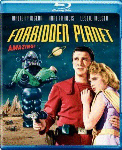
pleasure is entirely different. Forbidden
Planet (1956) and The Day the Earth Stood
Still (1951) are the genre's genuine
masterworks, but the real joy of this list is in
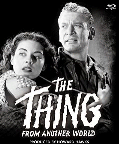
the lesser company they keep. The Thing from
Another World (1951) and It Came from
Outer Space (1953) still generate real dread
through pure atmosphere and withholding, decades
before jump-scares became the default. The
giant-creature cycle - Them! (1954),
Tarantula (1955), The Deadly Mantis,
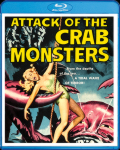
Attack of the Crab Monsters (1957) -
turns nuclear panic into something almost quaint
and endlessly comforting, cheap effects and all.
British entries like Quatermass and the Pit
(1967), X the Unknown (1956), and The
Trollenberg Terror (1958) bring a colder,
more clinical dread that plays differently than
their American counterparts - more procedural,
less hysterical. Then there's the pure pulp of
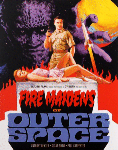
Fire Maidens of Outer Space (1956),
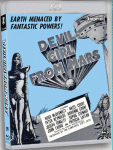
The She-Creature (1956), and Devil Girl
from Mars (1954) - objectively "bad" films
by any conventional measure, and yet utterly
re-watchable precisely because of how sincerely
they commit to their own absurdity. Invasion
of the Body Snatchers (1956) and The
Incredible Shrinking Man (1957) sit at the
more thoughtful end, using genre trappings to
smuggle in real existential dread about
conformity and diminishment. What ties the whole
sprawling list together is craft under
constraint - these were often made fast and
cheap, yet the best of them found real
ingenuity, real menace, and real wonder inside
those limits, which is exactly the kind of
scrappy resourcefulness that keeps pulling me
back decade after decade.
|
|
The 7th Voyage of Sinbad (1958) (4K UHD) |
The Abominable Snowman (1957) |
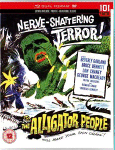
The Alligator People (1959) |
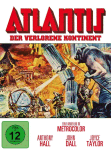
Atlantis: The Lost Continent (1961) |
Attack of the Crab Monsters (1957) |
The Birds (1963) (4K UHD) |
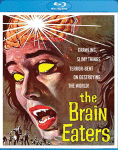
The Brain Eaters (1958) |
The Brain That Wouldn't Die (1962) |
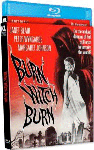
Burn, Witch, Burn (1962) |
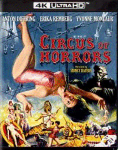
Circus of Horrors (1960)(4K UHD) |
|
|
|
|
|
|
|
|
 |
|
|
|
|
|
|
|
|
|
|
|
|
|
|
|
|
|
|
|
|
|
|
|
|
|
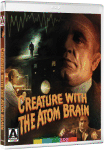
Creature With the Atomic Brain(1955) |
Cult of the Cobra (1955) |
The Day the Earth Caught Fire (1961) |
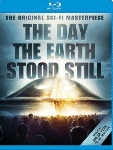
The Day the Earth Stood Still (1951) |
The Day the World Ended (1955) |
Devil Girl From Mars (1954) |
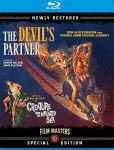
The Devil's Partner (1960) |
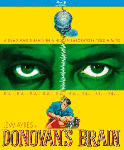
Donovan's Brain (1953) |
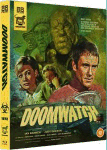
Doomwatch (1972) |
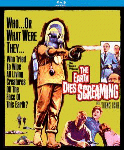
The Earth Dies Screaming (1964) |
|
|
|
|
 |
|
|
|
|
|
|
|
|
|
|
|
|
|
|
|
|
|
|
|
|
|
|
|
|
|
|
|
|
|
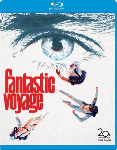
Fantastic Voyage (1966) |
Fire Maidens of Outer Space (1956) |
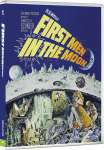
First Men in the Moon (1964) |
Five (1951) |
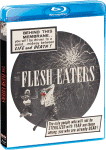
The Flesh Eaters (1964) |
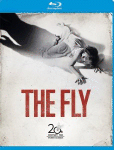
The Fly (1958) |
Forbidden Planet (1956) |
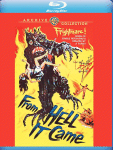
From Hell It Came (1957) |
Giant From the Unknown (1958) |
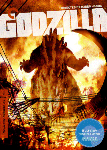
Godzilla (1954) |
|
|
|
|
|
|
|
|
|
|
|
|
|
|
|
|
|
|
|
|
|
|
|
|
|
|
|
|
|
|
|
|
|
|
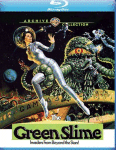
The Green Slime (1968) |
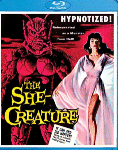
The She-Creature (1956) |
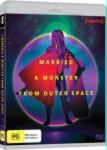
I Married a Monster from Outer Space (1958) |
The Incredible Shrinking Man (1957) |
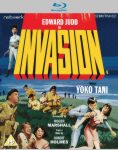
Invasion (1965) |
Invasion of the Body Snatchers (1956) (4K UHD) |
Island of Terror (1966) |
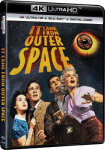
It Came from Outer Space (1953) (4K UHD) |
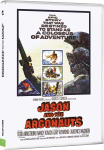
Jason and the Argonauts (1963) |
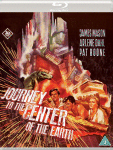
Journey to the Center of the Earth (1959) |
|
|
|
|
|
|
|
|
|
|
|
|
|
|
|
|
|
|
|
|
|
|
|
|
|
|
|
|
|
|
|
|
|
| The Last Man on Earth (1964) |
The Leech Woman (1960) |
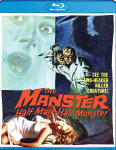
The Manster (1962) |
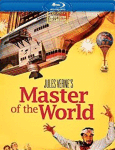
Master of the World (1961) |
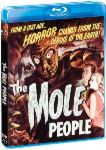
The Mole People (1956) |
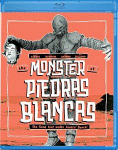
The Monster of Piedras Blancas (1959) |
Mysterious Island (1961) |
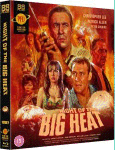
Night of the Big Heat (1967) |
Night of the Demon (1957) |
Panic in Year Zero (1962) |
|
|
|
|
|
|
|
|
|
|
|
|
|
|
|
|
|
|
|
|
|
|
|
|
|
|
|
|
|
|
|
|
|
|
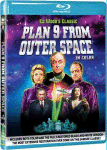
Plan 9 from Outer Space (1959) |
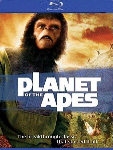
Planet of the Apes (1968) |
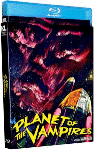
Planet of the Vampires (1965) |
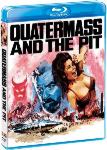
Quatermass and the Pit (1967) |
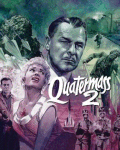
Quatermass 2 (1957) (4K UHD) |
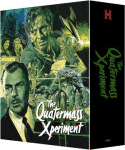
The Quatermass Xperiment (1955) (4K UHD) |
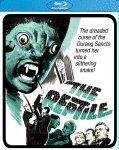
The Reptile (1966) |
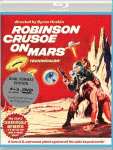
Robinson Crusoe on Mars (1964) |
The She-Creature (1956) |
Tarantula (1955) |
|
|
|
|
|
|
|
|
|
|
|
|
|
|
|
|
|
|
|
|
|
|
|
|
|
|
|
|
|
|
|
|
|
|
Them! (1954) (4K UHD) |
The Thing from Another World (1951) |
The Thing That Couldn't Die (1958) |
This Island Earth (1955) |
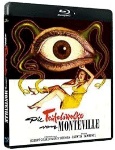
The Trollenberg Terror (aka "The Crawling Eye") (1958) |
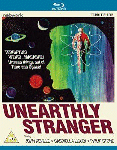
Unearthly Stranger (1963) |
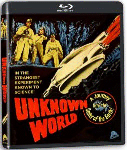
Unknown World (1951) |
Village of the Damned (1958) |
The War of the Worlds (1953) (4K UHD) |
The Wasp Woman (1959) |
|
|
|
|
|
|
|
|
|
|
|
|
|
|
|
|
|
|
|
|
|
|
|
|
|
|
|
|
|
|
|
|
|
|
When Worlds Collide (1951) |
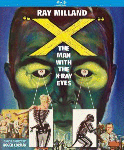
X: The Man with the X-Ray Eyes (1963) |
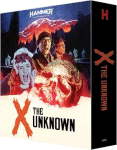
X The Unknown (1956) (4K UHD) |
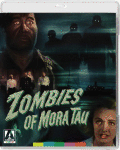
Zombies of the Mora Tau(1957) |
|
|
|
|
|
|
|
|
|
|
|
|
|
|
|
_________________________________________________________________________________________________________________
|
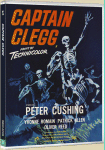
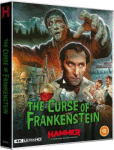
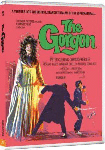
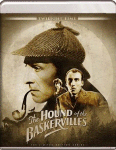
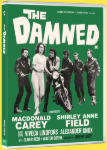
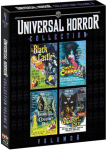
Hammer Films occupies a very specific corner of my collection - a shelf, tightly curated list, of perpetually re-watchable films. There's a house style to these films that's instantly recognizable: lush Eastmancolor blood and gothic sets on a shoestring budget, Peter Cushing's icy precision, Terence Fisher's confident, unhurried direction. The Curse of Frankenstein (1957) and The Brides of Dracula (1960) are the foundational texts - the films that essentially reinvented gothic horror for a new generation and set the template everyone else on this list is working from. The Gorgon (1964) and The Plague of the Zombies (1966) are the deeper cuts, moodier and stranger than the marquee monster titles, and arguably more re-watchable precisely because they lean harder into atmosphere than into recognizable icons. Captain Clegg (1962) and The Hound of the Baskervilles (1959) show the studio's range beyond straight horror - swashbuckling adventure and detective fiction filtered through that same rich, theatrical Hammer sensibility. And These Are the Damned (1962) is the outlier of the bunch, a colder, more paranoid sci-fi entry that proves the studio's reach extended well past capes and fangs. What keeps me coming back to this small list again and again is craftsmanship at a very specific, very British register - theatrical, unhurried, gorgeously coloured dread that never feels the need to hurry toward its next scare. |
|
The Brides of Dracula (1960) |
Captain Clegg (1962) |
The Curse of Frankenstein (1957) (4K UHD) |
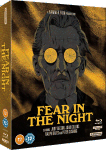
Fear in the Night (1972) 4K UHD |
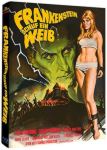
Frankenstein Created Woman (1967) |
|
|
|
|
|
|
|
|
|
|
|
|
|
|
|
|
|
|
|
The Gorgon (1964) |
The Hound of the Baskervilles (1959) |
Maniac (1963) |
The Plague of the Zombies (1966) |
Quatermass and the Pit (1967) |
Quatermass 2 (1957) (4K UHD) |
|
|
|
|
|
|
|
|
|
|
|
|
|
|
|
|
|
|
|
|
|
|
The Quatermass Xperiment (1955) (4K UHD) |
The Reptile (1966) |
Stolen Face (1952) (4K UHD) |
These Are the Damned (1962) |
The Witches (1966) |
X The Unknown (1956) (4K UHD) |
|
|
|
|
|
|
|
|
|
|
|
|
|
|
|
|
|
|
|
|
|
_________________________________________________________________________________________________________________
|
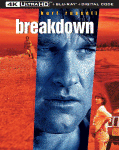
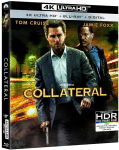
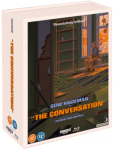
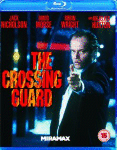
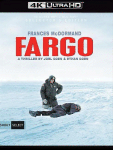
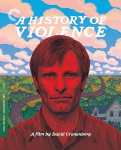
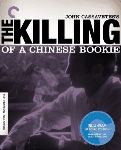
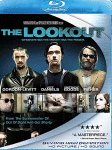
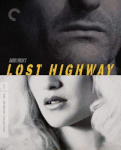
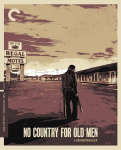
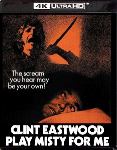
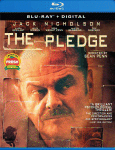
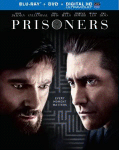
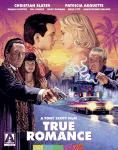
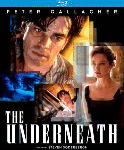
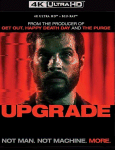
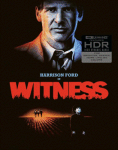
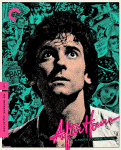
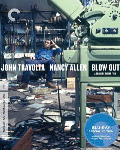
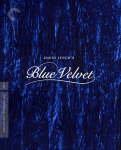
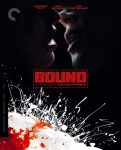
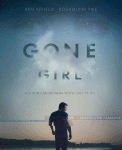
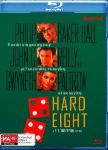
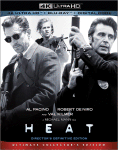
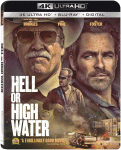
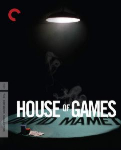
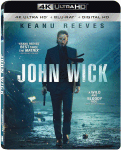
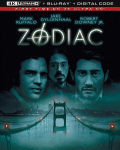
If classic noir is about shadow and fatalism, this section is about what happens when that same moral rot gets filtered through modern paranoia, color cinematography, and a few decades of genre self-awareness. It's easily one of the largest, most frequently revisited lists on this whole page. The Conversation (1974) and Blow Out (1981) turn surveillance itself into the source of dread, technical process as psychological unraveling, and both only get richer the more you already know how they end. Blue Velvet (1986) and Lost Highway (1997) push neo-noir into outright nightmare logic - Lynch treating the genre's conventions as a doorway into something stranger rather than a destination in itself. The heist-and-hitman strain - Heat (1995), Thief (1981), The Killing of a Chinese Bookie (1976), the vengeance in John Wick (2014) - thrives on pure procedural competence, characters defined entirely by how well they do their jobs, which is exactly the kind of craftsmanship that rewards endless re-watching. House of Games (1987) and The Spanish Prisoner (1997) represent Mamet's ice-cold con-artist strand of the genre - dialogue as a weapon, misdirection as the whole point. And then there's the sprawling middle ground of confident, well-worn genre pleasures - Fargo (1996), No Country for Old Men (2007), A History of Violence (2005), Zodiac (2007) - films that don't need surprise to work a second or tenth time because their tension comes from atmosphere, performance, and inevitability rather than plot mechanics. What unites the whole list is that these are stories about people who think they're in control of the situation, right up until the film proves otherwise - and watching that unravel never really gets old.
|
| 25th Hour (2002) |
After Hours (1985) (4K UHD) |
Against All Odds (1984) |
Blow Out (1981) (4K UHD) |
Blue Velvet (1986) (4K UHD) |
Bound (1996) (4K UHD) |
The Brave One (2007) |
Breakdown (1997) (4K UHD) |
Collateral (2004) (4K UHD) |
The Conversation (1974) (4K UHD) |
 |
 |
|
 |
 |
 |
|
|
|
|
|
|
|
|
|
|
|
|
|
|
|
|
|
|
|
|
|
|
|
|
|
|
|
The Crossing Guard(1995) |
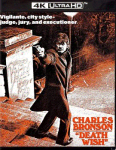
Death Wish (1974) (4K UHD) |
Dressed to Kill (1980) |
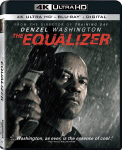
The Equalizer (2014) (4K UHD) |
Fargo (1996) (4K UHD) |
The Game (1997) |
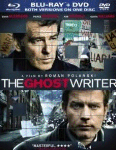
The Ghost Writer (2010) |
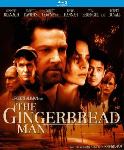
The Gingerbread Man (1998) |
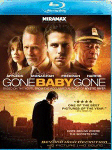
Gone Baby Gone (2007) |
Gone Girl (2014) |
|
|
 |
|
|
|
 |
 |
|
 |
 |
|
|
|
|
|
|
|
|
|
|
|
|
|
|
|
|
|
|
|
|
|
|
|
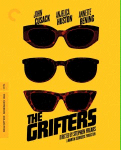
The Grifters (4K UHD) |
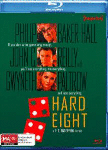
Hard Eight (1996) |
Heat (1995) (4K UHD) |
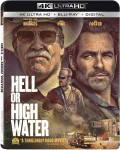
Hell or High Water (2016) (4K UHD) |
A History of Violence (2005) (4K UHD) |
House of Games (1987) |
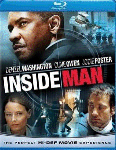
Inside Man (2006) |
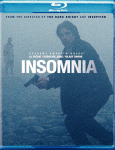
Insomnia (2002) |
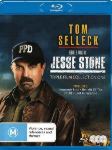
Jesse Stone (2011-2015) |
John Wick (2014) (4K UHD) | The Killing of a Chinese Bookie (1976) |
|
|
 |
 |
 |
|
 |
 |
|
 |
 |
|
|
|
|
|
|
|
|
|
|
|
|
|
|
|
|
|
|
|
|
|
|
|
|
|
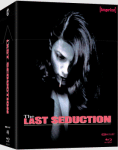
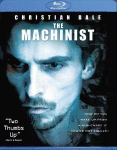
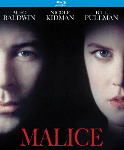
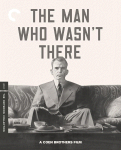
| The Last Seduction (1994) (4K UHD) | The Lookout (2007) | Lost Highway (1997) (4K UHD) | The Machinist (2004) | Malice (1993) | The Man Who Wasn't There (2001) (4K UHD) | Match Point (2005) |
Mulholland Drive (2001) (4K UHD) |
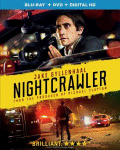
Nightcrawler (2014) | No Country for Old Men (2007) (4K UHD) |
|
|
|
|
|
 |
 |
|
|
|
|
|
|
|
|
|
|
|
|
|
|
|
|
|
|
|
|
|
|
|
|
|
|
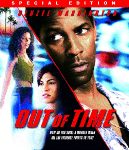
| Out of Time (2003) | Play Misty for Me (1971) (4K UHD) | The Pledge (2001) | Prisoners (2013) |
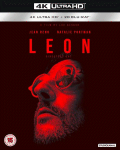
The Professional aka Leon (4K UHD) |
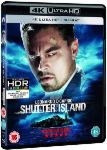
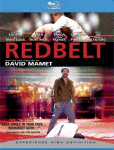
Red Belt (2008) | Sea of Love (1989) | Shallow Grave (1994) | Shutter Island (2010) (4K UHD) | The Spanish Prisoner (1997) |
 |
|
|
|
|
 |
 |
 |
|
|
|
|
|
|
|
|
|
|
|
|
|
|
|
|
|
|
|
|
|
|
|
|
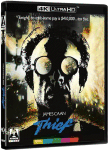
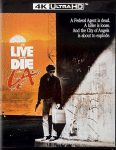
| The Talented Mr. Ripley (1999) | Taxi Driver (1976) (4K UHD) | Thief (1981) (4K UHD) | To Live and Die In L.A. (1985) (4K UHD) | True Romance (1993) (4K UHD) | U-Turn (1997) | The Underneath (1995) | Upgrade (2018) (4K UHD) | Witness (1985) (4K UHD) | Zodiac (2007) (4K UHD) |
 |
 |
|
|
|
 |
|
|
|
 |
|
|
|
|
|
|
|
|
|
|
|
|
|
|
|
|
|
|
|
|
|
|
_________________________________________________________________________________________________________________
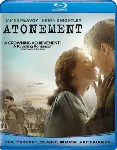
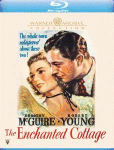
| We're not overly big on the romance genre - it's easily the smallest list on this whole page - but some films can't be overlooked, and the ones that do make the cut tend to earn it through restraint rather than sentiment. Waterloo Bridge (1940) and The Enchanted Cottage (1945) are pure classic-Hollywood heartbreak, the kind of quietly devastating melodrama that works precisely because it never overplays its hand. A Man and a Woman (1966) is here for its aching, unhurried rhythm - a film more interested in silences and glances than in dialogue doing the emotional work. In the Mood for Love (2000) might be the most treasured film on this entire list, genre notwithstanding - nothing is said, everything is felt, and that tension between restraint and longing only deepens with familiarity. Great Expectations (1998) and Atonement (1998) round things out as more traditionally sweeping, tragic romances - proof that even a category I mostly steer clear of has a handful of films I'll always make room for. |
|
Atonement (1998) |
The Enchanted Cottage (1945) |
Great Expectations (1998) |
In the Mood For Love (2000) (4K UHD) |
A Man and a Woman (1966) |
Waterloo Bridge (1940) |
|
|
|
|
|
|
|
|
|
|
|
|
|
|
|
|
|
|
|
|
|
_________________________________________________________________________________________________________________
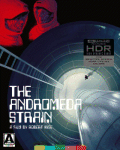
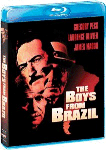
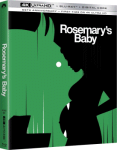
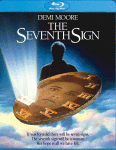
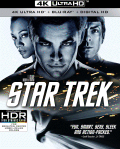
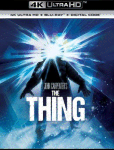
| Once science fiction and horror shed the black-and-white, atomic-age anxieties of the '50s and '60s, something shifted - the genre stopped being about the threat arriving from outside and started digging into dread that lives much closer to home. The films in this section, from the '70s onward (granted Rosemary's Baby was 1968), largely trade rubber-suited monsters for something harder to shake: body horror, cosmic indifference, technology turning against its makers, the unnerving realism of alien encounters, the supernatural creeping into ordinary domestic spaces rather than announcing itself with a flying saucer. It's not a hard rule, though - J.J. Abrams' 2009 Star Trek reboot sits here too, less for dread than for a different kind of post-70s ambition: bigger scale, sharper technical craft, and real emotional stakes brought to a franchise built on that same genre's classic sense of wonder. This is the era where genre filmmakers were given real budgets and real ambition to be strange, bleak, and formally adventurous - and, occasionally, spectacular - and decades later that ambition is exactly why these films keep earning a spot back in the rotation instead of aging into camp. More than half are in 4K UHD... |
|
The Andromeda Strain (1971) (4K UHD) |
The Boys From Brazil (1978) |
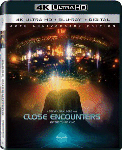
Close Encounters of the Third Kind (1977) (4K UHD) |
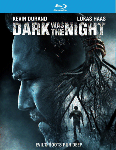
Dark Was the Night (2014) |
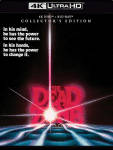
The Dead Zone (1983) (4K UHD) |
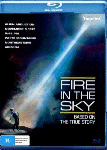
Fire in the Sky (1993) |
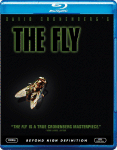
The Fly (1986) |
|
|
|
|
|
|
|
|
|
|
|
|
|
|
|
|
|
|
|
|
|
|
|
|
|
Gattaca (1997) (4K UHD) |
Hollow Man (2000) |
The Invisible Man (2020) (4K UHD) |
Jaws (1975) (4K UHD) |
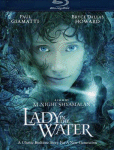
Lady in the Water (2006) |
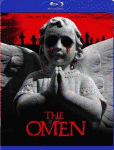
The Omen (1976) |
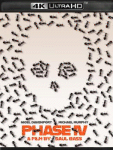
Phase IV (1974) (4K UHD) |
Rosemary's Baby (1968) (4K UHD) |
|
|
|
|
|
|
|
|
|
|
|
|
|
|
|
|
|
|
|
|
|
|
|
|
|
|
|
|
The Seventh Sign (1988) |
The Shining (1980) (4K UHD) |
Signs (2002) (4K UHD) |
Star Trek (2009) (4K UHD) |
The Tenant (1976) (4K UHD) |
The Thing (1982) (4K UHD) |
They Live (1988) (4K UHD) |
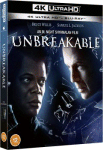
Unbreakable (2000) (4K UHD) |
|
|
|
|
|
|
|
|
|
|
|
|
|
|
|
|
|
|
|
|
|
|
|
|
|
|
|
_________________________________________________________________________________________________________________
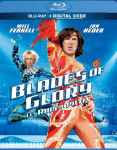
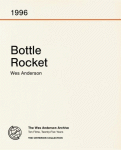
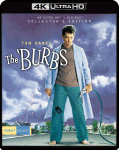
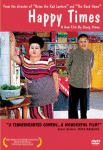
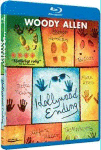
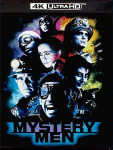
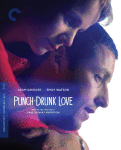
| Comedy is where some genuinely great filmmakers get to loosen up, and this list leans hard into that idea - auteur-driven comedy rather than pure gag delivery. Woody Allen shows up more than once (Mighty Aphrodite, Small Time Crooks, Hollywood Ending), and it's no accident - his neurotic rhythms and dialogue-first instincts hold up beautifully to repeat viewing precisely because so much of the pleasure is in the phrasing, not the plot. The Coen brothers' Raising Arizona and The Big Lebowski are pure comfort-viewing at this point, quotable to the point of ritual. Wes Anderson's Bottle Rocket and The Royal Tenenbaums bring that same re-watch-friendly quality through meticulous visual composition and deadpan melancholy rather than punchlines. Scorsese's After Hours is the odd one out tonally - anxiety dressed up as comedy - but it belongs here for how relentlessly it escalates on every viewing. Paul Thomas Anderson's Punch-Drunk Love takes a similar left turn, romantic comedy filtered through Adam Sandler's barely-contained rage, which somehow gets funnier and more tender the more you already know where it's headed. Even Zhang Yimou makes an appearance with Happy Times - proof that this list isn't just an American genre exercise, and that a bittersweet, quietly aching comedy can sit comfortably next to broader studio fare like Blades of Glory or The 'Burbs. What unites all of it is that these aren't disposable comedies - they're films built by directors with a genuine voice, and in my opinion they hold up brilliantly over time. |
|
After Hours (4K UHD) |
The Big Lebowski (1998) (4K UHD) |
Blades of Glory (2007) |
Bottle Rocket (1996) (4K UHD) |
Buffalo 66' (1998) |
The Burbs (1989) (4K UHD) |
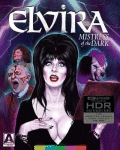
Elvira Mistress of the Dark (1988) (4K UHD) |
The Ghost and Mr. Chicken (1966) |
|
|
|
|
|
|
|
|
|
|
|
|
|
|
|
|
|
|
|
|
|
|
|
|
|
|
|
|
Happy Times (2000) |
Hollywood Ending (2002) |
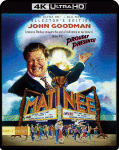
Matinee (1993) (4K UHD) |
Mighty Aphrodite (1995) |
Mystery Men (1999) (4K UHD) |
Punch Drunk Love (2002) (4K UHD) |
Raising Arizona (1987) |
Small Time Crooks (2000) |
The Royal Tenenbaums (2001) (4K UHD) |
|
|
|
|
|
|
|
|
|
|
|
|
|
|
|
|
|
|
|
|
|
|
|
|
|
|
|
|
|
|
_________________________________________________________________________________________________________________
|
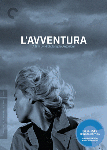
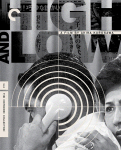
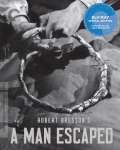
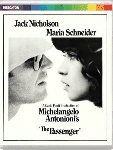
"Arthouse" can be a generalization - yes, mostly foreign-language films, but certainly not all - and this is only a sampling of what could easily balloon into a list of over a hundred with more Antonioni, Bresson, Rohmer, Tarkovsky, and Fellini thrown in. Antonioni alone accounts for a cluster here - L'Avventura, Blow-Up, L'Eclisse, The Passenger - films built on alienation and dead air that somehow become more absorbing, not less, once you stop waiting for conventional resolution. Bresson's A Man Escaped and Pickpocket reward re-watching almost like studying a diagram - every gesture stripped down to its essential function. Tarkovsky's Mirror and Fellini's Nights of Cabiria sit at opposite emotional poles - one dreamlike and fragmented, the other warm and heartbroken - but both deepen the more familiar you become with their rhythms. Kieslowski's Blue and Bergman's Autumn Sonata bring a more intimate, chamber-piece intensity, while Wong Kar-wai's Chungking Express and Tsai Ming-liang's Vive L'Amour and The Hole represent a cooler, more contemporary strand of urban isolation and longing. Roeg's Walkabout and Zhang Yimou's To Live round things out with sweeping, landscape-driven storytelling that trades dialogue for pure image. I could throw on any of these at any given time - not because they're comfortable in the way a genre picture is comfortable, but because they reward the kind of close attention that only grows with repetition. I remain constantly fascinated. |
|
3 Women (1977) |
2001: A Space Odyssey (1968) (4K UHD) |
Autumn Sonata (1978) |
L'Avventura (1960) |
Beau Travail (1999) |
The Bicycle Thief (1948) |
Blow-Up (1966) |
Blue (1993) (4K UHD) |
Chungking Express (1994) (4K UHD) |
|
|
|
|
|
|
|
|
|
|
|
|
|
|
|
|
|
|
|
|
|
|
|
|
|
|
|
|
|
|
|
L'Eclisse (1962) |
Eyes Wide Shut (1999) (4K UHD) |
The Green Ray (1986) |
High and Low (1963) (4K UHD) |
The Hole (1998) |
Late Spring (1949) |
A Man Escaped (1956) |
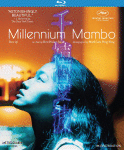
Millennium Mambo (2001) |
Mirror (1975) |
|
|
|
|
|
|
|
|
|
|
|
|
|
|
|
|
|
|
|
|
|
|
|
|
|
|
|
|
|
|
|
Nights of Cabiria (1957) |
Nude in a White Car (1958) |
The Passenger (1975) |
Pickpocket (1959) |
Red Beard (1965) |
Rosetta (1999) |
To Live (1994) |
The Umbrellas of Cherbourg (1964) (4K UHD) |
Walkabout (1971) (4K UHD) |
Vive L'Amour (1994) |
|
|
|
|
|
|
|
|
|
|
|
|
|
|
|
|
|
|
|
|
|
|
|
|
|
|
|
|
|
|
|
|
|
_________________________________________________________
|
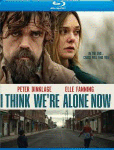
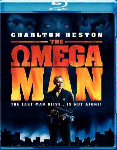
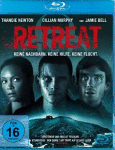
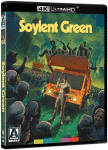
These apocalypse films always appeal to me - they draw their power from intimacy rather than spectacle. Stripped of global armies and city-leveling set pieces, they reduce the end of the world to a handful of survivors in a house, a valley, or a ruined landscape, forcing us to watch ordinary people confront the collapse of everything that once held society together. Even 2023's Leave the World Behind, with its predictive programming, would get my endorsement for the genre but no physical media release is in sight. Observe the pressure-cooker closeness: the moral choices, the shifting alliances, the loneliness, the fragile attempts at new order, and the quiet terror of realizing that the real threat is no longer the disaster itself but what human beings become when the old rules no longer apply. These stories satisfy a deep curiosity about who we might turn out to be when the world ends and only a few of us remain. Notice I said "us". |
|
Contagion (2011) |
Day of the Triffids (1963) |
The Day the Earth Caught Fire (1961) |
Day the World Ended (1955) |
Five (1951) |
I Think We're Alone Now (2018) |
The Last Man on Earth (1964) |
|
|
|
|
|
|
|
|
|
|
|
|
|
|
|
|
|
|
|
|
|
|
|
|
|
The Omega Man (1971) |
Panic in Year Zero (1962) |
Retreat (2011) |
Soylent Green (1973) (4K UHD) |
Take Shelter (2011) |
When Worlds Collide (1951) |
Z For Zachariah (2015) |
|
|
|
|
|
|
|
|
|
|
|
|
|
|
|
|
|
|
|
|
|
|
|
|
_________________________________________________________________________________________________________________
| What a mix. Not every film worth revisiting fits neatly into a genre box, and some of my most consistently re-watched titles live in this catch-all category precisely because I am incapable of easy categorization. Great musicals, adventurous Westerns, Ozploitation, Hagsploitation, a gripping Giallo, or a fulfilling sports drama that can lean on atmosphere, rhythm, image, gesture, and pure cinematic craft rather than narrative mechanics alone, which is exactly why they hold up so well to repeat viewing. Taken together, this odds-and-ends shelf is where some of my most beloved, most frequently revisited films actually live - proof that "doesn't fit the list" is often just another way of saying they are "too good to categorize" and my tastes are all over the board. Multiple films with highly watchable actors; Jimmy Stewart, Paul Newman, Barbara Steele, Nicole Kidman, Jennifer Connelly, Michael Keaton... |
|
Batman Returns (1992) (4K UHD) |
The Best Years of Our Lives (1946) |
The Beyond (1981) (4K UHD) |
The Bird With the Crystal Plumage (1970) (4K UHD) |
Birth (2004) (4K UHD) |
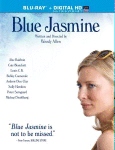
Blue Jasmine (2013) |
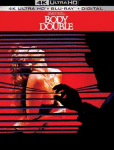
Body Double (1984) (4K UHD) |
The Bourne Legacy (2012) (4K UHD) |
Butch Cassidy and the Sundance Kid (1969) |
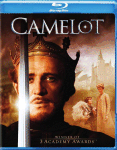
Camelot (1989) |
|
|
|
|
|
|
|
|
|
|
|
|
|
|
|
|
|
|
|
|
|
|
|
|
|
|
|
|
|
|
|
|
|
|
Casablanca (1942) (4K UHD) |
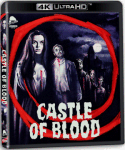
Castle of Blood (1964) (4K UHD) |
Cheeky (2000) (4K UHD) |
City Lights (1931) |
Clean and Sober (1988) |
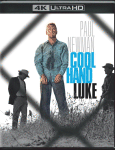
Cool Hand Luke (1967) (4K UHD) |
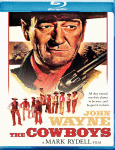
The Cowboys (1972) |
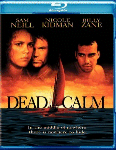
Dead Calm (1989) |
Death and the Maiden (1989) |
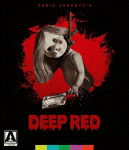
Deep Red (1975) (4K UHD) |
|
|
|
|
|
|
|
|
|
|
|
|
|
|
|
|
|
|
|
|
|
|
|
|
|
|
|
|
|
|
|
|
|
|
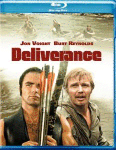
Deliverance (1972) |
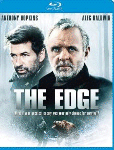
The Edge (1997) |
Fail-Safe (1964) |
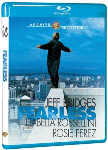
Fearless (1993) |
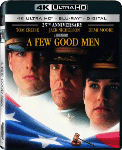
A Few Good Men (1992) (4K UHD) |
From Russia With Love (1963) (4K UHD) |
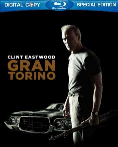
Gran Torino (2008) |
Hard Eight (1996) |
Hell of High Water (2016) (4K UHD) |
Hoosiers (2008) |
|
|
|
|
|
|
|
|
|
|
|
|
|
|
|
|
|
|
|
|
|
|
|
|
|
|
|
|
|
|
|
|
|
|
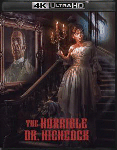
The Horrible Dr. Hichcock (1962) (4K UHD) |
House of Flying Daggers (2004) |
House of Sand and Fog (2003) |
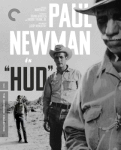
Hud (1963) (4K UHD) |
In the Bedroom (2003) |
The Incredibles (2004) (4K UHD) |
Magnolia (2018) |
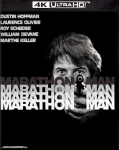
Marathon Man (1976) (4K UHD) |
Margin Call (2011) |
Old Henry (2021) (4K UHD) |
|
|
|
|
|
|
|
|
|
|
|
|
|
|
|
|
|
|
|
|
|
|
|
|
|
|
|
|
|
|
|
|
|
|
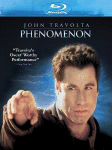
Phenomenon (1996) |
Psycho (1960) (4K UHD) |
Rear Window (1954) (4K UHD) |
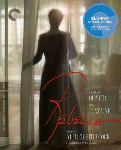
Rebecca (1940) |
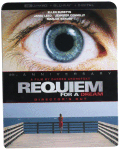
Requiem For a Dream (2000) (4K UHD) |
Rocky (1976) (4K UHD) |
Seven Days in May (1964) |
Seven Pounds (2008) |
Shane (1959) (4K UHD) |
Shawshank Redemption (1994) |
|
|
|
|
|
|
|
|
|
|
|
|
|
|
|
|
|
|
|
|
|
|
|
|
|
|
|
|
|
|
|
|
|
|
The Silence of the Lambs (1991) (4K UHD) |
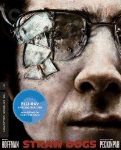
Straw Dogs (1971) |
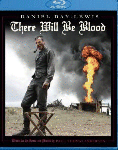
There Will be Blood (2007) |
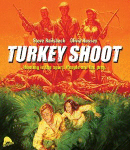
Turkey Shoot (1982) |
The Umbrellas of Cherbourg (1964) (4K UHD) |
Vertigo (1958) (4K UHD) |
West Side Story (1961) (4K UHD) |
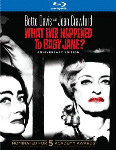
Whatever Happened to Baby Jane (1962) |
|
|
|
|
|
|
|
|
|
|
|
|
|
|
|
|
|
|
|
|
|
|
|
|
|
|
|
_________________________________________________________________________________________________________________
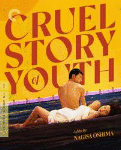
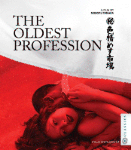
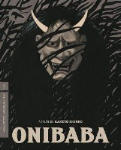
This is quite a mixed bag and none made the Top 100. Cruel Story of Youth (1960) and Onibaba (1964) hold up as formally rigorous provocations - Oshima's jagged, anti-melodramatic take on postwar disaffection and Shindo's stark, wind-swept folk-horror both reveal new layers of technique and subtext once the initial shock of their content wears off. The genre entries - Bohachi Bushido, sexy / fun Hanzo the Razor, and homage-parody-driven Angel with the Iron Fists - thrive on pure sensory excess: outrageous set pieces, gleeful genre-mixing, and go-for-broke performances that only get more entertaining with familiarity, the way a favorite exploitation film becomes a comfort watch once you know exactly where it's headed. The more explicitly erotic titles - A Haunted Turkish Bathhouse, The Oldest Profession, Erotic Ghost Story, and Sex and Zen - endure less as shock value and more as time-capsule curiosities, blending softcore spectacle - Amy Yip-isms - with wuxia fantasy, period detail, and surprisingly earnest melodrama in ways that reveal fresh absurdities or craftsmanship on each re-watch. And The Eel (1997), Imamura's Cannes-winning tale of guilt and quiet redemption, anchors the group with slow-burn emotional depth that simply can't be absorbed in one sitting. Together, the collection rewards re-watching not despite its provocations but because of them - each film uses transgression as a doorway into something stranger, funnier, sadder, or more technically accomplished than it first appears.
|
| Cruel Story of Youth (1960) | Bohachi Bushido: Code of the Forgotten Eight (1973) | A Haunted Turkish Bathhouse (1975) | The Oldest Profession (1974) | Onibaba (1964) |
|
|
|
|
|
|
|
|
|
|
|
|
|
|
|
|
|
|
| Angel with the Iron Fists (1967) | Erotic Ghost Story (1990) | Sex and Zen (1991) | The Eel (1997) | Hanzo the Razor (1972) |
|
|
|
|
|
|
|
|
|
|
|
|
|
|
|
|
|
|
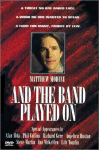
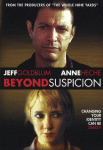
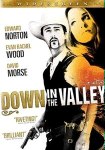
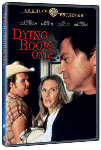
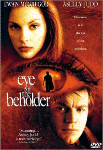
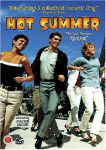
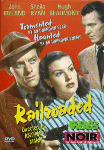
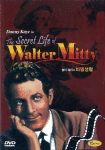
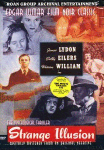
| These films have rewatch value because they operate on layers that carry an obscure, under-the-radar appeal - the kind of films that never made the jump to Blu-ray, yet reward viewing all the same: the slow-burn psychological unease in Beyond Suspicion and Eye of the Beholder, the pure pulp invention and creature effects of Fiend Without a Face and Day of the Triffids, the lean desert paranoia of Dying Room Only, the mythic cowboy delusion of Down in the Valley, the uncompromising idealism of The Fountainhead, the joyful daydream escapism of The Secret Life of Walter Mitty, the feverish noir triangle of The Woman on the Beach, and the buoyant East German summer-romance "Beach Blanket" energy camp of Hot Summer. The Hole blends slow-cinema alienation, urban decay, deadpan comedy, and sudden bursts of musical fantasy. It's marvelous. They remain DVD-only for different reasons; either they sit in the commercial middle ground - appealing as cult favorites / mid-tier titles, modest transferable elements, no profit to be made - although Day of the Triffids has some rights issue, I understand. |
| And the Band Played On (1993) | Beyond Suspicion (2000) | Day of the Triffids (1963) | Down in the Valley (2005) | Dying Room Only (1973) | Eye of the Beholder (1999) | Fiend Without a Face (1958) |
|
|
|
|
|
|
|
|
|
|
|
|
|
|
|
|
|
|
|
|
|
|
|
|
| The Fountainhead (1949) | Happy Times (2000) | The Hole (1998) | Hot Summer (1967) | Railroaded (1947) | The Secret Life of Walter Mitty (1947) | Strange Illusion (1945) | The Woman on the Beach (1947) |
|
|
|
|
|
|
|
|
|
|
|
|
|
|
|
|
|
|
|
|
|
|
|
|
|
|
|
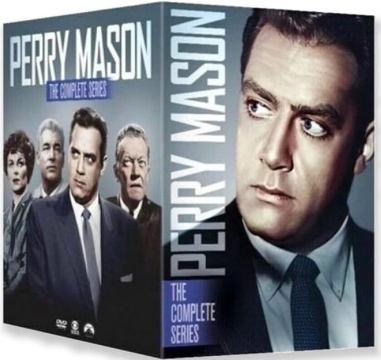
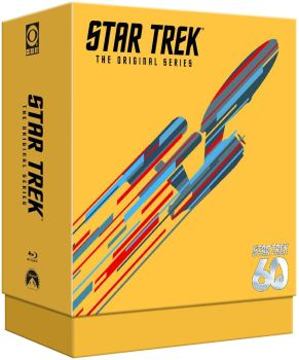
| Yes, I have watched all of these 3 series - completely - many times. I often forget the episode but always love the characters. These three series exemplify a kind of episodic craftsmanship that only deepens with familiarity. The Fugitive (1963–1967) turns its simple premise - an innocent man on the run, a relentless pursuer behind him - into a surprisingly rich meditation on identity and moral choice, with David Janssen's world-weary performance anchoring each week's new town and new disguise; knowing the endgame doesn't diminish the tension, it sharpens appreciation for how patiently the show built its mythology one episode at a time. I could throw on a disc of this show any time. Perry Mason (1957–1966) rewards re-watching almost like a puzzle box: Raymond Burr's unflappable courtroom command and the show's rigid, satisfying formula - wrongful accusation, dogged investigation, last-minute confession on the stand - become a pleasure in their own right once you're no longer watching for the twist but for the elegant mechanics of how each case gets solved. There can be some noir crossover too. And the original Star Trek (1966–1969), for all its shoestring effects and occasional camp, endures because its ideas were built to outlast its budget - allegories about war, prejudice, and technology delivered through Kirk, Spock, and McCoy's crackling chemistry, so that even episodes you've seen a dozen times reveal new resonance depending on what's happening in the world when you revisit them. What unites all three is that their pleasures were never really about surprise; each was constructed with such internal consistency and character-driven confidence that re-watching feels less like repetition and more like returning to well-worn, trustworthy company. |
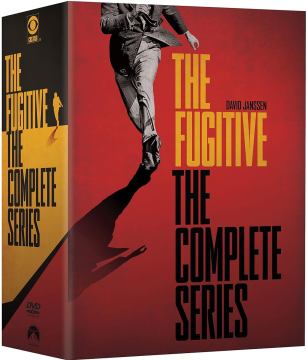 |
The Fugitive is a landmark American crime drama television series created by Roy Huggins that aired on ABC from September 17th, 1963, to August 29th, 1967. Spanning four seasons and exactly 120 episodes, the show stars David Janssen in his iconic, Emmy-nominated role as Dr. Richard Kimble, a paediatrician wrongfully convicted of his wife’s murder and sentenced to death. Filmed in stark black-and-white for its first three seasons before transitioning to color for its final 30 episodes, the series masterfully combined elements of film noir with anthology-style human drama. The series culminated in a legendary two-part finale in August 1967, which drew over 78 million viewers and held the record as the most-watched episode in television history for over a decade. |

_____________________________ |
|
|
|
Perry Mason is a Hollywood cornerstone and the definitive television legal drama, created as a CBS adaptation of Erle Stanley Gardner's detective fiction. Spanning nine seasons and 271 episodes from September 21st, 1957, to May 22nd, 1966, the series stars Raymond Burr in his legendary, Emmy-winning role as the brilliant Los Angeles defense attorney. Filmed entirely in stark black-and-white except for a single color experiment in its final season, each episode follows a highly successful formula where Mason defends a client falsely accused of murder. The show regularly concluded with the true killer dramatically breaking down and confessing on the witness stand. Burr's monumental performance established the ultimate archetype for TV lawyers, a role so defining that he returned to it decades later for 26 made-for-TV movie sequels from 1985 until his death in 1993. |
|
_____________________________ |
|
|
|
Star Trek: The Original Series is a foundational pillar of modern science fiction and pop culture, created by Gene Roddenberry and premiering on NBC from September 8th, 1966, to June 3rd, 1969. Spanning three seasons and 79 episodes (plus one initial unaired pilot), the series chronicles the 23rd-century interstellar adventures of the starship USS Enterprise on its five-year mission to explore unknown worlds. Though it initially struggled with low Nielsen ratings and faced early cancellation, the series became a massive international phenomenon through 1970s broadcast syndication. Its groundbreaking legacy successfully birthed a global multi-billion-dollar franchise encompassing over a dozen spin-off series, multiple feature films, and a passionate fanbase that fundamentally reshaped fan culture. |
|
_____________________________ |
|




















Thank You!