


 Search DVDBeaver |
S E A R C H D V D B e a v e r |

(aka "Buffalo 66" )
directed
by Vincent Gallo
USA 1998
|
Buffalo '66 opens with Billy Brown (Vincent Gallo) being released from prison after 5 years. The first three and a half minutes of this film rank among my favorite scenes of all time. Starting with the fade from white through until the onscreen collage you know you're looking at something special. For me, these moments are emotionally shattering and we know right off that something is not right in the world of this film.
I finally saw this movie, and I was so very impressed... and genuinely moved. The first half of the film is so completely oppressive, so utterly unnerving, that it felt as though someone was rubbing brillo against my raw, exposed nerves. I can certainly understand how this extremely heightened level of anguish and violent potential could really put off someone simply looking for a bit of escapism. I love the look of the reversal stock and I never found the camera angles disturbing. It's an extraordinarily constructed film, but it doesn't allow it's expressionistic techniques to overshadow its true emotion.
Very quickly (with the prison collage) we are clue'd in to the fact that we are seeing events through Billy's eyes. The exaggerated emotions and the over-the-top portrayal of the parents are events as filtered through his experience - a child's eye view. When we see his mother looking directly through him to watch her beloved Bills (on VHS) losing the very game that was the roundabout cause of Billy's prison term, we are seeing her through her son's eyes. We're seeing his whole miserable existence, his whole pathetic history. As she lays out the family albums, filled with Buffalo Bill's memories, but can't quite find the one single 'Billy photo', we experience his whole childhood. When benign explanations are offered for particular events (what happened to Billy's puppy?), we are brought deep inside Billy's mind to witness the stark contrast of truth... or at least truth as filtered through a child's eyes. It is horrifying.
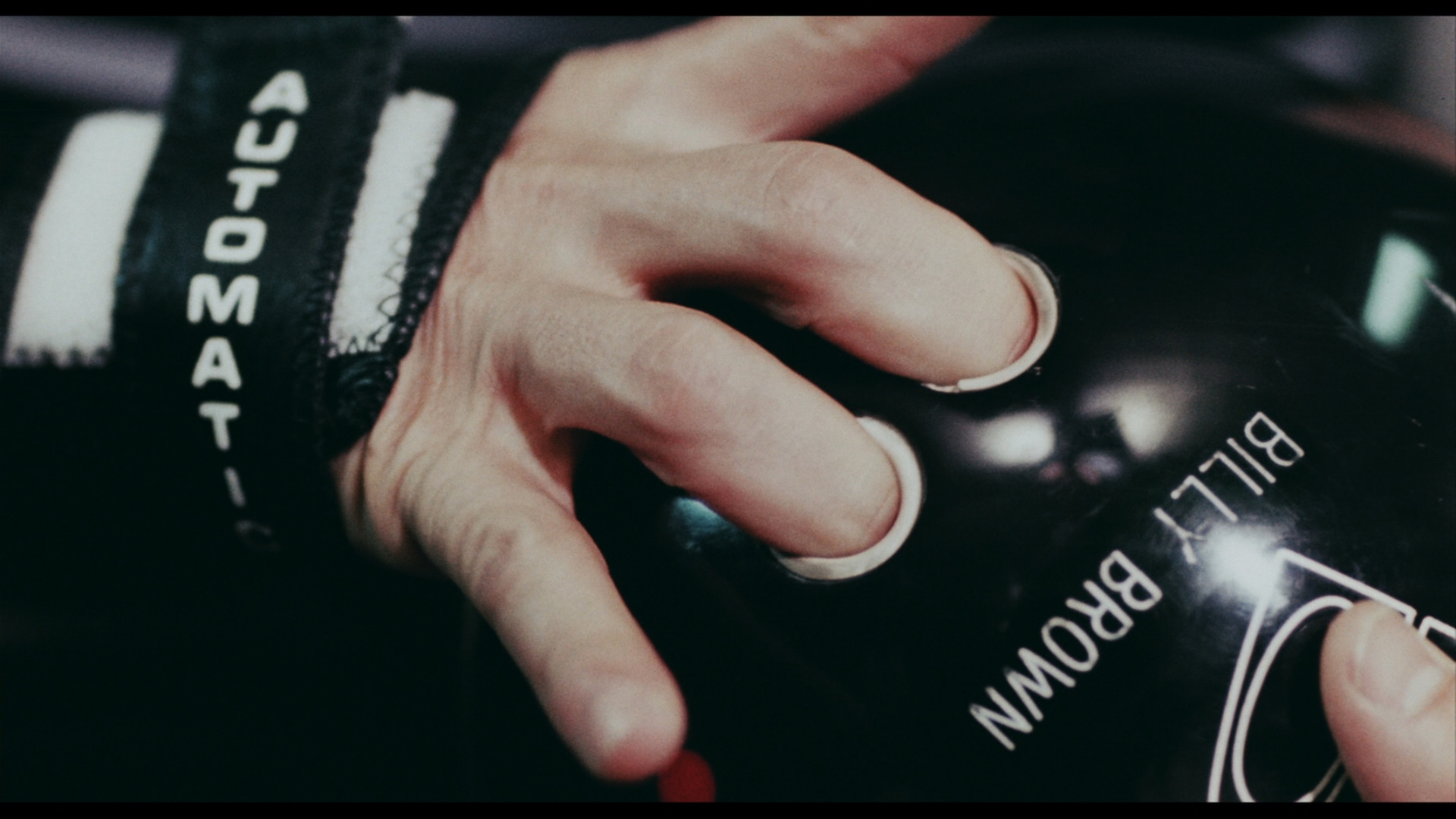
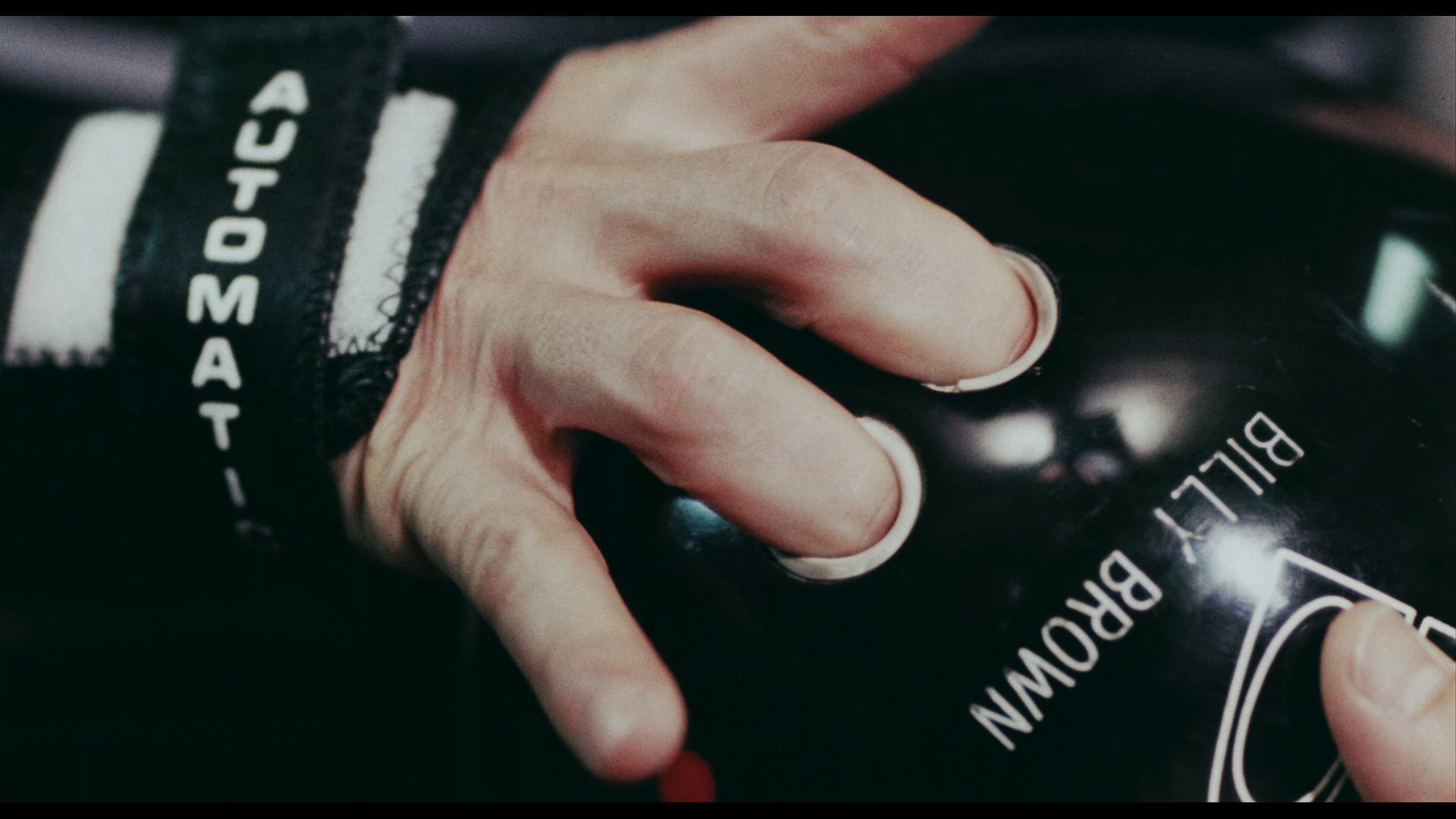
But then we get to the bowling alley. We see Billy's one, pathetic skill - the single thing he's proud of; the sum total of his life's promise. It's at this moment that Layla performs her tap-dance. It's such a momentously joyous thing; her one, most prized ability; her joy. It's her first true expression of self. From that moment on, it becomes a story about two people; a love story. I can't begin to tell you how touched I was by that scene. It certainly has a lot to do with how utterly oppressive and hopeless life had looked up to that point - these two are still pathetic and largely without hope, but suddenly they've begun to connect with one another and with life. But not quite...
I can't say more without giving it all away, but the scene in the donut shop was a wonder. The dialog could have been so banal, so utterly sentimental, but it rang so true and perfect to me. The heart-shaped cookie; the obliging clerk... "who made these?" "probably someone romantic" ... "four dollars?" "including the one you bought for him" "oh yeah" ... the whole exchange rang so true to me, and my heart was pounding with the fear that Layla might have given up on him ever returning. And, oh yeah... that final call to Goon/Rocky outside of the strip club (almost forgot about that one!)... though this movie is very often brutal and hopeless and oppressive, it's also a movie of a million tiny joys.
"I've got a girl. A girl who loves me. She's pretty.... She's waiting for me." Goddam. A whole life redeemed. Al Brown The deadpan tragicomedy aspect of the film reminds me very much of the existentialist angst films of Aki Kaurismaki (influenced by Robert Bresson and Jean-Pierre Melville). The use of superimposed, framed flashback sequences is derived from Francois Truffaut (adapted from the montage techniques of Sergei Eisenstein). The extended fade to black and short take ellipses are reminiscent of Jim Jarmusch.
What this suggests to me is that Vincent Gallo may be a novice, but he is neither self-indulgent nor uninformed in the process of filmmaking. It is obvious that he is passionate about film (and has studied it well), and that he has a deliberate, singular vision in the direction of Buffalo 66. This is not a film that results from a "happy accident" or weak directing and editing; it is a confident and reverent film of self-expression. Acquarello |
 out of
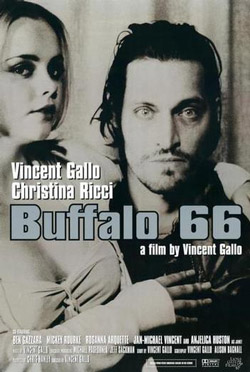
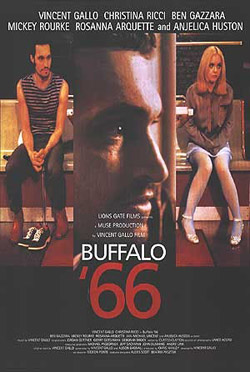
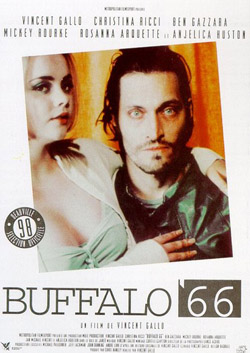
 Posters
 |
 |
 |
Theatrical Release: January 21, 1998 (Sundance Film Festival)
Reviews More Reviews DVD Reviews
Comparison:
Lion's Gate / Columbia Tristar - Region 1 - NTSC vs. TC Entertainment (Japan) - Region 'A' - Blu-ray vs. Lions Gate - Region FREE - Blu-ray
|
1)
LionsGate
- Region 1 - NTSC LEFT
2) TC Entertainment - Region 'A' -
Blu-ray
MIDDLE
3)
Lions Gate - Region FREE -
Blu-ray
RIGHT
|
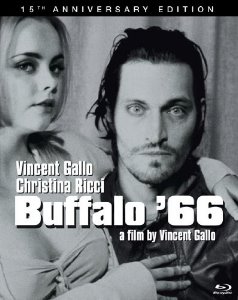
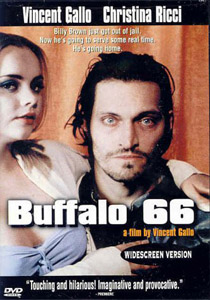
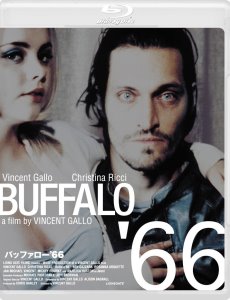
| Box Cover |
CLICK to order from:
or duplicate U.S. release:
|
In North America:
Globally:
|
|
| Distribution |
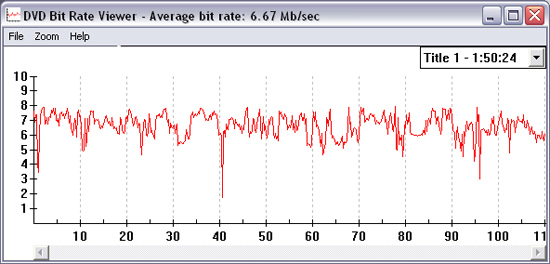
Lion's Gate / Columbia Tristar Region 1 - NTSC |
TC Entertainment Region 'A' - Blu-ray |
Lions Gate (15th Anniversary) Region FREE - Blu-ray |
| Runtime | 1:50:24 | 1:49:52.252 | 1:49:52.627 |
| Video |
1.75:1 Original Aspect Ratio
16X9 enhanced |
1080P Dual-layered
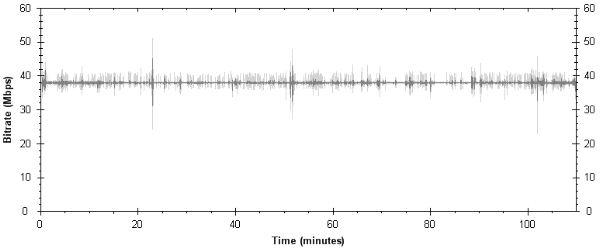
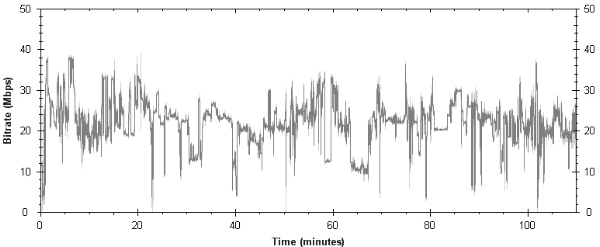
Blu-ray Disc Size: 37,610,488,064 bytesFeature: 37,000,501,248 bytes Codec: MPEG-4 AVC Video Total Video Bitrate: 38.00 Mbps |
1080P
Single-layered
Blu-ray Disc Size: 22,036,772,586 bytesFeature: 21,070,073,856 bytes Codec: MPEG-4 AVC Video Total Video Bitrate: 21.99 Mbps |
|
NOTE: The Vertical axis represents the bits transferred per second. The Horizontal is the time in minutes. |
|||
| Bitrate |
|
||
| Bitrate TC Blu-ray |
|
||
| Bitrate Lions Gate Blu-ray |
|
||
| Audio | English Dolby Digital 2.0 |
Dolby TrueHD Audio English 668 kbps 2.0 / 48
kHz / 668 kbps / 16-bit (AC3 Embedded: 2.0 / 48 kHz / 640 kbps) Dolby TrueHD Audio Japanese 497 kbps 2.0 / 48 kHz / 497 kbps / 16-bit (AC3 Embedded: 2.0 / 48 kHz / 640 kbps) |
DTS-HD Master Audio English 2086 kbps 2.0 / 48 kHz / 2086 kbps / 24-bit (DTS Core: 2.0 / 48 kHz / 1509 kbps / 24-bit / DN -3dB) |
| Subtitles | English, none | Japanese, none | English, Spanish, none |
| Features |
Release Information: Studio: Lion's Gate / Columbia Tristar Aspect Ratio:
Edition Details: Chapters 18 |
Release Information: Studio: TC Entertainment Aspect Ratio: 1.85:1 1080P Dual-layered Blu-rayDisc Size: 37,610,488,064 bytesFeature: 37,000,501,248 bytes Codec: MPEG-4 AVC Video Total Video Bitrate: 38.00 Mbps
Edition Details: Chapters 19 |
Release Information: Studio: Lions Gate Aspect Ratio: 1.85:1 1080P Single-layered Blu-rayDisc Size: 22,036,772,586 bytesFeature: 21,070,073,856 bytes Codec: MPEG-4 AVC Video Total Video Bitrate: 21.99 Mbps
Edition Details: Chapters 12 |






| Comments |
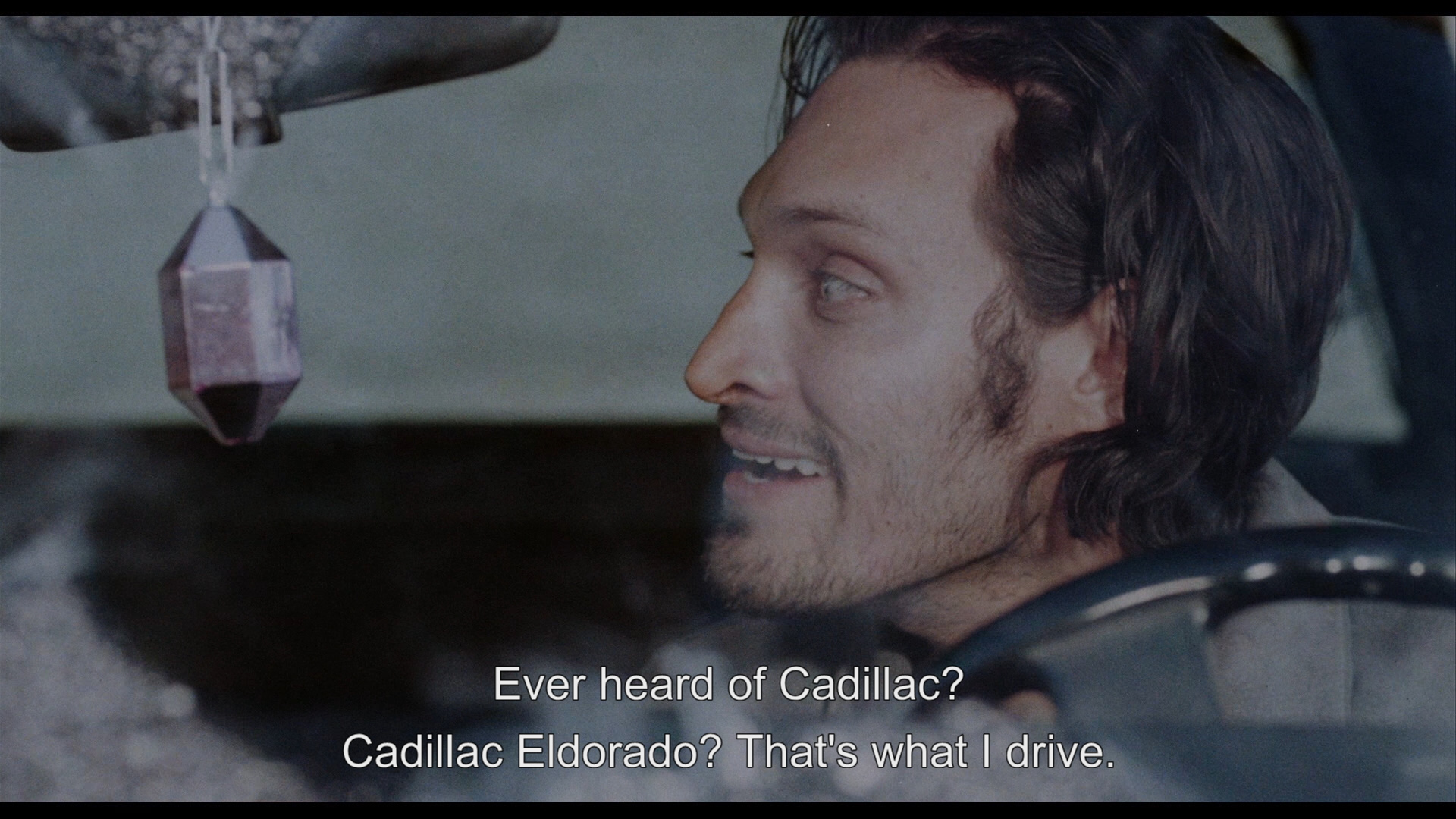
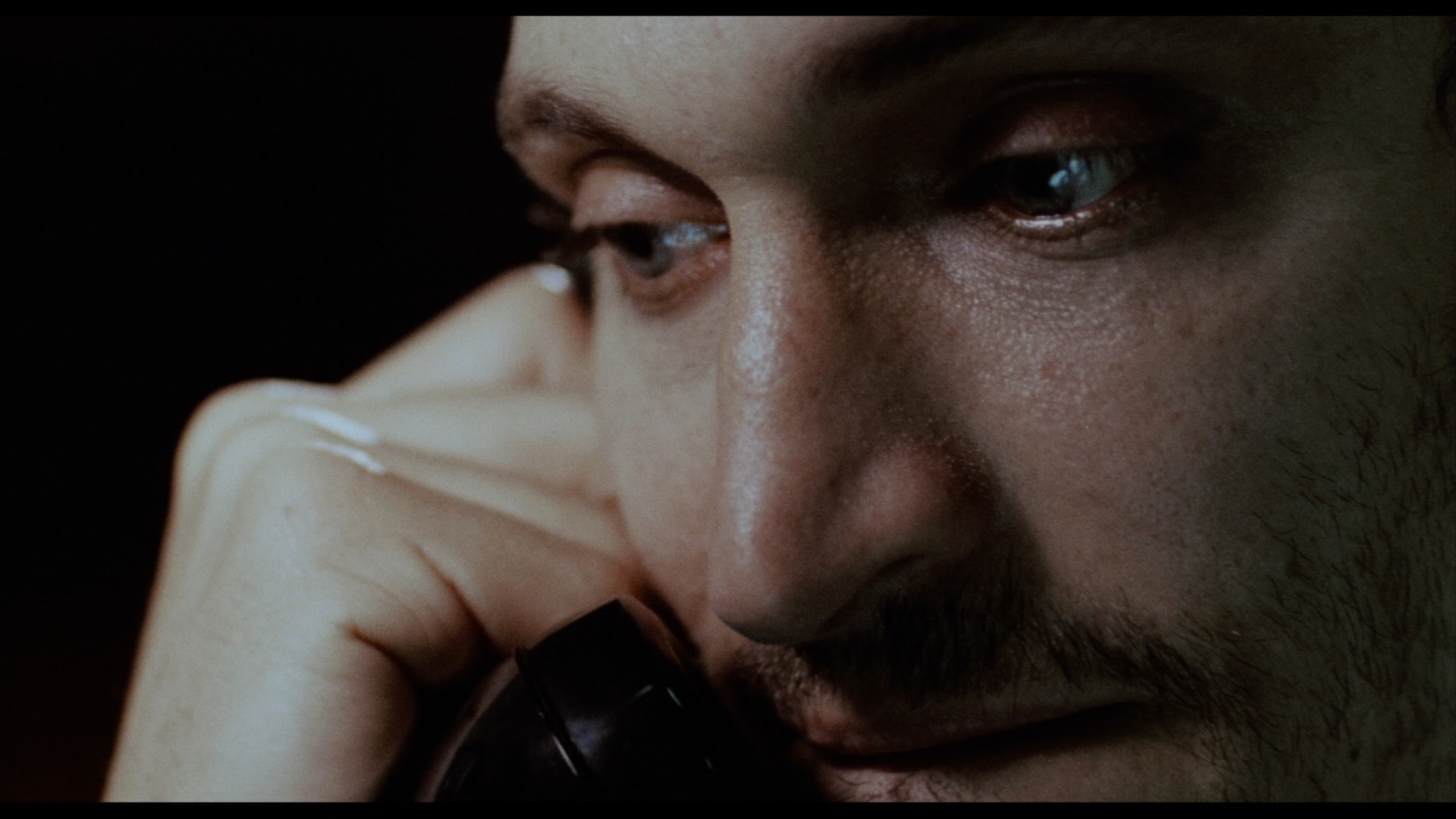
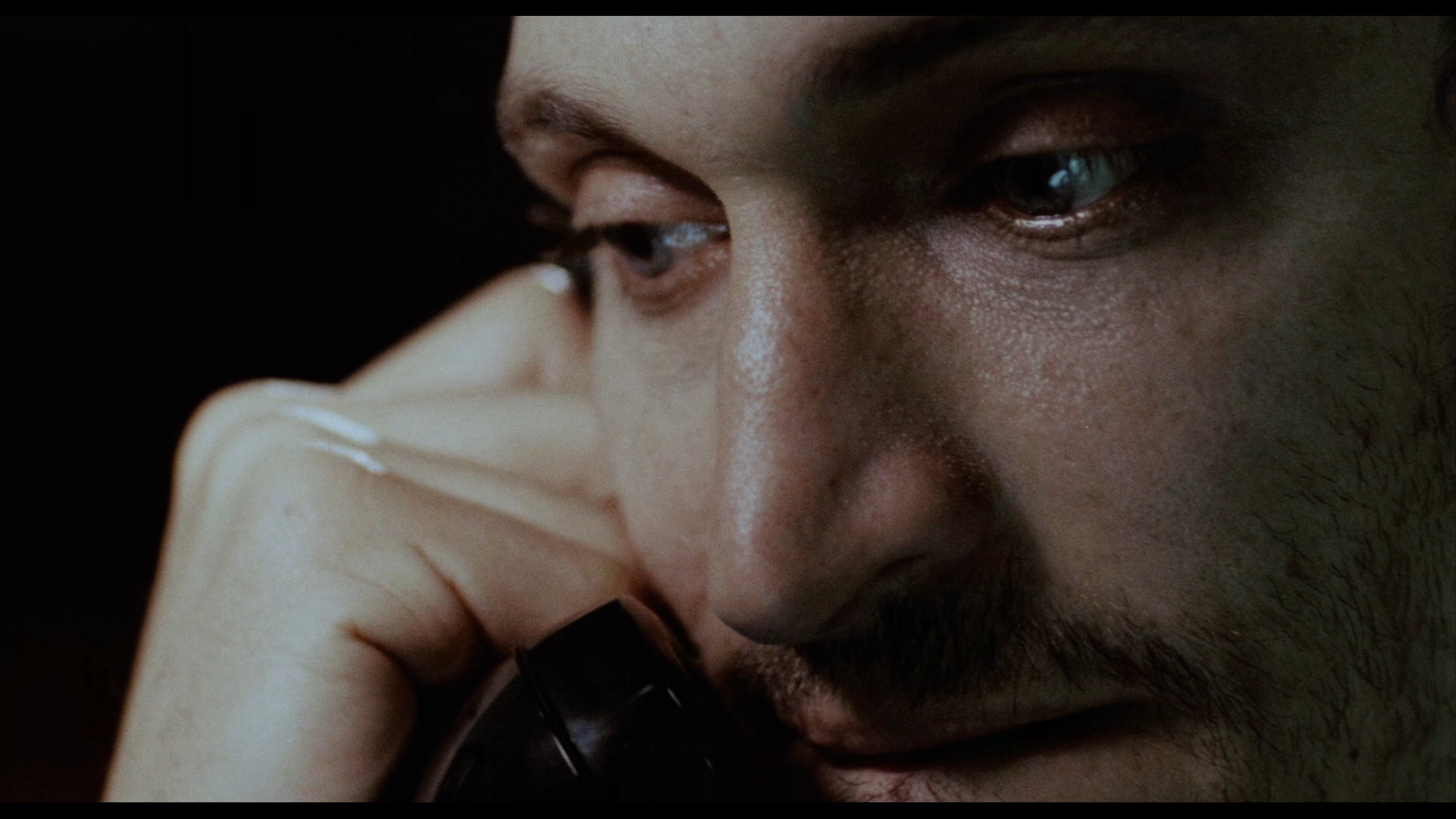
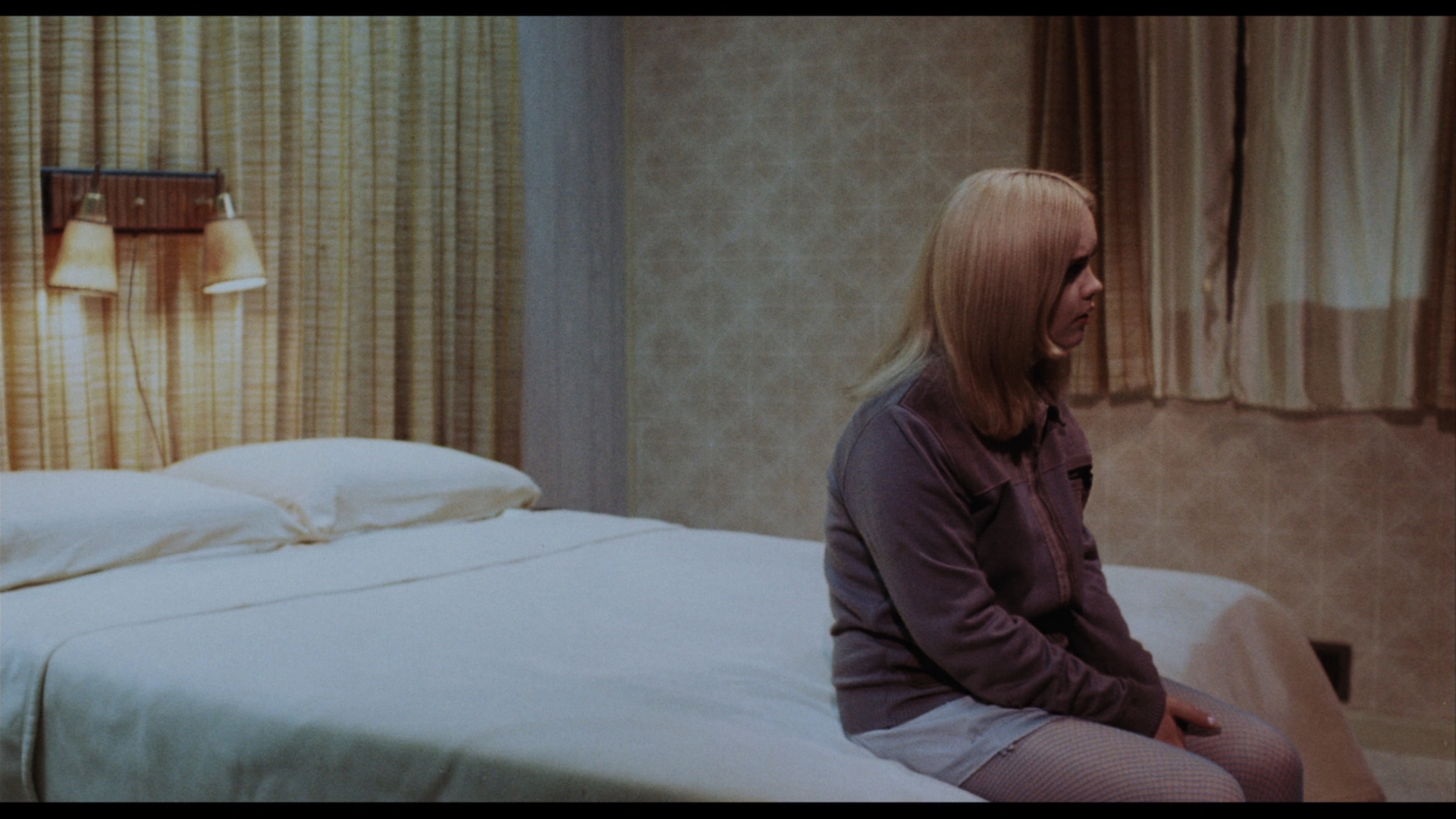
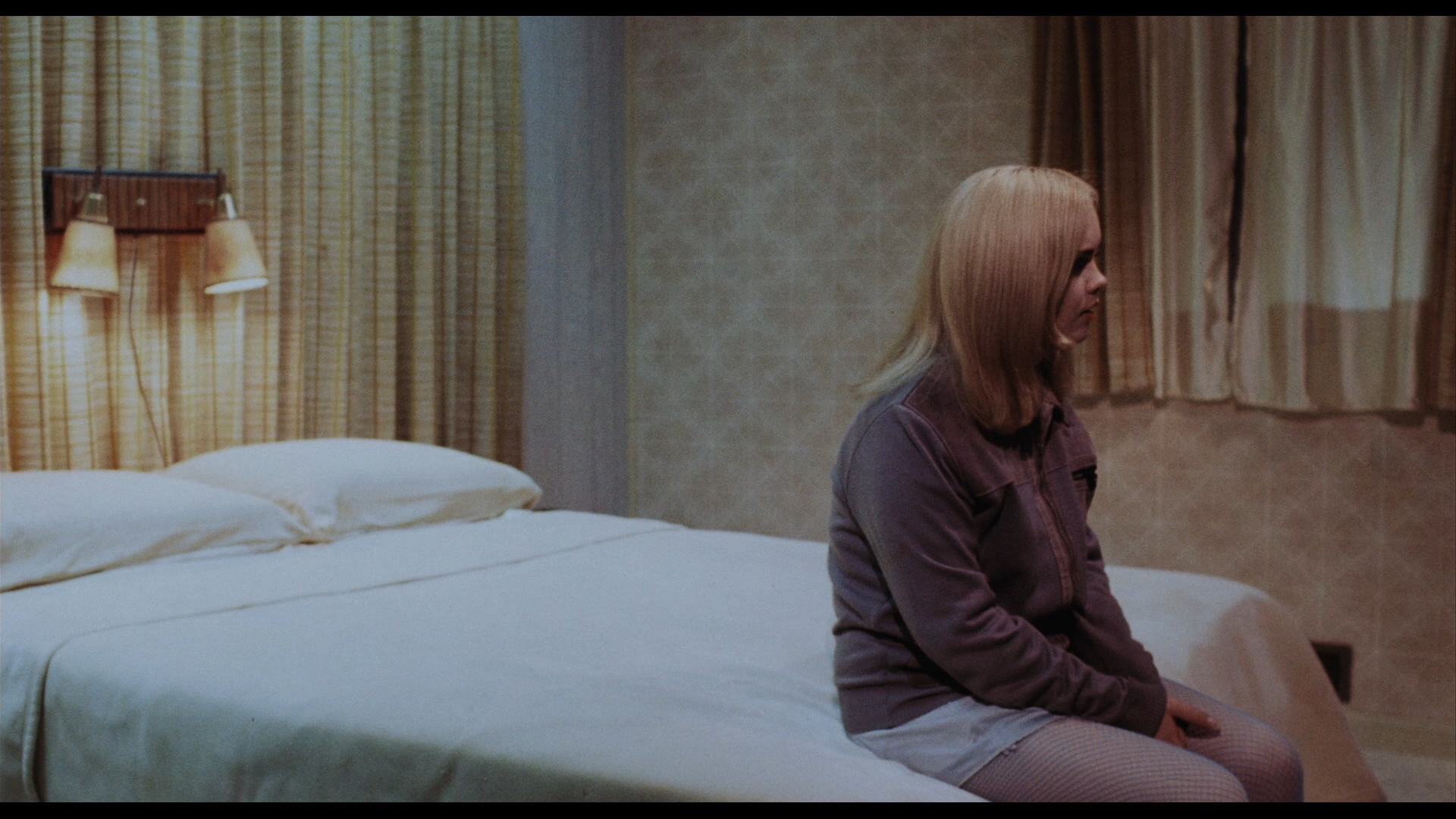
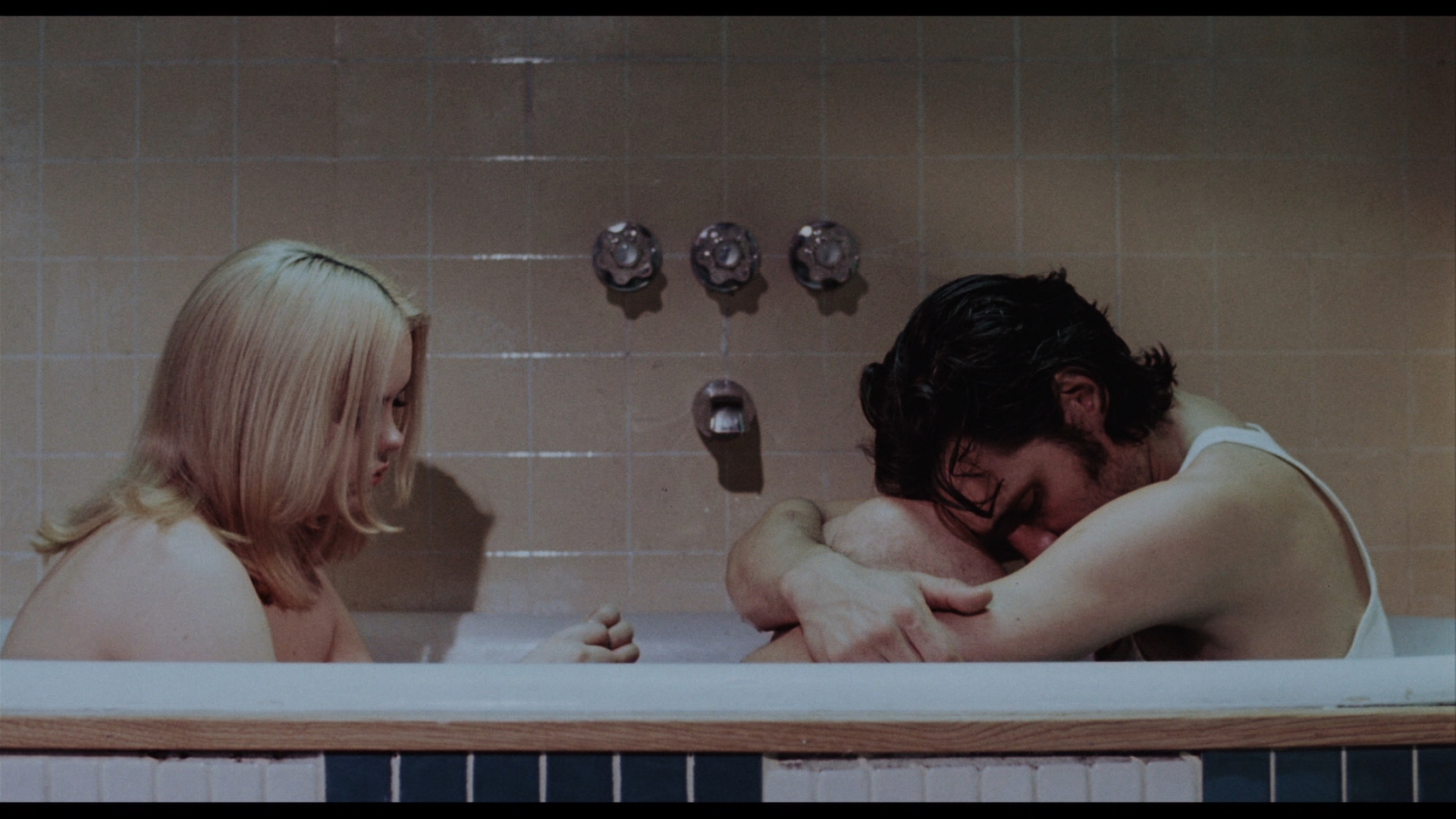
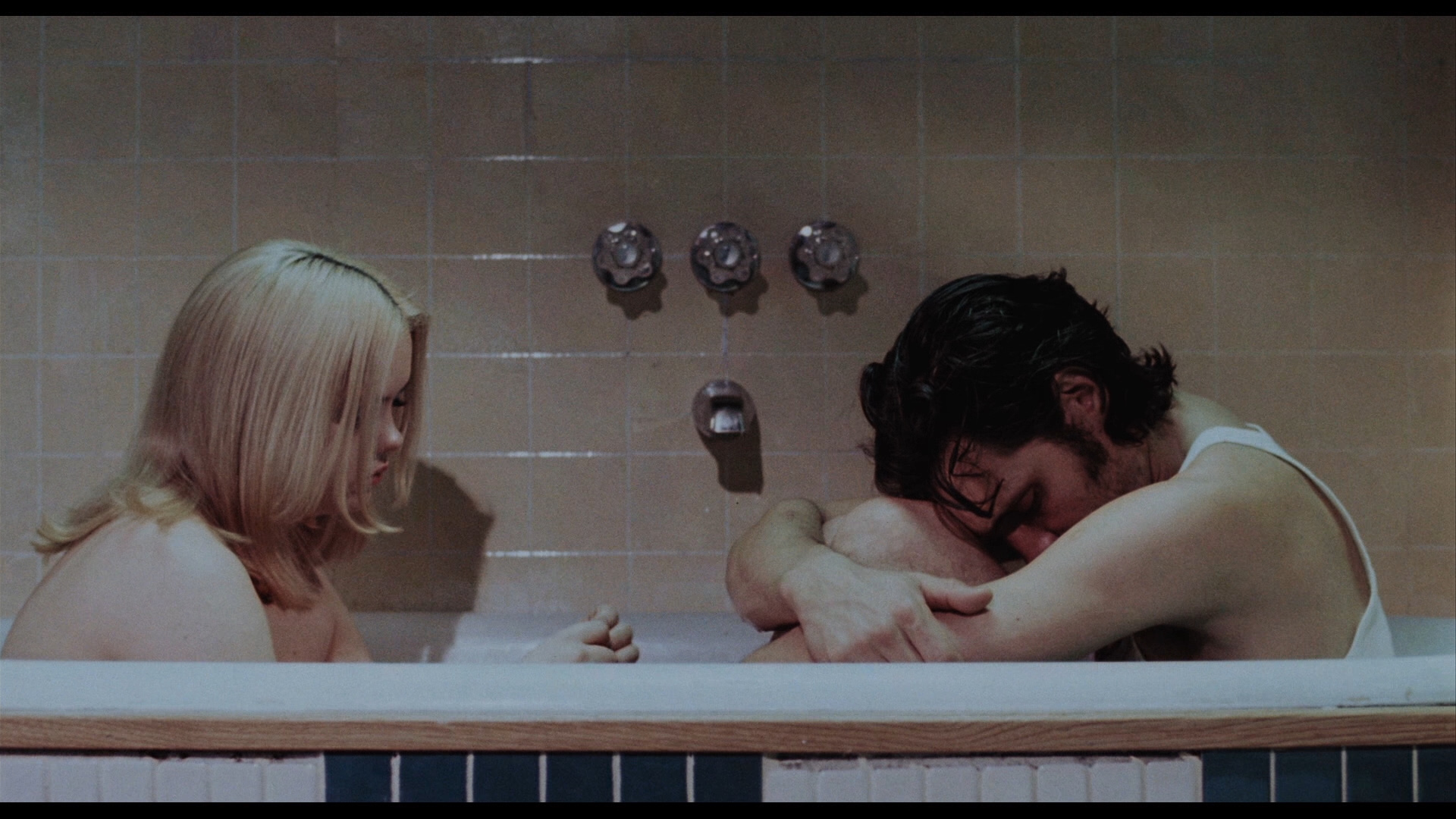
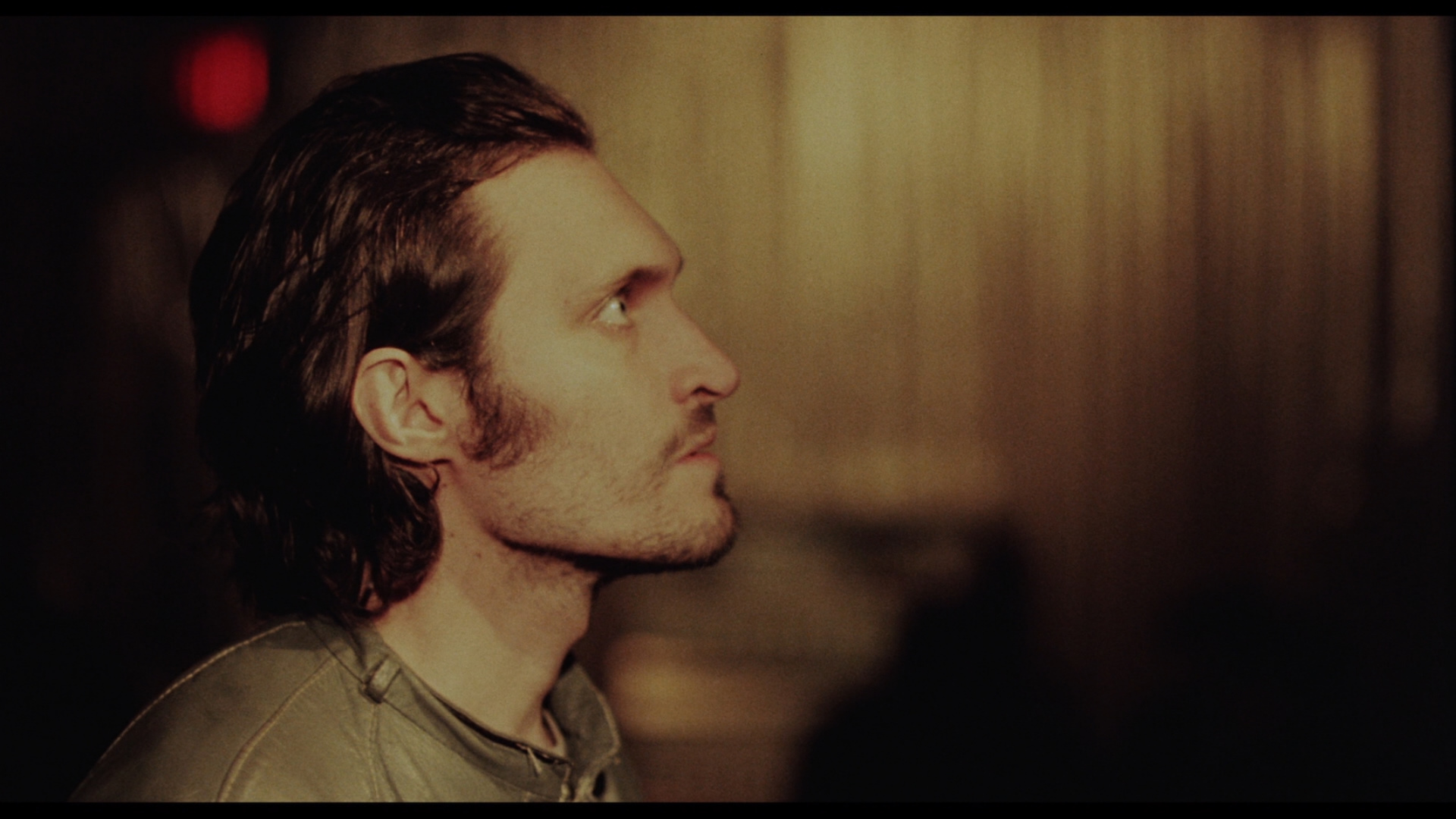
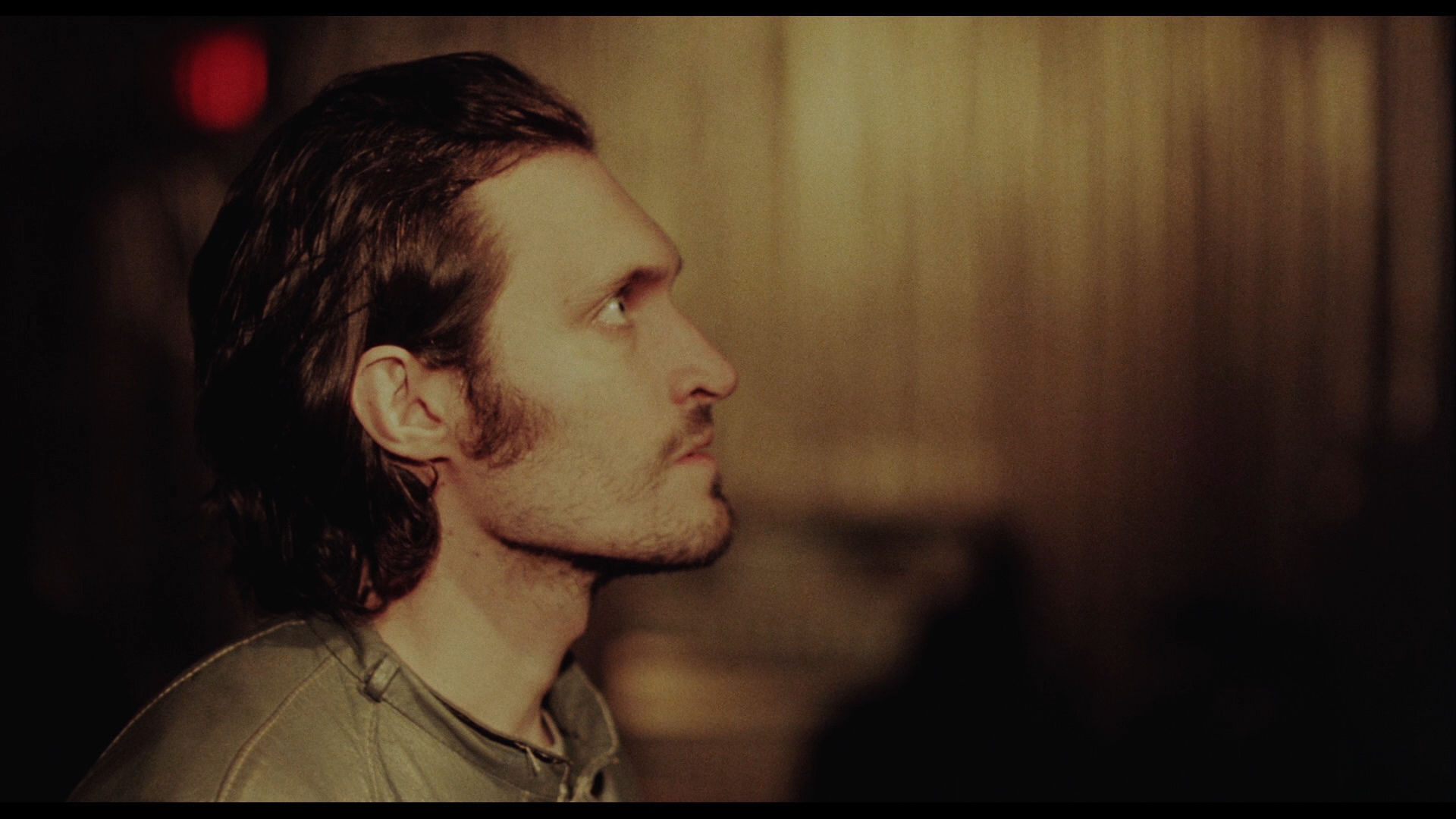
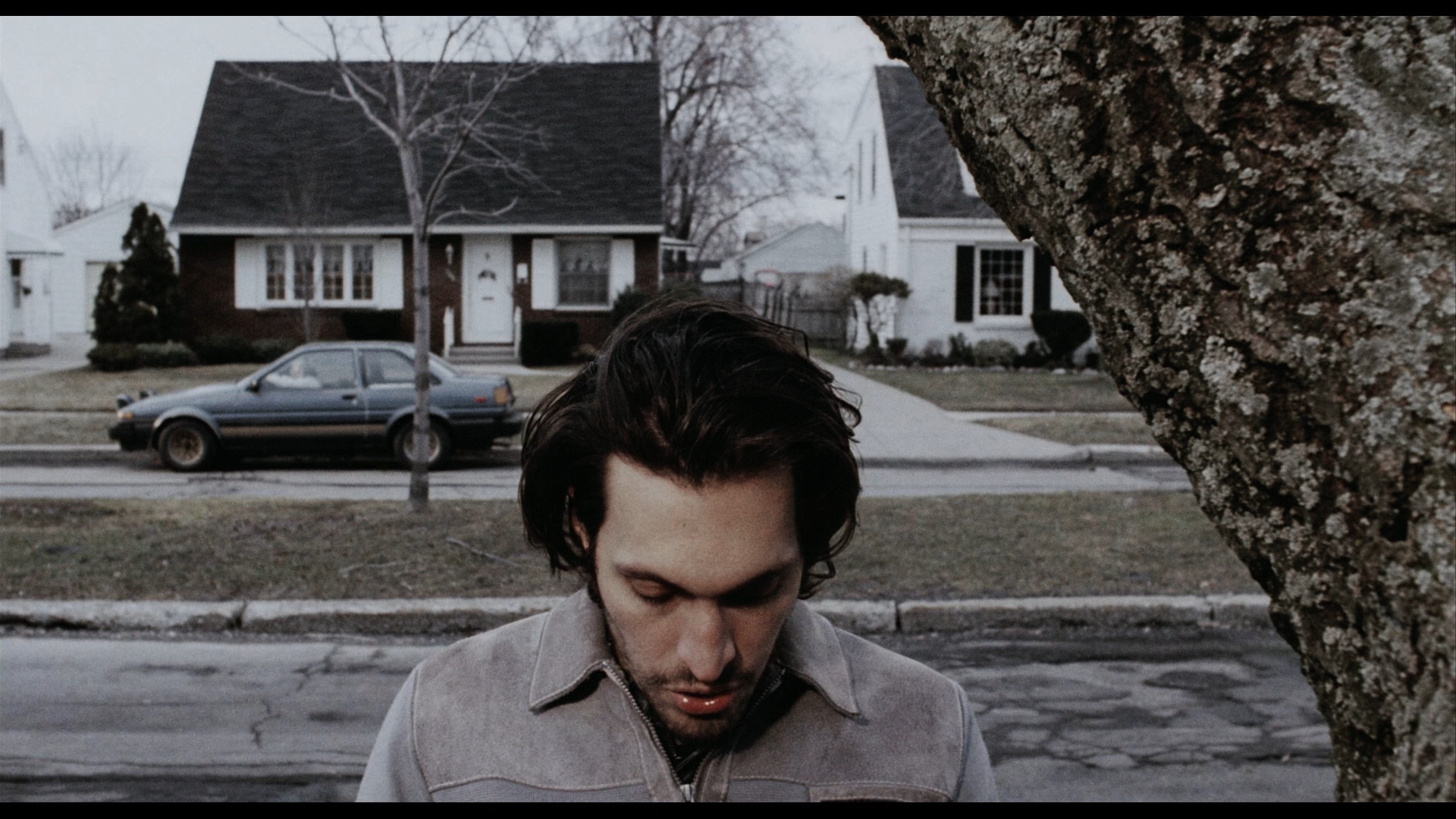
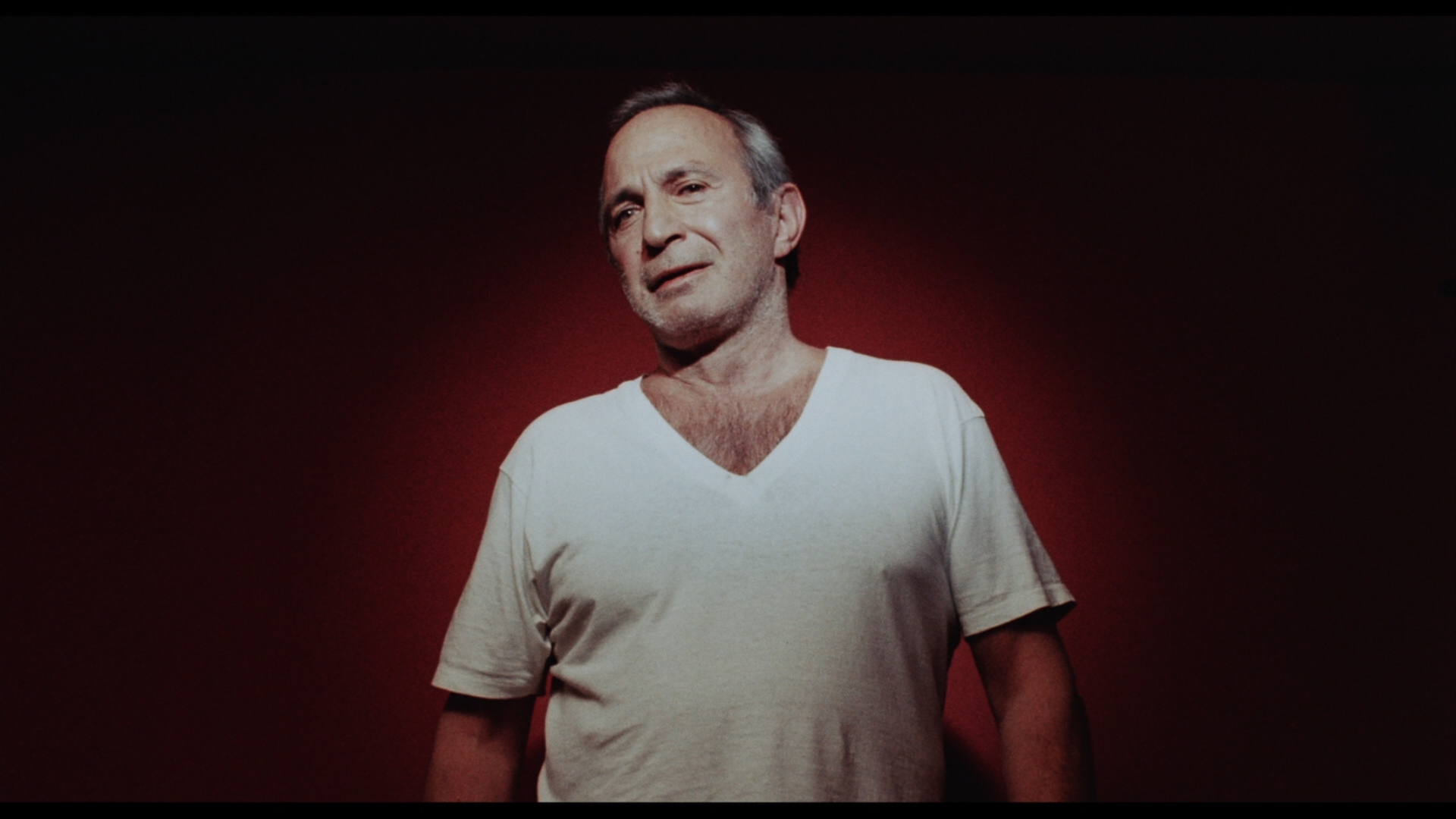
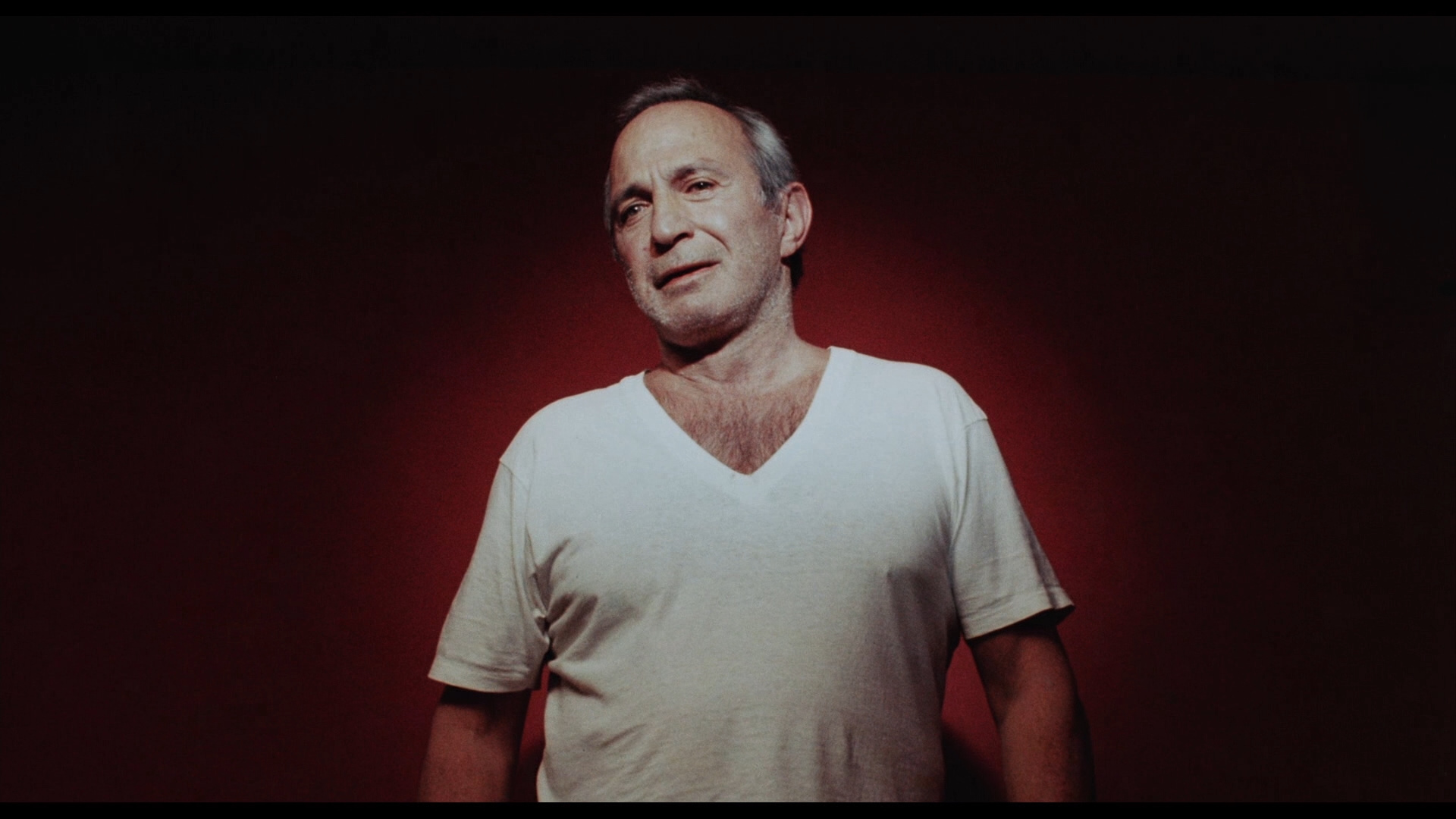
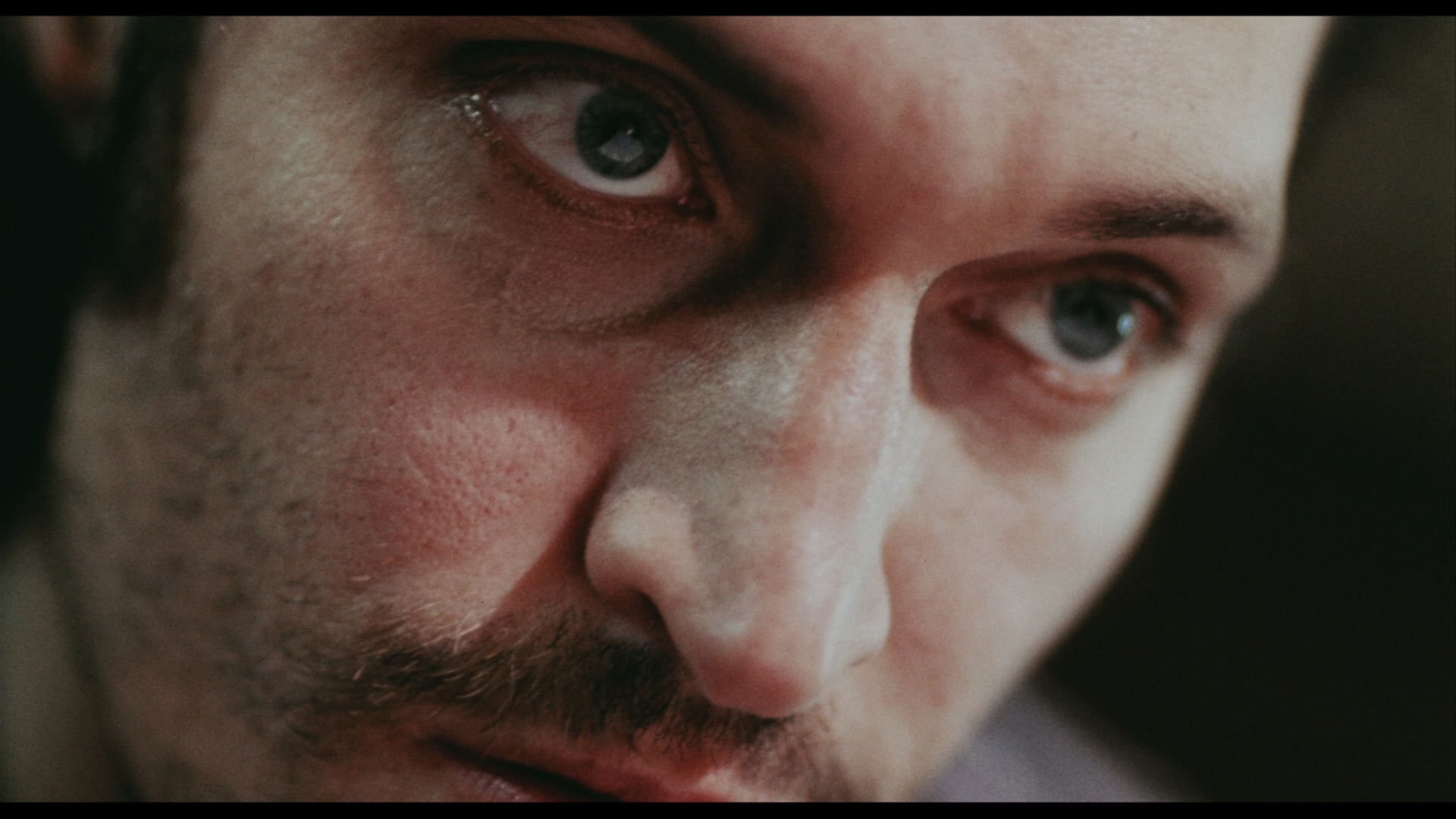
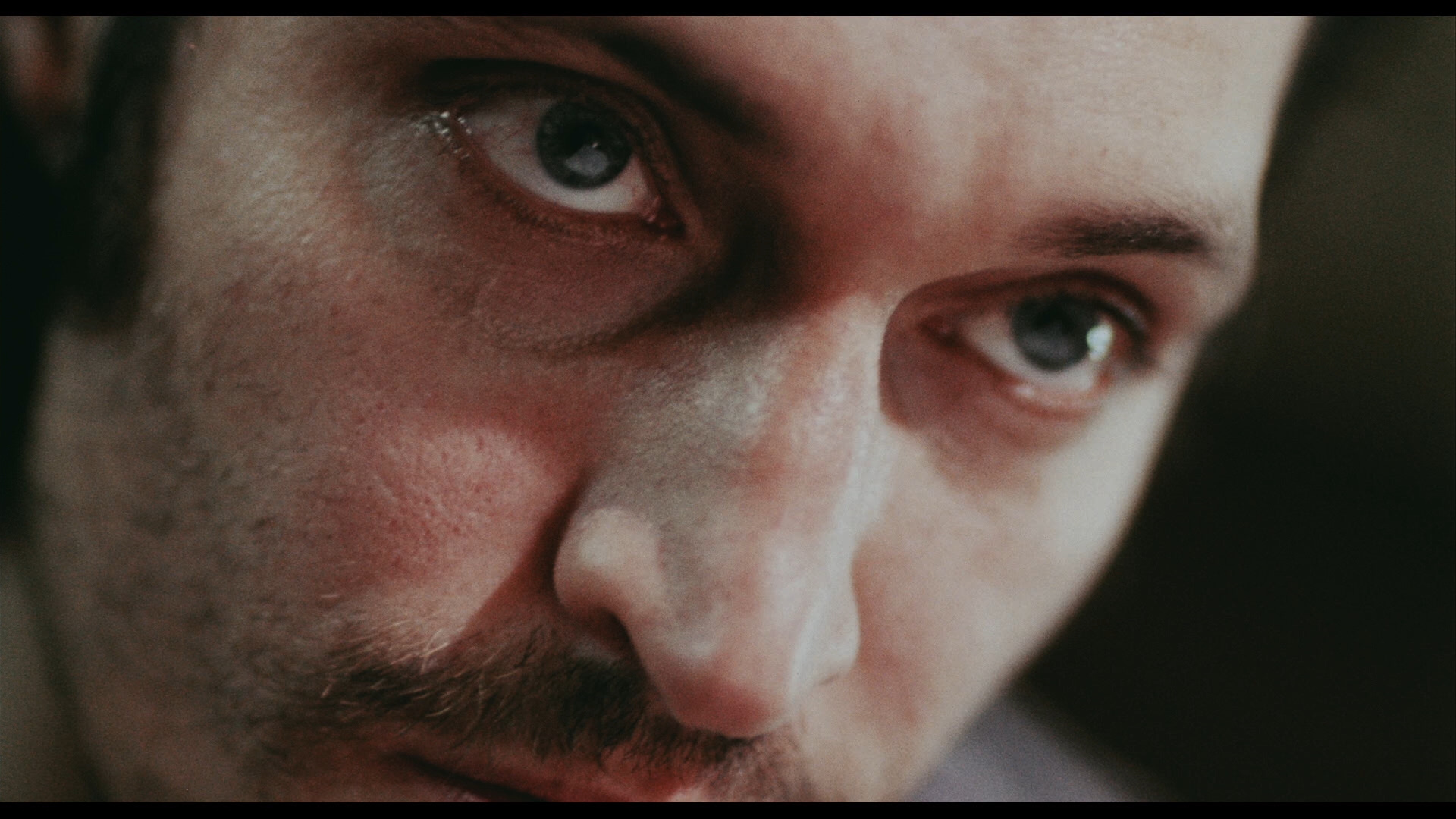
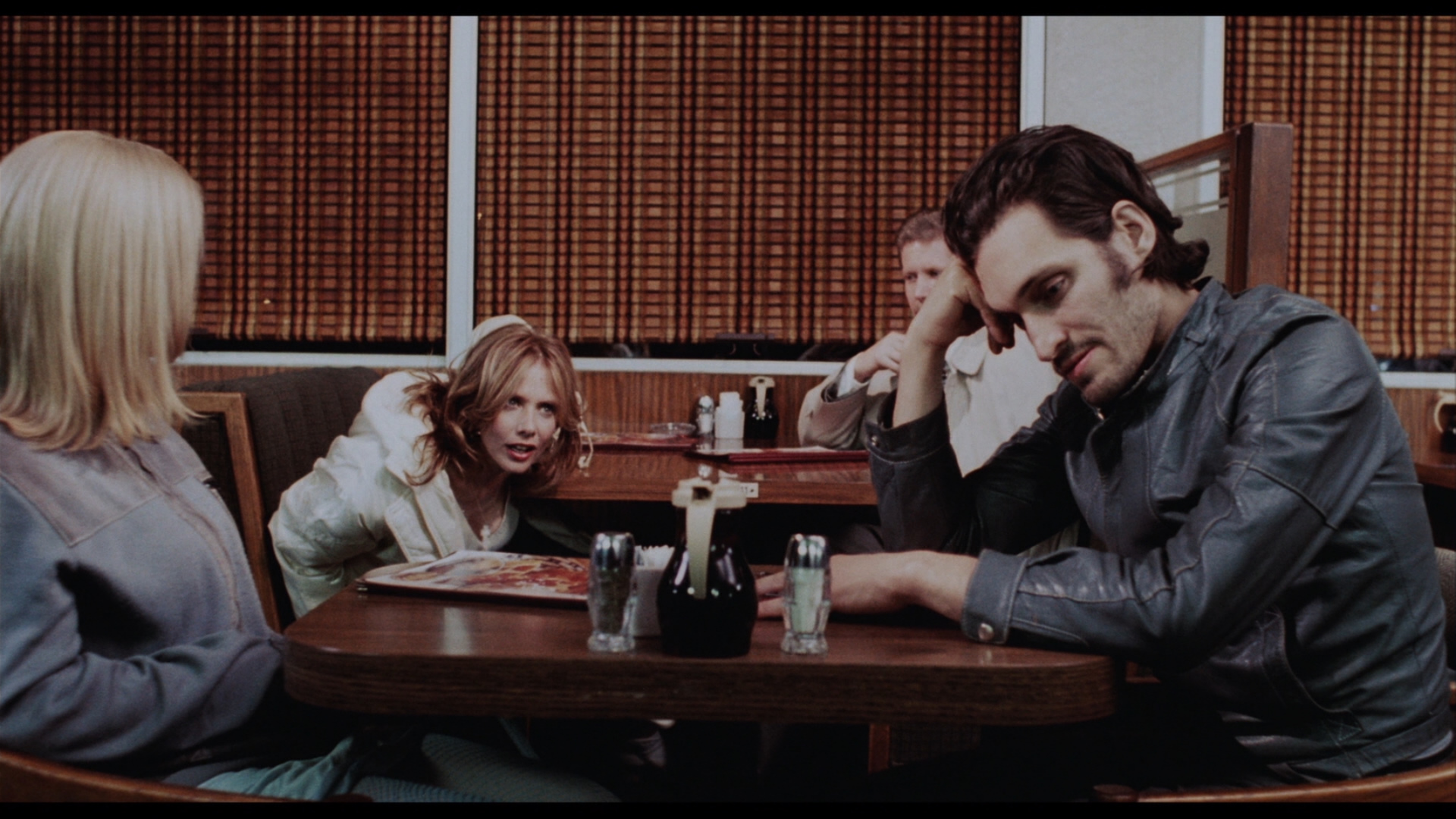
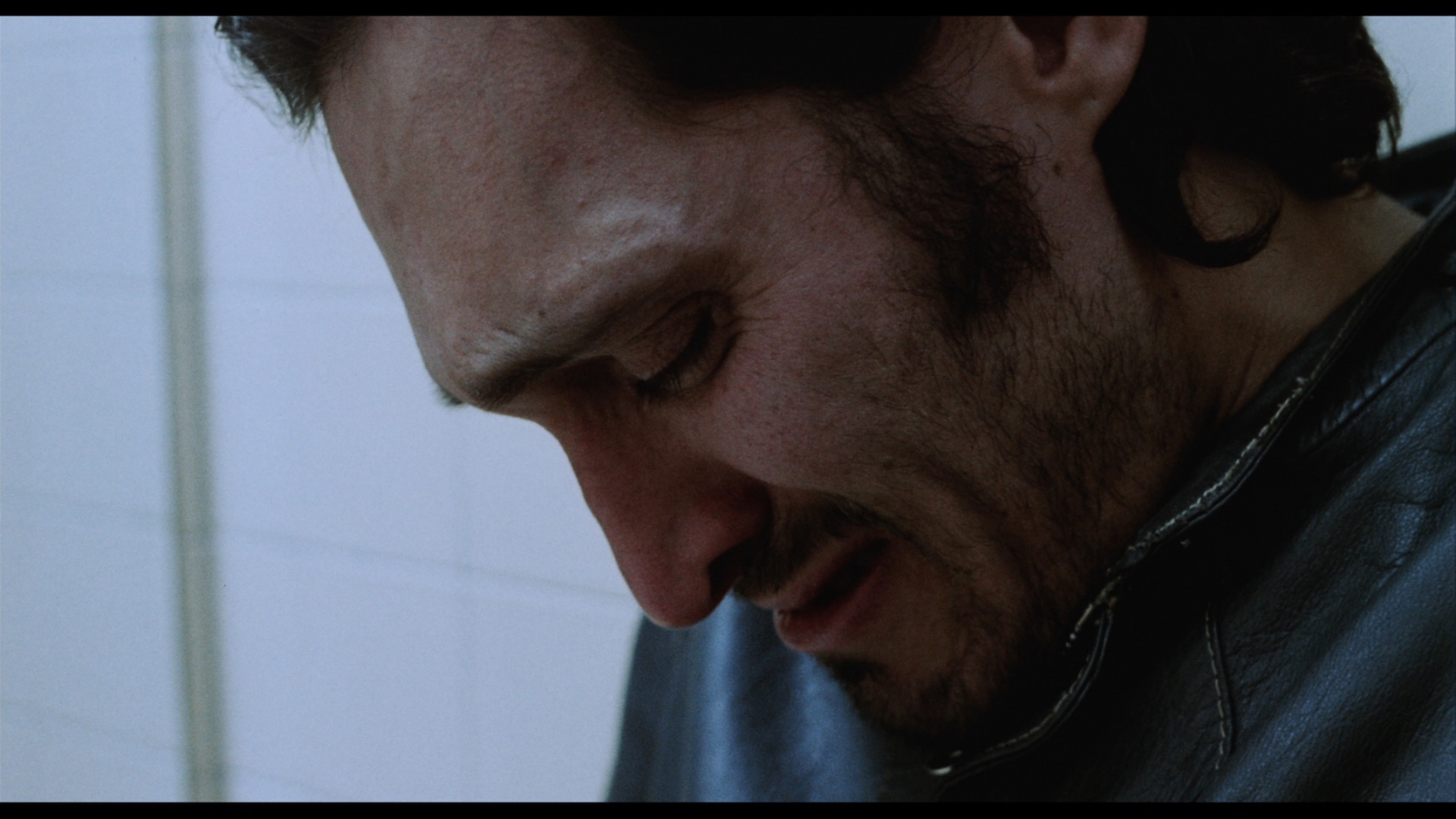
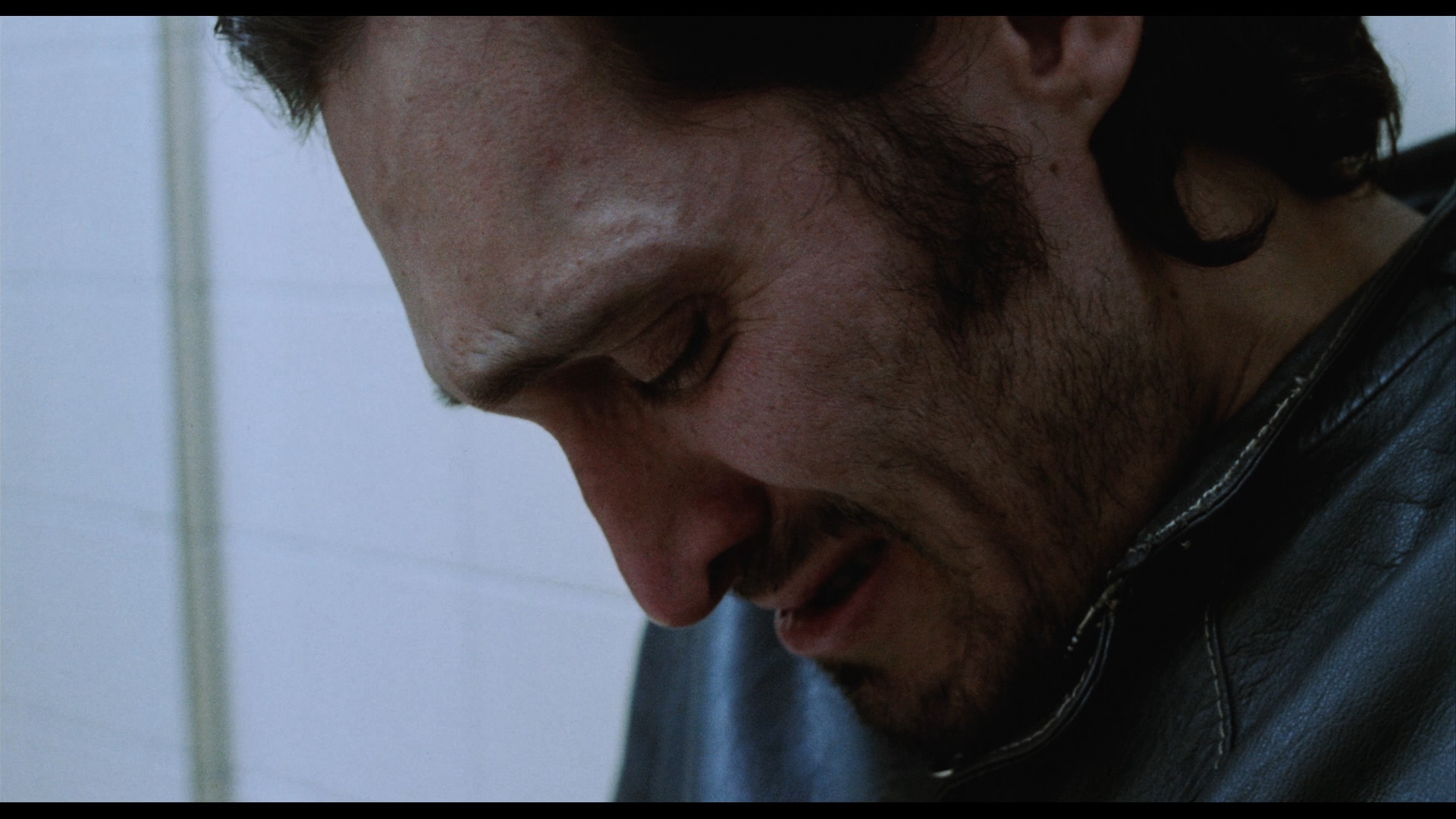
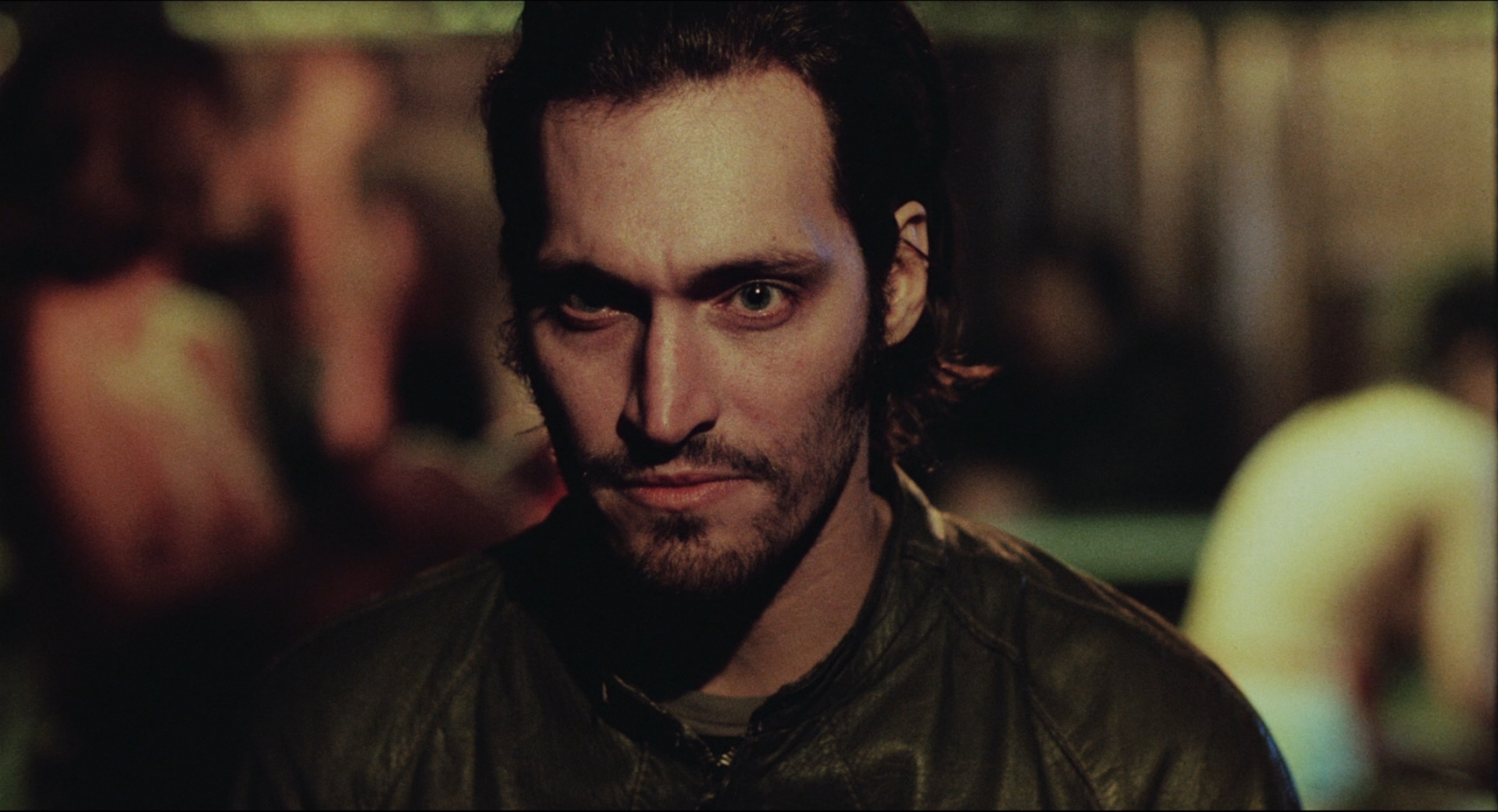
NOTE: The below Blu-ray captures were taken directly from the Blu-ray disc. ADDITION: Lions Gate 15th Anniversary - Region FREE - Blu-ray - January 2014': Lions Gate's single-layered transfer is no where near as robust as its Japanese counterpart but its seems flawless if not as rich an smooth as the TC Entertainment in-motion. This is about what I was anticipating - a bare-bones package - competent but nothing of substantial HD quality. It, obviously, improves upon the 2004 DVD in most visual areas. If you zoom in very close - minor artifacts are visible on the Lions Gate 1080P - but you'd have to be projecting to a very large screen for it to be an issue. Colors appear duplicated. The majority will find any video differences imperceptible.What the Lions Gate does have is a more substantial audio track than the Japanese Blu-ray. It is still 2.0 channel but seems to export superior depth in the soundtrack and at the bowling alley. We also get optional subtitles on the US edition (see sample below). It is Region FREE. The only extra is the 'original trailer' where Gallo takes a poke at Lions Gate. At the very reasonable price this Lions Gate Blu-ray still offers tremendous value, IMO. Buffalo 66 remains a absolute favorite film and we can endorse the US Blu-ray, for the money, although it screams for extras and a Gallo commentary. Perhaps one day... ***
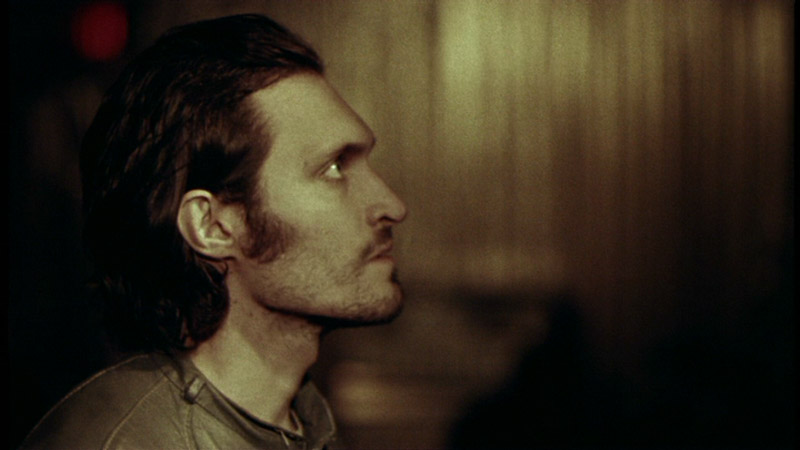
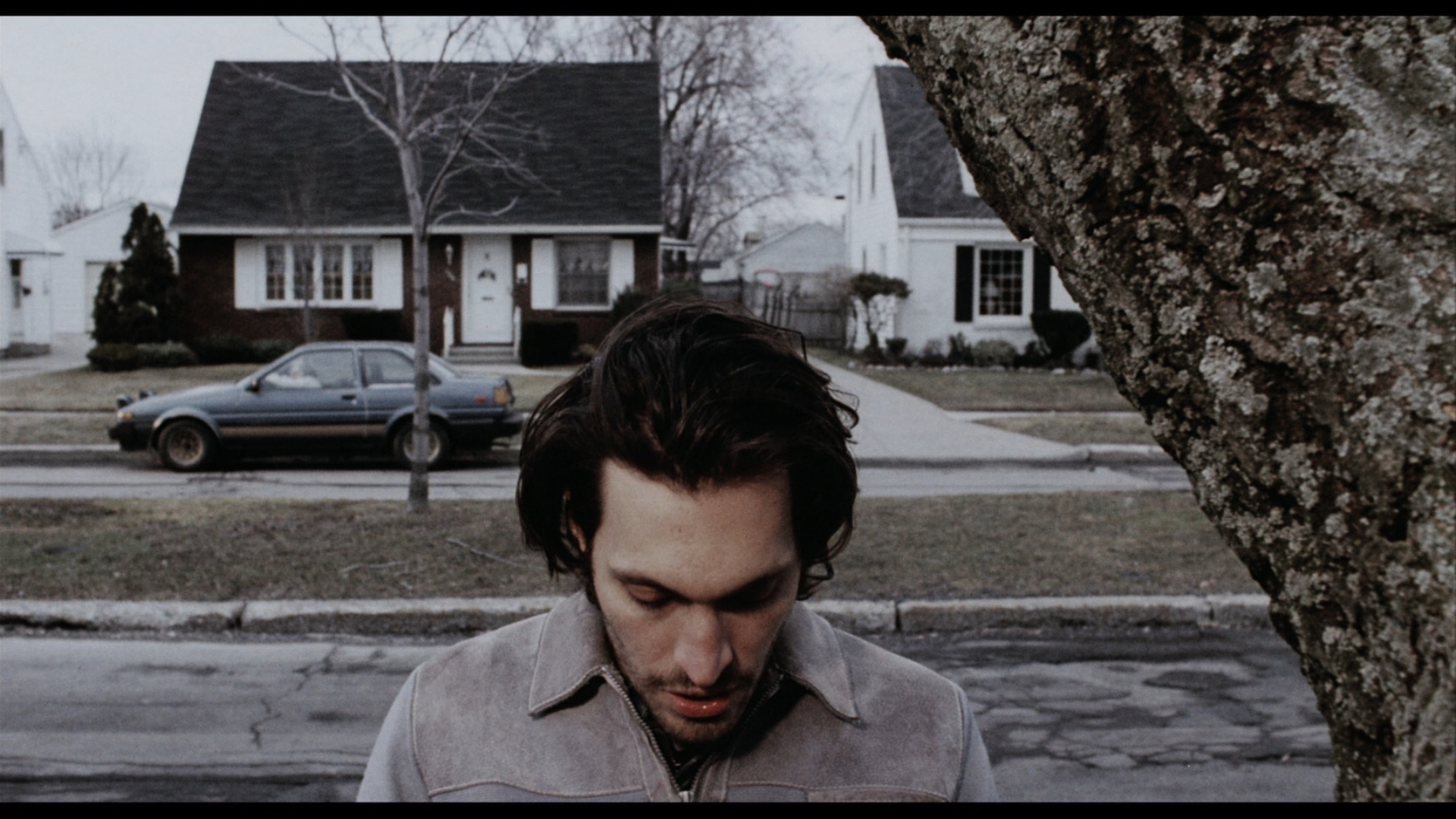
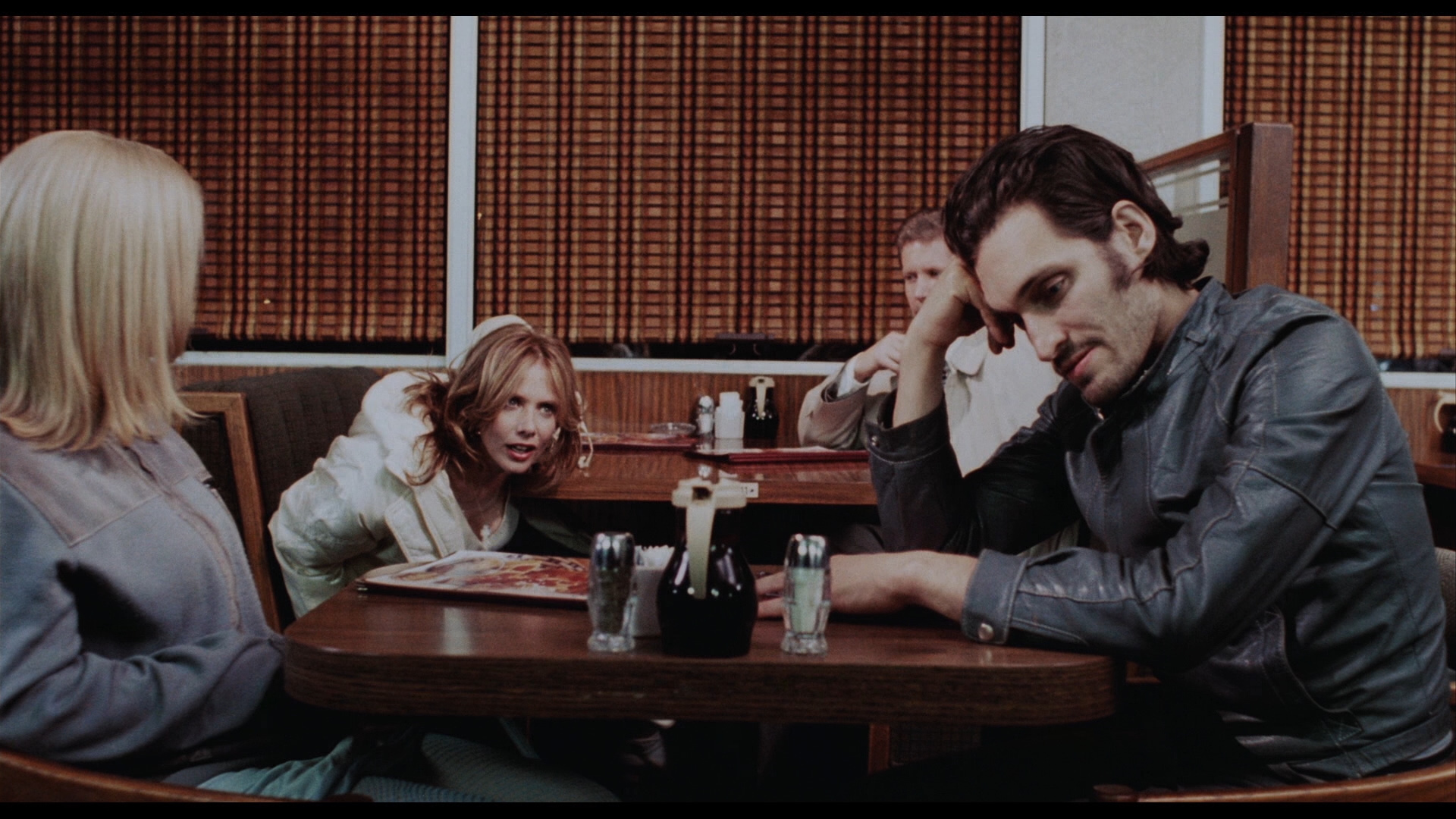
ADDITION: TC Entertainment - Region 'A' - Blu-ray - October 12': I'd say "Buffalo 66' is one of my favorite films and when I saw it was available on Blu-ray - I was ecstatic. What we can see from the matching screen captures is that the DVD was quite cropped - a lot on the side edges and a bit on the bottom of the frame. Gallo - was detailed about his use of the super-impositional framing because I can see now that the final flashback sequence was actually slightly pictureboxed - as intended! So, we get the film at the proper 1.85:1 aspect ratio for starters. This is dual-layered and seems is far more film-like with skin tones loosing their yellowish hues. Detail and contrast perk-up and there are some scenes with depth. Gallo utilized quite a few cinematographic techniques and they seem far more impacting and verité in the 1080P resolution.There are Dolby TrueHD 2.0 channel tracks for the original English and a Japanese DUB. The audio - which is a large part of certain sequences - is crisper from Johnny Mercer's "Fools Rush In (Where Angels Fear to Tread)" to Stan Getz to Yes' "Sweetness" . This is another area of advancement over the SD editions.Supplements consist of only a couple of trailers. I would have loved a commentary as found on the Japanese version of Gallo's The Brown Bunny (but never made it to North America). But maybe one day. I consider this a masterpiece and am thrilled to have it looking and sounding so much better via the new format. Fans of the film are strongly encouraged to pick this up - and it is region 'A' North American-friendly! ***
There seems to be a few variations of
the same DVD on the market. This release from Lion's Gate/Columbia Tristar
seems to be recently re-issued with no changes from it's previous release
a few years ago. Oddly enough this DVD starts with Universal logos even
though they're not mention anywhere on the packaging. There is a Universal
release in the U.S. that I assume has the exact same content as this
Canadian release.
There aren’t really any extras to speak of except for an excellent
trailer. Overall, a very solid A/V presentation but little more. |


 out
of
out
of
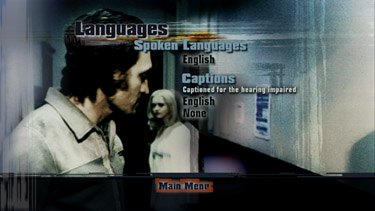
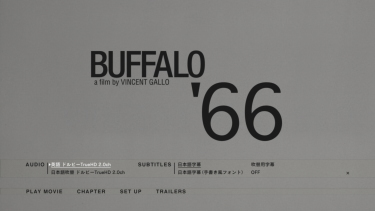
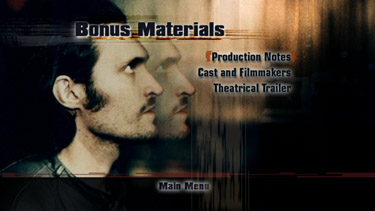
Menus
|
1)
LionsGate
- Region 1 - NTSC LEFT
2) TC Entertainment - Region 'A' -
Blu-ray
RIGHT
|
|
|
|
|
|
|
 |
 |
 |
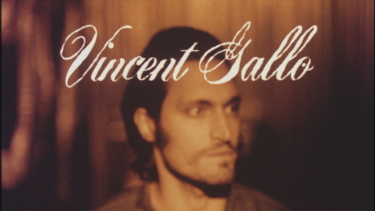 |
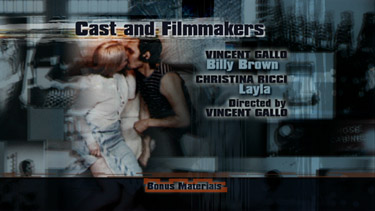 |
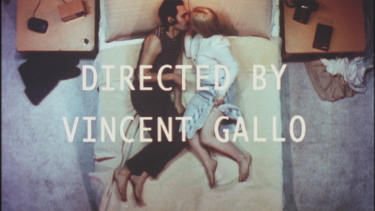 |
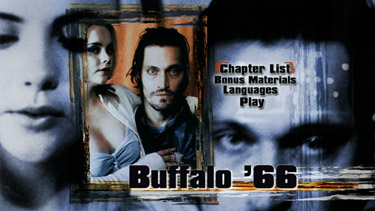
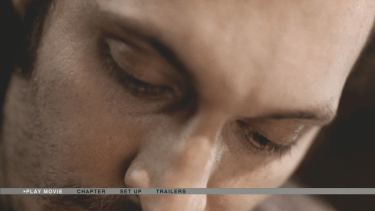
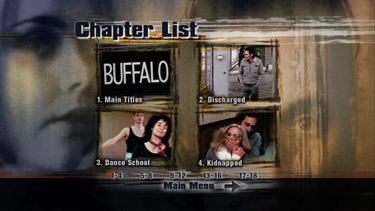
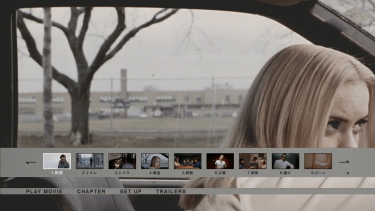
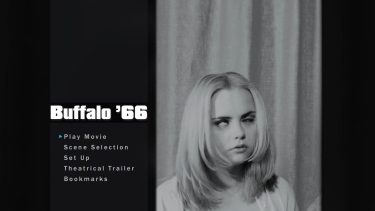
Lions Gate - Region FREE - Blu-ray
 |
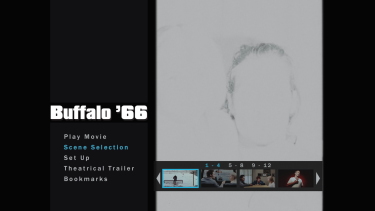 |
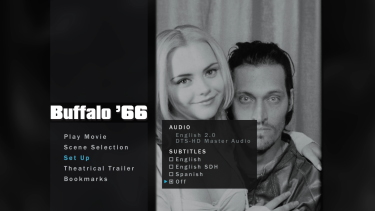 |
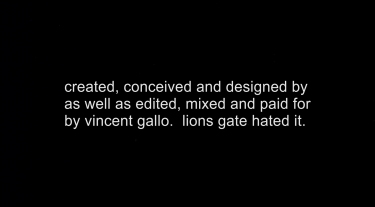 |
CLICK EACH BLU-RAY CAPTURE TO SEE ALL IMAGES IN FULL 1920X1080 RESOLUTION
Subtitle Sample on Lions Gate Blu-ray
 |
Screen Captures
|
1)
LionsGate
- Region 1 - NTSC TOP
2) TC Entertainment - Region 'A' -
Blu-ray
MIDDLE
3) Lions Gate -
Region FREE -
Blu-ray
BOTTOM
|
|
|
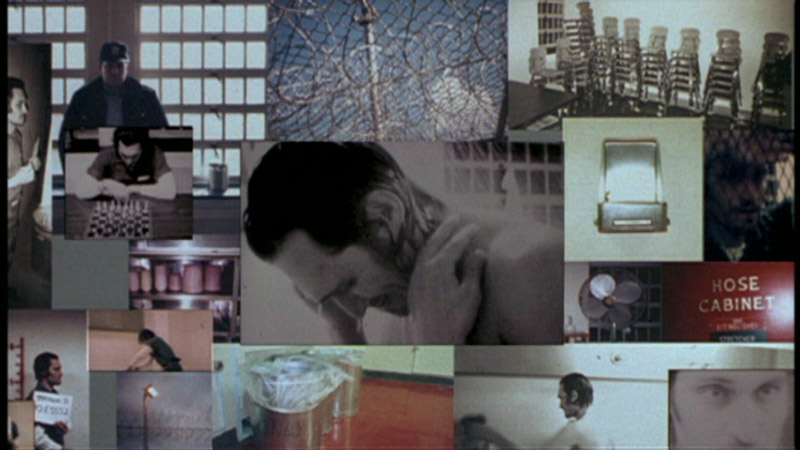
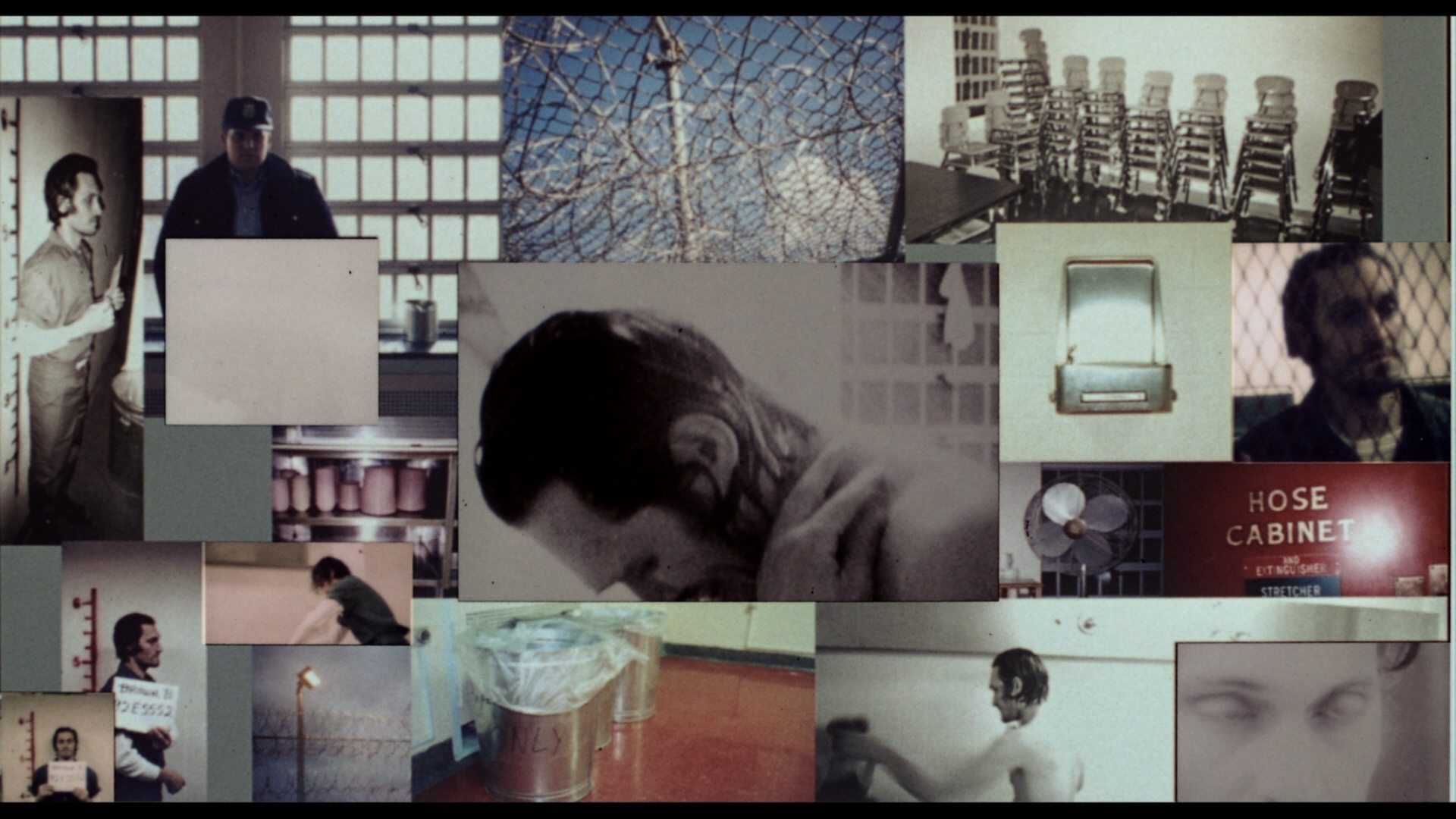 |
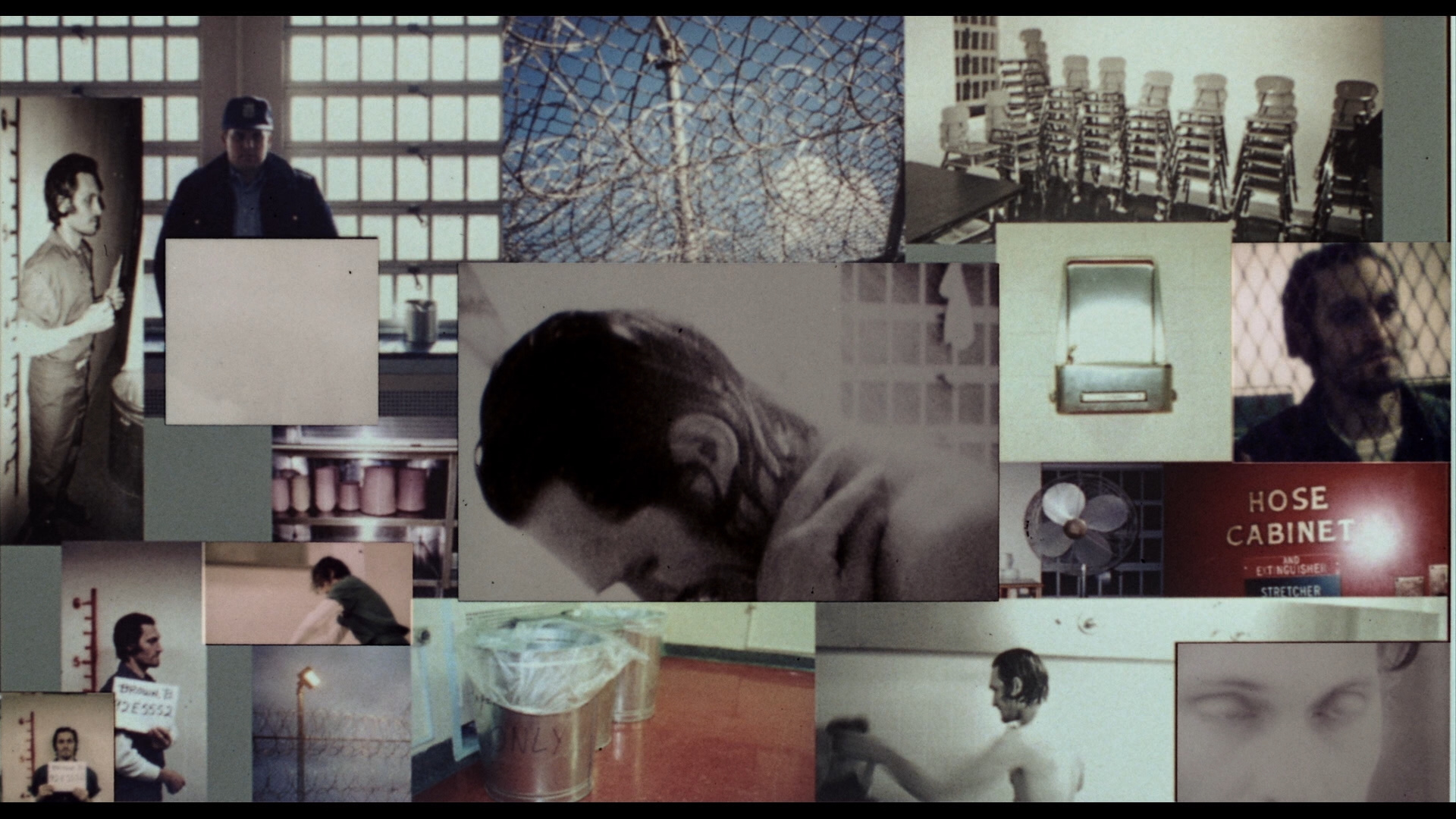 |
|
1)
LionsGate
- Region 1 - NTSC TOP
2) TC Entertainment - Region 'A' -
Blu-ray
MIDDLE
3) Lions Gate -
Region FREE -
Blu-ray
BOTTOM
|
|
|
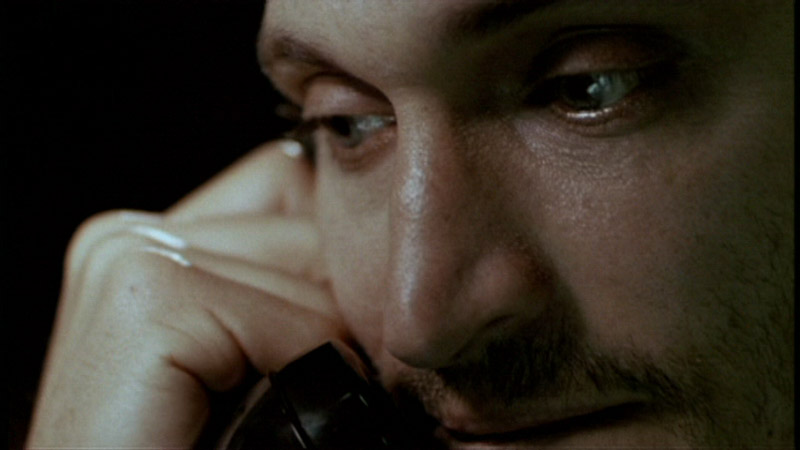
 |
 |
|
1)
LionsGate
- Region 1 - NTSC TOP
2) TC Entertainment - Region 'A' -
Blu-ray
MIDDLE
3) Lions Gate -
Region FREE -
Blu-ray
BOTTOM
|
|
|

 |
 |
|
1)
LionsGate
- Region 1 - NTSC TOP
2) TC Entertainment - Region 'A' -
Blu-ray
MIDDLE
3) Lions Gate -
Region FREE -
Blu-ray
BOTTOM
|
|
|
 |
 |
|
1)
LionsGate
- Region 1 - NTSC TOP
2) TC Entertainment - Region 'A' -
Blu-ray
MIDDLE
3) Lions Gate -
Region FREE -
Blu-ray
BOTTOM
|
|
|
 |
 |
|
1)
LionsGate
- Region 1 - NTSC TOP
2) TC Entertainment - Region 'A' -
Blu-ray
MIDDLE
3) Lions Gate -
Region FREE -
Blu-ray
BOTTOM
|
|
|
 |
 |
More Blu-ray Captures
|
1)
TC Entertainment - Region 'A' -
Blu-ray
TOP
2)
Lions Gate - Region FREE -
Blu-ray
BOTTOM
|
 |
 |
|
1)
TC Entertainment - Region 'A' -
Blu-ray
TOP
2)
Lions Gate - Region FREE -
Blu-ray
BOTTOM
|
 |
 |
|
1)
TC Entertainment - Region 'A' -
Blu-ray
TOP
2)
Lions Gate - Region FREE -
Blu-ray
BOTTOM
|
 |
 |
|
1)
TC Entertainment - Region 'A' -
Blu-ray
TOP
2)
Lions Gate - Region FREE -
Blu-ray
BOTTOM
|
 |
 |
|
1)
TC Entertainment - Region 'A' -
Blu-ray
TOP
2)
Lions Gate - Region FREE -
Blu-ray
BOTTOM
|
 |
 |
|
1)
TC Entertainment - Region 'A' -
Blu-ray
TOP
2)
Lions Gate - Region FREE -
Blu-ray
BOTTOM
|
 |
 |
|
1)
TC Entertainment - Region 'A' -
Blu-ray
TOP
2)
Lions Gate - Region FREE -
Blu-ray
BOTTOM
|
 |
 |
|
1)
TC Entertainment - Region 'A' -
Blu-ray
TOP
2)
Lions Gate - Region FREE -
Blu-ray
BOTTOM
|
 |
 |
| Box Cover |
CLICK to order from:
or duplicate U.S. release:
|
In North America:
Globally:
|
|
| Distribution |
Lion's Gate / Columbia Tristar Region 1 - NTSC |
TC Entertainment Region 'A' - Blu-ray |
Lions Gate (15th Anniversary) Region FREE - Blu-ray |
DONATIONS Keep DVDBeaver alive and advertisement free:
CLICK PayPal logo to donate!
|
Gary Tooze |
|
Many Thanks...
