|
An
enormous, sincere thank you to our phenomenal
Patreon
supporters! Your unshakable dedication is the bedrock that keeps DVDBeaver
going - we’d be lost without you. Did you know? Our patrons include a
director, writer, editor, and producer with honors like Academy Awards for
Best Picture and Best Director, a Pulitzer Prize-winning screenwriter, and a
Golden Globe-winning filmmaker, to name a few! Sadly, DVDBeaver has reached a breaking point where our existence hangs in the balance. We’re now reaching out to YOU with a plea for help. Please consider pitching in just a few dollars a month - think of it as the price of a coffee or some spare change - to keep us bringing you in-depth reviews, current calendar updates, and detailed comparisons. I’m am indebted to your generosity!
|






|
Search DVDBeaver |
S E A R C H D V D B e a v e r |

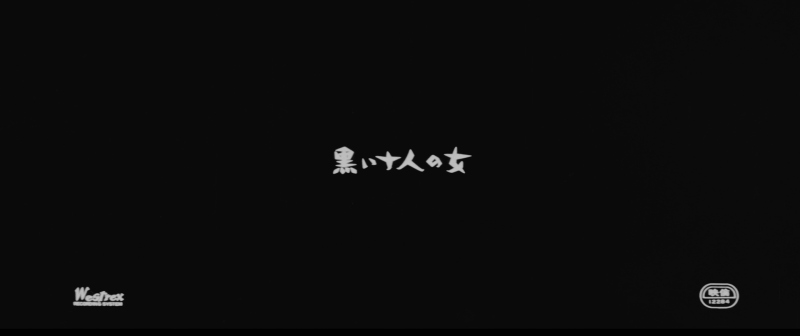
(aka "Kuroi jûnin no onna" or "Ten Dark Women" or "Ten Black Women" or "Ten Women In Black")
Directed by Kon Ichikawa
Japan 1961
|
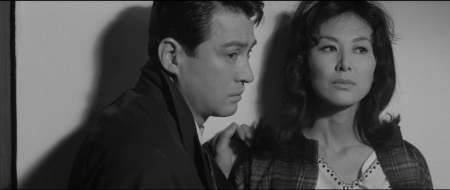
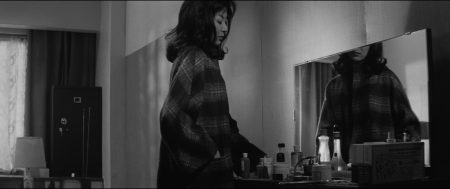
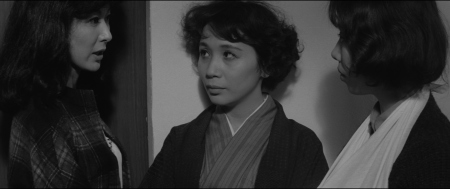
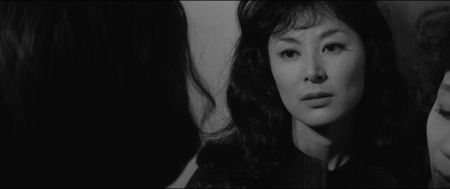
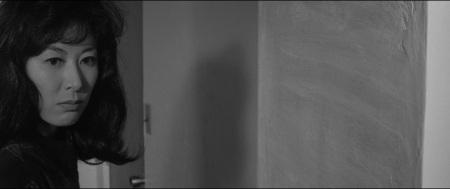
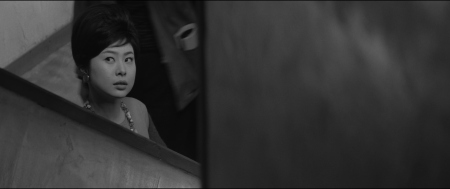
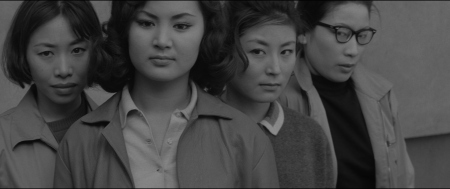
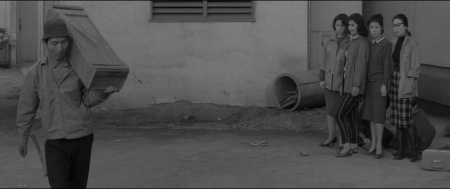
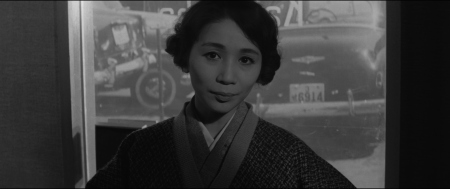
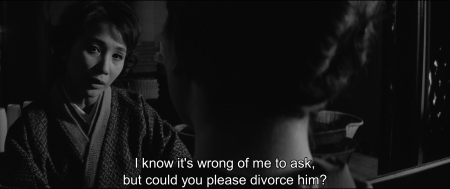
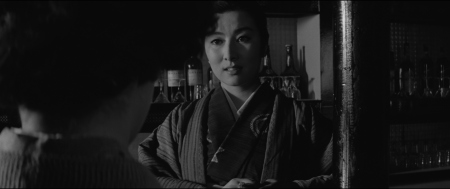
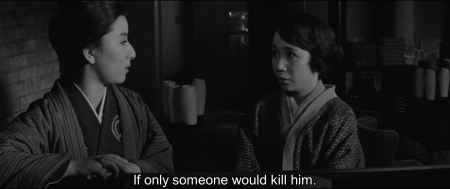
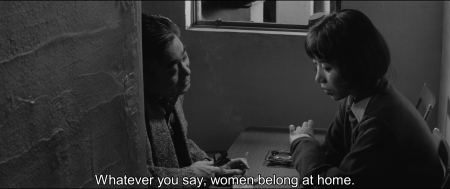
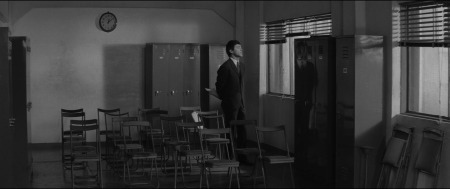
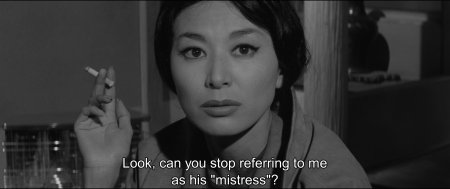
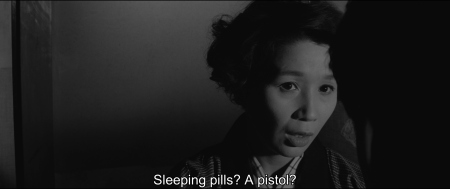
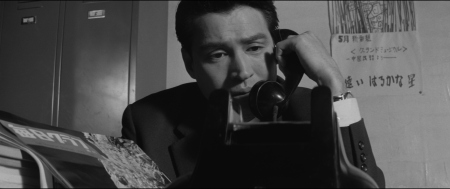
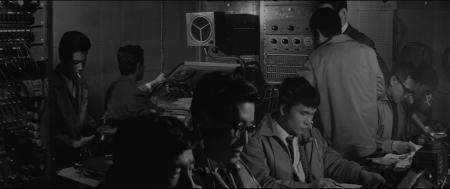
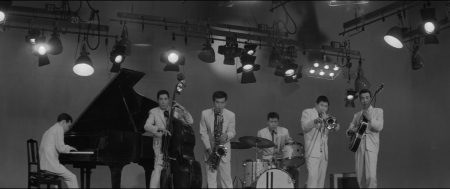
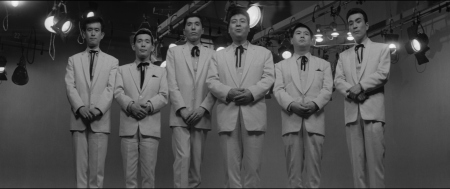
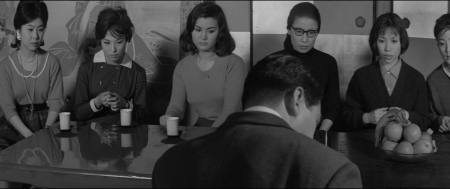
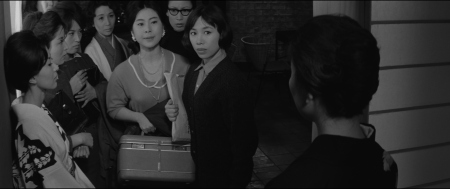
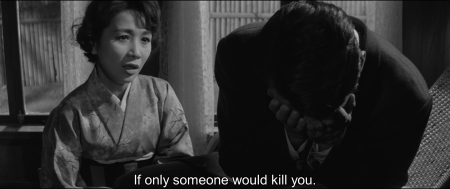
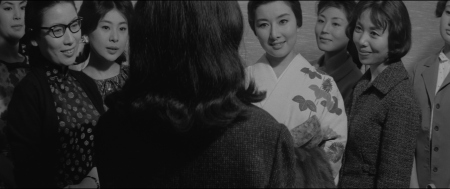
A television executive's nine mistresses conspire with his wife to have him killed. When Miwako, one of the mistresses, tells him of the plot, he decides to fake his own death in front of them all. The women panic and deny that they were ever serious about the murder, while Miwako even takes her own life in remorse. But when they find out the man is still alive, they put their original plan back into action. Given complete creative freedom, Kon Ichikawa made this dark satire that is one of the undiscovered gems of Japan's cinematic Golden Age. Featuring a stunning cast of Daiei studio divas and striking monochrome photography by Setsuo Kobayashi (Blind Beast), this is a merciless dissection of social relations and gender roles in affluent post-war Japan, scripted by Natto Wada. *** Made at Daiei in 1961, between the twin body-blows of Fires on the Plain and the international run that would culminate in Tokyo Olympiad, Kon Ichikawa's Ten Women in Black is the film that best demonstrates how cheerfully vicious he could be when handed a contemporary subject. The premise is pitched somewhere between farce and indictment: Matsuyoshi Kaze (Eiji Funakoshi), a television producer of no particular distinction and considerable appetite, is keeping nine mistresses in addition to his wife — and the ten women, having compared notes, resolve to murder him. Scripted by Natto Wada, Ichikawa's wife and most essential collaborator, the film treats that setup less as a thriller than as a widening social diagnosis, skewering the new television industry, the compromises of postwar marriage, and the peculiar impotence of a man who has arranged his life so that ten different people have grounds to want him dead. Setsuo Kobayashi shoots it in ravishing, high-contrast monochrome 'Scope — the black dresses against white walls, women arranged across the width of the frame like a jury — and Ichikawa's timing is closer to a Sixties caper comedy than to melodrama, right down to Hajime Hana and the Crazy Cats turning up as themselves and Yasushi Akutagawa's score needling the action along. The ensemble is a remarkable gathering of Daiei's leading actresses, Fujiko Yamamoto as the wife and Keiko Kishi, Kyōko Kishida and Mariko Miyagi among the conspirators, with a young Jūzō Itami two decades from his own directing career. Long one of the harder Ichikawa titles to see outside Japan, it arrives from Radiance Films in a 4K restoration by Kadokawa, presented at 2.39:1 with uncompressed mono and a new subtitle translation. |
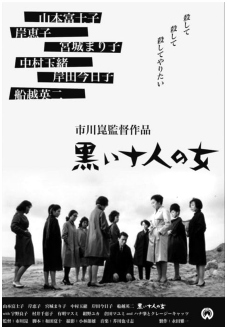
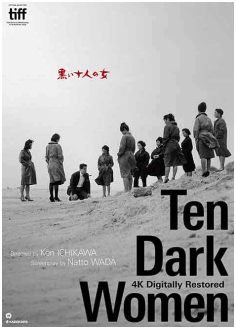
Posters
 |
 |
Theatrical Release: May 3rd, 1961

Review: Radiance - Region FREE - Blu-ray
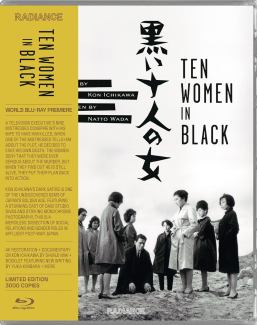
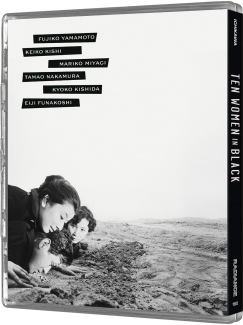
| Box Cover |
|
CLICK to order from:
BONUS CAPTURES:
|
| Distribution | Radiance - Region FREE - Blu-ray | |
| Runtime | 1:42:51.623 | |
| Video |
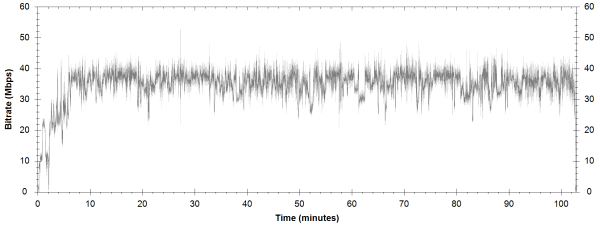
2.3 9:1 1080P Dual-layered Blu-rayDisc Size: 45,594,026,762 bytesFeature: 29,912,429,952 bytes Video Bitrate: 34. 69 MbpsCodec: MPEG-4 AVC Video |
|
|
NOTE: The Vertical axis represents the bits transferred per second. The Horizontal is the time in minutes. |
||
| Bitrate Blu-ray: |
|
|
| Audio |
LPCM Audio Japanese 1152 kbps 1.0 / 48 kHz / 1152 kbps / 24-bit |
|
| Subtitles | English, None | |
| Features |
Release Information: Studio: Radiance
2.3 9:1 1080P Dual-layered Blu-rayDisc Size: 45,594,026,762 bytes Feature: 29,912,429,952 bytes Video Bitrate: 34. 69 MbpsCodec: MPEG-4 AVC Video
Edition Details:
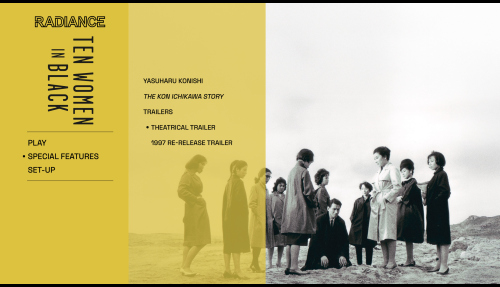
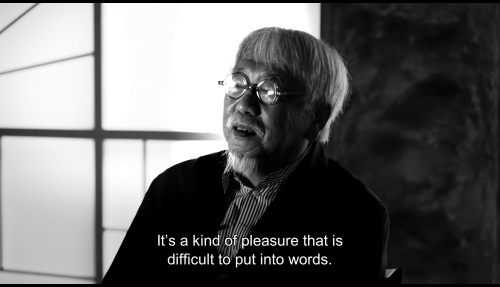
• Appreciation by Yasuharu Konishi (20:45)
Transparent Blu-ray Case Chapters 12 |
|



| Comments: |
NOTE:
The below
Blu-ray
captures were taken directly from the
Blu-ray
disc.
NOTE: We
have added 52 more large resolution Blu-ray
captures (in lossless PNG format) for DVDBeaver Patrons
HERE
On their
Blu-ray,
Radiance use a linear PCM mono track (24-bit) in the original Japanese
language. This is a soundtrack built on the contrast between density and
vacancy - Kenichi Nishii's mix keeps the television studio environments
in a state of constant electrical chatter and then drops the domestic
scenes into near-total silence, and any attempt at expansion or
artificial widening would flatten exactly the effect Ichikawa is after.
Retaining the original mono uncompressed preserves the abruptness of
those transitions, which is where a good deal of the film's unease is
actually generated. The score is by Yasushi Akutagawa (Fires
on the Plain,
An Actor's Revenge,)- a serious concert composer, son of the
novelist Ryūnosuke
Akutagawa, and previously heard on
Gate of Hell - and it is a brass-forward, jazz-inflected
crime-picture idiom deliberately mismatched to the domestic farce on
screen. Mono of this vintage typically shows its limits in exactly that
register: brass stabs are where you'll hear any thinness, distortion or
age-related hardness in the elements, so that's the material to
audition. Dialogue is clean and centered; the diegetic passages,
including the
Hajime Hana and the Crazy Cats performance sourced as
broadcast-style material and will legitimately sound more constrained
than the scored cues. Radiance
offer optional English subtitles on their Region FREE
Blu-ray.
The
Radiance
Blu-ray
has assembled a strong and thoughtful selection of extras. This is where
the release justifies itself, and the headline item is substantial by
any measure: 2006's "The Kon Ichikawa Story" (1:18:32, HD,)
Shunji Iwai's feature-length documentary on the director. That is a
genuine coup for a single-film release - a full-length portrait of
Ichikawa by a significant filmmaker in his own right, extending far past
the boundaries of the feature it accompanies and effectively functioning
as the primer on Ichikawa's career that the film's marginal position in
his canon otherwise denies it. Anyone coming to Ten Women in Black
cold gets the whole context in one sitting. Alongside it is a new
20-minute appreciation by
Yasuharu Konishi, founding member of
Pizzicato Five, English-subtitled. On paper an odd choice; in
practice an inspired one. Shibuya-kei as a movement was built
substantially on the graphic and musical vocabulary of exactly this
period of Japanese pop modernism - the monochrome 'Scope design sense,
the jazz-lounge scoring, the whole 1961 urban-cool surface that Ichikawa
is simultaneously deploying and satirizing here. Having that lineage
traced by a musician who worked from it is more illuminating than a
conventional academic commentary would have been, and it addresses the
film's sound and design directly rather than treating it as a footnote
to the plot. Two trailers are included - the original theatrical trailer
and the 1997 re-release trailer, both HD - and the 1997 piece is worth
attention as a document of the film's rediscovery. Print material
comprises a booklet with a new essay by
Yuka Kimbara,
plus a reversible sleeve and removable obi strip, in Scanavo packaging,
limited to 3,000 copies.
Ten Women In Black has been one of the more frustrating gaps in
Kon Ichikawa's availability outside Japan - a genuinely peculiar,
formally adventurous 1961 satire from the middle of his strongest
decade, and one that has never had the circulation of
Fires on the Plain or
An Actor's Revenge despite arguably having more to say about the
world it was made in. Radiance have treated it as a major title rather
than a curio. The ensemble is one of the more remarkable gatherings of
Daiei-era talent in any Ichikawa picture. Fujiko Yamamoto (The
Demon of Mount Oe), as the wife, was the studio's reigning star
- winner of the inaugural
Miss Nippon in 1950, more than a hundred films in a decade, and
lately seen for Ozu in
Equinox Flower - cast here against the serene, iconic beauty
that had made her, as the one woman in the film who declines to compete
for her husband; two years later
Daiei chief Masaichi Nagata, who produced this as well as
Rashomon +
Ugetsu, would refuse her a new contract, dismiss her and use the
Five-Company Agreement to blacklist her from every rival studio, ending
her film career at 31. Keiko Kishi, playing the diva actress, was by
then the most internationally connected performer in Japanese cinema,
co-founder of the independent Ninjin Club and married to the French
director Yves Ciampi, with
Kwaidan and
The Makioka Sisters still ahead of her. Kyōko Kishida - daughter
of the playwright
Kunio Kishida, and Mishima's Salome on stage - was three years
from the twin erotic landmarks of
Woman in the Dunes and
Manji, and the
watchful, faintly predatory intelligence that made those performances is
already fully formed here.
Mariko Miyagi, a hit recording artist and
Kōhaku Uta Gassen regular, plays the meekest of the ten and
turns out to be the coldest; she would later found Nemunoki Gakuen, the
first school of its kind in Japan for disabled children, and run it for
fifty years. And Tamao Nakamura (The
Human Condition III: A Soldier's Prayer,) daughter of the kabuki
actor Nakamura Ganjirō II (The
Lower Depths,
When a Woman Ascends the Stairs,
The Pornographers,) was a year away from marrying Shintarō Katsu
(Zatoichi
and
Hanzo the Razor fame) and six decades away from a death - in
June 2026 - that makes this release land as an unintended memorial. The
Kadokawa restoration on
Blu-ray
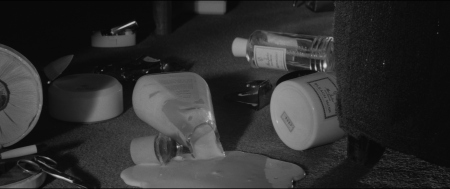
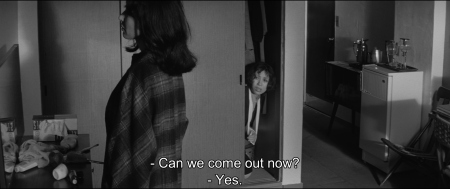
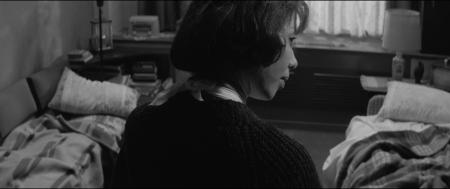
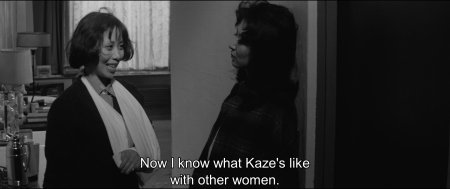
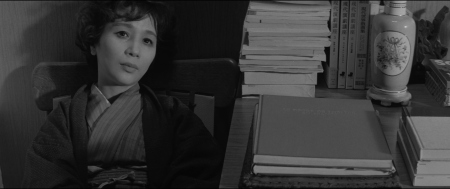
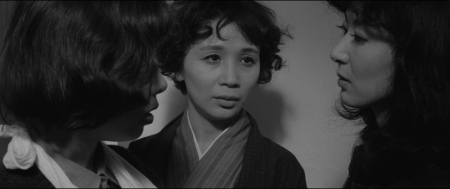
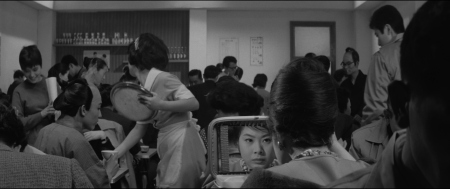
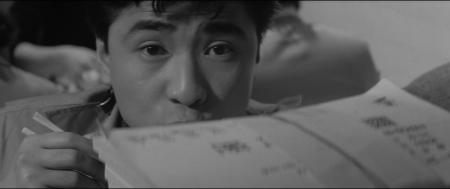
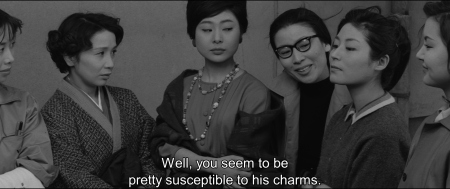
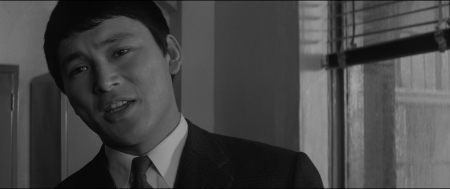
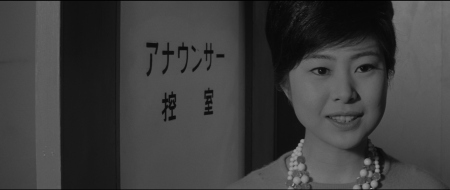
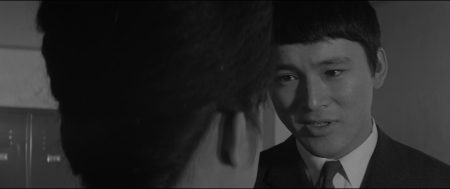
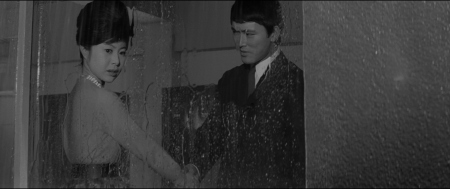
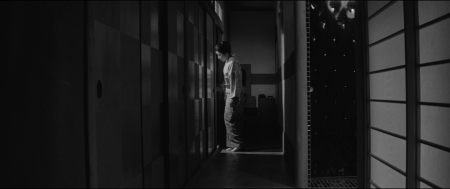
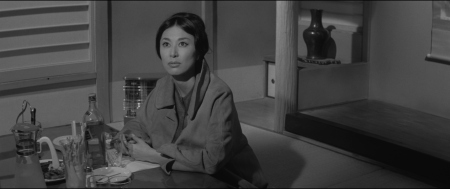
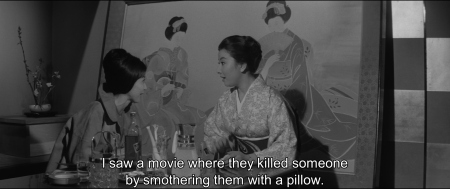
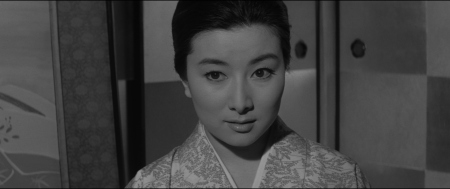
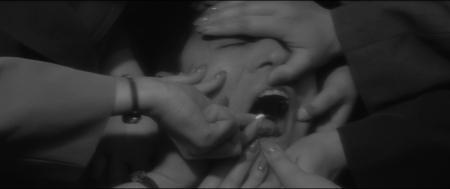
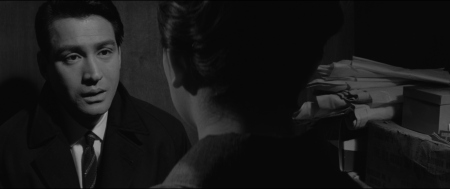
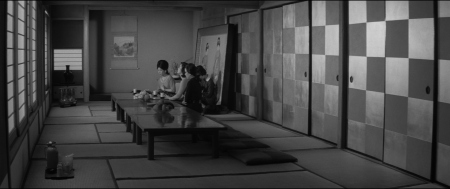
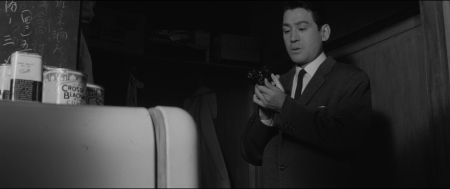
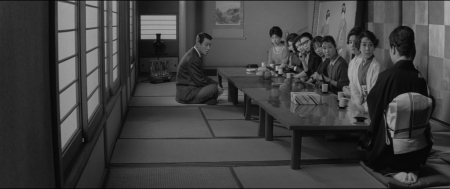
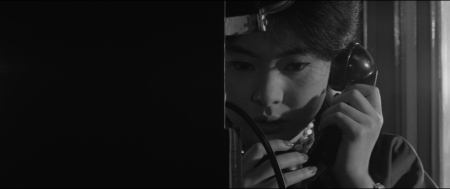
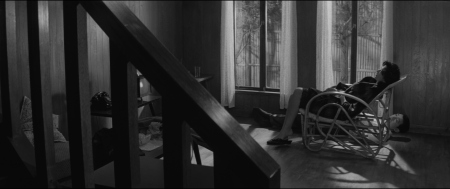
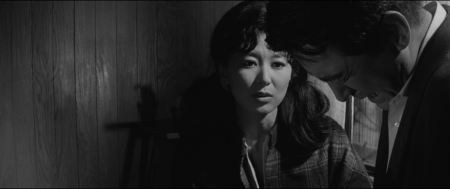
appears to serve Kobayashi's high-contrast monochrome 'Scope photography
properly; the original mono is preserved uncompressed. For anyone
working through Ichikawa seriously, or anyone with an interest in how
postwar
Japanese cinema processed the arrival of television, this is a
straightforward
Blu-ray
purchase - and at 3,000 copies, not one to think about for too long.
Absolutely recommended. |

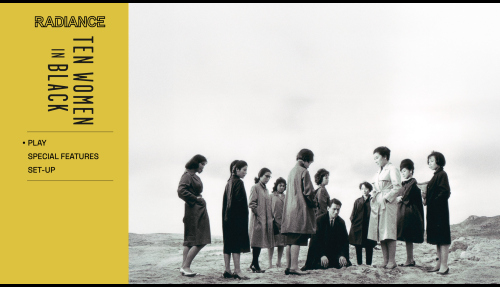
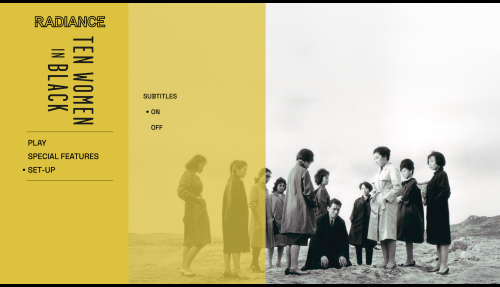
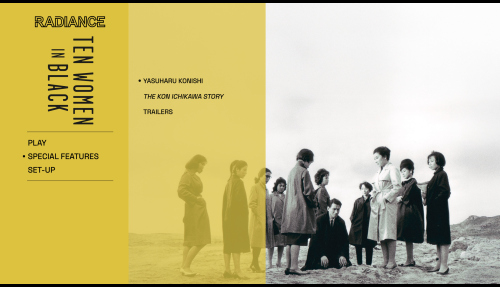
Menus / Extras
 |
 |
 |
 |
 |
 |
 |
 |
 |
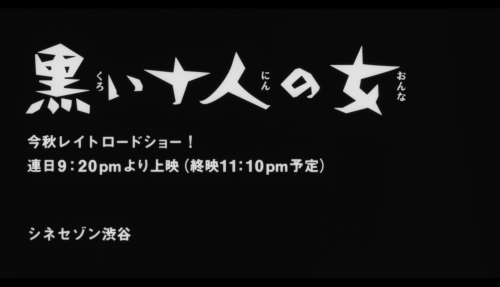 |

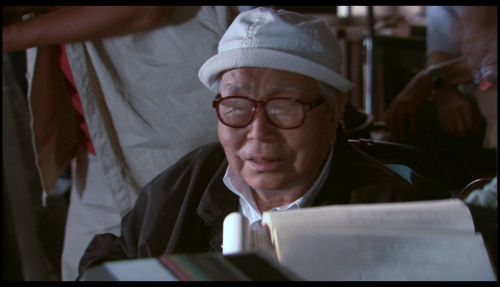
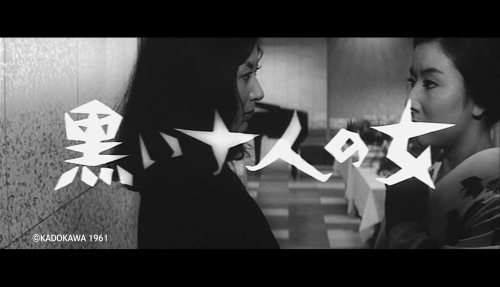
CLICK EACH BLU-RAY CAPTURE TO SEE ALL IMAGES IN FULL 1920X1080 RESOLUTION
 |
 |
 |
 |
 |
 |
 |
 |
 |
 |
 |
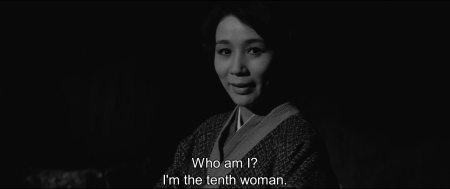
More full resolution (1920 X 1080) Blu-ray Captures for DVDBeaver Patreon Supporters HERE
 |
 |
 |
 |
 |
 |
 |
 |
 |
 |
 |
 |
 |
 |
 |
 |
 |
 |
 |
 |
 |
 |
 |
 |
 |
 |
 |
 |
 |
 |
 |
 |
 |
 |
 |
 |
 |
 |
 |
 |
 |
 |
 |
 |
 |
 |
 |
 |
 |
 |
 |
 |
| Box Cover |
|
CLICK to order from:
BONUS CAPTURES:
|
| Distribution | Radiance - Region FREE - Blu-ray | |
|
Search DVDBeaver |
S E A R C H D V D B e a v e r |





















CLICK PayPal logo to donate!
|
Gary Tooze
|
|
Thank You!
