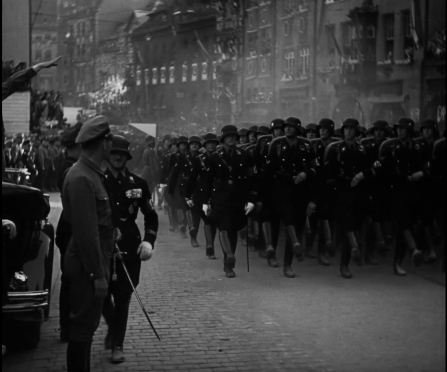
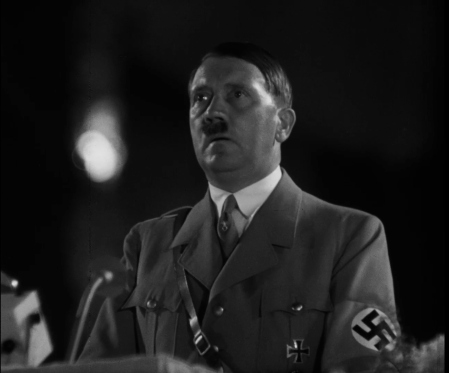
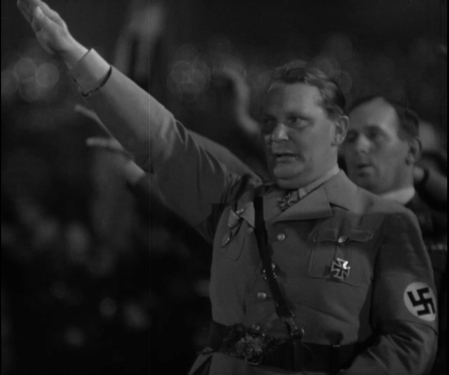
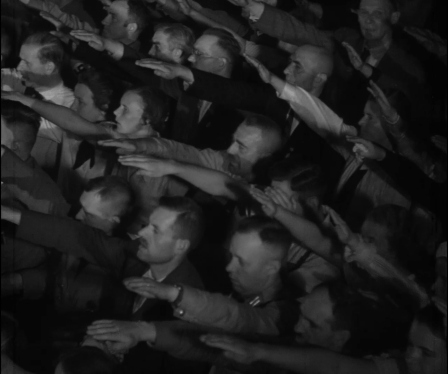
An enormous, sincere thank you to our phenomenal Patreon supporters! Your unshakable dedication is the bedrock that keeps DVDBeaver going - we’d be lost without you. Did you know? Our patrons include a director, writer, editor, and producer with honors like Academy Awards for Best Picture and Best Director, a Pulitzer Prize-winning screenwriter, and a Golden Globe-winning filmmaker, to name a few!

Sadly, DVDBeaver has reached a breaking point where our existence hangs in the balance. We’re now reaching out to YOU with a plea for help.

Please consider pitching in just a few dollars a month - think of it as the price of a coffee or some spare change - to keep us bringing you in-depth reviews, current calendar updates, and detailed comparisons.
I’m am indebted to your generosity!


Search DVDBeaver

S E A R C H    D V D B e a v e r

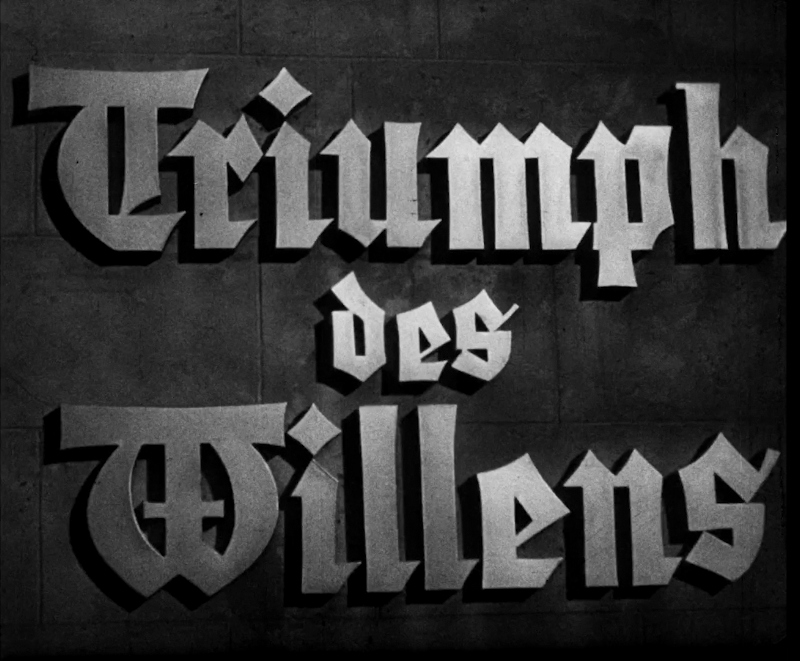
(aka "Triumph des Willens" or "Triumph of the Will" or "Das Dokument vom Reichsparteitag 1934")


Directed by Leni Riefenstahl
Germany 1935


For almost a century, Leni Riefenstahl's Triumph of the Will (Triumph des Willens) has reigned as the most controversial documentary ever made, a "cinema masterpiece," according to film historian Amos Vogel, "a huge and disturbing film spectacle."

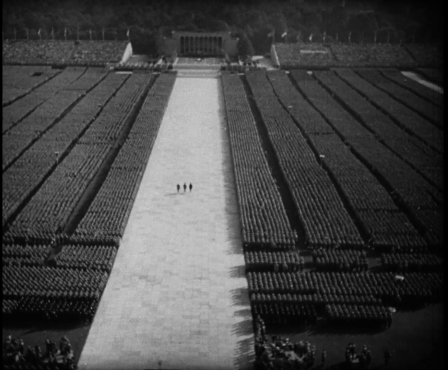
Capturing the pageantry of the 1934 Nuremberg congress, Triumph of the Will is a sensory tableau that celebrates the nation's resurgence in the aftermath of a crushing economic depression. Riefenstahl commanded a squad of photographers and oversaw the editing of the film, crafting a landmark of documentary cinema, even as it permanently stained the reputation of the filmmaker. Riefenstahl spent a lifetime trying to disassociate herself from the Nazi leadership, but her complicity with Hitler is now unequivocal, and no matter how artistically rendered, Triumph of the Will was used to fertilize the rise of the Third Reich.

This Kino Classics release is part of an ambitious reevaluation of the filmmaker's career, including the release of Andres Veiel's award-winning documentary Riefenstahl, new restorations of her films (The Blue Light, Tiefland,) and special editions of previously unreleased work (Longing for Innocence, Under Water Impressions.). Triumph of the Will was restored by the Bundesarchiv (German Federal Archives) and includes two additional Riefenstahl propaganda films glorifying the military strength of the National Socialist German Workers' Party: Day of Freedom and Victory of Faith.

***

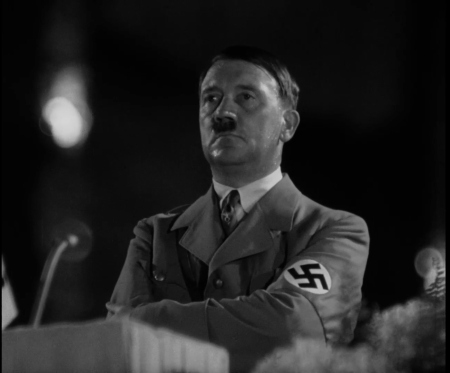
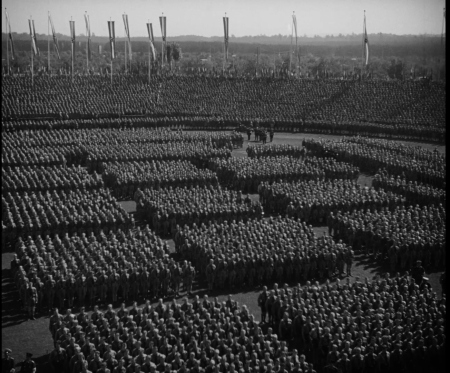
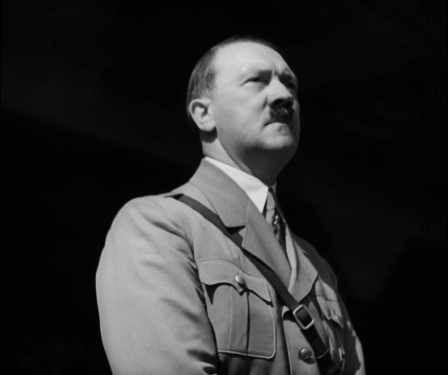
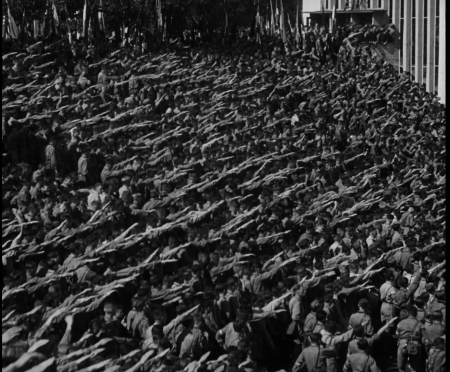
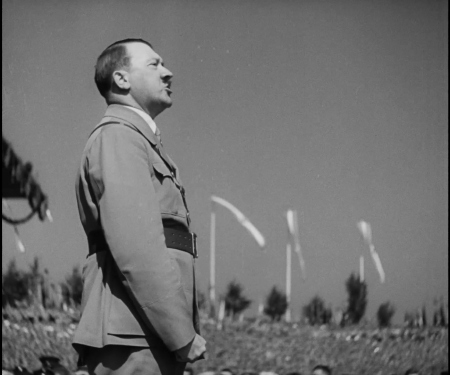
Triumph of the Will (Triumph des Willens, 1935) is a landmark Nazi propaganda film directed, produced, and co-written by Leni Riefenstahl. Commissioned by Adolf Hitler, it documents the 1934 Nazi Party Congress in Nuremberg with carefully staged spectacle—massed ranks of troops and party members, dramatic low-angle shots of Hitler, rhythmic editing, and soaring camera movements—that transformed a political rally into a mythic celebration of unity, power, and the Führer cult. Although celebrated for its technical innovations in documentary cinematography and montage, the film remains one of the most effective and controversial works of political propaganda ever made, permanently associating Riefenstahl’s artistic reputation with the aestheticization of Nazi ideology.

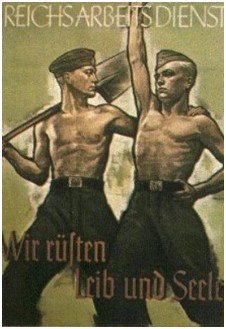
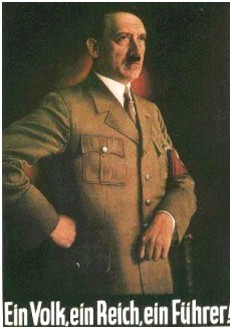
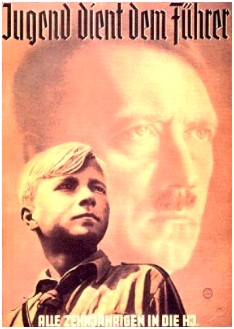
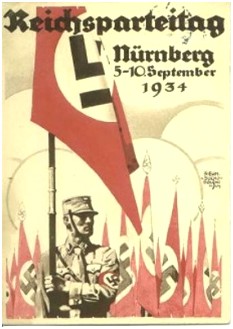
Posters

Theatrical Release: March 28th, 1935


Review: Kino - Region 'A' - Blu-ray

Box Cover

CLICK to order from:


BONUS CAPTURES:

Distribution Kino - Region 'A' - Blu-ray
Runtime

1:54:45.545

Video

1.33:1 1080P Dual-layered Blu-ray

Disc Size: 49,501,894,403 bytes

Feature: 28,830,541,824 bytes

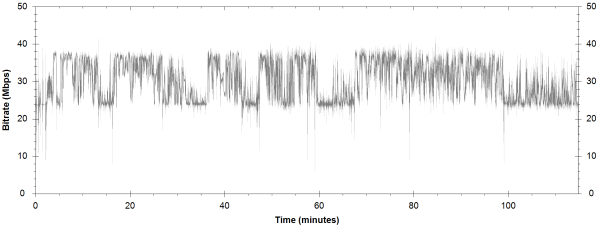
Video Bitrate: 29.99 Mbps

Codec: MPEG-4 AVC Video

NOTE: The Vertical axis represents the bits transferred per second. The Horizontal is the time in minutes.

Bitrate Blu-ray:

Audio

DTS-HD Master Audio German 1557 kbps 2.0 / 48 kHz / 1557 kbps / 24-bit (DTS Core: 2.0 / 48 kHz / 1509 kbps / 24-bit)
Commentary for
Triumph of the Will:

Dolby Digital Audio English 192 kbps 2.0 / 48 kHz / 192 kbps / DN -31dB

Subtitles English, None
Features Release Information:
Studio:
Kino


1.33:1 1080P Dual-layered Blu-ray

Disc Size: 49,501,894,403 bytes

Feature: 28,830,541,824 bytes

Video Bitrate: 29.99 Mbps

Codec: MPEG-4 AVC Video


Edition Details:

• Audio commentary by Film Historian Anthony Slide
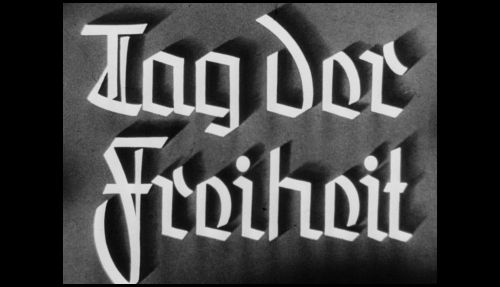
• Day of Freedom (Tag her Freshet - Unsere Wehrmacht, 1935, 29:18) and Victory of Faith (Der Sieg des Glaubens, 1933, 1:03:58): Two propaganda films made for the NSDAP by Leni Riefenstahl
• Schichlegruber Doing the Lambeth Walk: A 1942 Satirical British Anti-Nazi Propaganda Short (2:27)
• Promo Reel (3:02)
8-page liner notes booklet with "Leni Riefenstahl: On a Nazi Female Filmmaker," an Essay by Novelist, Essayist and Critic Francine Prose


Blu-ray Release Date: July 21st, 2026

Standard Blu-ray Case

Chapters 9


Comments:

NOTE: The below Blu-ray captures were taken directly from the Blu-ray disc.

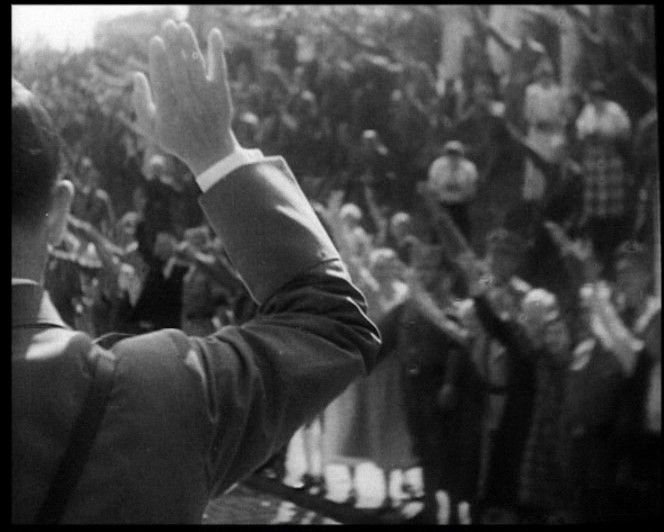
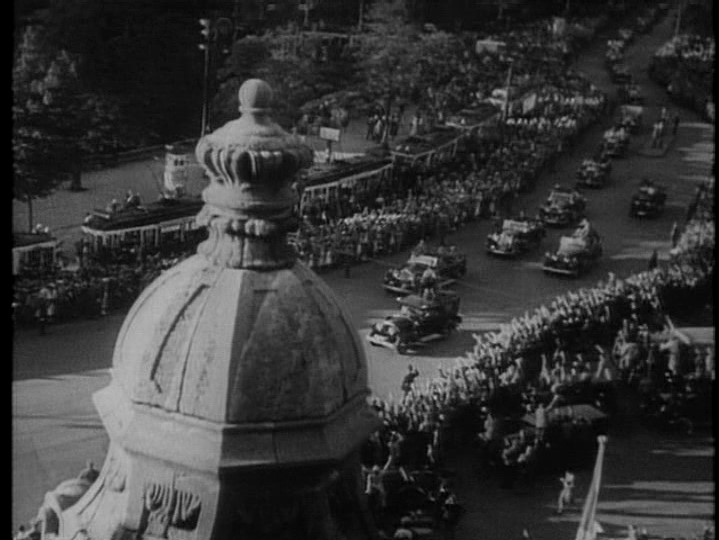
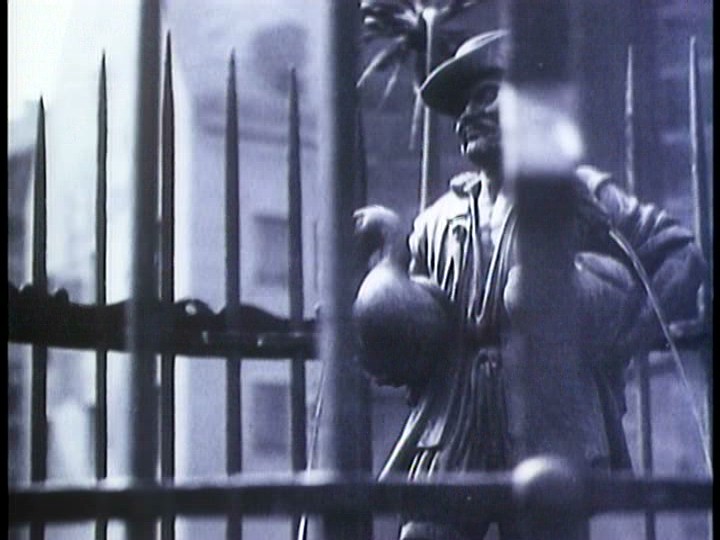
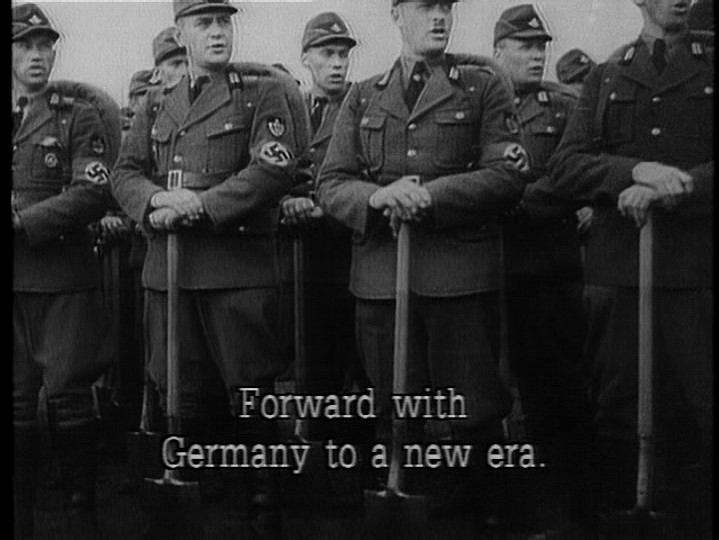
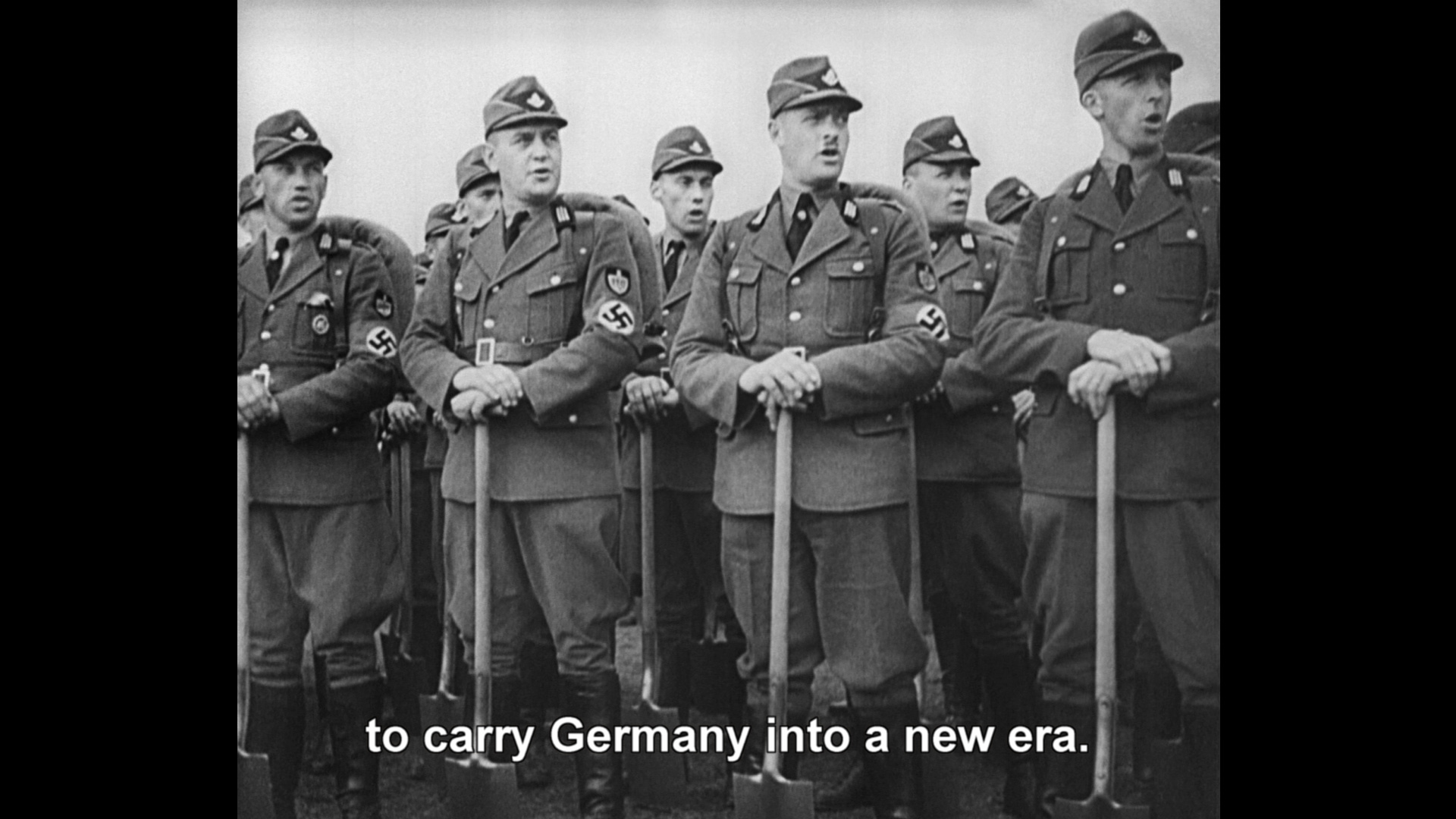
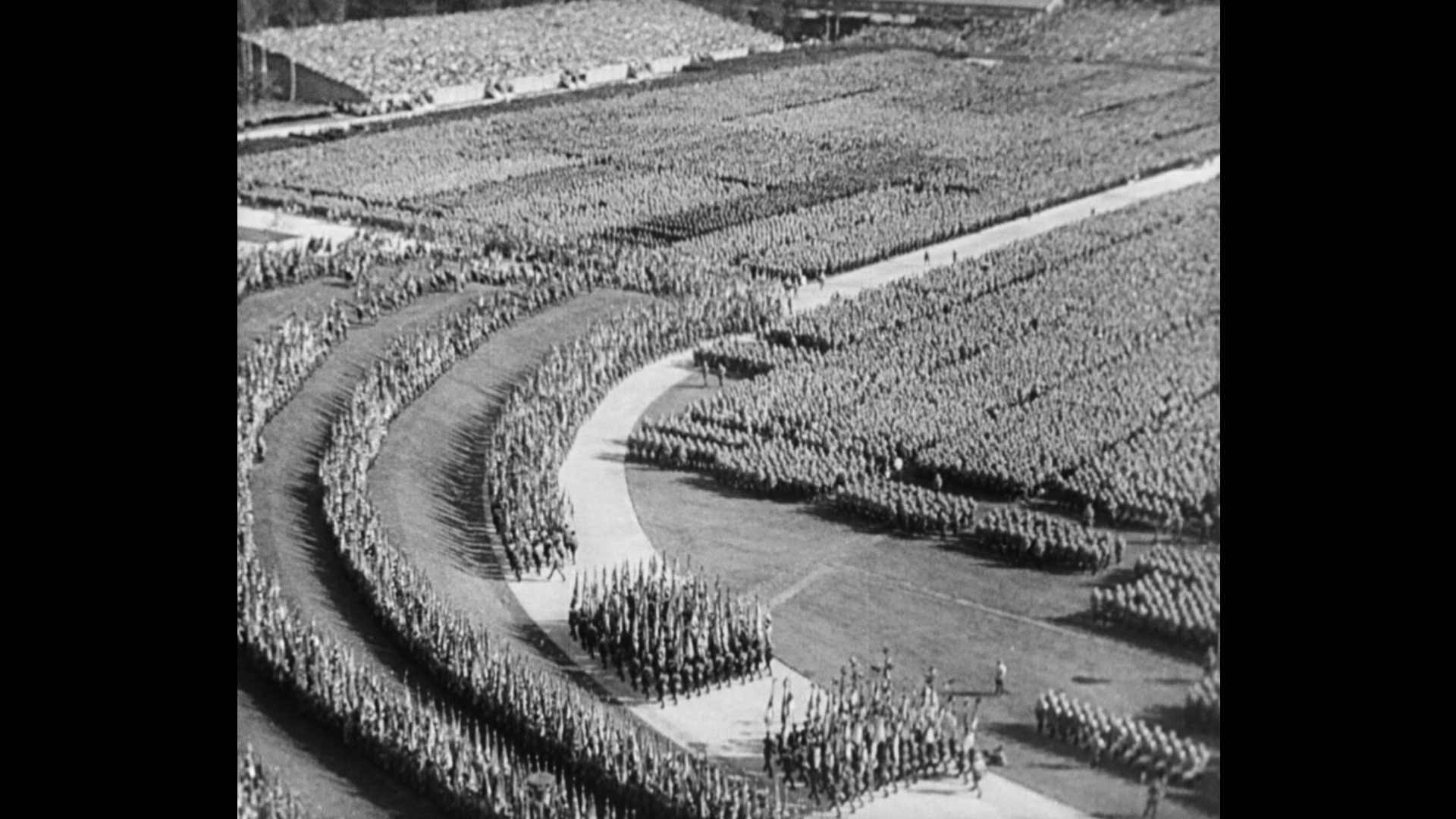
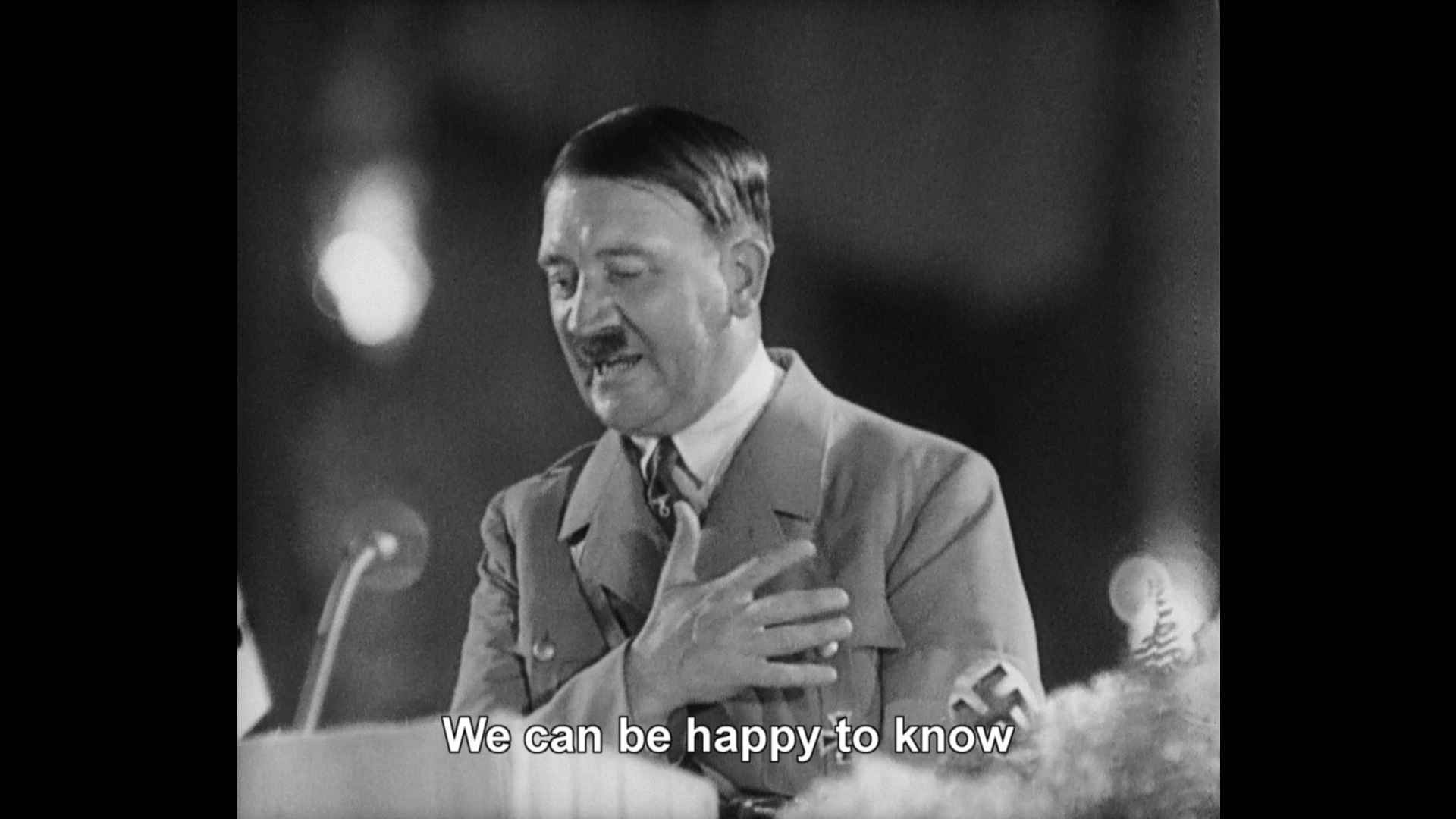
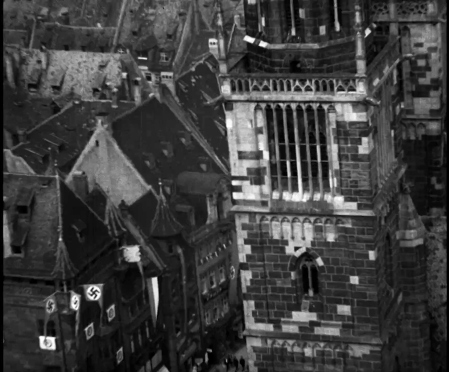
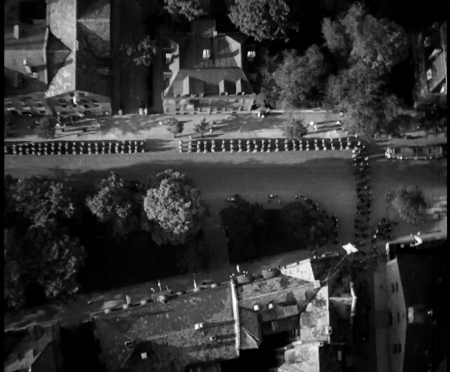
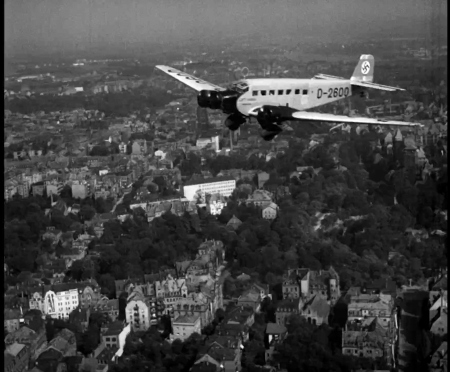
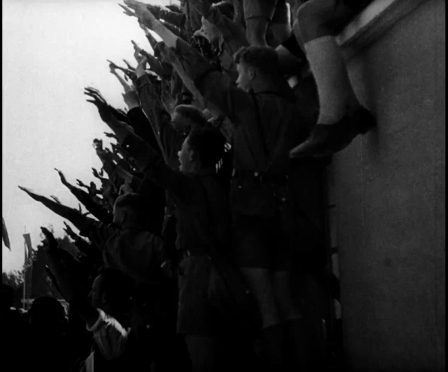
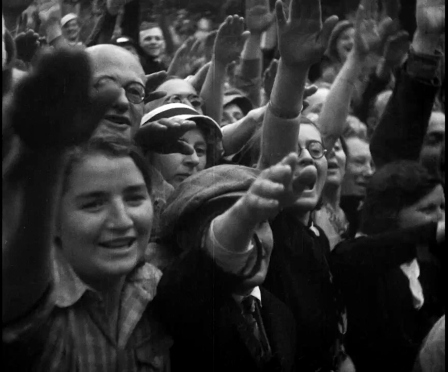
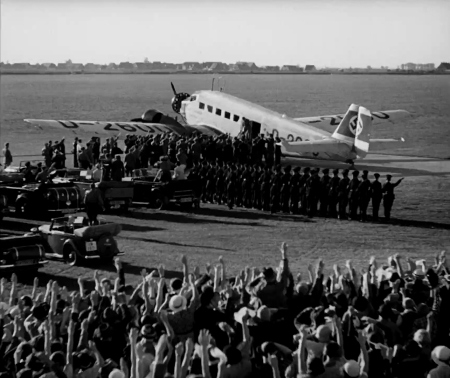
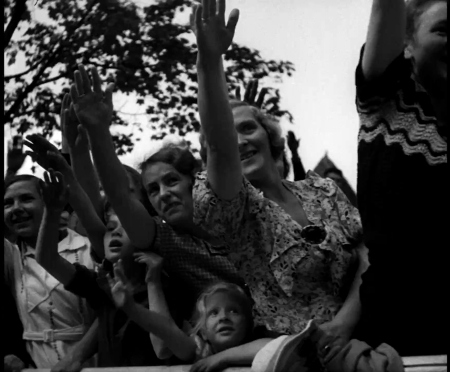
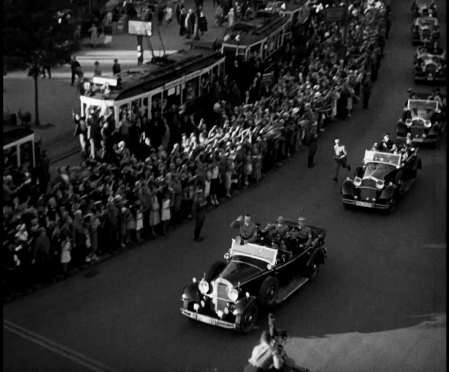
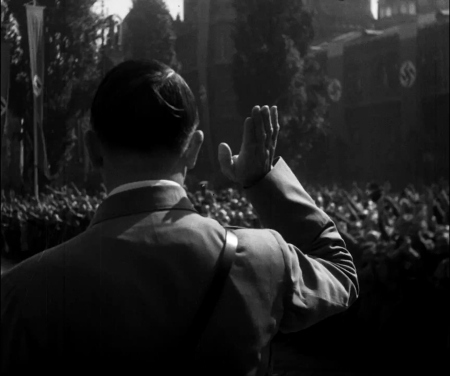
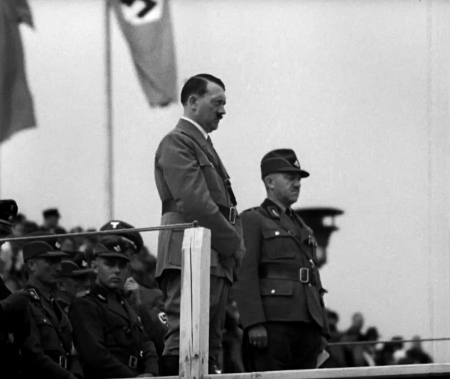
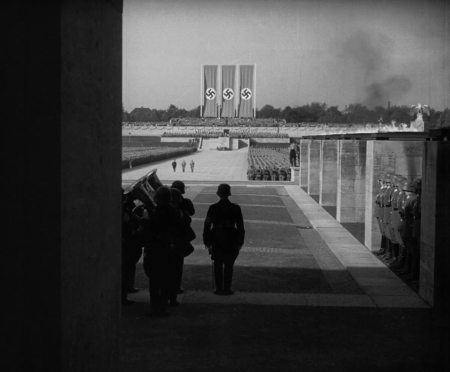
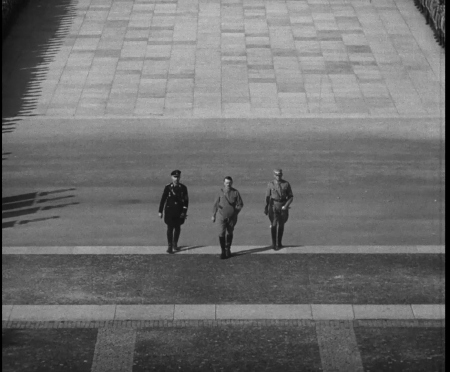
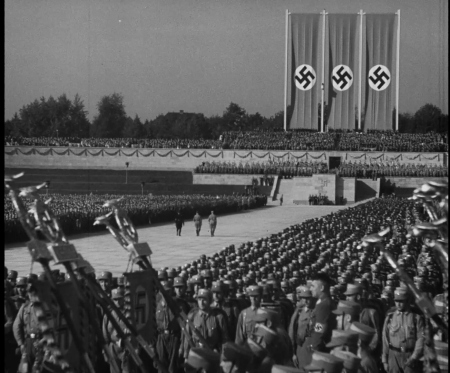
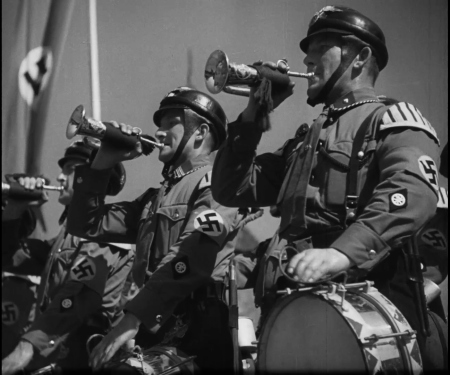
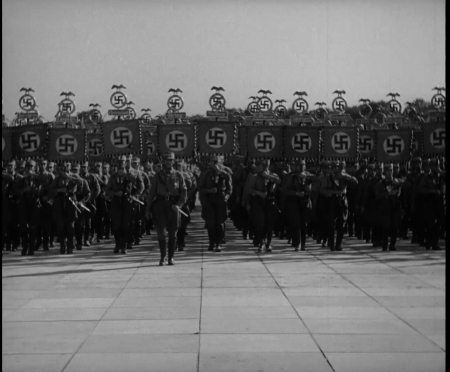
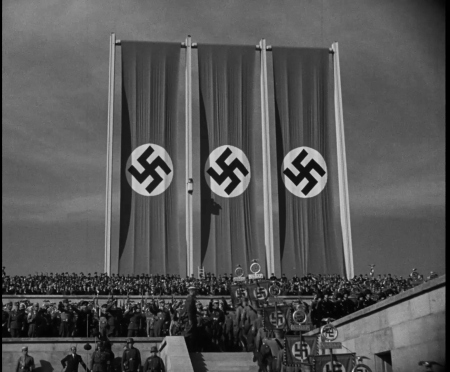
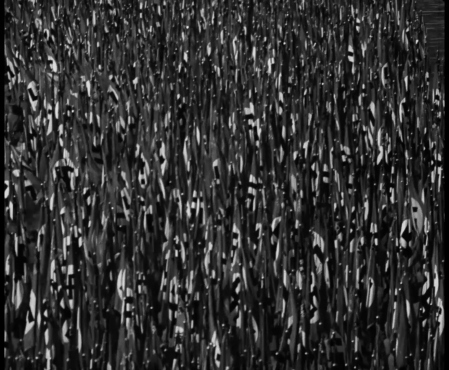
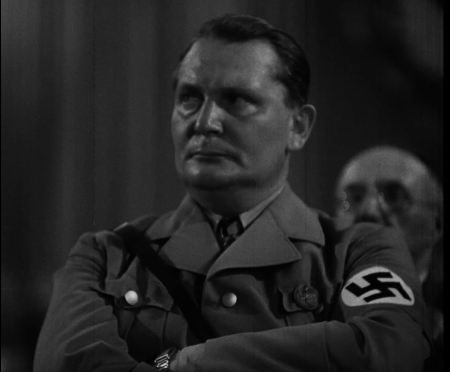
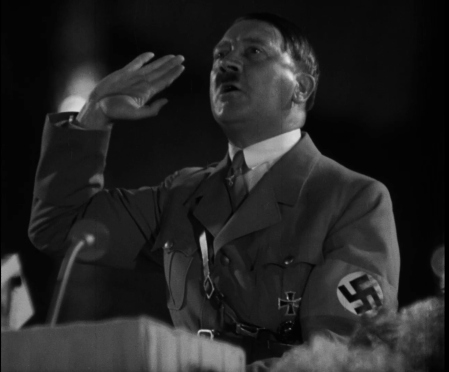
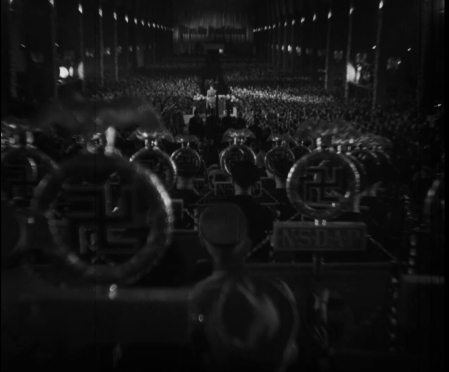
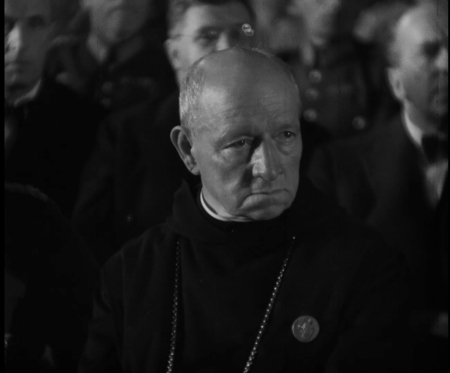
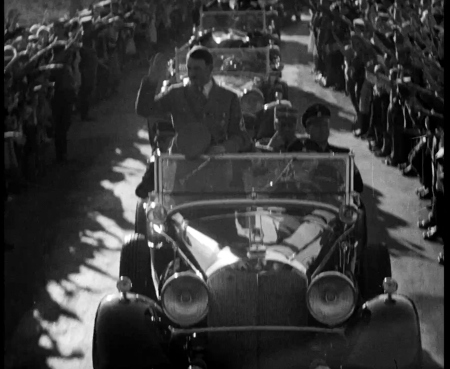
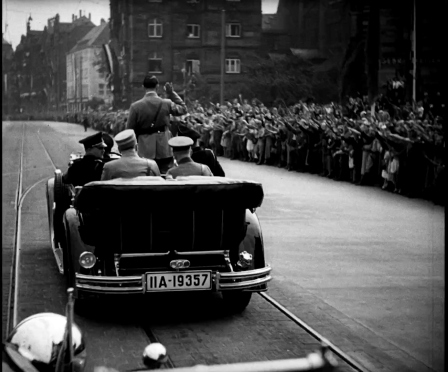
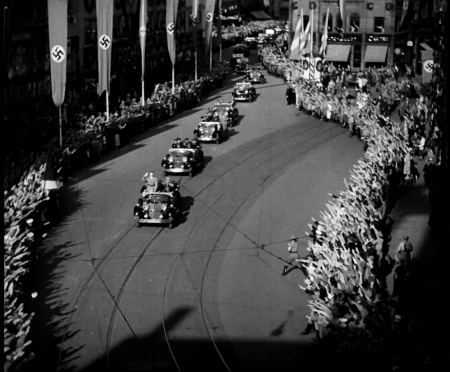
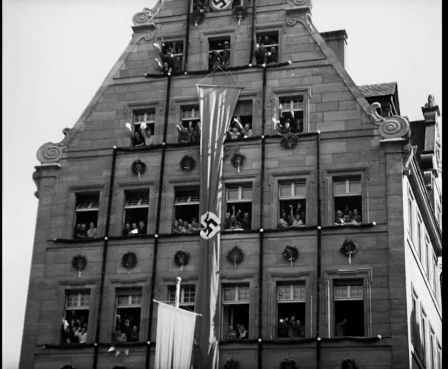
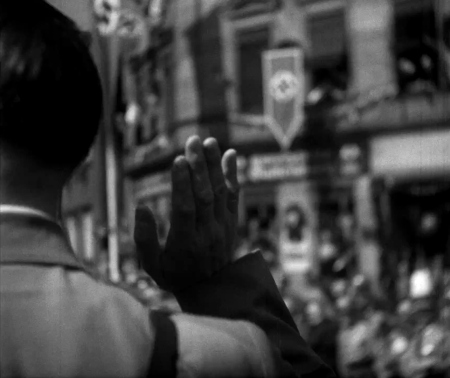
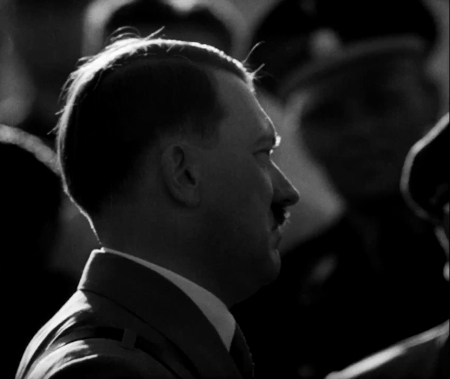
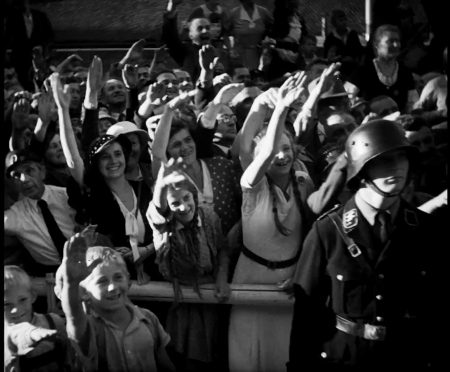
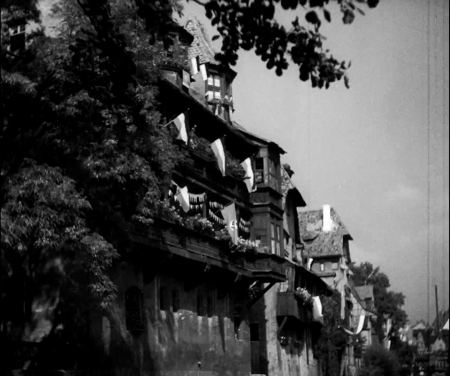
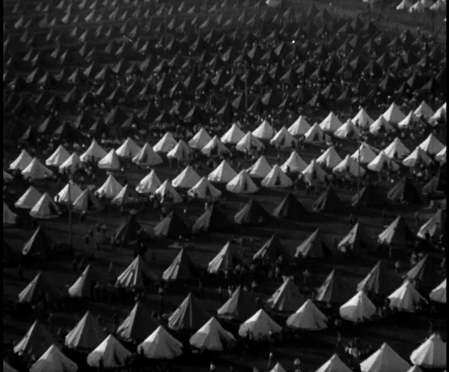
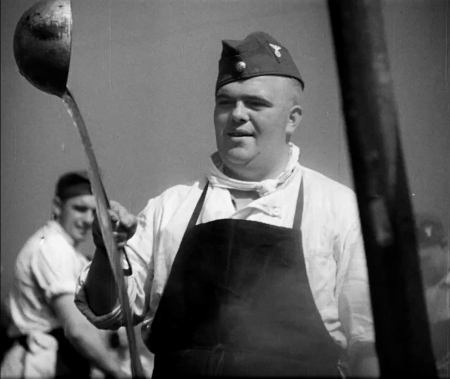
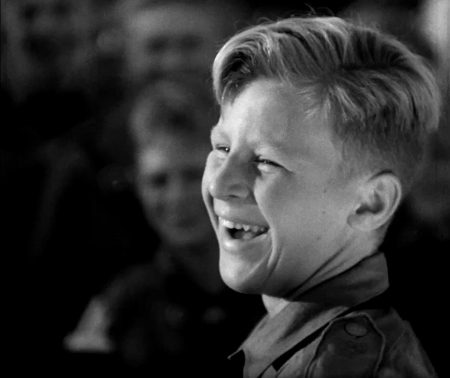
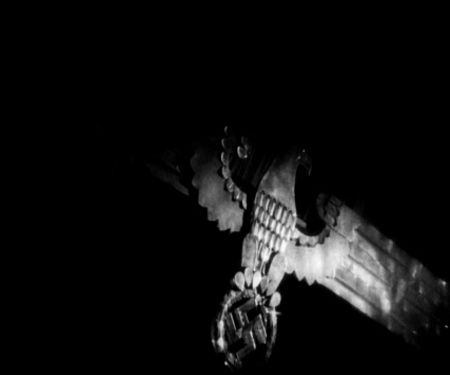
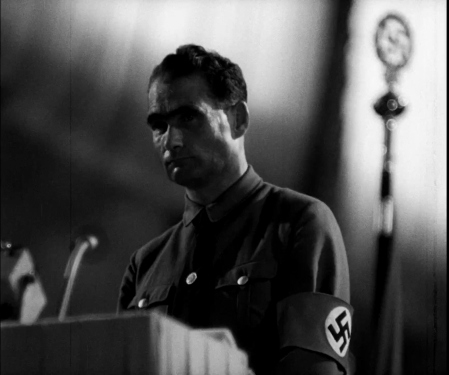
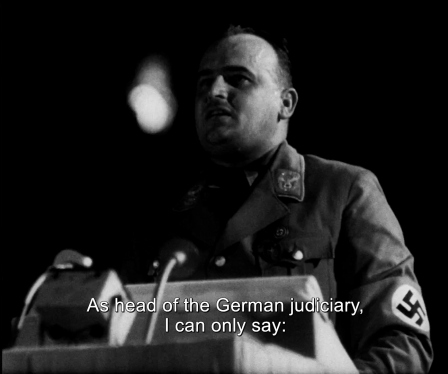
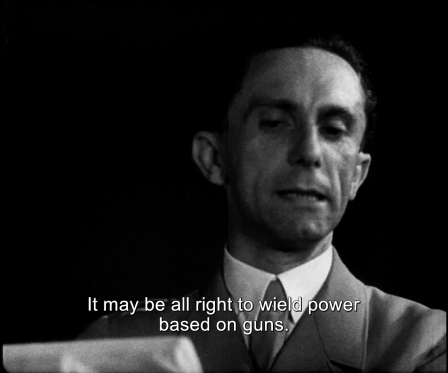
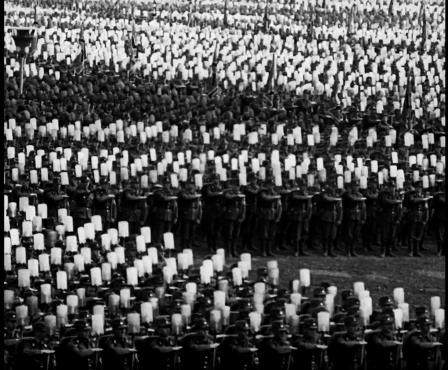
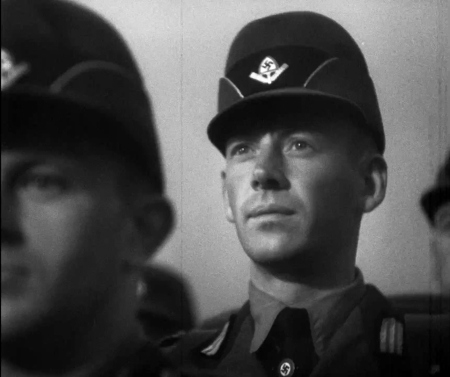
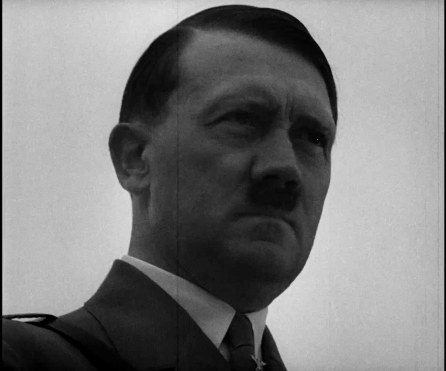
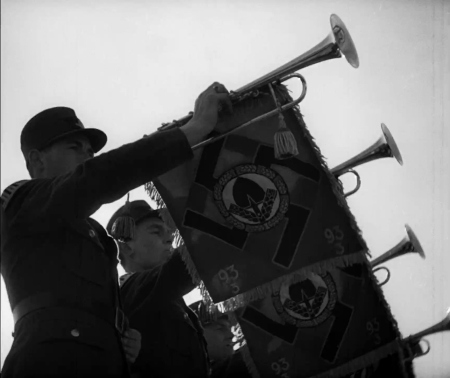
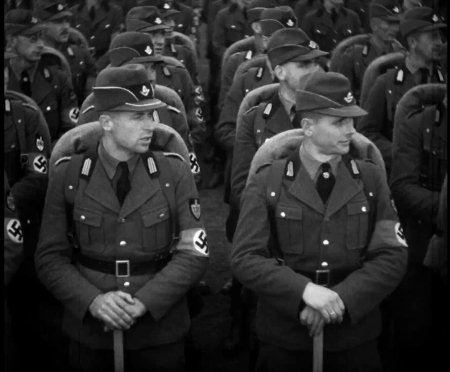
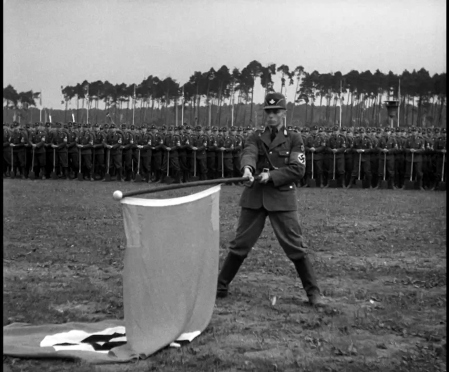
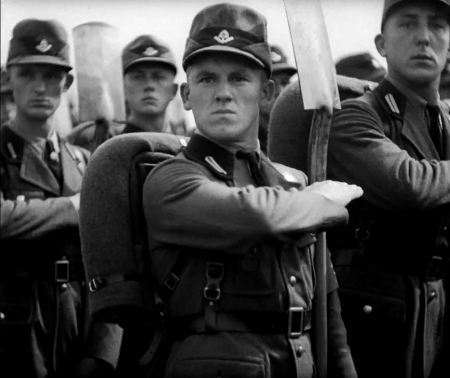
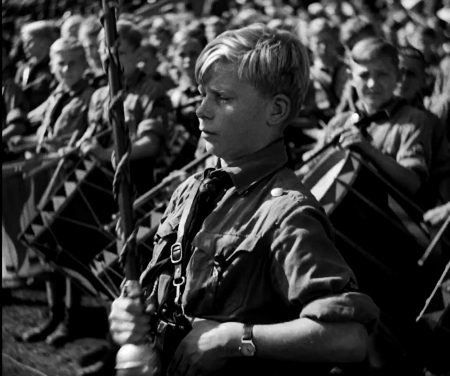
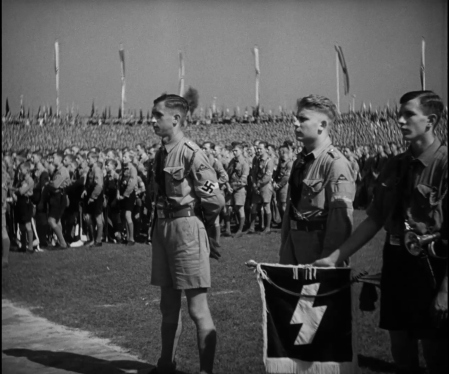
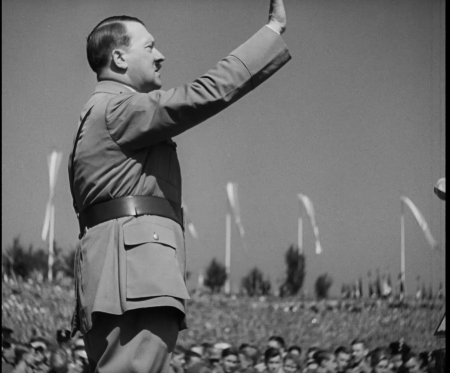
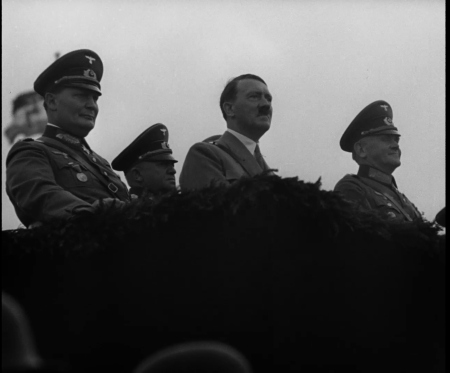
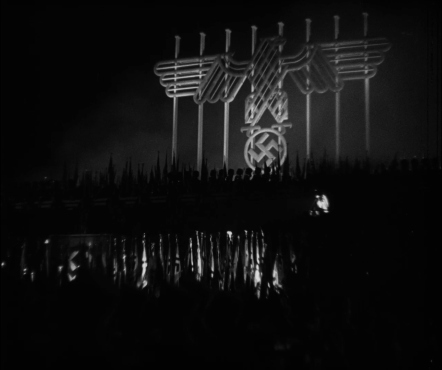
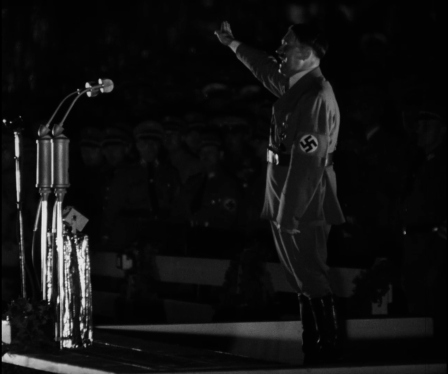
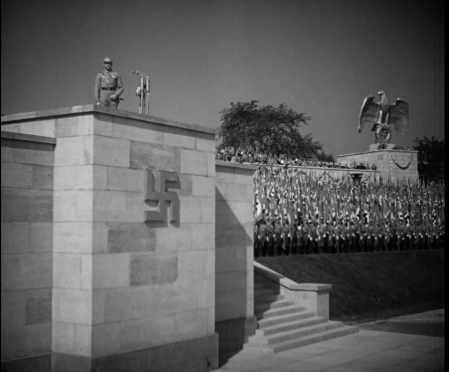
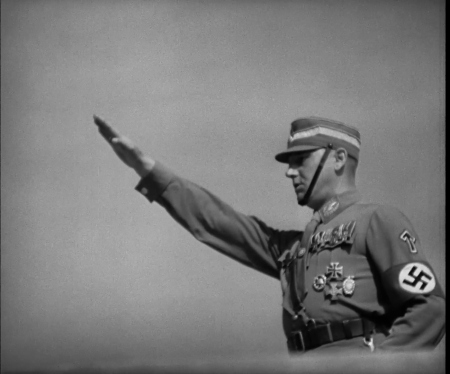
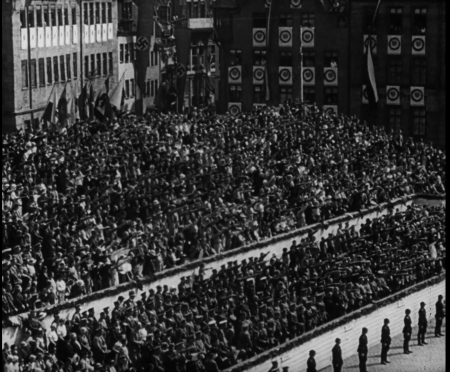
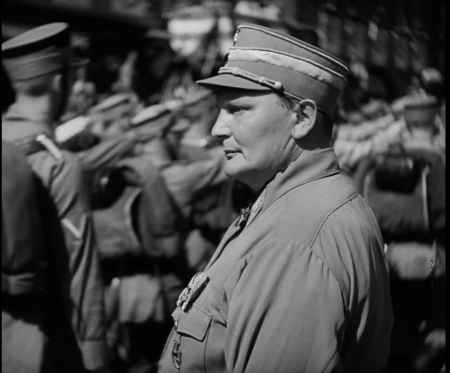
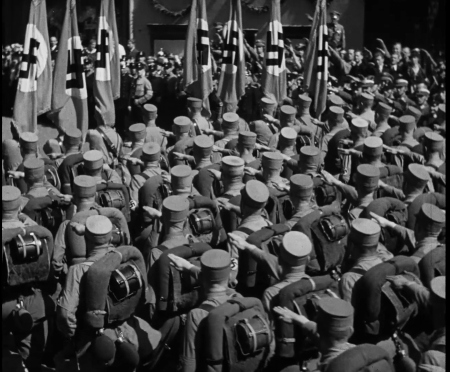
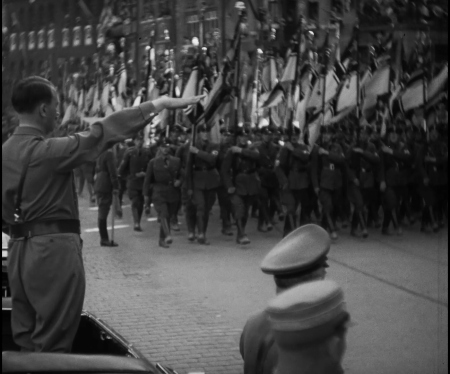
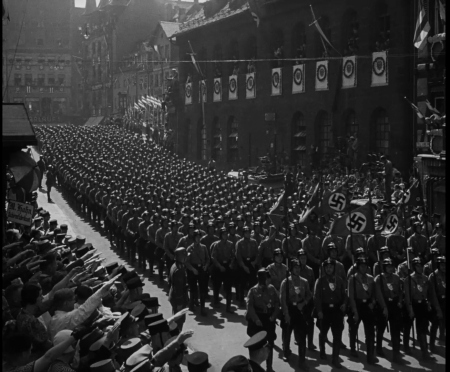
ADDITION: Kino Blu-ray (July 2026): Kino have transferred Leni Riefenstahl's Triumph of the Will to Blu-ray. Back in 2015 we compared the Synapse Films (2001) DVD / the Synapse Films (2006) DVD / the 2000 Connoisseur-Meridian DVD / the Kino 1999 DVD (from 'The Wonderful, Horrible Life of Leni Riefenstahl') and the 2015 Synapse Blu-ray HERE. The new transfer states "The German Federal Archive (Das Bundesarchiv) has a legal obligation to preserve Germany’s audio-visual heritage and make it available for viewing. This includes some collections and archival content that disseminate ideologies or stereotypes which are discriminatory or hurtful. The Federal Archive therefore puts the greatest emphasis on the need for contextualization of such content when made available. The Archive expressly denies the approval of any statements, judgments and representations made in this film." and "The German Federal Archive (Das Bundesarchiv) has preserved several copies of the National Socialist propaganda film Triumph of the Will, made in 1934-35. These include an original 35mm nitrate print and a 35mm duplicate negative (on safety stock) created in 1986 by the laboratory of the Staatliches Filmarchiv der DDR." and "To create the most complete version possible, it was necessary to scan both copies and then digitally combine them. The nitrate print served as the basis for the 4K restoration. The safety negative was used to cover any splices and missing footage. The film’s running time, after restoration, is 112 minutes. The censorship card from the Berlin Film Testing Office, dated March 26, 1935, lists a length of 3,109 meters, which corresponds to 114 minutes. The premiere of Triumph of the Will took place on March 28, 1935, at the Ufa-Palast am Zoo in Berlin." Kino’s 2026 Blu-ray of Triumph of the Will (restored by the Bundesarchiv / German Federal Archives) offers a historically significant presentation of Riefenstahl’s most notorious film. The 1080P transfer is framed in the film’s original nearly square aspect ratio (approximately 1.33:1 depending on the source measurement) and derives from the Bundesarchiv restoration. Expect a solid, film-like black-and-white image with strong contrast, deep blacks that retain shadow detail in the torchlit night sequences, and a natural layer of grain. Fine detail in faces, uniforms, flags, and architectural textures is appreciably improved over older video editions, particularly in the aerial and tracking shots. Residual print damage (minor scratches, occasional density fluctuations, and age-related imperfections inherent to surviving 1930s elements) remains visible. Overall, the transfer respects the film’s monumental compositions and layered-contrast lighting while delivering the best widely available home-video presentation of this title to date from an official archival source.

NOTE: We have added 68 more large resolution Blu-ray captures (in lossless PNG format) for DVDBeaver Patrons HERE

On their Blu-ray, Kino use a DTS-HD Master dual-mono track (24-bit) in the original German language. It preserves the original mix’s characteristics: Herbert Windt’s (Paracelsus, Olympia,) swelling orchestral and martial score sits forward, speeches have clear presence (some of which were studio-re-recorded at the time for better quality), and crowd noise, marching feet, and ambient rally sounds retain their period texture. Expect the limitations of 1930s optical recording - occasional hiss, mild distortion or peaking during the loudest cheers and music peaks, and a somewhat constrained dynamic range - but the track is clean and well-balanced for its age. There is almost no voice-over narration beyond the brief opening titles. Sound and image work as a single system: the music elevates the visuals into mythic register, while the visuals give the music concrete political embodiment. Kino offer optional English subtitles on their Region 'A'-locked Blu-ray.

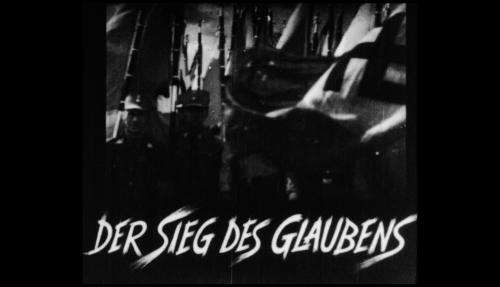
The Kino Blu-ray offers relevant extras. The supplemental package is focused and useful. Film historian Anthony Slide (author of Hollywood Unknowns: A History of Extras, Bit Players, and Stand-Ins) contributes a full-length audio commentary that situates the film historically, identifies key figures, and discusses Riefenstahl’s methods and the production context without sensationalism. Two complete additional Riefenstahl propaganda shorts are included: the rarely seen Victory of Faith (Der Sieg des Glaubens, 1933, over an hour) which states "Original materials from the time of the film’s production have not survived. Reels 2, 3 and 4 have far better photographic quality than reel 1, which is softer and has lost contrast range due to multiple generations of copying. It also shows numerous printed-in continuous scratches and abrasions. These visual defects are also apparent in the present digital version. The duplicate positive used for the 4K restoration is 1696 meters long. According to the censorship card of the Berlin Film Inspection Office dated 29 November 1933, the original length of the film was 1756 meters. The premiere of “Der Sieg des Glaubens” took place on 2 December 1933 at the Ufa-Palast am Zoo in Berlin.", her earlier, less polished documentation of the 1933 Nuremberg rally, and Day of Freedom (Tag der Freiheit – Unsere Wehrmacht, 1935, 1/2 an hour) which states "The duplicate negative used for the 4K restoration is 744 meters long. According to the censorship card of the Berlin Film Inspection Office dated 29 November 1935, the original length of the film was 755 meters. The premiere of “Tag der Freiheit! – Unsere Wehrmacht” took place on 30 December 1935 at the Ufa-Palast am Zoo in Berlin.", the short made to placate the Wehrmacht after they felt under-represented in Triumph. A brief 1942 British satirical short, Schichlegruber Doing the Lambeth Walk offers a witty Allied counterpoint by reediting Nazi footage to a popular dance tune. A short promo reel and an 8-page booklet featuring Francine Prose’s essay “Leni Riefenstahl: On a Nazi Female Filmmaker” round out the package, providing critical and biographical perspective. There is a reversible sleeve - see below.

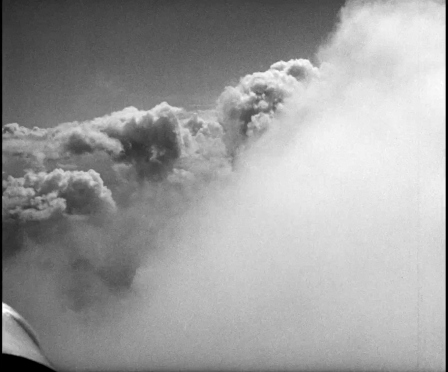
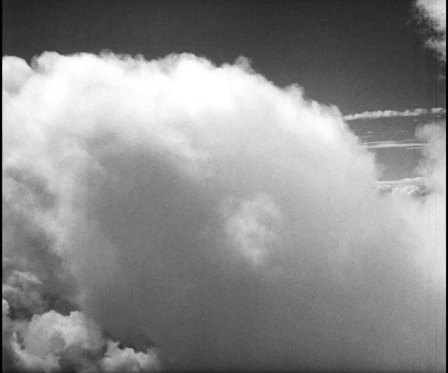
Leni Riefenstahl's Triumph of the Will is one of the most formally accomplished and ethically fraught films ever made. Commissioned by Adolf Hitler and released after the 1934 Nuremberg Party Congress (the Reichsparteitag), it transforms a political rally into a mythic spectacle of national rebirth, collective will, and Führer worship. Its power lies precisely in the tension between documentary surface and carefully engineered ideology: it presents itself as a record of events while systematically constructing an idealized image of Nazi Germany. The film was made in the wake of the Night of the Long Knives (June–July 1934), the purge in which Hitler eliminated the SA leadership, including Ernst Röhm. The previous year’s rally film, Victory of Faith (Sieg des Glaubens, 1933) - included in the Blu-ray package, had featured Röhm prominently and was subsequently suppressed. Triumph of the Will therefore serves a dual purpose: it celebrates the consolidation of Hitler’s absolute authority and presents a purified, unified Party free of internal rivals. Riefenstahl received extraordinary resources - roughly 30 cameras, a crew of more than 100, and the freedom to have towers, tracks, bridges, and platforms built specifically for filming, in collaboration with Albert Speer. The rally itself (attended by more than 700,000 people) was choreographed with the camera in mind. Riefenstahl later insisted the film was pure documentary reportage; critics have long argued that the event was staged as a movie set and that “reality” was subordinated to the image. The only explicit commentary appears in the opening titles, which locate the events on 5 September 1934 - “20 years after the outbreak of the World War, 16 years after the beginning of German suffering, 19 months after the beginning of the German rebirth” - and frame Hitler’s arrival as the culmination of national renewal. Riefenstahl’s formal innovations remain striking. She employed moving cameras, aerial photography, long-focus lenses that compress and distort space, extreme low-angle shots that monumentalize Hitler, and high-angle views that reduce the crowds to abstract patterns of order. At its core the film performs a secular apotheosis. Hitler descends from the clouds like a messianic or divine figure; he reviews his people, receives their adoration, and delivers sermons that bind the individual to the collective will. The masses are not chaotic but perfectly ordered; individuality is absorbed into the geometry of ranks and the repetition of symbols. Ancient German settings and Teutonic associations are mobilized to suggest that Nazism is both a revolutionary force and the fulfillment of deep racial-historical destiny. Notably, the film largely avoids explicit references to antisemitism, territorial expansion, or specific policy. Its propaganda operates through affective and aesthetic means - beauty, order, vitality, belonging, and the charismatic presence of the leader - rather than through argument or explicit hatred. This makes it both more seductive and more insidious: it offers the viewer the pleasure of participation in a transcendent spectacle. In Nazi Germany the film was a major success and received official prizes. Internationally it won awards (including at Venice and Paris). After 1945 it was widely banned or restricted as pure propaganda; Riefenstahl was detained, interrogated, and effectively blacklisted from mainstream filmmaking. She spent decades defending the work as an apolitical artistic document. In the end, Triumph of the Will demonstrates the extraordinary capacity of cinema to aestheticize ideology and to transform political theater into myth. Its technical mastery continues to command attention; its content and purpose continue to demand critical vigilance. The film does not merely record the 1934 rally - it helps invent the image of the Nazi movement that the regime wished the world (and the German people) to internalize. Kino’s Blu-ray edition is a responsible, archive-sourced release that prioritizes the film’s historical and formal importance while surrounding it with the necessary context. The Bundesarchiv restoration yields a strong high-definition image that allow the film’s visual design to be studied properly. The inclusion of Victory of Faith and Day of Freedom is especially useful, as these companion works illuminate Riefenstahl’s evolving technique and the regime’s propaganda strategy. Slide’s commentary and Prose’s essay further equip the viewer to engage critically rather than passively. For students of film history, propaganda, or 20th-century visual culture, this is currently the most complete and thoughtful domestic Blu-ray presentation available.

Gary Tooze


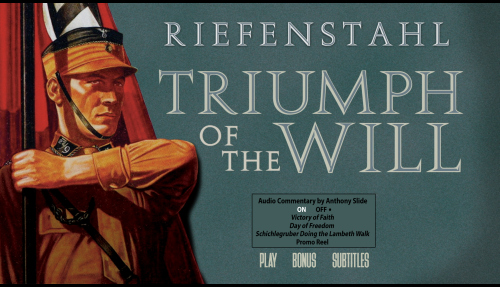
Menus / Extras


CLICK EACH BLU-RAY CAPTURE TO SEE ALL IMAGES IN FULL 1920X1080 RESOLUTION


1) Synapse Films (SE - New) - Region 0 - NTSC TOP

2) Kino (2026) - Region 'A' - Blu-ray - BOTTOM


1) Connoisseur/Meridian Region 0 - NTSC TOP

2) Kino (2026) - Region 'A' - Blu-ray - BOTTOM


1) Kino Video (Life of Leni Riefenstahl) - Region 0 - NTSC TOP

2) Kino - Region 'A' - Blu-ray - BOTTOM


1) Connoisseur/Meridian Region 0 - NTSC TOP

2) Synapse - Region FREE - Blu-ray MIDDLE

3) Kino - Region 'A' - Blu-ray - BOTTOM


1) Synapse Films (SE - Old) - Region 0 - NTSC TOP

2) Kino - Region 'A' - Blu-ray - BOTTOM


1) Synapse - Region FREE - Blu-ray TOP

2)  Kino - Region 'A' - Blu-ray - BOTTOM


1) Synapse - Region FREE - Blu-ray TOP

2)  Kino - Region 'A' - Blu-ray - BOTTOM


More 2026 Kino Blu-ray Captures


More full resolution (1920 X 1080) Blu-ray Captures for DVDBeaver Patreon Supporters HERE


Box Cover

CLICK to order from:


BONUS CAPTURES:

Distribution Kino - Region 'A' - Blu-ray


Search DVDBeaver

S E A R C H    D V D B e a v e r


Hit Counter


DONATIONS Keep DVDBeaver alive:

 CLICK PayPal logo to donate!

Gary Tooze

Thank You!