|
An enormous, sincere thank you to our
phenomenal
Patreon
supporters! Your unshakable dedication
is the bedrock that keeps DVDBeaver
going - we’d be lost without you. Did
you know? Our patrons include a
director, writer, editor, and producer
with honors like Academy Awards for Best
Picture and Best Director, a Pulitzer
Prize-winning screenwriter, and a Golden
Globe-winning filmmaker, to name a few!
|






|
Search DVDBeaver |
S E A R C H D V D B e a v e r |


Hungary / Germany / Switzerland 1994
|
For the last decade, the name Béla Tarr
has surfaced once in a while, but once spoken out, the name lingers,
even though one never is closer to Tarr than the sound of his name
alone. The reason may well be, that his works are largely unseen. For
the longest time, Tarr has only been viewable at institutions as MoMA.
Few have seen
Werckmeister Harmonies, fewer have seen
Sátántangó, even
fewer has seen the remaining works of Tarr. Most only know of his work
thru the writings of esoteric cinephiles, who praise and hail, or by
commented influence upon such directors as for instance Gus van Sant.
That is until now, where his films are being released on DVD, which
allows not only – finally – to get to know his work, but by repeated
viewings to study and appreciate it. |
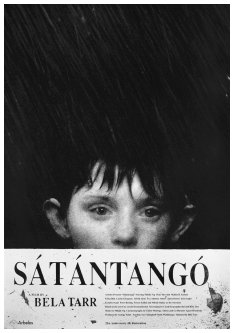
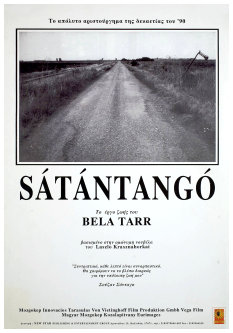
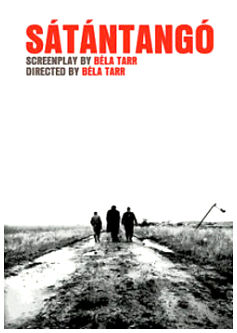
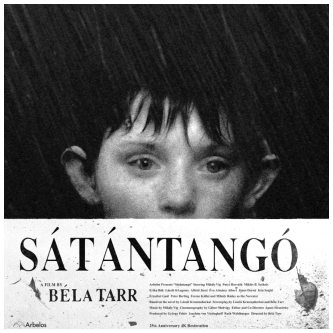
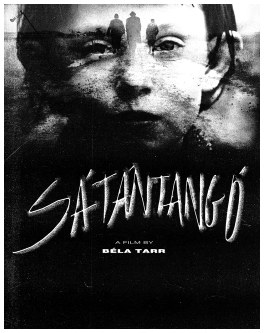
Poster
 |
 |
 |
 |
 |
 |
 |
 |
 |
 |
 |
Theatrical Release: February 8, 1994
Reviews More Reviews DVD Reviews
Comparison:
Artificial Eye - Region 2 - PAL vs. Facets - Region 0 - NTSC vs. Arbelos Films - Region 'A' - Blu-ray
Big thanks to Henrik Sylow for the DVD Review!
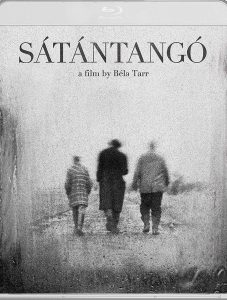
| Box Cover |
|
|
BONUS CAPTURES:
Also available on Blu-ray in the UK from Curzon / Artificial Eye - re-released Dec 2022:
Coming to 4K UHD in August 2026 by Curzon
(UK):
|
| Distribution |
Artificial Eye Region 2 - PAL |
Facets Region 0 - NTSC |
Arbelos - Region 'A' - Blu-ray |
| Runtime | 6:59:46 (4% PAL speedup) | 6:59:46 (from PAL source) |
Part one: 2:17:33.244 Part two: 2:04:34.925 Part three: 2:57:26.344 |
| Video |
1.66:1 Original Aspect Ratio |
1.66:1
Aspect Ratio Average Bitrate: 5.1 mb/s NTSC 720x480 29.97 f/s |
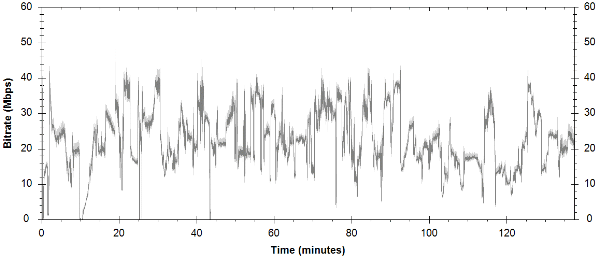
Blu-ray One: 1.66 :1 1080P Dual-layered Blu-rayDisc Size: 48,200,249,505 bytesFeature (part one): 25,655,717,952 bytesFeature (part two): 22,281,686,016 bytes Video Bitrate: 22.50 / 21.52 Mbps Codec: MPEG-4 AVC Video
Blu-ray Two: 1. 66:1 1080P Dual-layered Blu-rayDisc Size: 48,503,861,789 bytesFeature (part three): 40,648,901,952 bytesVideo Bitrate: 27.94 MbpsCodec: MPEG-4 AVC Video |
| Blu-ray Bitrate Graphs: |
 |
||
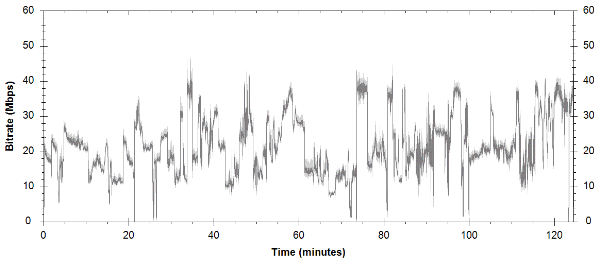 |
|||
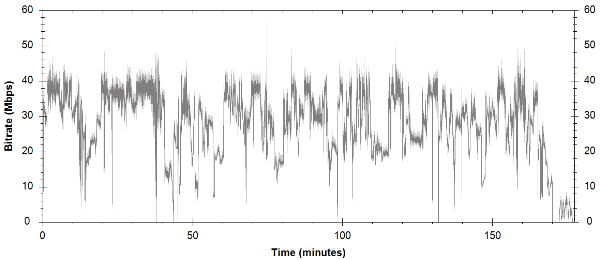 |
|||
| Audio | 2.0 Dolby Digital Hungarian Mono | 2.0 Dolby Digital Hungarian Mono | DTS-HD Master Audio Hungarian 1085 kbps 1.0 / 48 kHz / 1085 kbps / 24-bit (DTS Core: 1.0 / 48 kHz / 768 kbps / 24-bit) |
| Subtitles | English, None | English, None | English, None |
| Features |
Release Information: Studio: Artificial Eye Aspect Ratio:
Edition Details:
• 4 - The Spider's Function Chapters 12 |
Release Information: Studio: Facets Aspect Ratio:
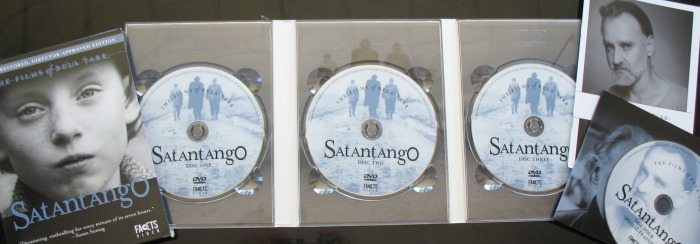
Edition Details: Three digipack in box (see photo) Chapters various |
Release Information: Studio: Arbelos
Blu-ray One: 1.66 :1 1080P Dual-layered Blu-rayDisc Size: 48,200,249,505 bytesFeature (part one): 25,655,717,952 bytesFeature (part two): 22,281,686,016 bytes Video Bitrate: 22.50 / 21.52 Mbps Codec: MPEG-4 AVC Video
Blu-ray Two: 1. 66:1 1080P Dual-layered Blu-rayDisc Size: 48,503,861,789 bytesFeature: 40,648,901,952 bytesVideo Bitrate: 27.94 MbpsCodec: MPEG-4 AVC Video
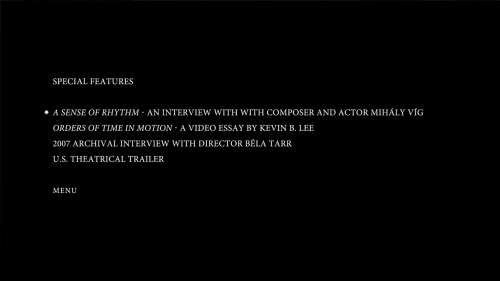
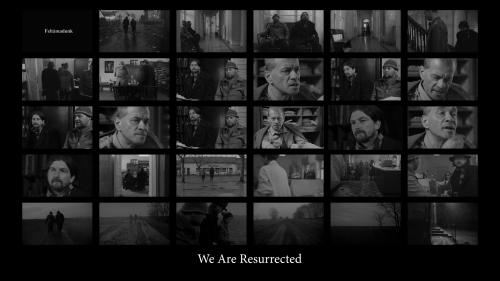
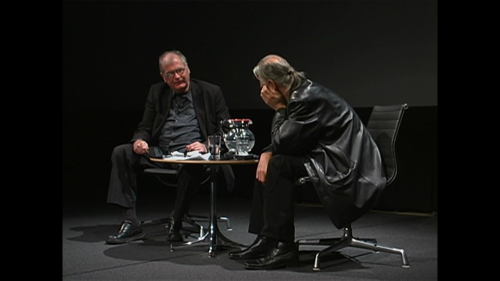
Edition Details: • New video interview "A Sense of Rhythm" with composer and actor Mihály Víg (41:17)• New video essay "Orders of Time in Motion" by Kevin B. Lee (19:31) • 2007 archival interview with director Béla Tarr (23:07) • U.S. Theatrical Trailer (2:45) • New essay "How to Watch Sátántangó" by Janice Lee and Jared Woodland.
Transparent Blu-ray Case Chapters 4 / 3 / 6 |
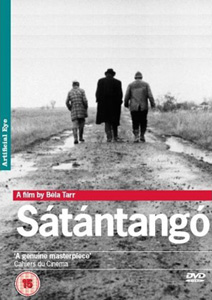





|
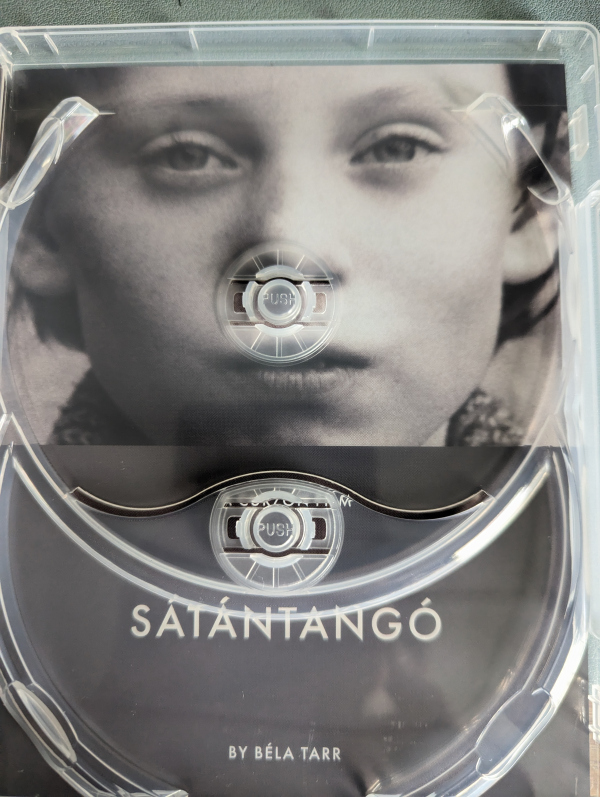
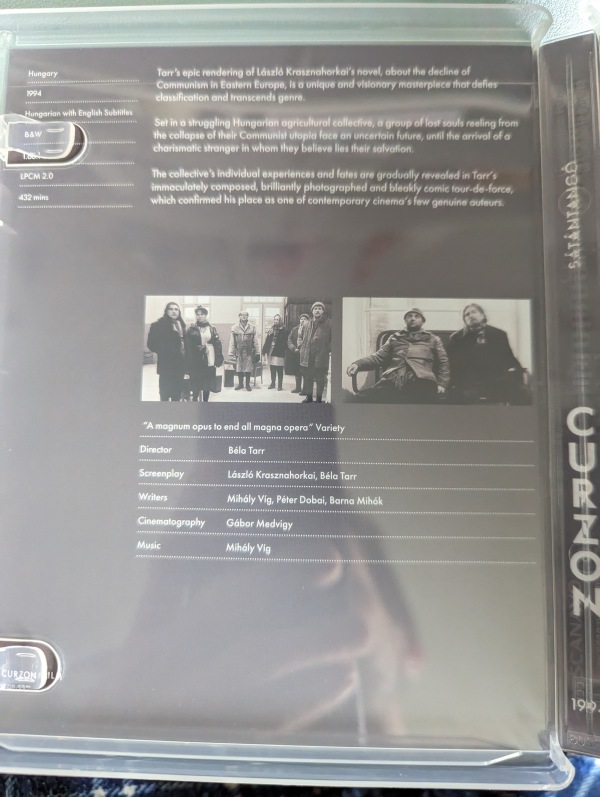
NOTE: Rob Joy informs us
about the December 2022 Artificial Eye
Blu-ray: "Outer sleeve is basically the same as
the old edition but with no blue/green/teal 'Curzon Artificial
Eye' branding. Rather, at the top it says only 'A Curzon Film'.
This edition has an inner sleeve image though. Pics attached
(very bad pics!) Had a quick look at the image on disc one. Transfer as expected, it appears to have corrected the AR issue!" (Thank you Rob!) |
| Comments: |
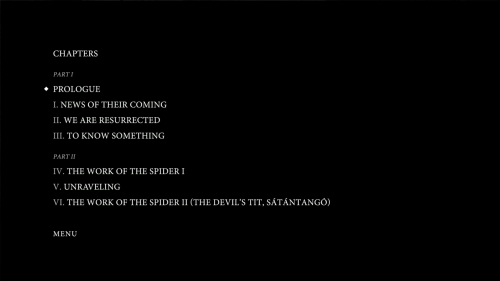
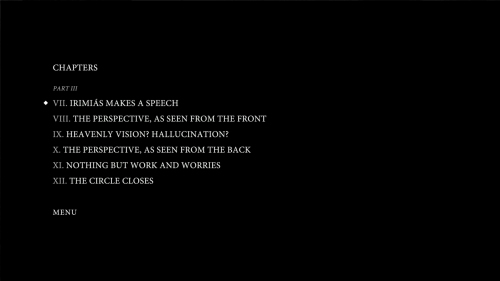
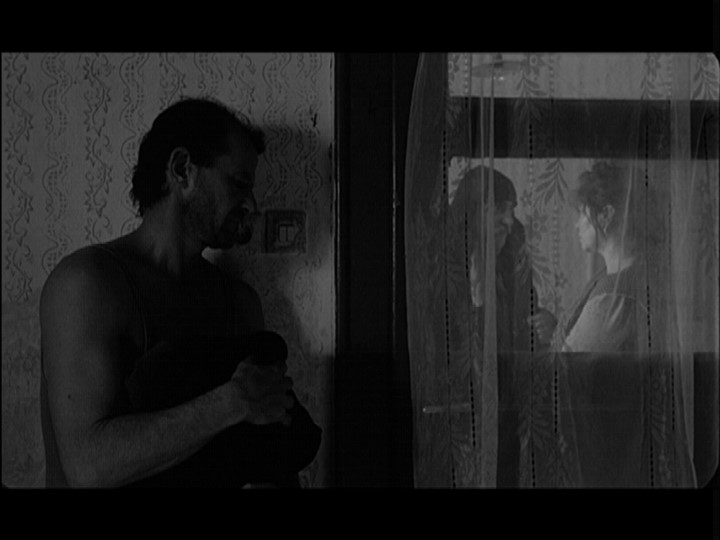
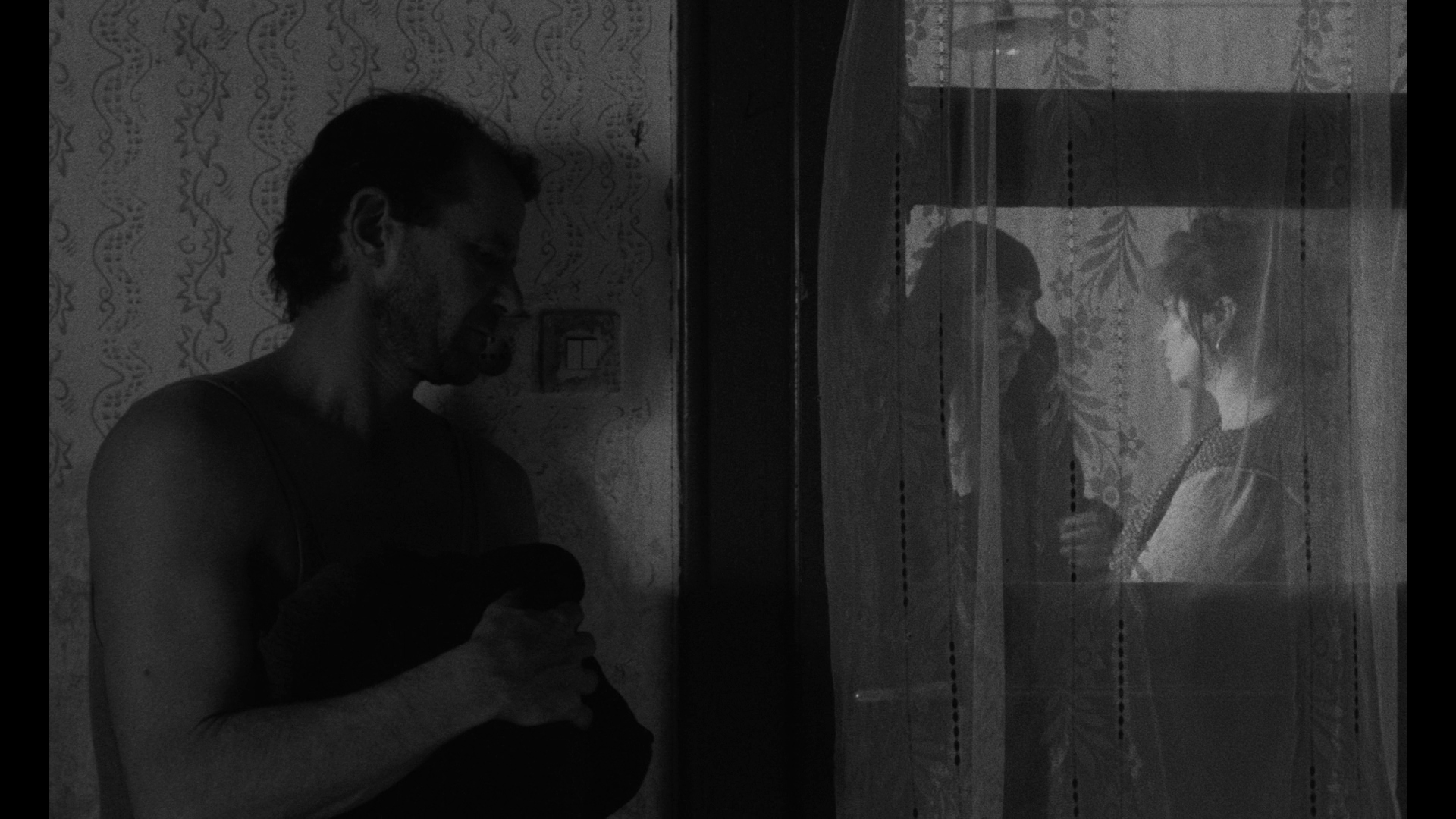
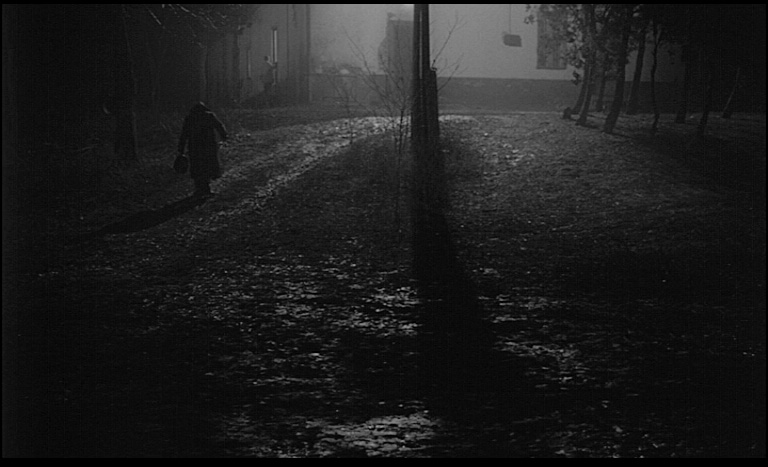
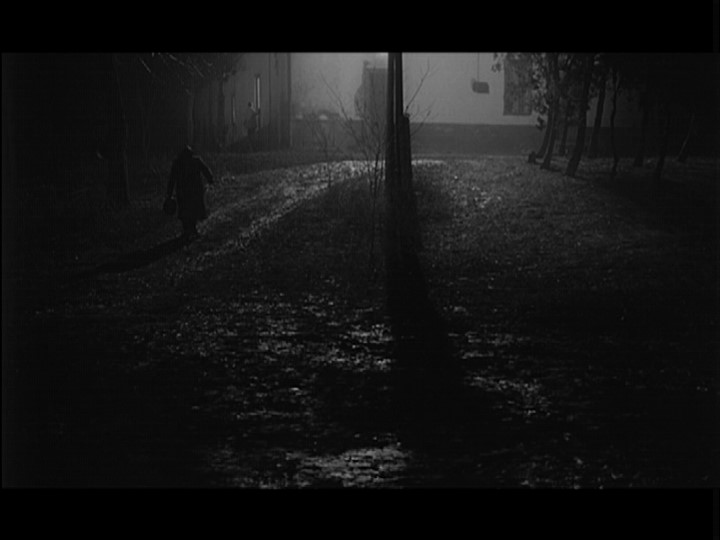
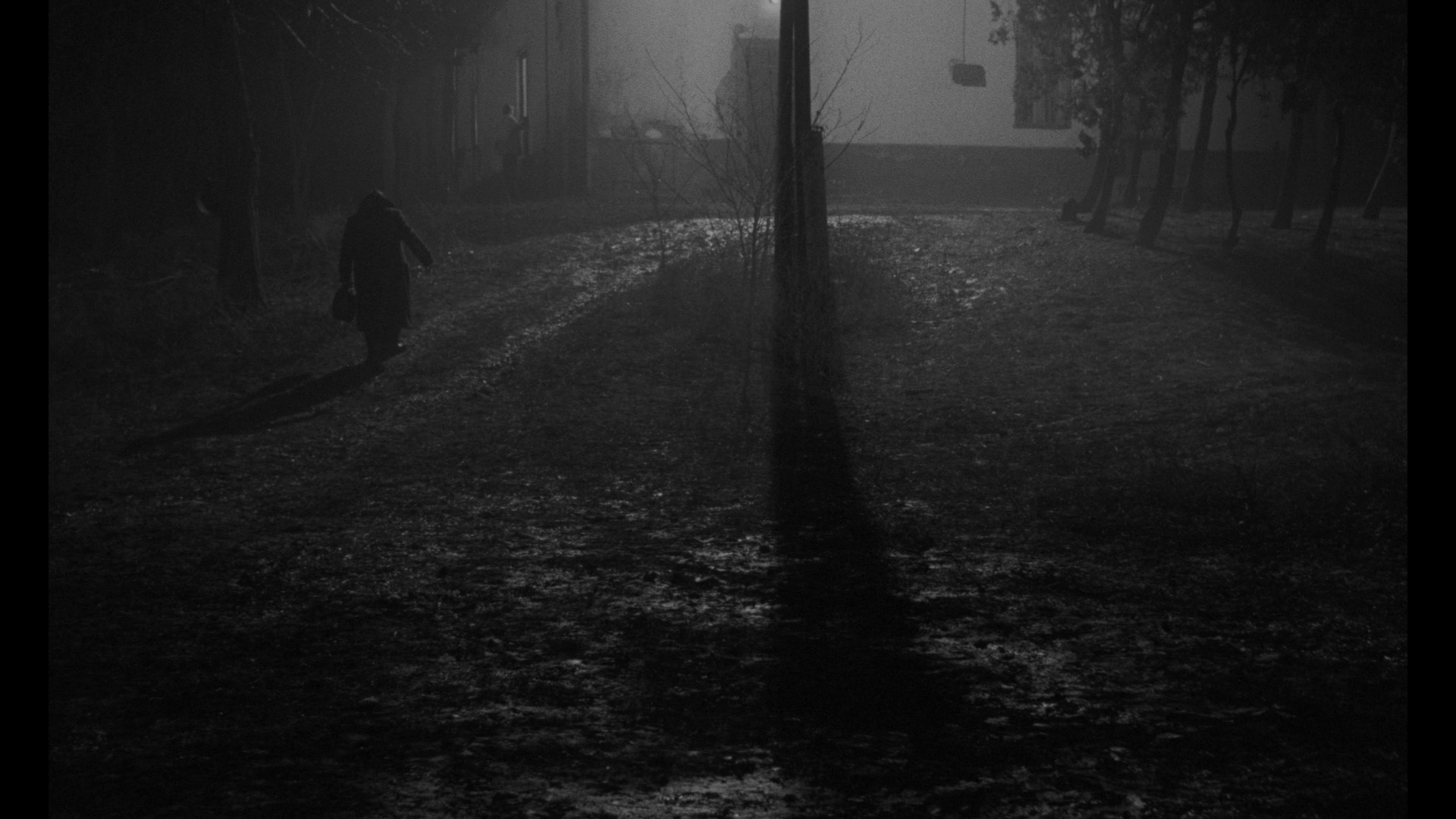
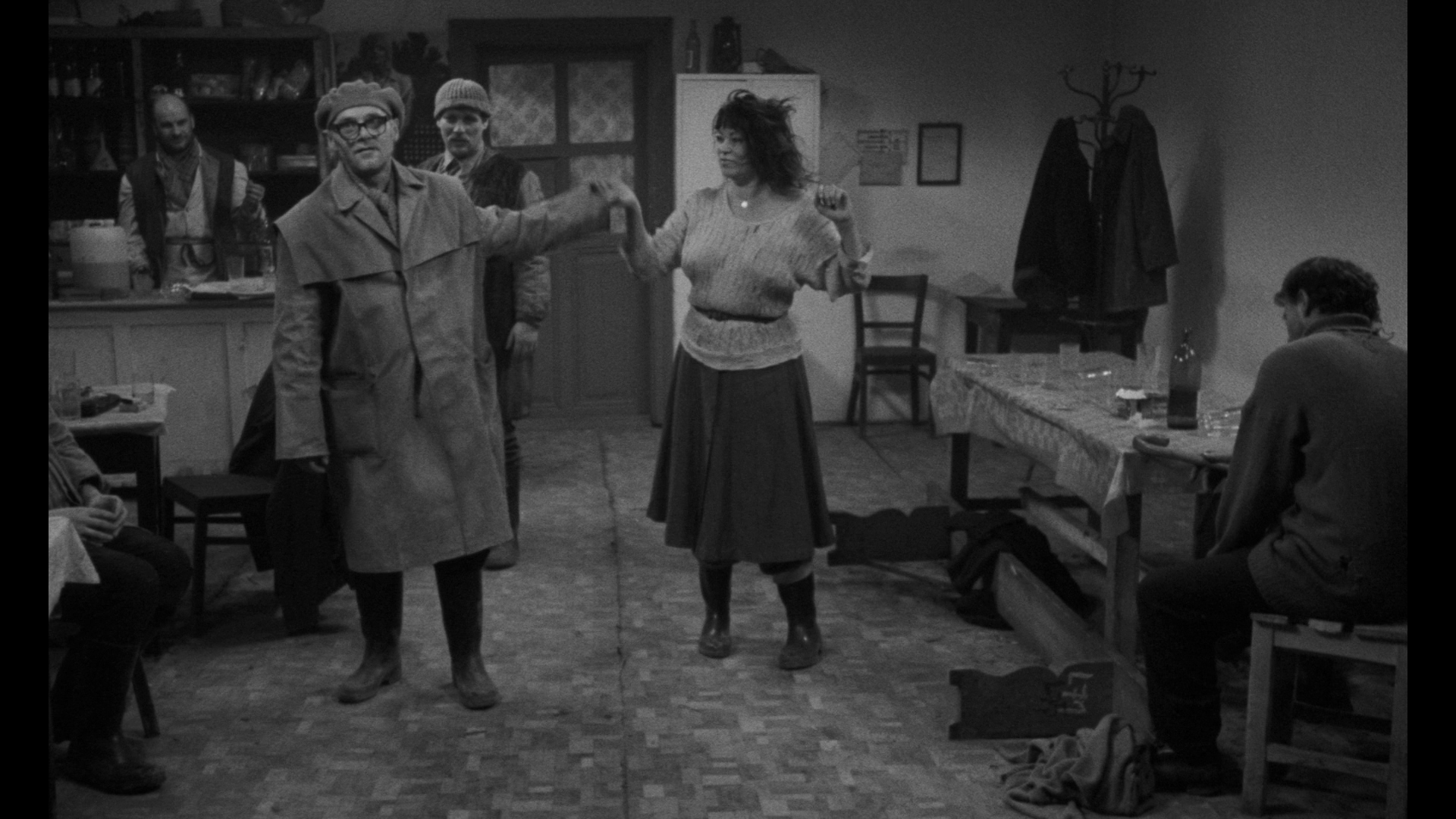
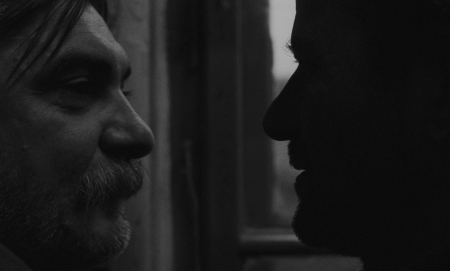
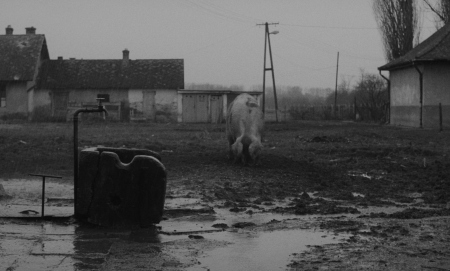
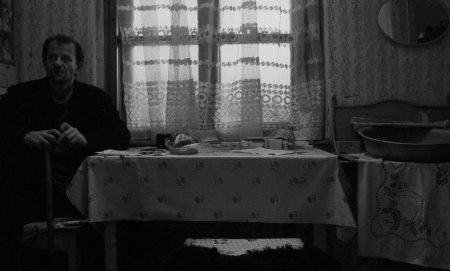
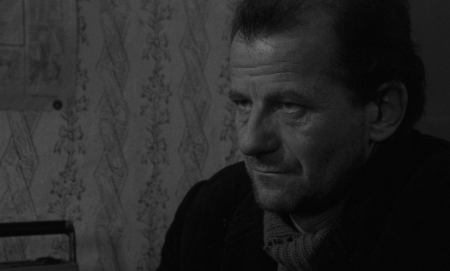
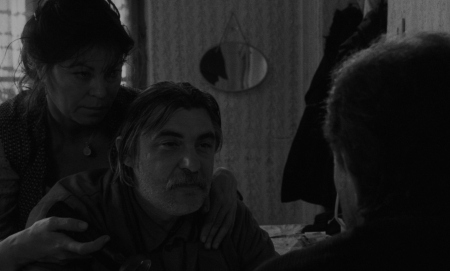
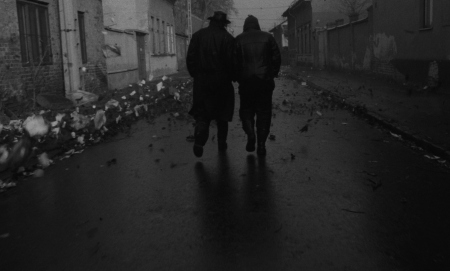
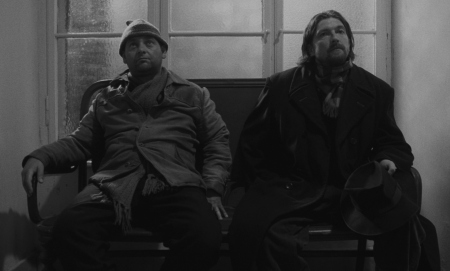
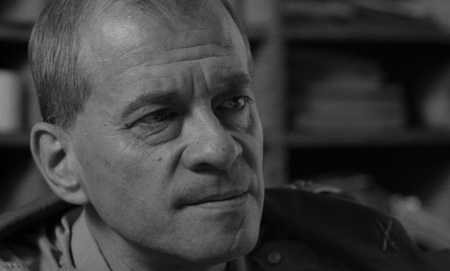
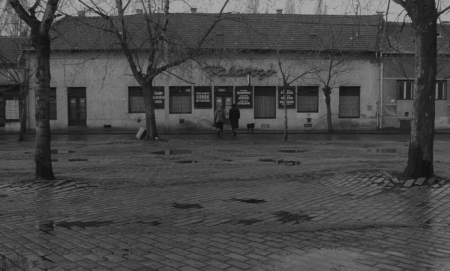
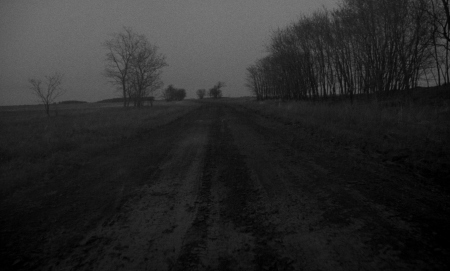
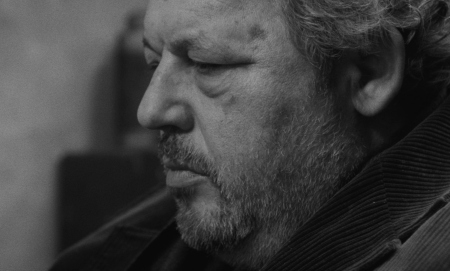
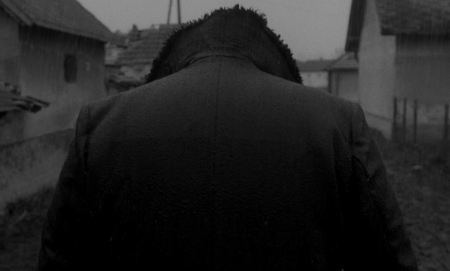
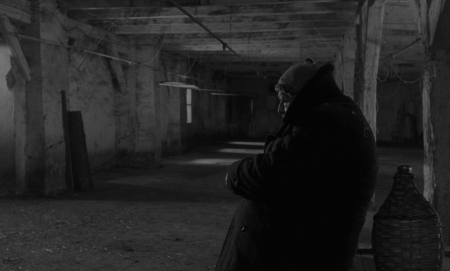
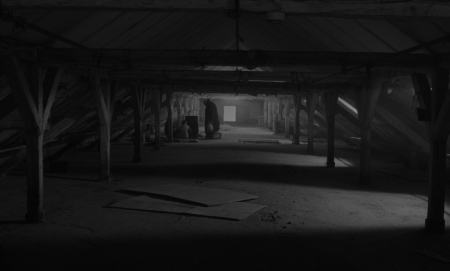
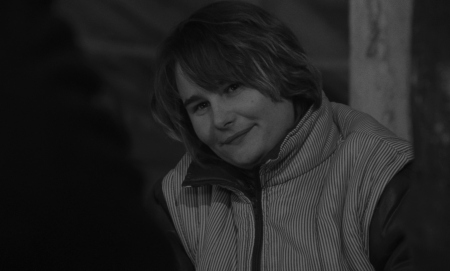
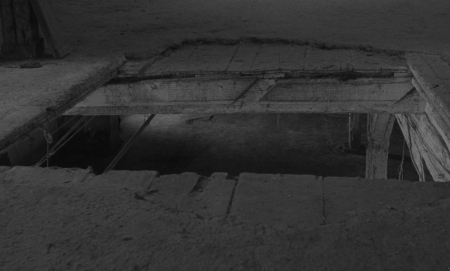
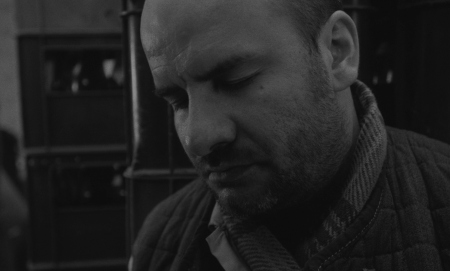
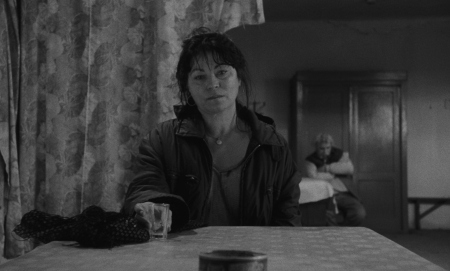
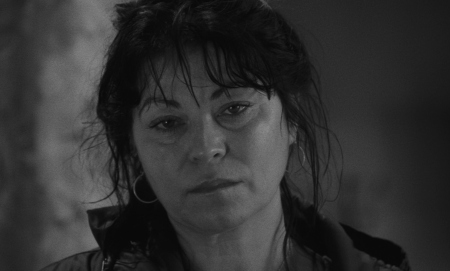
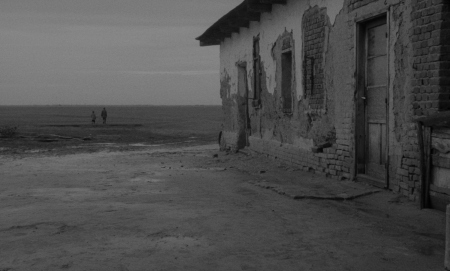
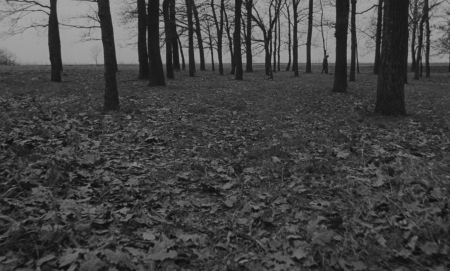
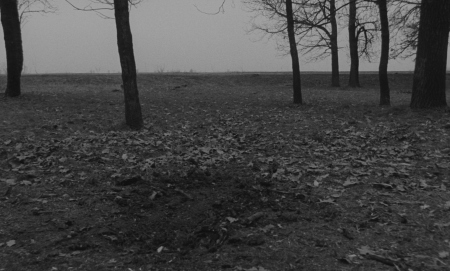
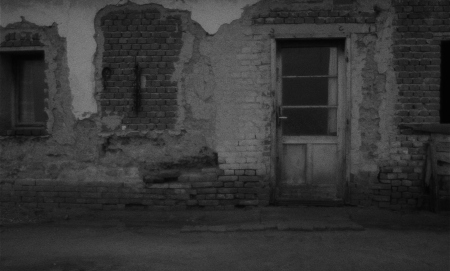
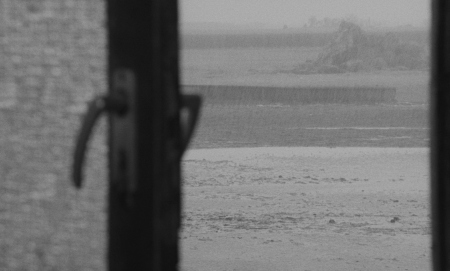
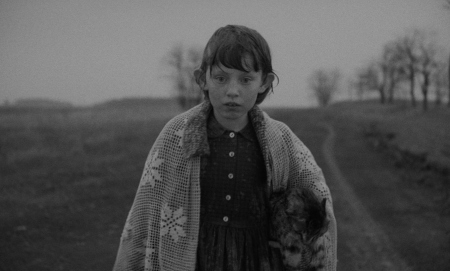
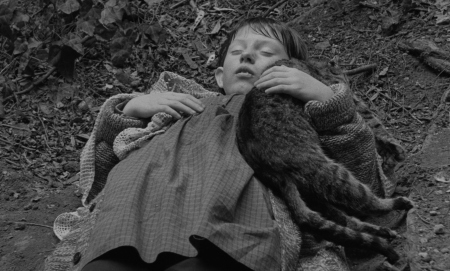
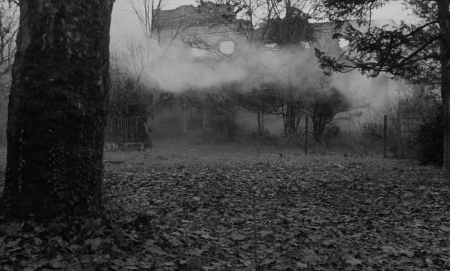
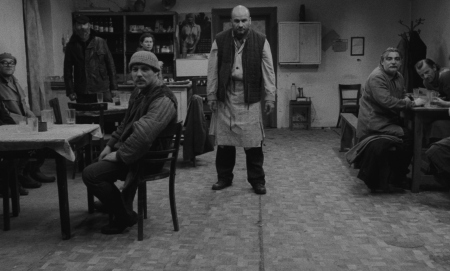
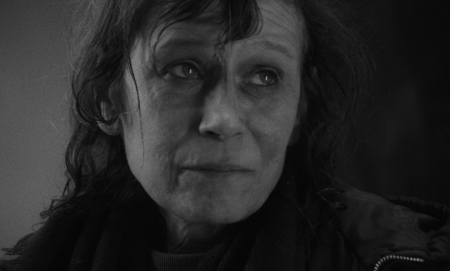
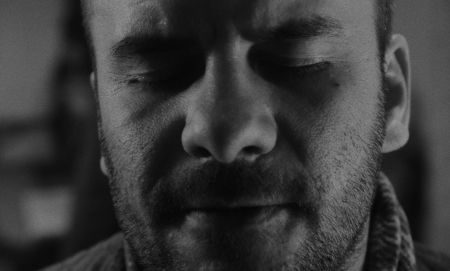
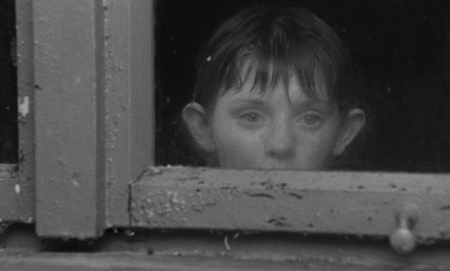
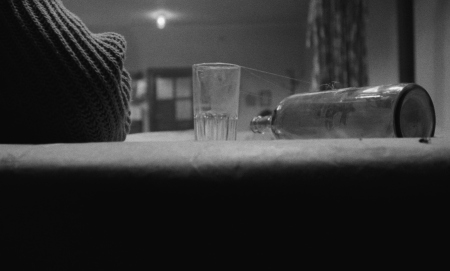
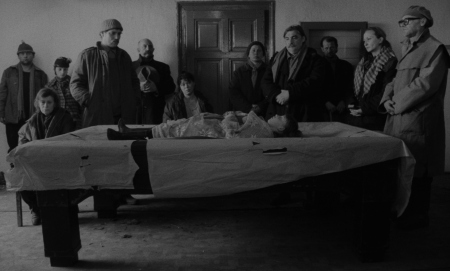
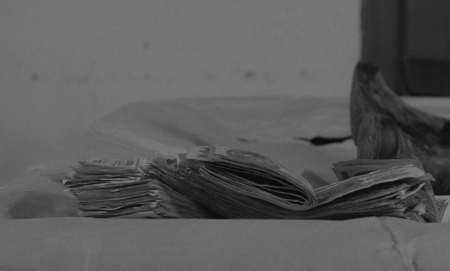
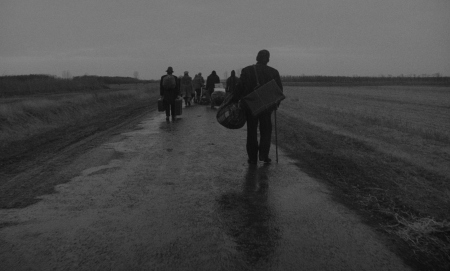
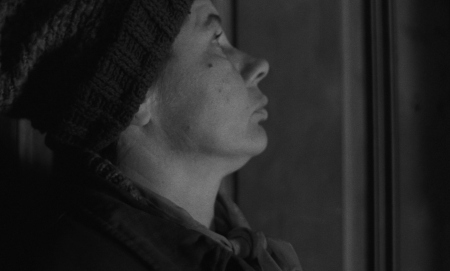
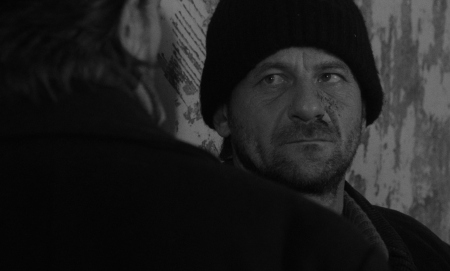
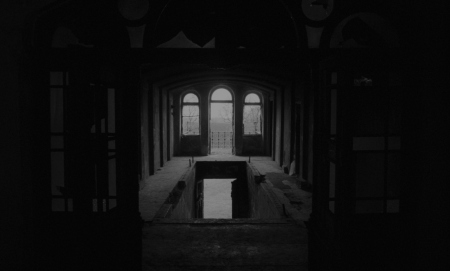
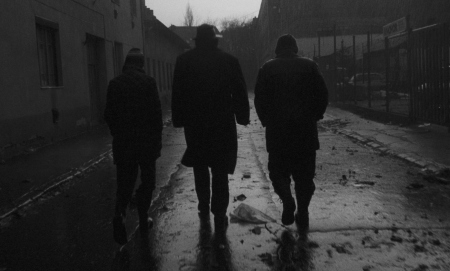
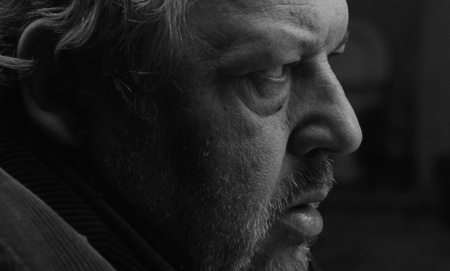
NOTE: The below Blu-ray captures were taken directly from the Blu-ray disc. ADDITION: Arbelos Blu-ray (March 2021): Arbelos have transferred Béla Tarr's Sátántangó to Blu-ray. It is cited as being from a "New 4K restoration from the original negative and sound materials" and is housed on two dual-layered Blu-ray discs with the 7-hour the epic divided into three 'parts' - with the first 2-hour+ sections on the first disc (part one has the prologues and 3 chapters, part 2 has 3 chapters) and the last, three hour part (6 chapters), on the 2nd dual-layered Blu-ray. This is a massive upgrade over the DVDs, which do show a shade more information in the frame but had rounded corners. It is a significantly superior image - great texture, layered contrast and no artifacts (Facets). It was a revelation to see this in 1080P after suffering with SD for the last 15-years. The 4K restoration is a total success. The improvement is extremely satisfying.
NOTE: Regarding the UK
Blu-ray
(Curzon / Artificial Eye) - Our friend, Jan Bielawski, has informed us in
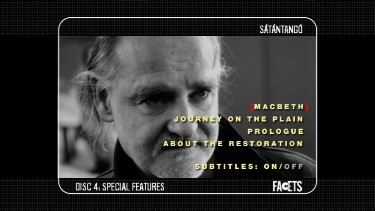
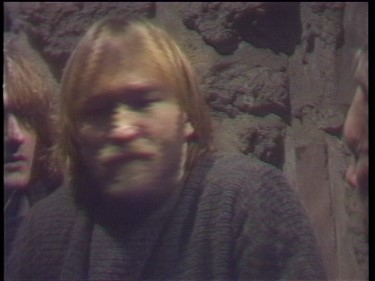
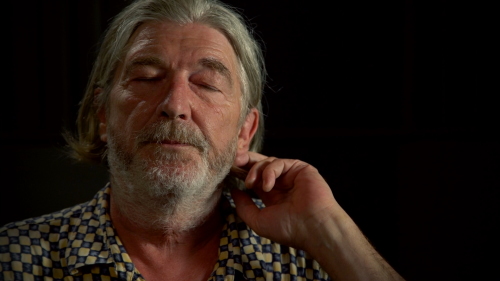
email: NOTE: We have added 56 more large resolution Blu-ray captures (in lossless PNG format) for DVDBeaver Patrons HERE On their Blu-ray, Arbelos use a linear PCM 1.0 channel mono track (24-bit) in the original Hungarian language. The score is by Mihály Vig (NotFilm, Béla Tarr's The Turin Horse, The Man from London, Werckmeister Harmonies etc.). It sounds clean without pops or hiss and is authentically flat via the uncompressed transfer. Arbelos offer optional English subtitles (see sample below) on their Region 'A' Blu-ray. Arbelos augment their Blu-ray release with supplements. There is a new 41-minute video interview entitled "A Sense of Rhythm" with composer and actor Mihály Víg. He is a composer, poet, songwriter, guitarist and singer plus being the co-founder of bands Trabant (1980–1986) and Balaton (1979–present), and known for his musical and occasional acting collaborations with Tarr. His comments are very welcome. I loved the new, 20-minute, video essay "Orders of Time in Motion" by Kevin B. Lee. Very insightful - great work Kevin. There is also a 2007 archival interview with director Béla Tarr running 23-minutes, and a U.S. theatrical trailer. Sátántangó is #36 on the Sight & Sound / British Film Institute's Critic's Poll of the 100 Greatest Films Ever Made. I can't say much more than the Arbelos description: "One of the greatest achievements in recent art house cinema and a seminal work of "slow cinema," Sátántangó, based on the novel by László Krasznahorkai, follows the members of a humble agricultural community living in a bleak and punishing backwater after the fall of Communism... Shot in stunning black-and-white by Gábor Medvigy and filled with exquisitely composed long takes, Sátántangó unfolds in twelve distinct movements, alternating forwards and backwards in time, echoing the structure of a tango dance. Béla Tarr's vision, aided by long-time partner and collaborator Ágnes Hranitzky, is enthralling and his portrayal of rural Hungary beset by drunken revelry, treachery, and near-perpetual rainfall is both transfixing and uncompromising. Sátántangó has been justly lauded by critics and audiences as a masterpiece..." Arbelos' '25th anniversary 4K Blu-ray restoration of Béla Tarr's masterpiece' is a welcome addition to any cinephile's digital library... in fact, we consider it essential. Don't hesitate to pick this up, immediately. Gary Tooze *** ADDITION: Facets - Region 0 NTSC - July 08': If ever there was a reason to own a region-free DVD player.... Well, I can't say I'm surprised. The three (actually all 4) Facets discs, despite rumors, are also non-anamorphic, and they are unfortunately from an unconverted PAL source (see the times) and hence are filled with artifacts like 'ghosting' and digital noise. The image is generally muddy and appears to be interlaced - making it more hazy and even less sharp. Sigh. I haven't watched the three discs all the way through but have done some extensive sampling to reach these conclusions. While I can appreciate Facets giving a decent attempt at a 'package' here - they are still miserable failures on the digital transfer front. The second disc is single-layered and overall the image is much darker. In short the Artificial Eye set - also imperfect - is far in advance of this Facets representation of Tarr's masterpiece film. Depending on the system it can be a humungous difference - like night and day. Facets have even cheaply duplicated the exact same static menus screen for all three feature discs. NOTE: The term 'director approved' seems to get thrown around a lot these past few years. What is can mean is the director endorses the print that the digital transfer is made from. It, very infrequently, means he/she approves the final encode - where anything can happen - from cropping to incorrect standard conversion. The fact that this Facet's package is labeled as 'director approved' is fairly meaningless. I didn't give a thorough test to the audio but it too seems, like the image transfer, at the weaker end of the scale. Facets have tried with a fourth disc inclusion (single-layered). It includes Tarr's TV version of Macbeth (1982 - 63 minutes 4:3 interlaced), Journey on the Plain (1995, 34 minutes - color), Prologue (2004, 5 minutes, 4:3 letterboxed - interlaced) and 5 minutes on the restoration which states Facts as initiating the removal of 500,000 pieces of dirt and debris, scratch repair etc. from the print. There is also a 24-page linter notes booklet which includes the text of "A Symposium at Facets" with Susan Doll in conversation with Jonathan Rosenbaum. The latter may be the best part of this set. In an age where DVD production companies are producing high-definition digital transfers on Blu-ray disc - I'm afraid Facets appears as a techno-dinosaur with their work only really acceptably viewable on old tube TVs (the smaller the better). They have some amazing licensed works in their stable of films but need a strong influx of cash to support them to modern standards. This is almost as bad as Fox/Lorber's stuff from more than a decade ago. The extras are a positive attempt although they too lack any type of impressive representation. So despite this we really have no alternative but to continue to recommend the Artificial Eye package (currently half the price of the Facets) - which we strongly encourage to those both uninitiated to the film or post-appreciating it. Gary ToozeON THE ARTIFICIAL EYE: Despite the presence of macro-blocking and visible blocks of difference shades of grey pixels, when zooming in, the transfer looks great. Strong blacks, no visible artefacts while viewing, strong details. Overall, a very good package indeed. Decent video for a non-anamorphic transfer (i.e., leaps and bounds better than the video featured on those horrible bootlegs). Both the AE and the Clavis sets are more or less the same. However, the AE set is slightly better than the Clavis set in terms of subtitles (style, position in the frame...and actual translation to a small near minuscule extent), package design (the AE set features three slim keepcases that slip into a nice, sturdy cardboard sleeve vs. Clavis' double-disc size amaray style case), and video in a certain respect. Specifically, the Clavis set appears to have a sporadic stream of debris that runs along the top edge of the frame. While this stream of debris does not distract from the viewing experience of the film, it is nevertheless a video defect. However, said defect is not on the AE edition of the film (so far as I can tell from my quick spot check). Thus, the AE edition takes the lead video wise (although aside from this small difference, the video on both is more or less the same). Although we have more than two weeks to go in the month of November, I still nominate AE's edition of Satantango for DVD of the Month. The DVD presentation of the film could be better, but it is nevertheless truly exciting to finally have this film on DVD. Throw away those infamous bootlegs and pick up the AE set of Satantango. Irimias and Petrina have finally arrived on the DVD format. All hail. Karim (a.k.a livullmannfan) |
Facets Package
 |
Arbelos - Region 'A' - Blu-ray
 |
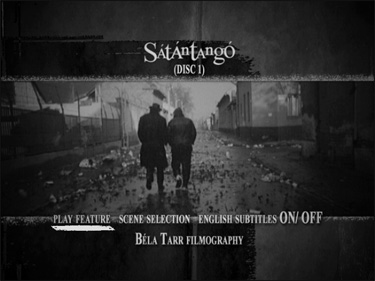
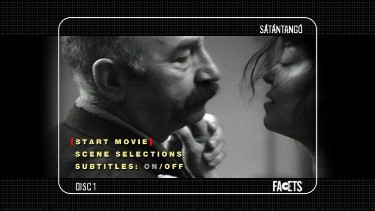
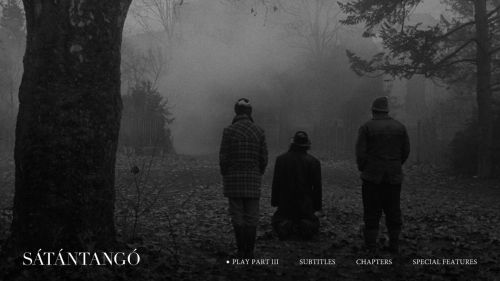
DVD Menus
(Artificial Eye - Region 2 - PAL LEFT vs. Facets - Region 0 -
NTSC RIGHT)
 |
 |
|
|
|
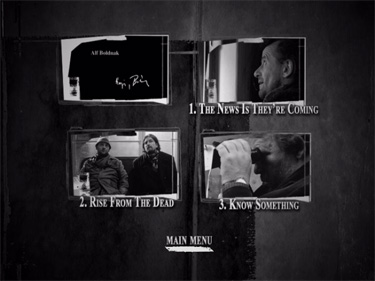
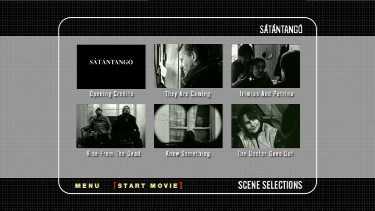
Facets fourth disc
 |
 |
|
|
|
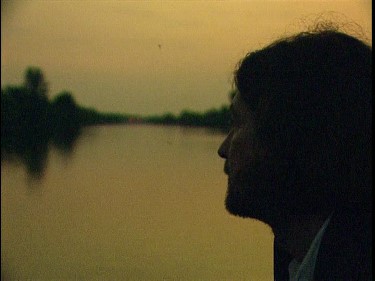
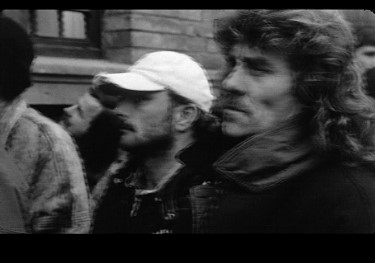
Arbelos - Region 'A' - Blu-ray
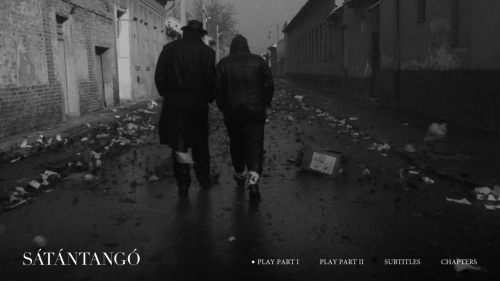 |
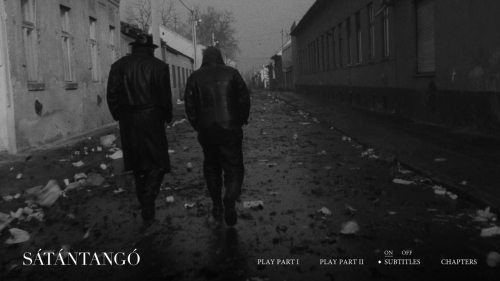 |
 |
 |
 |
 |
 |
 |
 |
 |
 |
 |
 |
 |
CLICK EACH BLU-RAY CAPTURE TO SEE ALL IMAGES IN FULL 1920X1080 RESOLUTION
Screen Captures
|
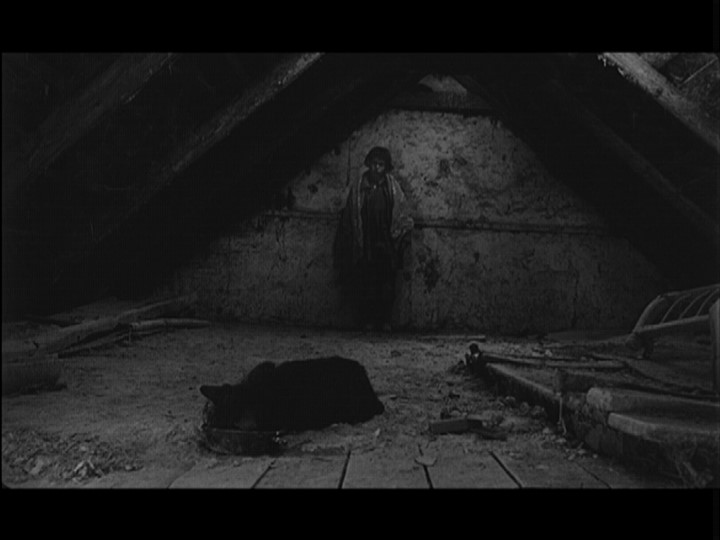
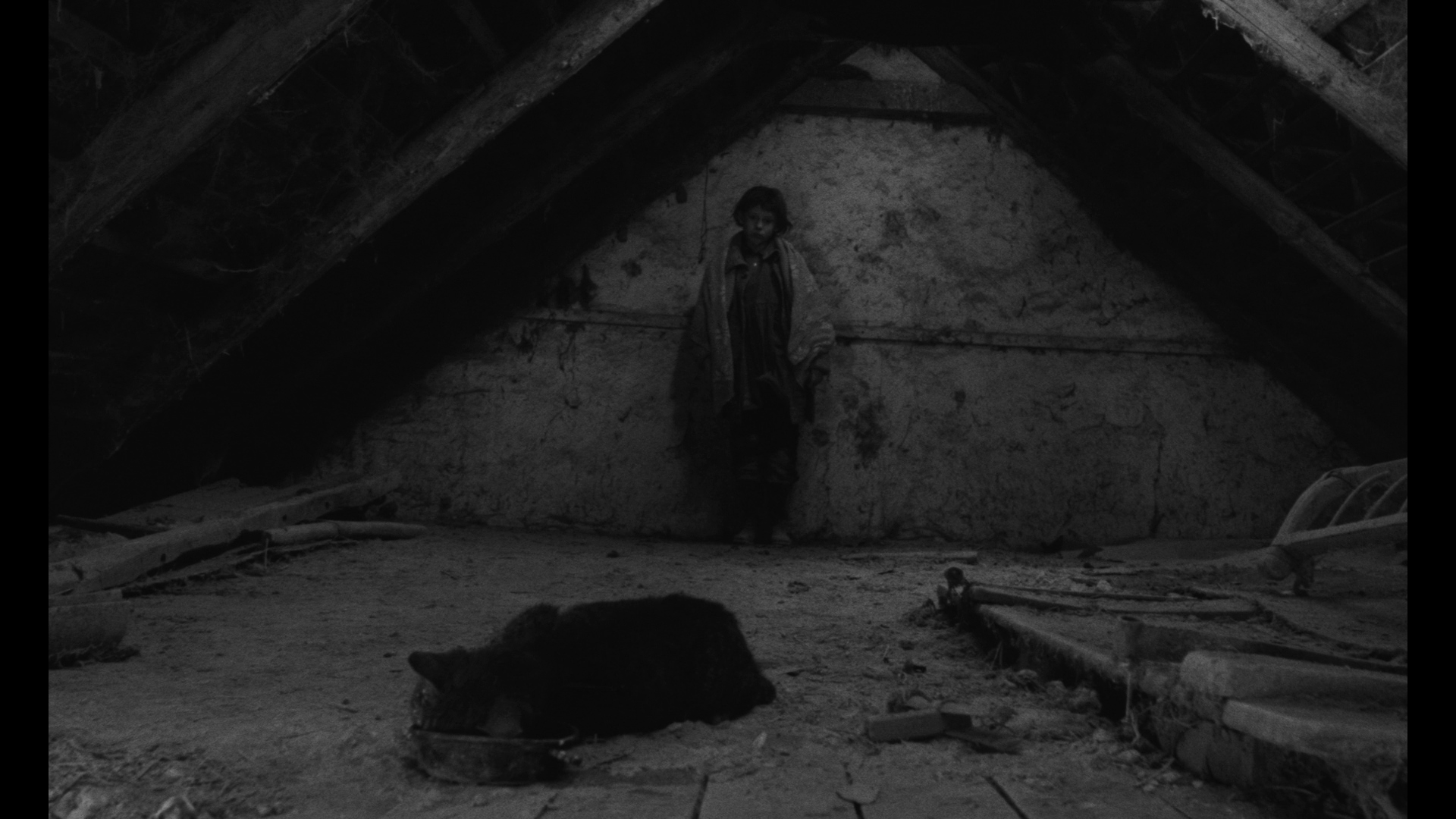
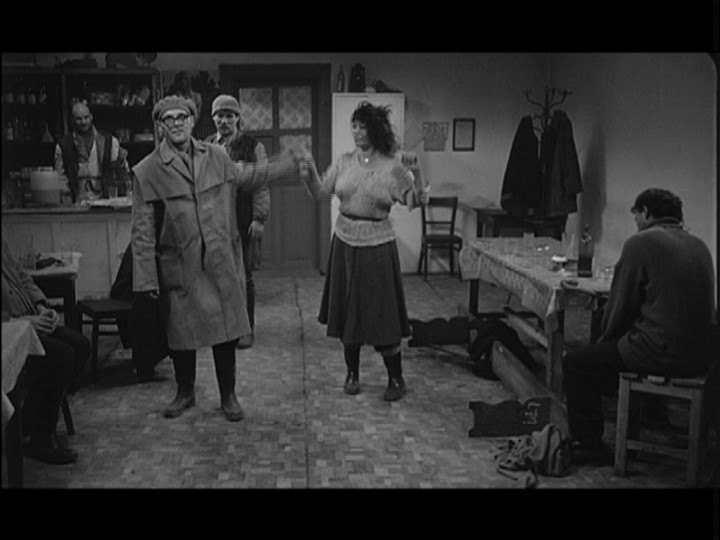
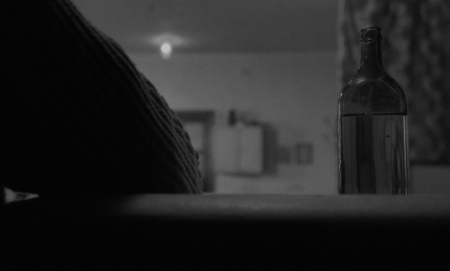
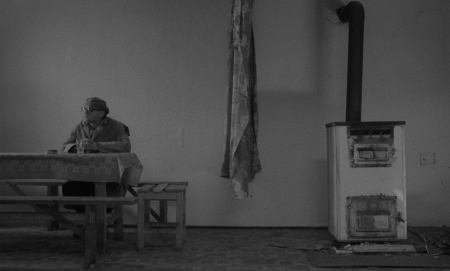
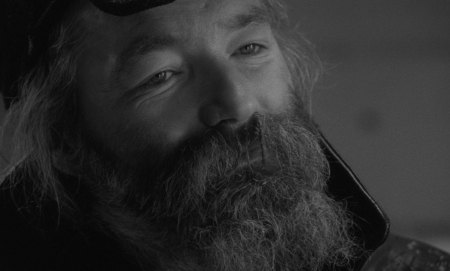
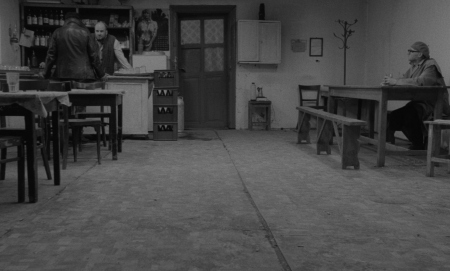
1) Artificial Eye - Region 2 - PAL TOP 2) Facets - Region 0 - NTSC MIDDLE 3) Arbelos - Region 'A' - Blu-ray BOTTOM |
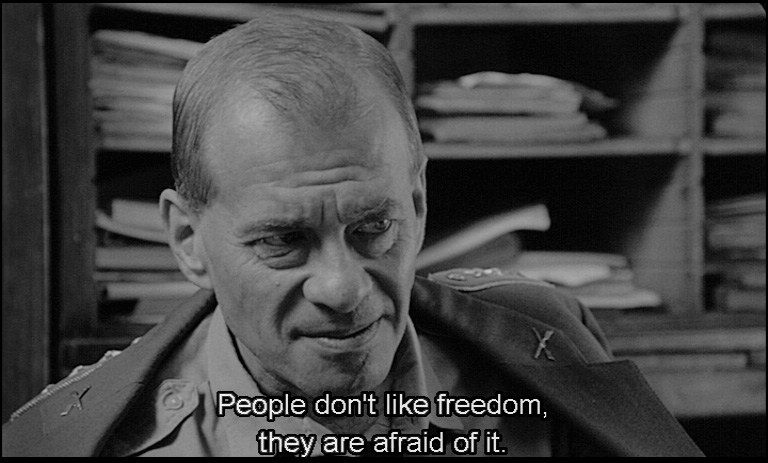
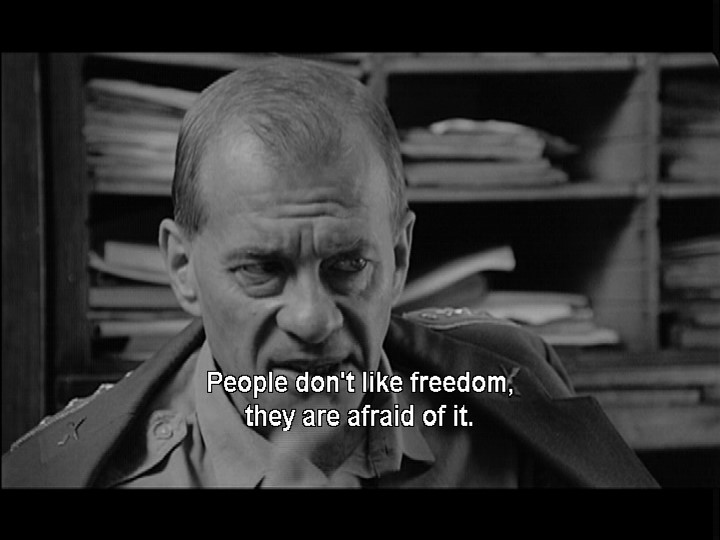
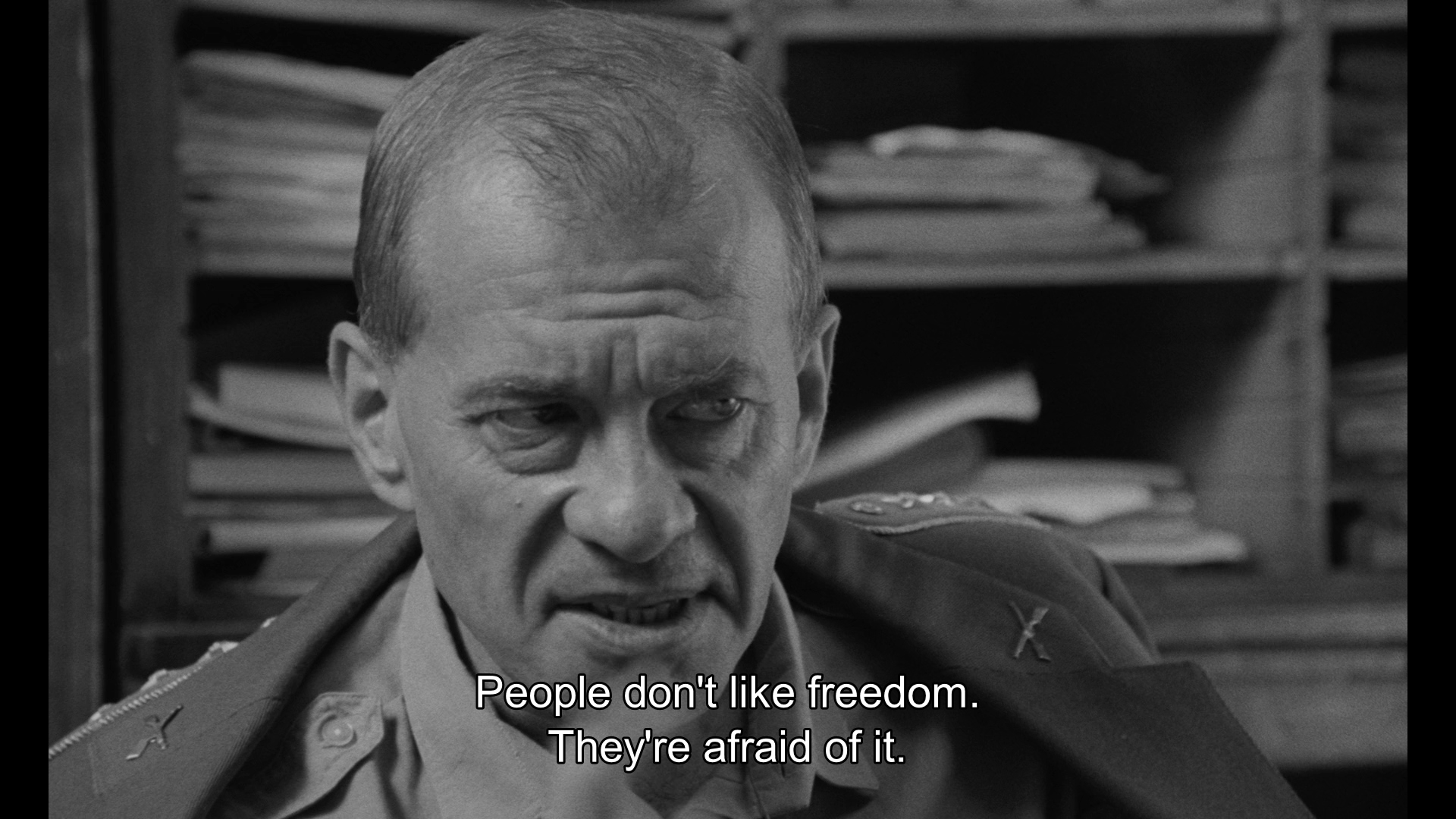
Subtitle Samples
 |
|
|
 |
|
1) Artificial Eye - Region 2 - PAL TOP 2) Facets - Region 0 - NTSC MIDDLE 3) Arbelos - Region 'A' - Blu-ray BOTTOM |
 |
|
|
 |
|
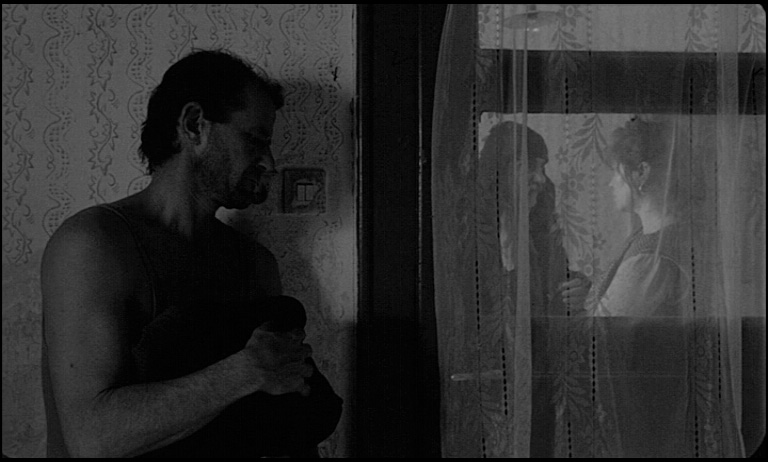
1) Artificial Eye - Region 2 - PAL TOP 2) Facets - Region 0 - NTSC MIDDLE 3) Arbelos - Region 'A' - Blu-ray BOTTOM |
 |
|
|
 |
|
1) Artificial Eye - Region 2 - PAL TOP 2) Facets - Region 0 - NTSC MIDDLE 3) Arbelos - Region 'A' - Blu-ray BOTTOM |
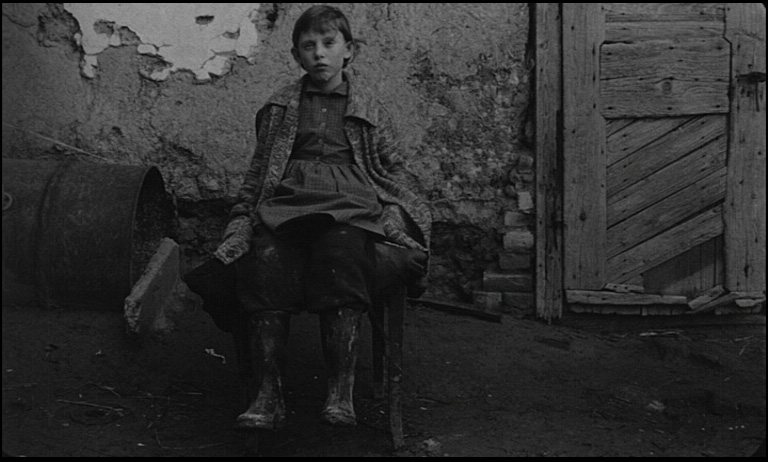 |
|
|
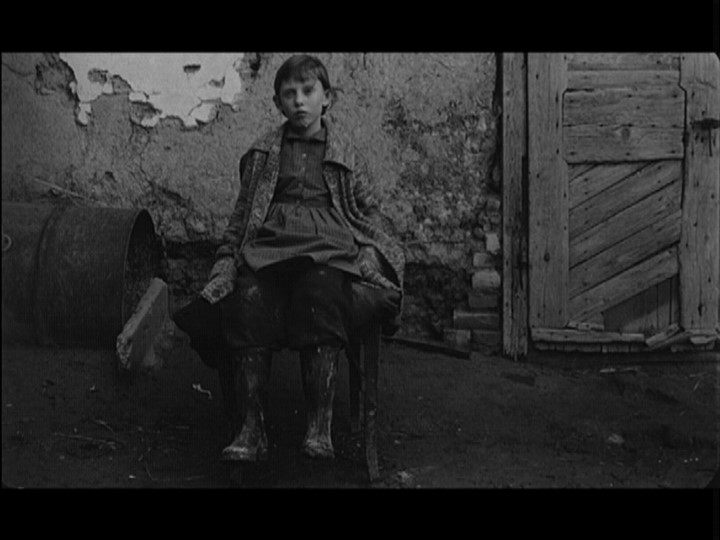
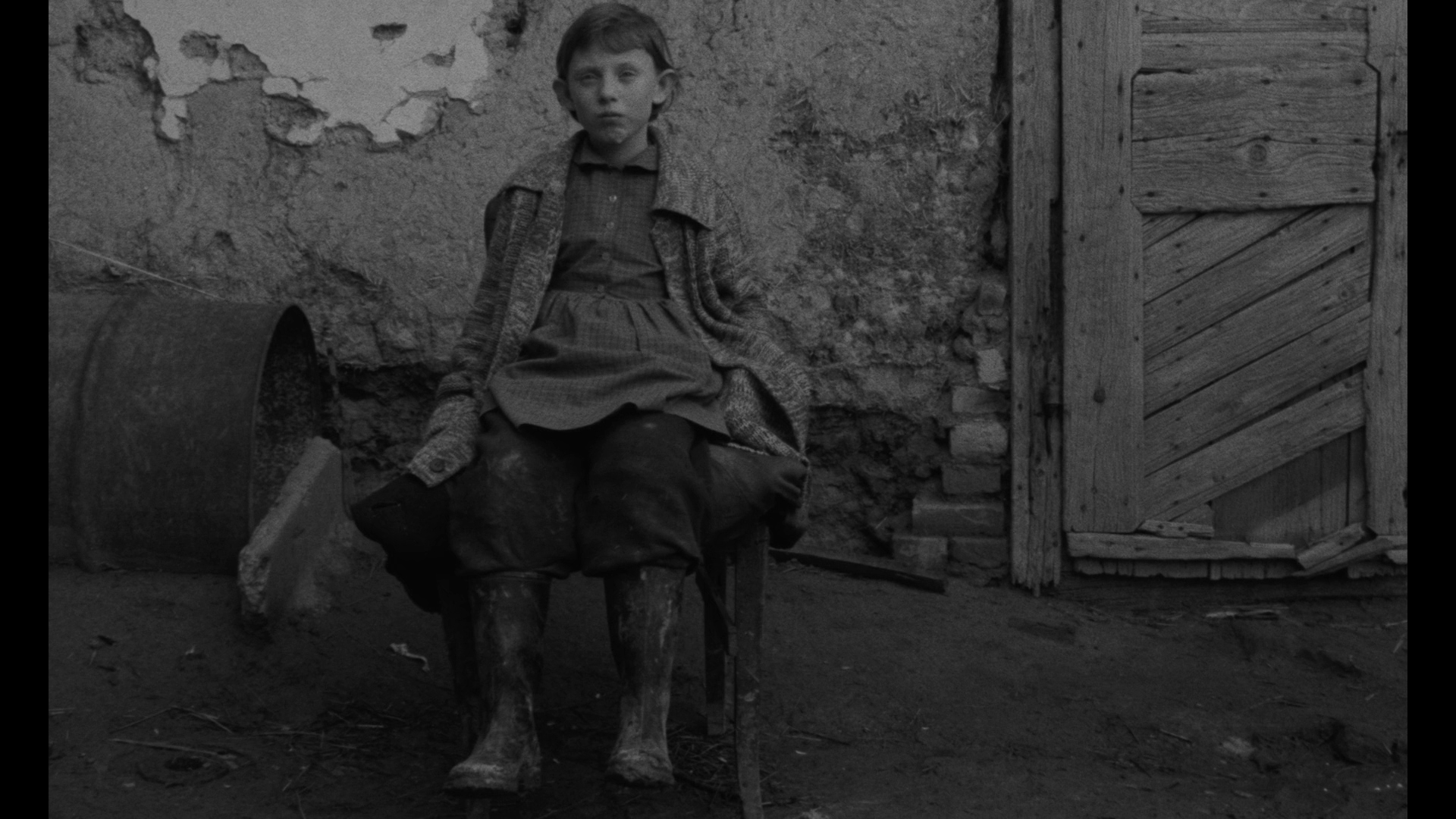 |
|
1) Artificial Eye - Region 2 - PAL TOP 2) Facets - Region 0 - NTSC MIDDLE 3) Arbelos - Region 'A' - Blu-ray BOTTOM |
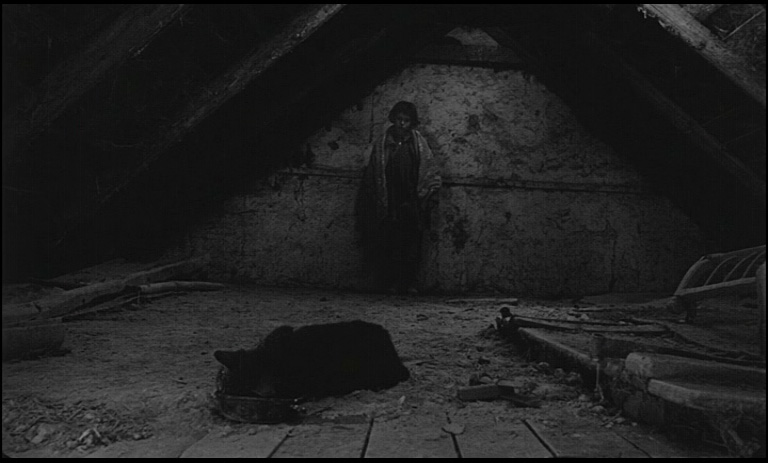 |
|
|
 |
|
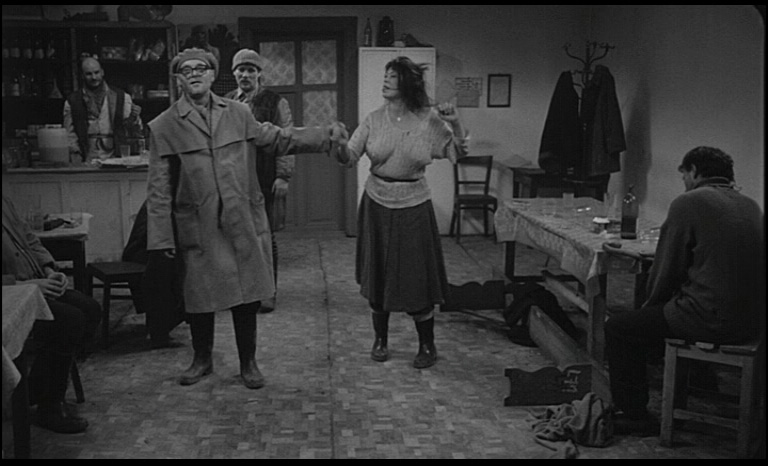
1) Artificial Eye - Region 2 - PAL TOP 2) Facets - Region 0 - NTSC MIDDLE 3) Arbelos - Region 'A' - Blu-ray BOTTOM |
NOTE: See combing in the Facets
disc
 |
|
|
 |
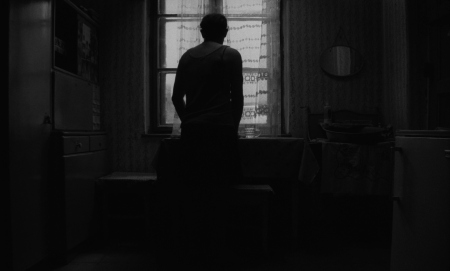
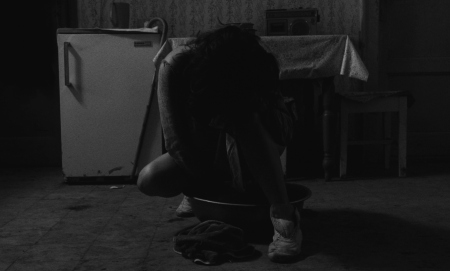
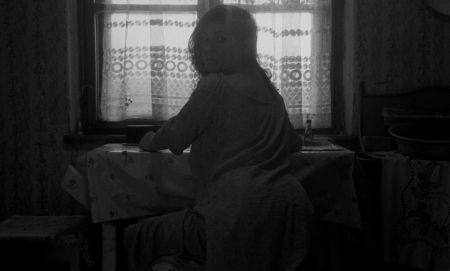
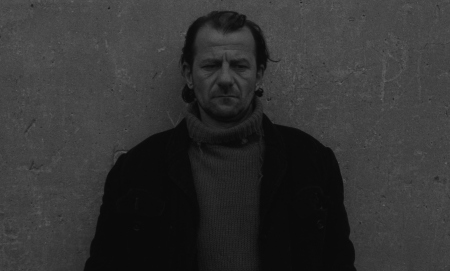

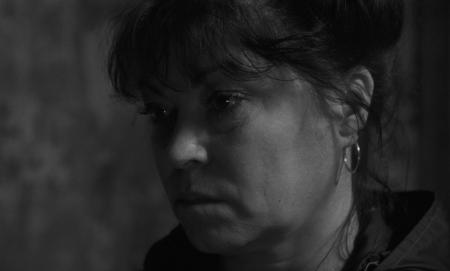
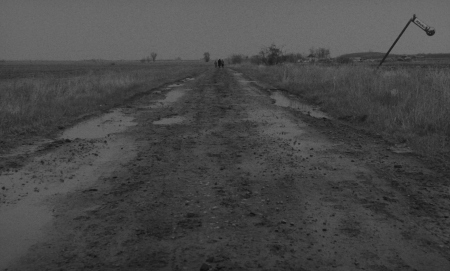
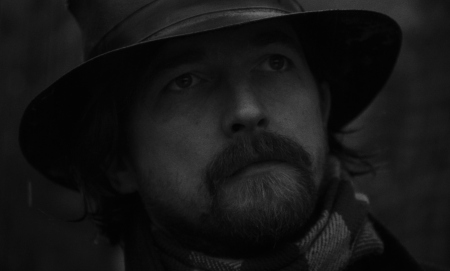
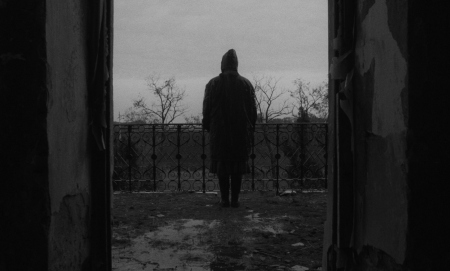
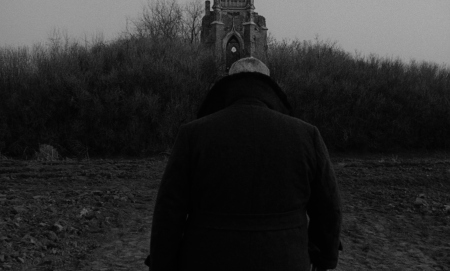
| Box Cover |
|
|
BONUS CAPTURES:
Also available on Blu-ray in the UK from Curzon / Artificial Eye - re-released Dec 2022:
Coming to 4K UHD in August 2026 by Curzon
(UK):
|
| Distribution |
Artificial Eye Region 2 - PAL |
Facets Region 0 - NTSC |
Arbelos - Region 'A' - Blu-ray |
|
Search DVDBeaver |
S E A R C H D V D B e a v e r |














Mail cheques, money orders, cash to: or CLICK PayPal logo to donate!
|
Gary Tooze
|
|
Thank You!
