|
We have started a Patreon page with the hopes that
some of our followers would be
willing to donate a small amount to keep DVDBeaver
alive. We are a tiny niche, so your
generosity is vital to our
existence.
We are talking about a minimum of
$0.10 - $0.15 a day, perhaps a
quarter (or more) to those who won't
miss it from their budget. It
equates to buying DVDBeaver a coffee
once, twice or a few times a month.
You can then participate in our
monthly
Silent
auctions,
and have exclusive access to many 'bonus' High Resolution screen captures
(in lossless PNG Format) - both
4K UHD
and
Blu-ray
(see
HERE).
|






|
Search DVDBeaver |
S E A R C H D V D B e a v e r |

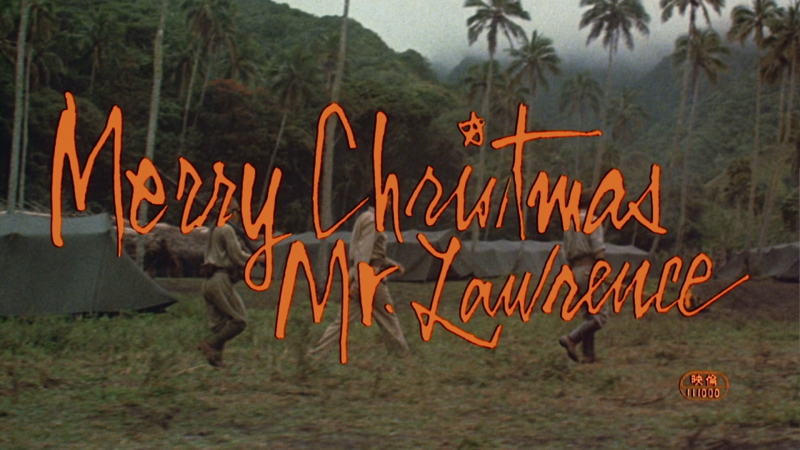
directed
by Oshima Nagisa
Japan 1983
|
SYNOPSIS: In this captivating, skewed World War II drama from Nagisa Oshima, David Bowie regally embodies Celliers, a British officer interned by the Japanese as a POW. Rock star Ryuichi Sakamoto (who also composed this film’s hypnotic score) plays the camp commander, obsessed with the mysterious blond major, while Tom Conti is the British lieutenant colonel Lawrence, who tries to bridge the emotional and language divides between captor and prisoner. Also featuring actor-director Takeshi Kitano in his first dramatic role, Merry Christmas Mr. Lawrence is a multilayered, brutal, at times erotic tale of culture clash, and one of Oshima’s greatest successes. ***
“There are times, when victory is very hard to take”
|
Poster
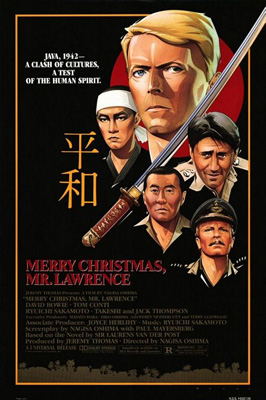 |
Theatrical Release: May 28, 1983
Reviews More Reviews DVD Reviews
Comparison:
Optimum (Special Collector's Edition) - Region 2 - PAL vs. Criterion Region 'A' - Blu-ray
Big thanks to Henrik Sylow for the DVD Review!
Optimum (Special Collector's Edition) - Region 2 - PAL LEFT vs. Criterion Region 'A' - Blu-ray RIGHT
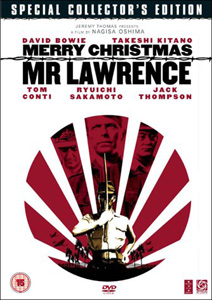
| DVD Box Cover |
|
Coming to the UK on Blu-ray from Arrow in June 2020:
|
| Distribution |
Optimum Region 2 - PAL |
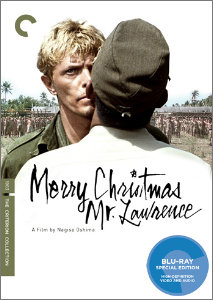
Criterion Collection - Spine # 535 - Region 'A' - Blu-ray |
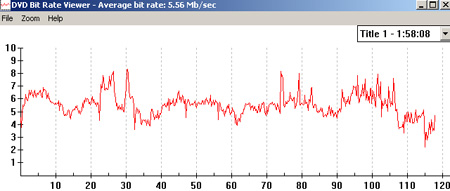
| Runtime | 1:58:11 (4% PAL speedup) | 2:03:18.224 |
| Video |
1.78:1 Aspect Ratio
16X9 enhanced |
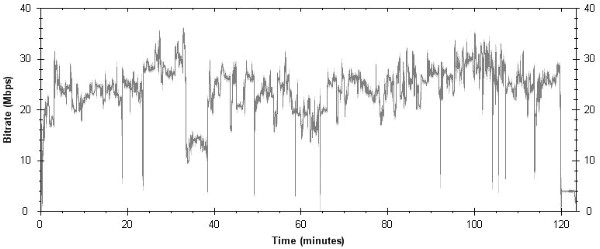
1080P / 23.976 fps Dual-layered Blu-ray Disc Size: 47,068,078,103 bytesFeature: 24,928,063,488 bytesVideo Bitrate: 23.51 MbpsCodec: MPEG-4 AVC Video |
|
NOTE: The Vertical axis represents the bits transferred per second. The Horizontal is the time in minutes. |
||
| Bitrate DVD |
|
|
| Bitrate Blu-ray |
|
|
| Audio | 2.0 Dolby Digital English and Japanese | DTS-HD Master Audio Japanese 2035 kbps 2.0 / 48 kHz / 2035 kbps / 24-bit (DTS Core: 2.0 / 48 kHz / 1509 kbps / 24-bit) |
| Subtitles | English (fixed) | English, none |
| Features |
Release Information: Studio: Optimum Aspect Ratio:
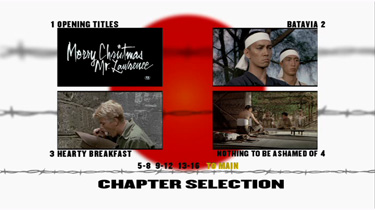
Edition Details: Chapters 16 |
Release Information: Studio: Criterion
1080P / 23.976 fps Dual-layered Blu-ray Disc Size: 47,068,078,103 bytesFeature: 24,928,063,488 bytesVideo Bitrate: 23.51 MbpsCodec: MPEG-4 AVC Video
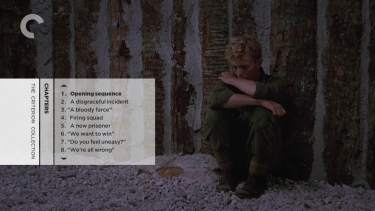
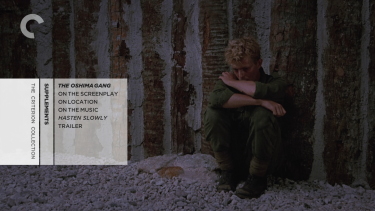
• New video interviews with producer Jeremy Thomas, screenwriter Paul Mayersberg, actor Tom Conti, and actor-composer Ryuichi Sakamoto • Hasten Slowly, an hour-long 1996 documentary about author Laurens van der Post, whose autobiographical novel was the basis for the film • Original theatrical trailer (3:13) • 30-page liner notes booklet featuring an essay by film critic Chuck Stephens and reprinted interviews with director Nagisa Oshima and actor Takeshi Kitano Blu-ray Release Date: September 28th, 2010 Transparent Blu-ray Case Chapters 18 |




| Comments |
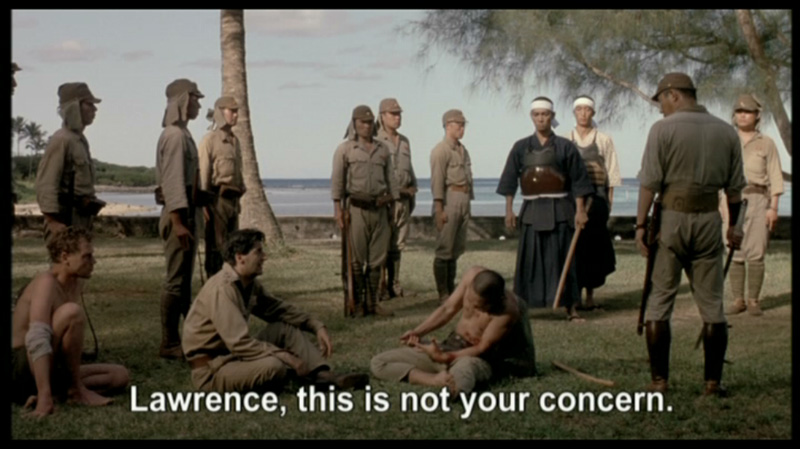
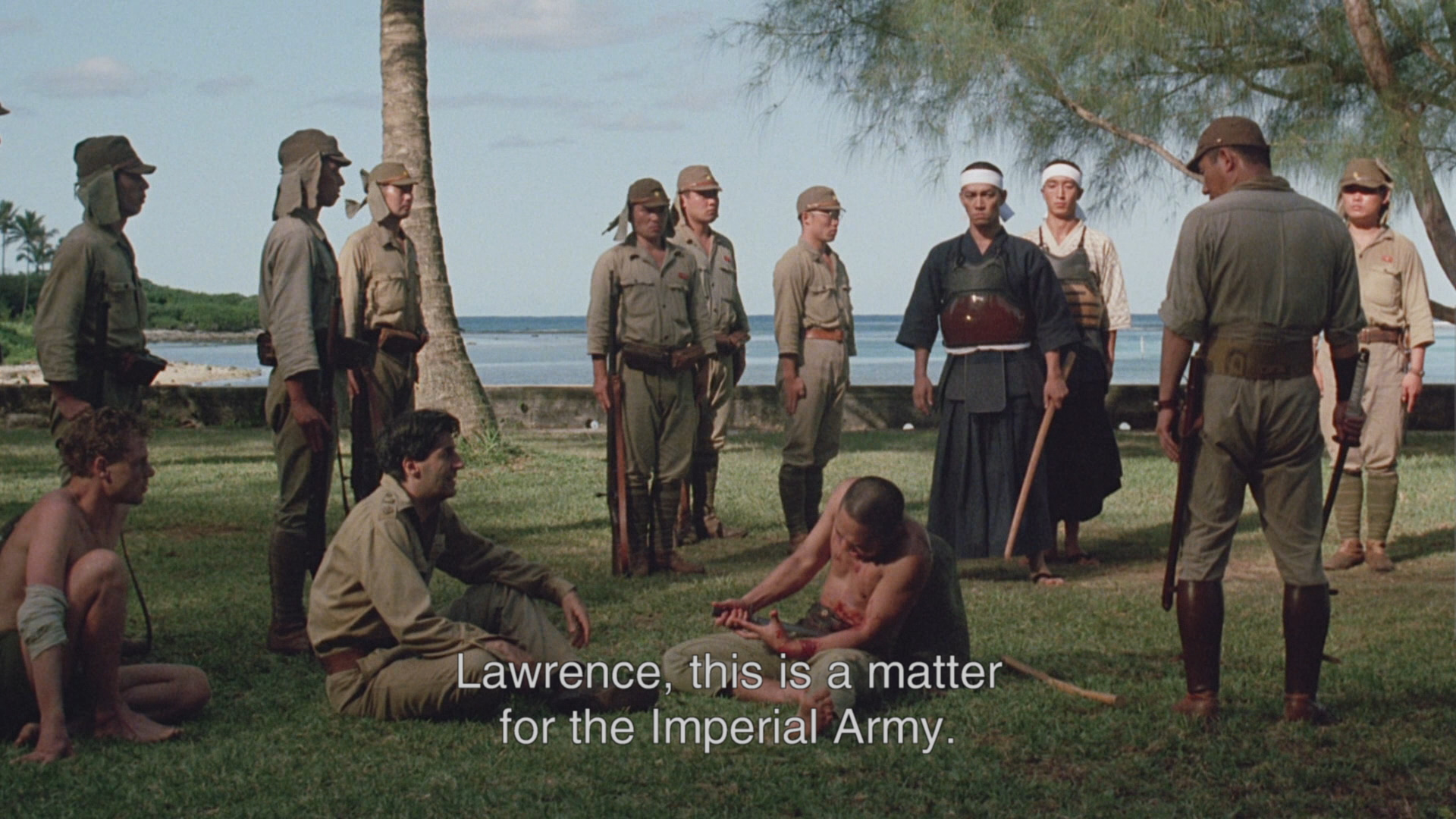
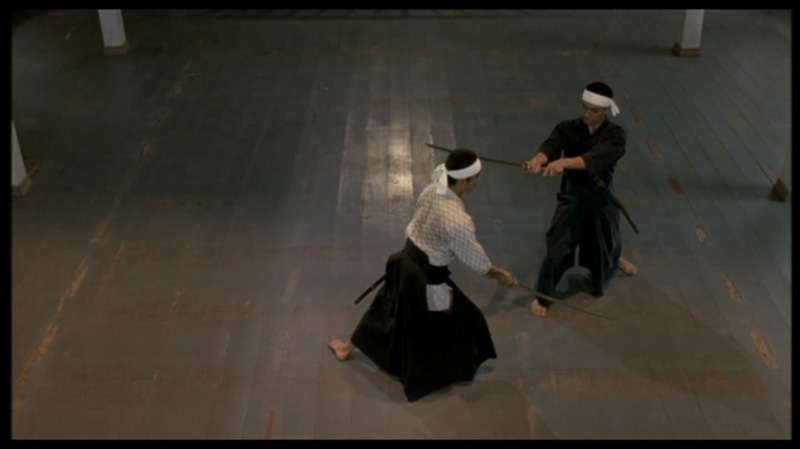
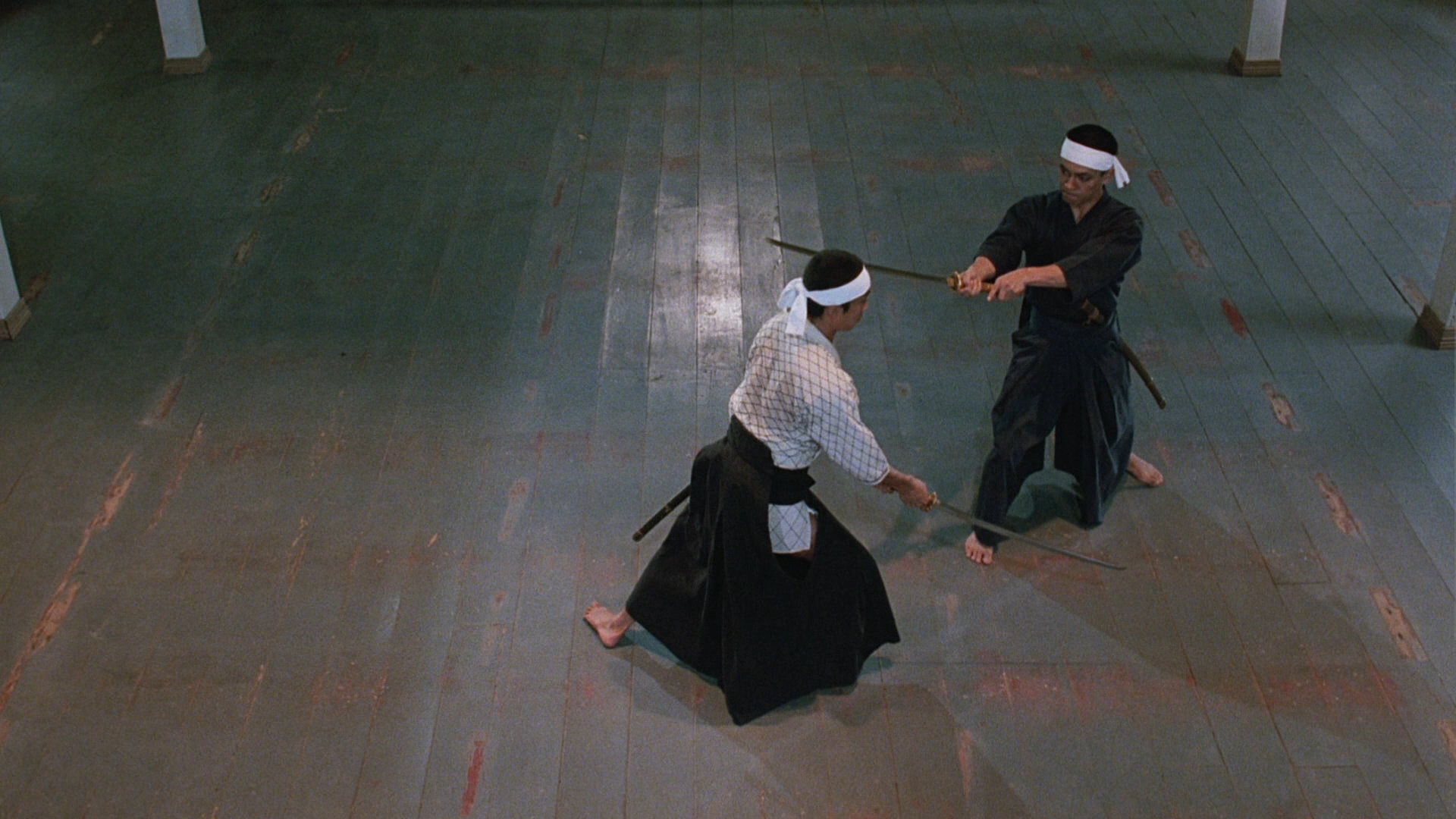
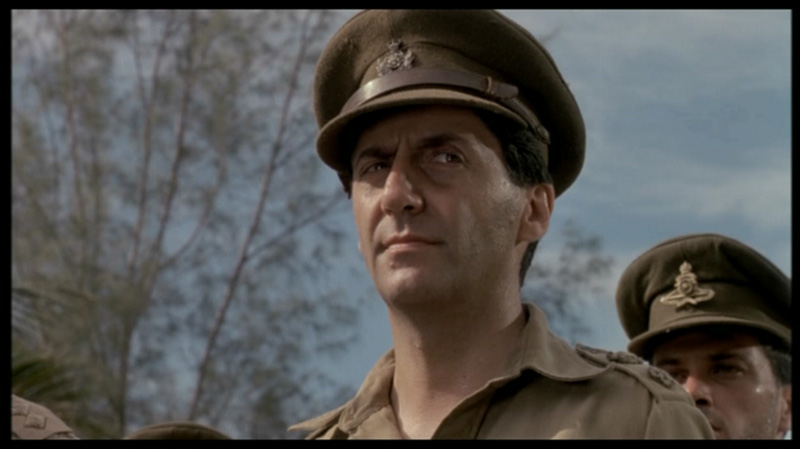
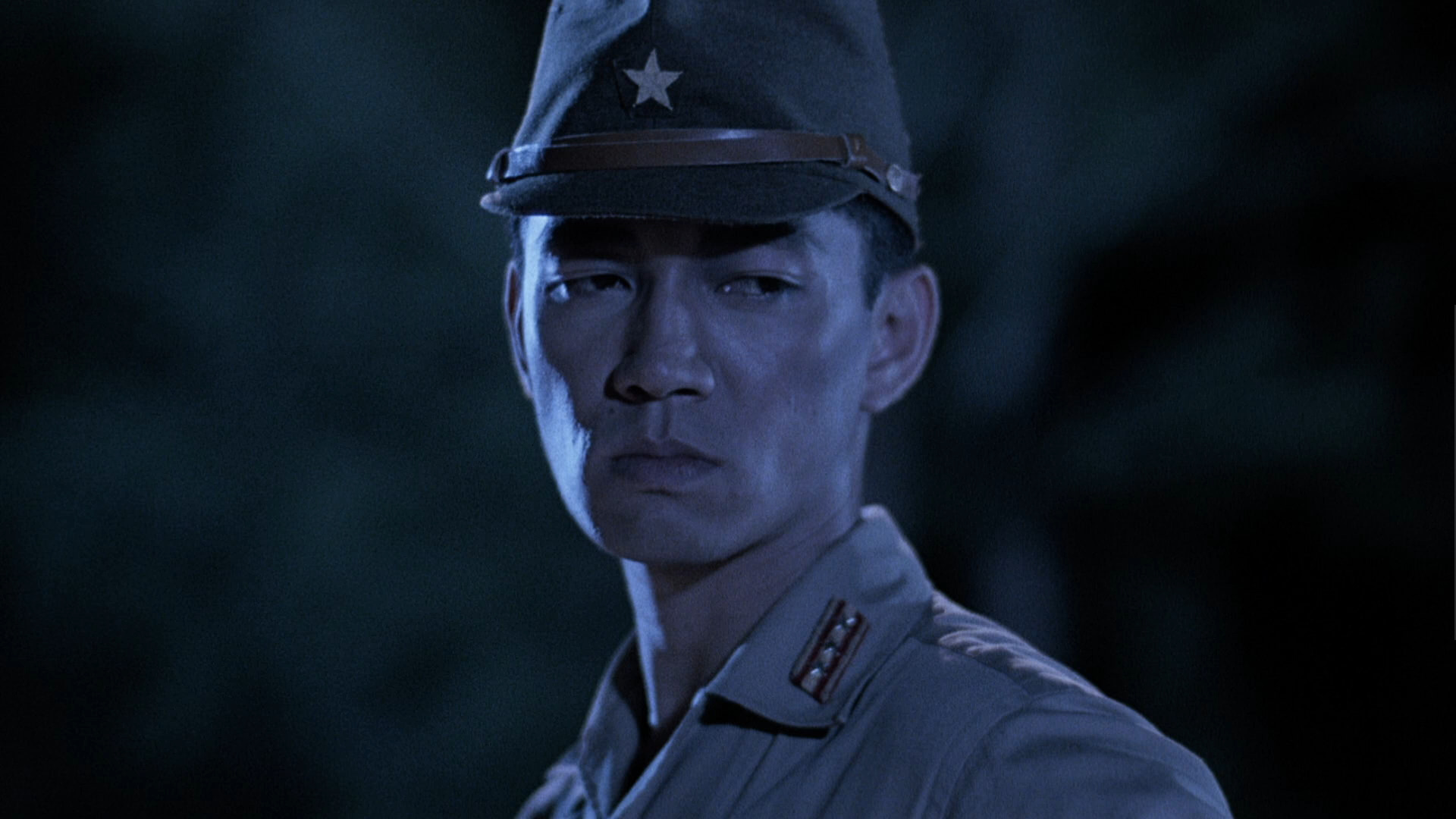
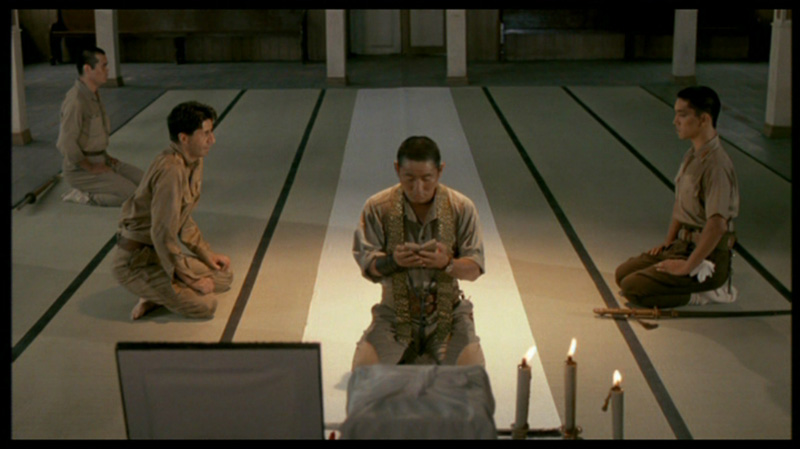
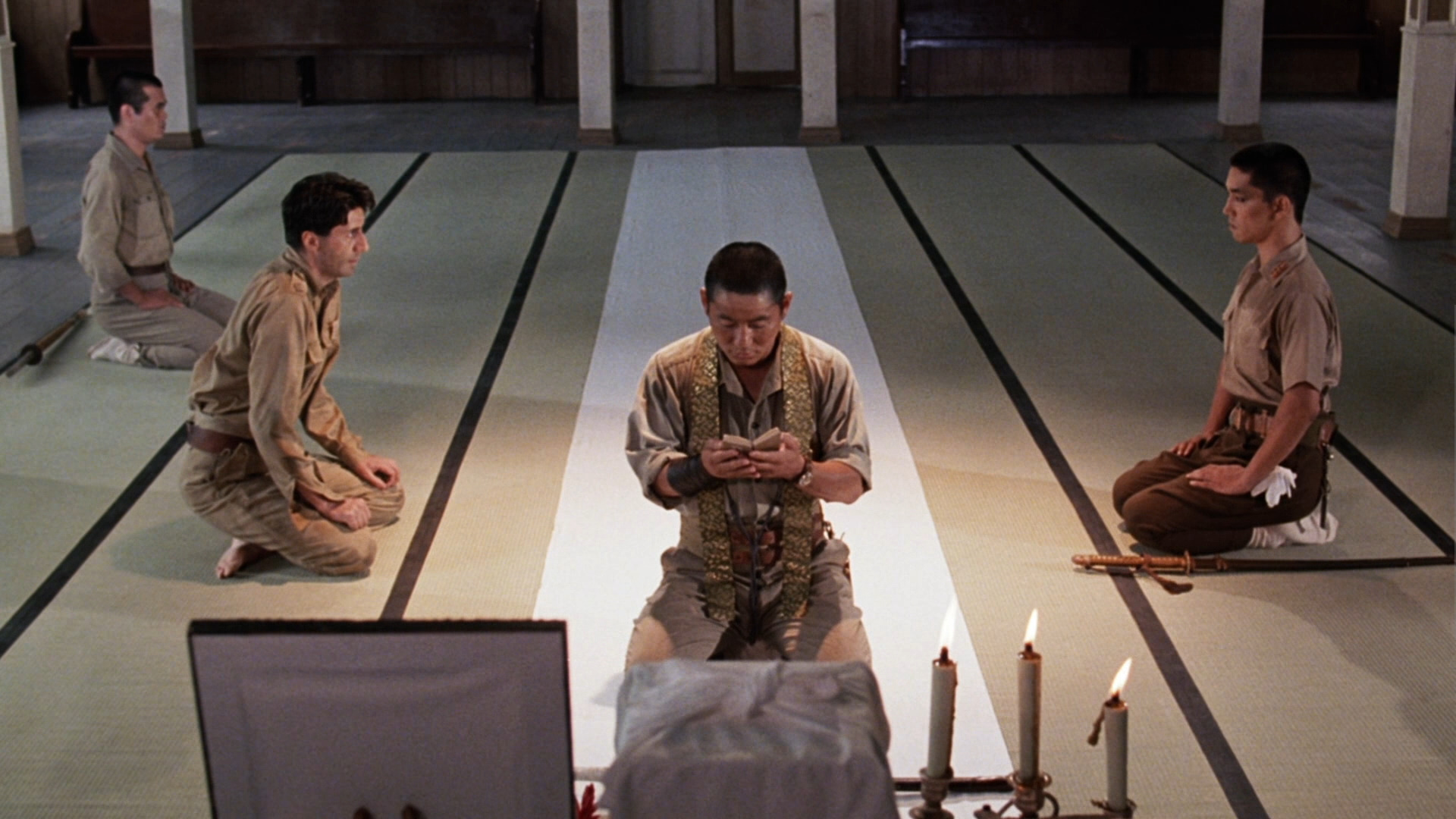
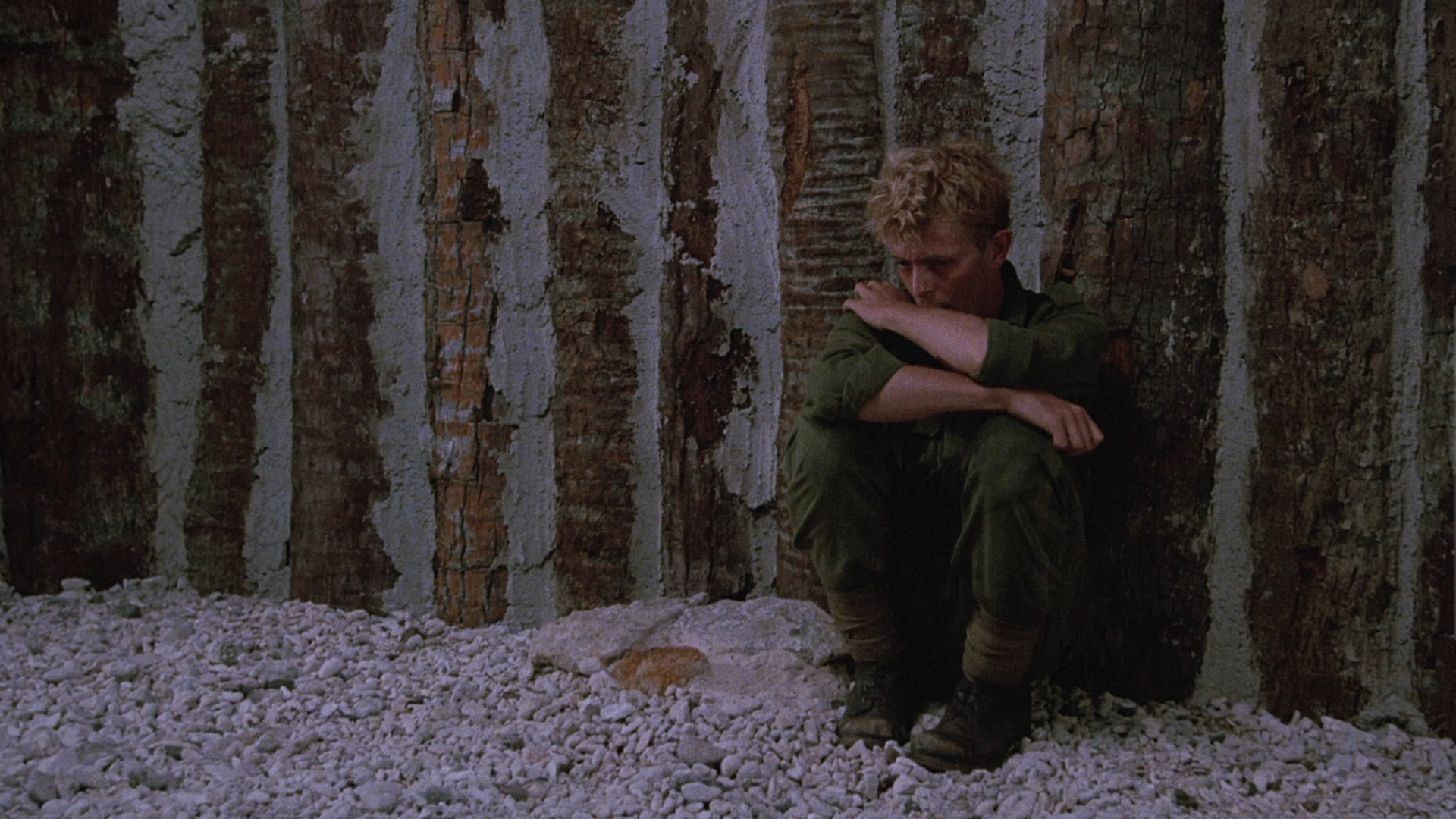
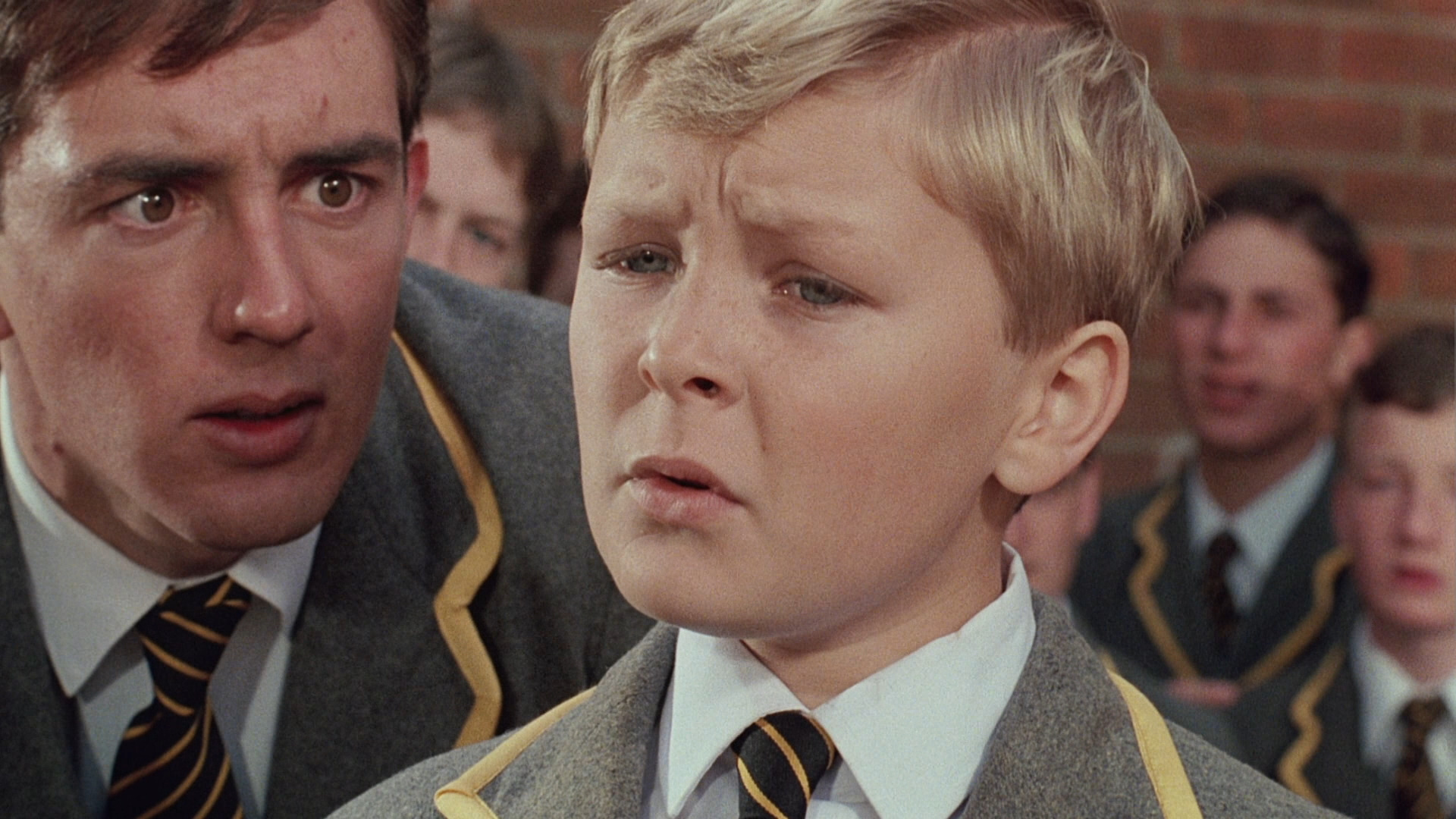
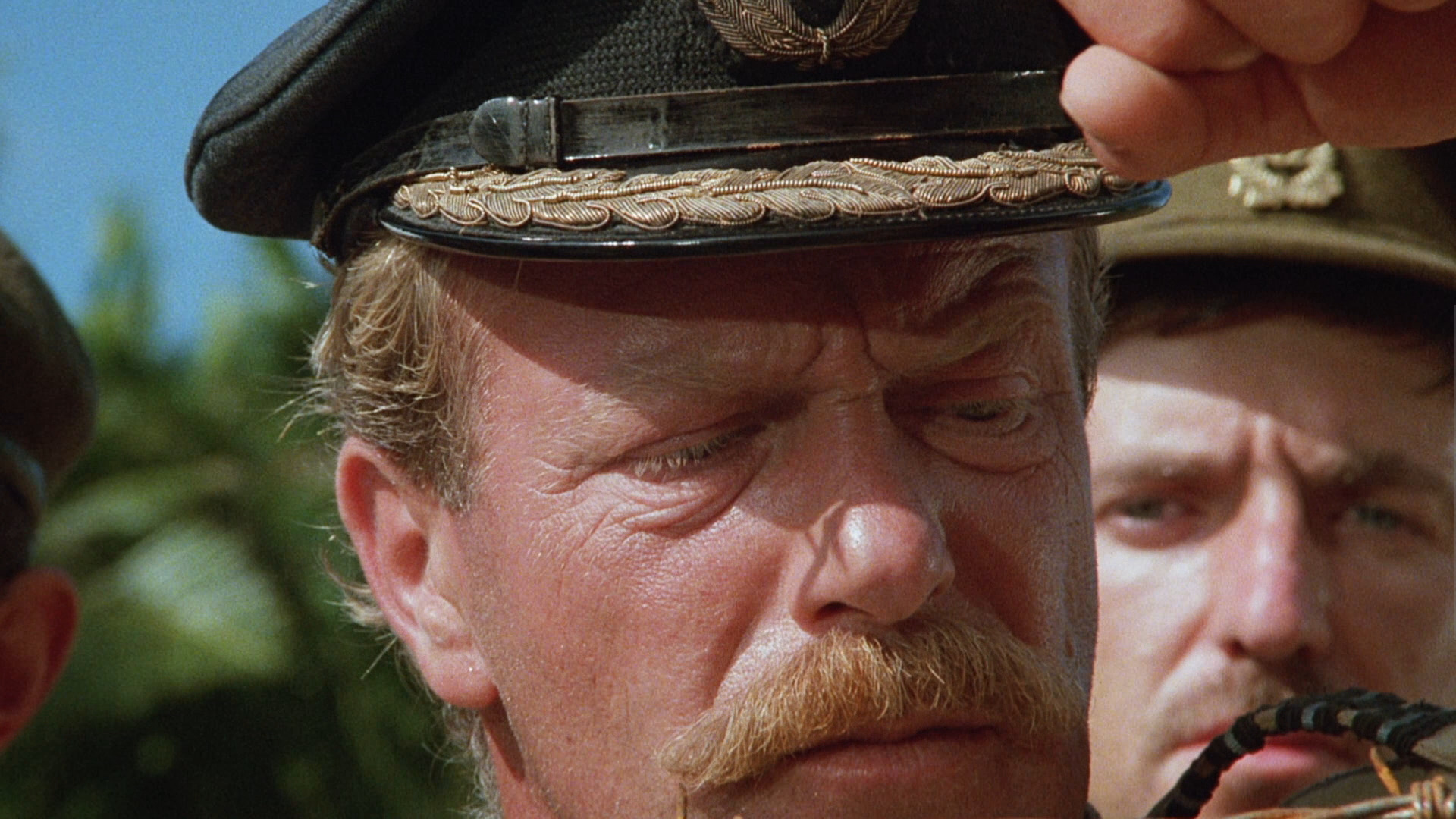
NOTE: The below Blu-ray captures were taken directly from the Blu-ray disc. ADDITION: Criterion Region 'A' - Blu-ray - September 2010: This is a pretty substantial improvement over the PAL release - much sharper, far better, and tighter rendered, colors, more grain... and even the subtitles are better. The dual-layered, 1.78:1, 1080P transfer shows depth. I don't there is much more I can add beyond viewing the screen captures.Criterion's audio is a very competent DTS-HD Master 2.0 channel at 2035 kbps supporting the original Japanese and English. It doesn't sound flat and the stereo carries some range. The Blu-ray contains, improved, optional English subtitles and my Momitsu confirms that the disc is region 'A'-locked.
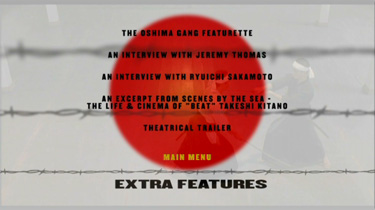
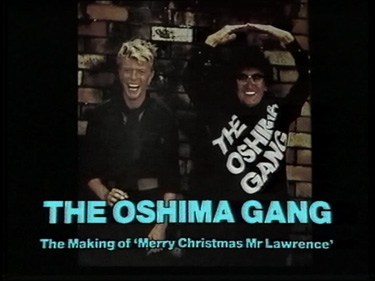
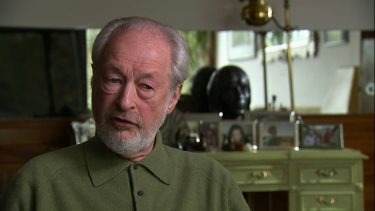
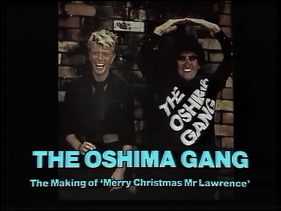
Criterion expands upon the solid supplements of the 'Special Collector's Edition'. This includes the 30-minute The Oshima Gang, a 1983 making-of featurette which has interviews with Bowie, Tom Conti, author Laurens van der Post, director Nagisa Oshima and producer Jeremy Thomas - among others. However, on the Criterion - it is in HD. 'On the Screenplay' (28:01 - also in HD) is a video piece recorded for Criterion in 2010 with Paul Mayersberg who discusses the development of the screenplay for Merry Christmas Mr. Lawrence and working with Nagisa Oshima. 'On Location' is also a new 40-minute featurette featuring Tom Conti, Ryûichi Sakamoto and producer Jeremy Thomas reminiscing about Merry Christmas Mr. Lawrence. 'On the Music' is another new interview, 18-minutes, with actor/composer Ryûichi Sakamoto on the score of the film. Hasten Slowly is a 1996, 55-minute, documentary about author Laurens Van der Post, whose autobiographical novel was the basis for the film. In addition to writing many books, Van der Post was a war hero, journalist, philosopher, conservationist, and advisor to the British heads of government. There is a 4:3 trailer in HD and Criterion includes a 30-page liner notes booklet featuring an essay by film critic Chuck Stephens and reprinted interviews with director Nagisa Oshima and actor Takeshi Kitano. I was indifferent to this film the first time I watched it a few years ago - but I appreciated it much more in the glory of HD - with a vastly improved a/v presentation by Criterion. I was also able to gain more information on the production from the bountiful supplements and the author, Laurens Van der Post. I think this is definitely worth seeing at some point and we can't recommend the Criterion package any higher for enjoying in your home theater. - Gary W. Tooze ****
ON THE OPTIMUM DVD (written
2005): This is one incredibly
beautiful presentation. The image has its original slightly lowered colour
scheme and is modest. The only artifacts I could spot was colour
banding (see wall behind Bowie in frame #2). |

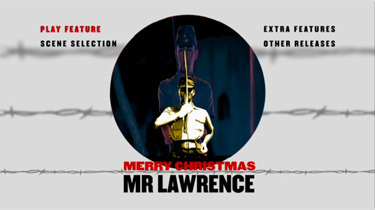
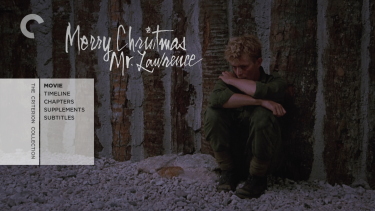
DVD Menus
|
|
|
 |
 |
 |
 |
 |
|
|
|
|
 |
|
 |
|
|
|
|

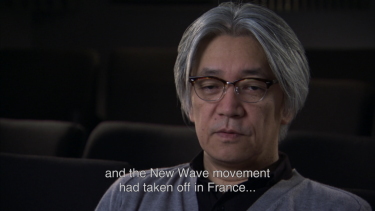
CLICK EACH BLU-RAY CAPTURE TO SEE ALL IMAGES IN FULL 1920X1080 RESOLUTION
Screen Captures
Optimum (Special Collector's Edition) - Region 2 - PAL TOP vs. Criterion Region 'A' - Blu-ray BOTTOM
|
|
 |
Optimum (Special Collector's Edition) - Region 2 - PAL TOP vs. Criterion Region 'A' - Blu-ray BOTTOM
|
|

 |
Optimum (Special Collector's Edition) - Region 2 - PAL TOP vs. Criterion Region 'A' - Blu-ray BOTTOM
|
|
 |
Optimum (Special Collector's Edition) - Region 2 - PAL TOP vs. Criterion Region 'A' - Blu-ray BOTTOM
|
|
 |
Optimum (Special Collector's Edition) - Region 2 - PAL TOP vs. Criterion Region 'A' - Blu-ray BOTTOM
|
|
 |
Optimum (Special Collector's Edition) - Region 2 - PAL TOP vs. Criterion Region 'A' - Blu-ray BOTTOM
|
|
 |
Optimum (Special Collector's Edition) - Region 2 - PAL TOP vs. Criterion Region 'A' - Blu-ray BOTTOM
|
|

 |
More Blu-ray Captures
 |
 |
 |
 |
 |
 |
Report Card:
|
Image: |
Blu-ray |
|
Sound: |
Blu-ray |
| Extras: | Blu-ray |
| DVD Box Cover |
|
Coming to the UK on Blu-ray from Arrow in June 2020:
|
| Distribution |
Optimum Region 2 - PAL |
Criterion Collection - Spine # 535 - Region 'A' - Blu-ray |
















Mail cheques, money orders, cash to: or CLICK PayPal logo to donate!
|
Gary Tooze
|
|
Many Thanks...
