|
Firstly, a massive thank you to our Patreon supporters. Your generosity touches me deeply. These supporters have become the single biggest contributing factor to the survival of DVDBeaver. Your assistance has become essential.
What do Patrons receive, that you don't?
1)
Our
weekly
Newsletter
sent to your Inbox every
Monday morning!
Please consider keeping us in existence with a couple of dollars or more each month (your pocket change!) so we can continue to do our best in giving you timely, thorough reviews, calendar updates and detailed comparisons. Thank you very much.
|






|
Search DVDBeaver |
S E A R C H D V D B e a v e r |

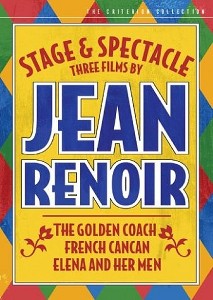
Stage and Spectacle - Three Films directed

USA 1944 -
1950
The Golden Coach French Cancan Elena and Her Men
NOTE: The Golden Coach is reviewed / compared on Blu-ray HERE
|
Near the end of his long and celebrated
career, master filmmaker Jean Renoir indulged his lifelong obsession with
life-as-theater and directed The Golden Coach (1953), French Cancan
(1955), and Elena and Her Men (1956), three delirious films, infatuated
with the past, love, and artifice. Awash in jubilant Technicolor, each film
interweaves public display and private feelings through the talents of three
immortal film icons—Anna Magnani, Jean Gabin, and Ingrid Bergman. The Criterion
Collection is proud to present these three majestic films by Jean Renoir for the
first time on DVD. |
DVD Review:
Criterion Collection - Region 0 - NTSC
|
CLICK logo to order |
|
| Distribution | Criterion Collection - Spine # 241 - Region 0 - NTSC |
| Audio | French (Dolby Digital 2.0 Mono) |
| Subtitles | English, None |
| Features |
Release Information: •
Three-part interview with Renoir conducted by French New Wave director
Jacques Rivette (The Nun, La Belle noiseuse) |

| Comments: |
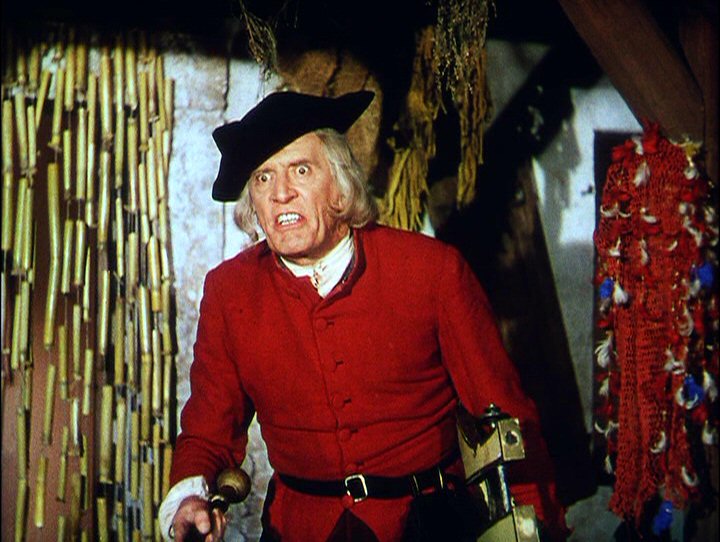
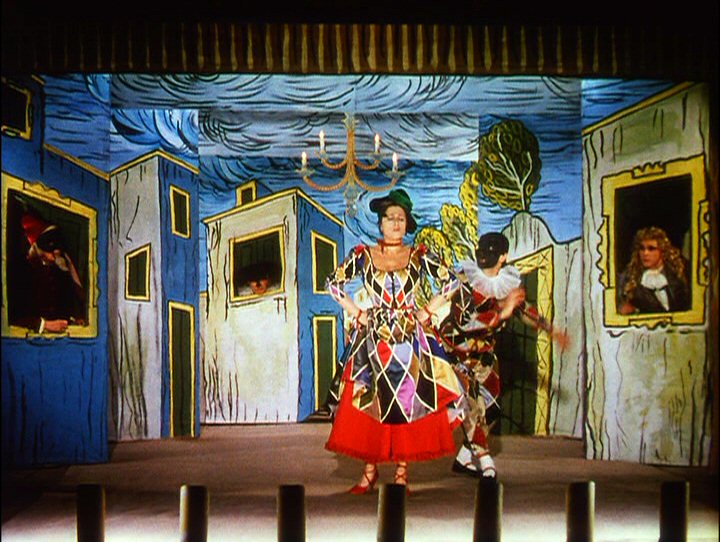
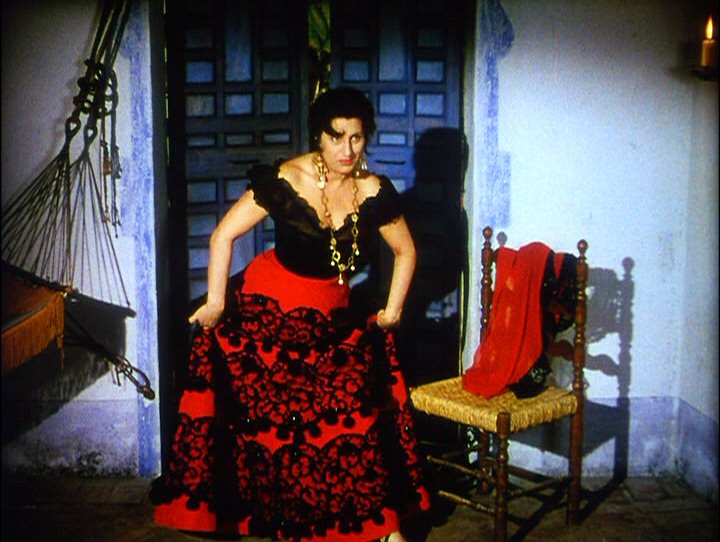
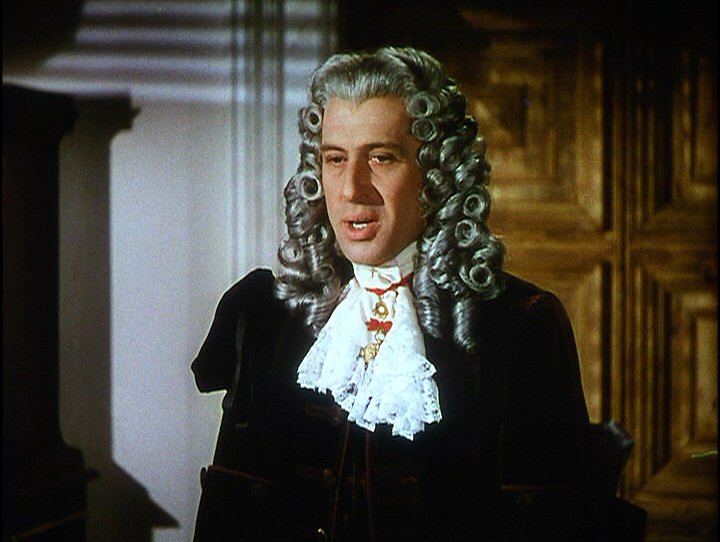
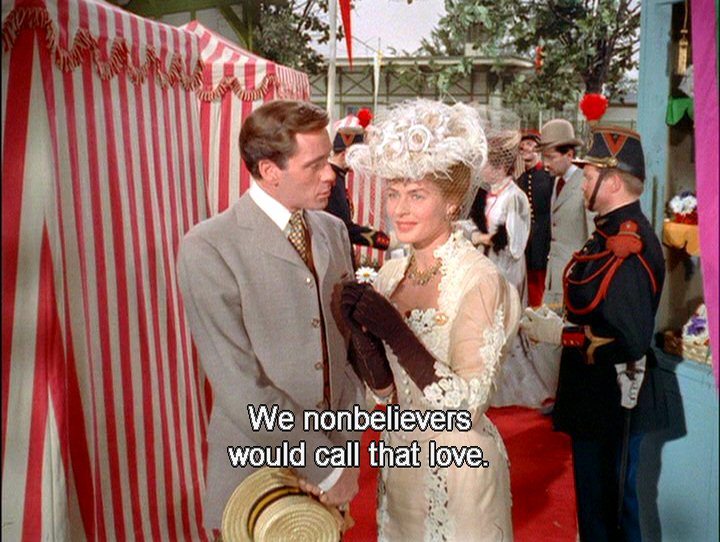
Each individual release here is strong with great transfers, original mono audio. Included are a host of interesting extras including interviews, Renoir (and other) introductions, documentary, stills etc. Perhaps the highlight (for me) is the three part Rivette interview with Renoir - magical! I don't know that I can add too much more to the wonderful images below. Colors are noticeably vibrant and alive in a Technicolor-esq way (almost to the point of saturation in The Golden Coach). Subtitles are perfect! Contrast is at its zenith! Film grain is peeking out in all 3 films. One could write 16 paragraphs simply on the Extras. Criterion continues to display to the DVD Production world what can be
achieved. They are groundbreaking pioneers in the field of DVD
authorship. In fact, I suspect we will have to use a different rating
system for Criterion. It would seem unfair to hold other studios up to
this benchmark of excellence. It seems impossible to give any less than
|
Recommended Reading in French Cinema (CLICK COVERS or TITLES for more information)
 |
 |
 |
 |
 |
 |
 |
 |
|
My
Life and My Films (Da Capo Paperback) |
French Cinema: A Student's Guide by Philip Powrie, Keith Reader |
Agnes Varda by Alison Smith | Godard on Godard : Critical Writings by Jean-Luc Godard |
Jean Renoir (French Film Directors) by Martin O'Shaughnessy |
Robert Bresson (Cinematheque Ontario Monographs, No.
2) by James Quandt |
The Art of Cinema by Jean Cocteau |
French New Wave
by Jean Douchet, Robert Bonnono, Cedric Anger, Robert Bononno |
Check out more in "The Library"

(aka 'La Carrozza d'oro' or 'Le Carrozza d'oro)
France / Italy 1953
NOTE: The Golden Coach is reviewed / compared on Blu-ray HERE
|
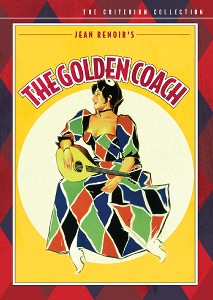
The Golden Coach (Le Carrosse d’or) is a ravishing eighteenth-century comic fantasy about a viceroy who receives an exquisite golden coach, and gives it to the tempestuous star of a touring commedia dell’arte company. Master director Jean Renoir’s sumptuous tribute to the theatre, presented here in the English version he favored, is set to the music of Antonio Vivaldi and built around vivacious and volatile star Anna Magnani.  out
of out
of 
NOTE: Watched "The Golden Coach" last night, and the DVD is for the most part fine, but the final minutes, which are crucial to the full impact of the film, are ruined by deplorable mastering. The scene appears to be out of focus and the colors are washed out to the point of barely being able make out what is happening (especially where Camilla has come out front and is surrounded by children from the troupe). I believe Criterion made some kind of mastering error, because Martin Scorsese's introduction to the film explicitly refers to the wonderful restored ending of the film. submitted by Louis Erwin (Thanks Louis!) This is regarding the addendum to The Golden Coach. I don't think it is a mastering problem at all, as the writer seems to think it is. The grain structure in this segment is equal to that of the rest of the film, and the problem seems primarily to be in the center of the image. The edges, i.e. the curtain and the like, are relatively without problem. After watching this segment, I'm of the impression that the problem was with the original camera negative. I highly doubt that Criterion would allow for, or let slip by, such a glaring flaw. The color bleeding/flaring evident in this segment seems typical of a technical issue that was present either in the negative, perhaps with the synchronization of the three-strip process or in the printing of the film. I think that perhaps the strip filtered to capture magenta was loose, not loaded properly, or something to that effect, which is why you see the red in the image, affecting the skin tones as well, bounce around to and fro. Perhaps Criterion used the best source material available and the problem is simply local, but I even doubt that. Unless the folk at Criterion chime in, or someone more knowledgably on the subject, or film specifically, for that matter, I'll remain believing the problem in this segment is an uncorrectable flaw of the original film itself. submitted by Jon Barli (Thanks Jon!)
Thanks, Gary. Incidentally, I have seen "The
Golden Coach" in the theater twice, in the 80s and 90s, and there was no problem
at all with the final scene, so I am skeptical of claims that the problem is in
the source rather than the mastering. On a related note, I started watching
"French Cancan" last night and was very disappointed in the poor contrast. I saw
the film in the theater once in the 70s and once in the 90s, and there was no
such problem - the colors were rich and gorgeous, not washed out as in the
Criterion DVD. submitted by Louis Erwin (Thanks Louis!) |
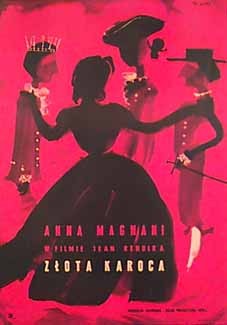
Posters
 |
 |
|
Cover (Can only be purchased in Renoir Boxset) |
|
|
CLICK logo to order |
|
| Distribution | Criterion Collection - Spine # 242 - Region 0 - NTSC |
| Extras |
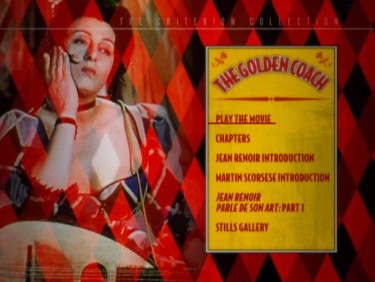
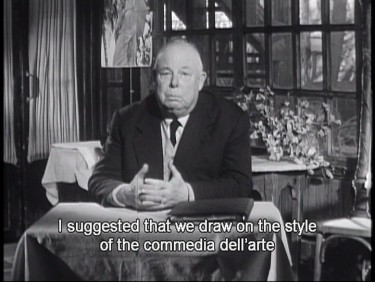
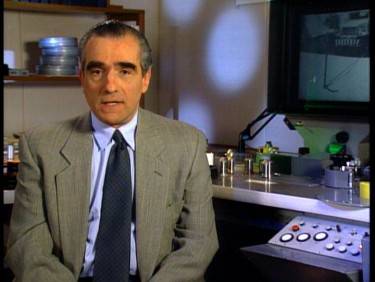
Introduction to the film by Jean Renoir Video introduction by director Martin Scorsese (Taxi Driver, Raging Bull, Gangs of New York, The Age of Innocence) A collection of behind-the-scenes and publicity stills |
| Runtime | 1:42:24 |
| Video |
1.33:1
Aspect Ratio Chapters : 32 |
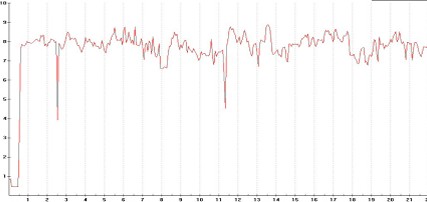
| Bitrate:
NOTE: The Vertical axis represents the bits transferred per second. The Horizontal is the time in minutes. |
|
DVD Menus
 |
 |
 |
 |
Subtitle Sample
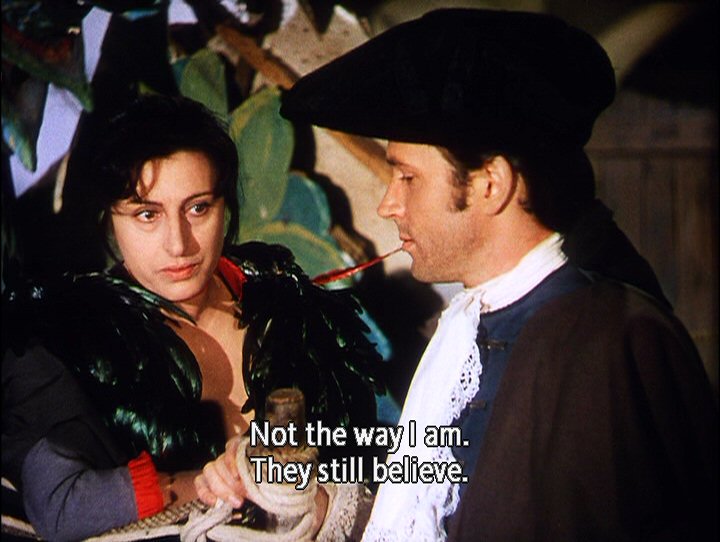 |
Screen Captures
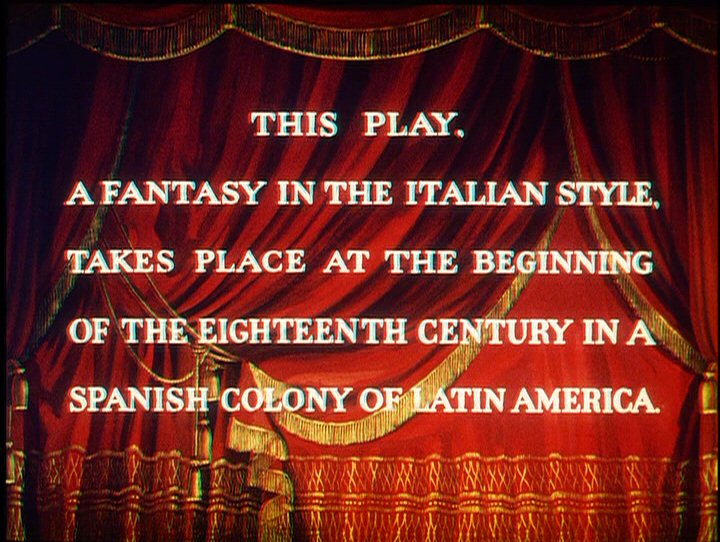 |
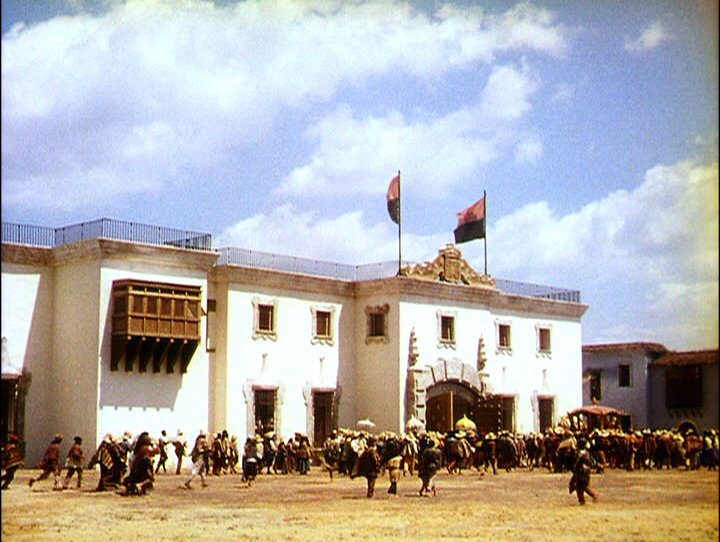 |
 |
 |
 |
 |
NOTE: The Golden Coach is reviewed / compared on Blu-ray HERE
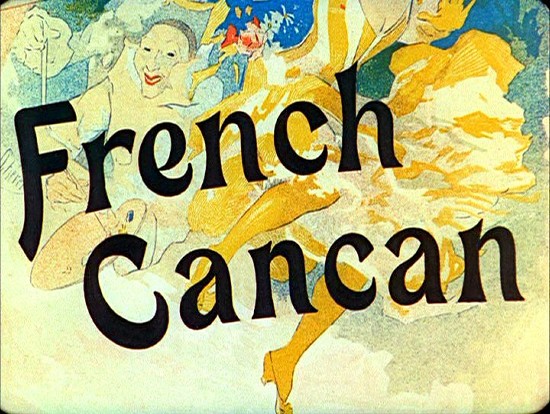
France 1955
(aka "Only the French Can")
Theatrical Release: April 27th, 1955 - France
|
Nineteenth-century Paris comes vibrantly alive in Jean Renoir’s exhilarating tale of the opening of the world-renowned Moulin Rouge. Jean Gabin plays the wily impresario Danglard, who makes the cancan all the rage while juggling the love of two beautiful women—an Egyptian belly-dancer and a naive working girl turned cancan star. This celebration of life, art and the City of Light—with a cameo by Edith Piaf—is a Technicolor tour de force by a master of modern cinema. out
of
NOTE: Robert says: "I like this movie quite a lot and have shown in
classes for many years, a number of times in a spectacular 35 mm IB tech print.
The Criterion color is not so hot - not faithful to the original color, being
kind of one-dimensional and lacking in the original richness very noticable in
the 35 print. Clear and bright it is, but there was and should be more to it
that that.
|
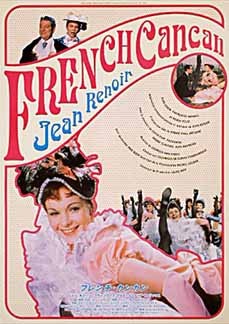
Posters
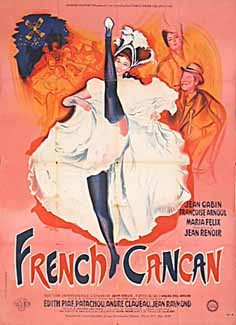 |
|
|
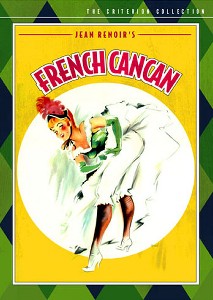
Cover (Can only be purchased in Renoir Boxset)
|
|
|
CLICK logo to order |
|
| Distribution | Criterion Collection - Spine # 243 - Region 0 - NTSC |
| Extras | Video
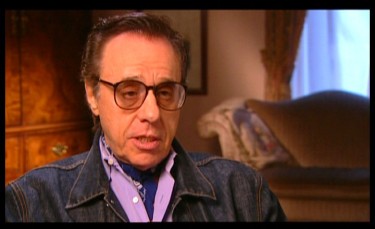
introduction by director Peter Bogdanovich (The Last Picture Show, Paper
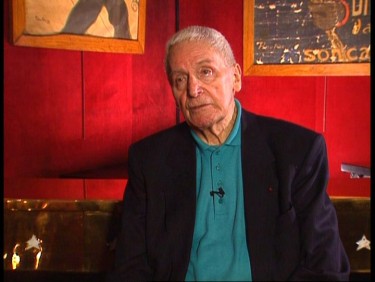
Moon) Interview with production designer Max Douy A collection of behind-the-scenes and publicity stills |
| Runtime | 1:43:44 |
| Video |
1.33:1
Aspect Ratio Chapters : 26 |
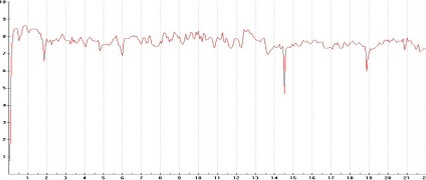
| Bitrate:
NOTE: The Vertical axis represents the bits transferred per second. The Horizontal is the time in minutes. |
|
DVD Menus
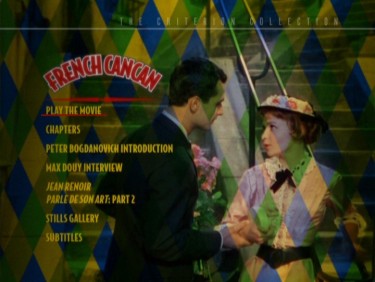 |
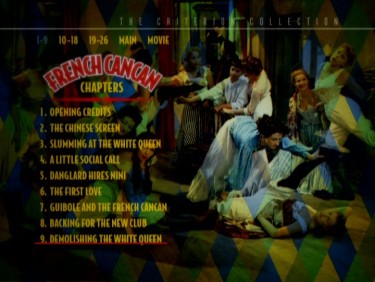 |
 |
 |
Subtitle Sample
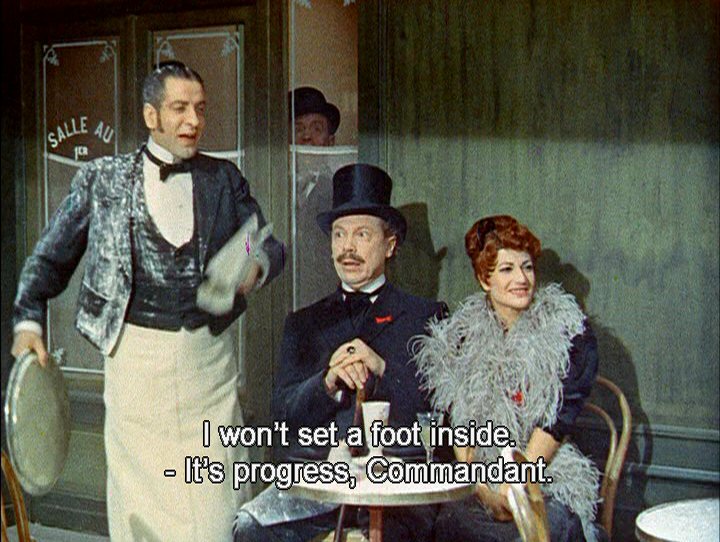 |
Screen Captures
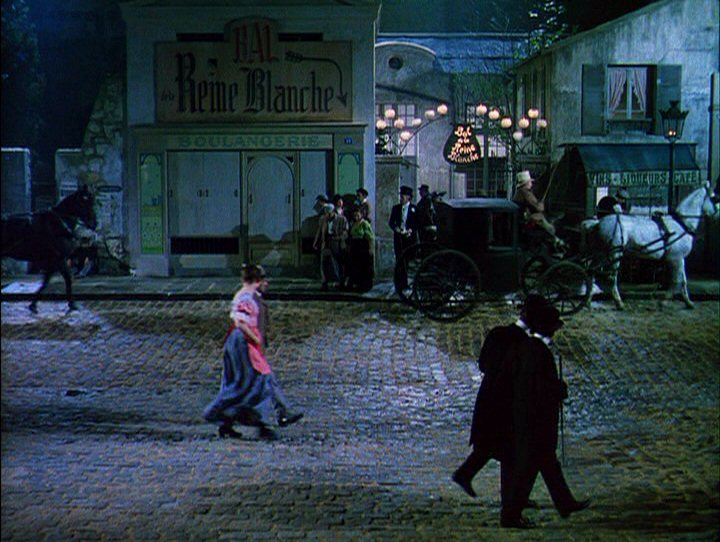 |
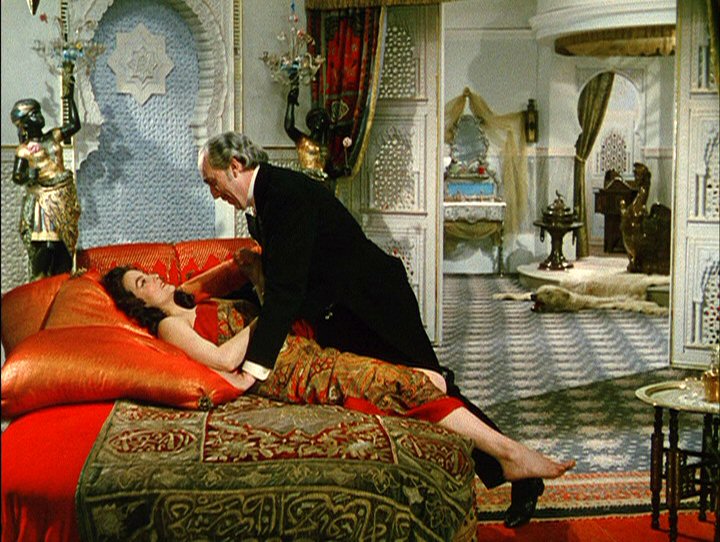 |
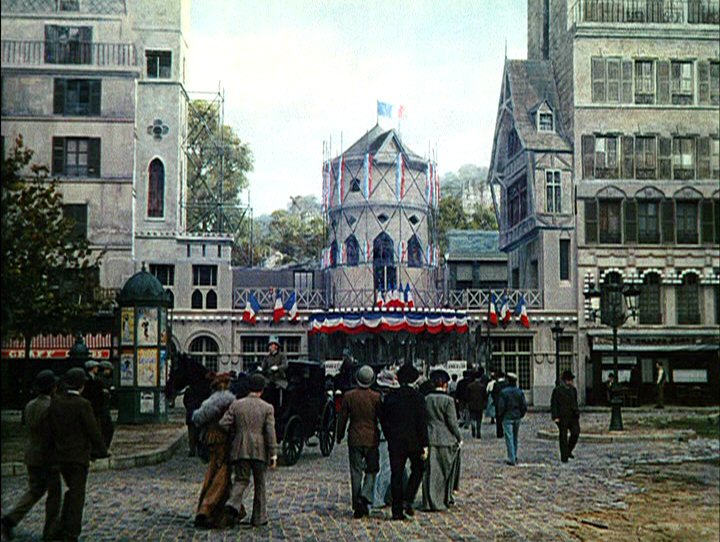 |
 |
(aka 'Paris Does Strange Things' or 'Elena and
Her Men' or 'Eliana e gli uomini')
Italy / France 1956
(aka "Farewell My Lovely" )
Theatrical Release: September 12th, 1956 - France
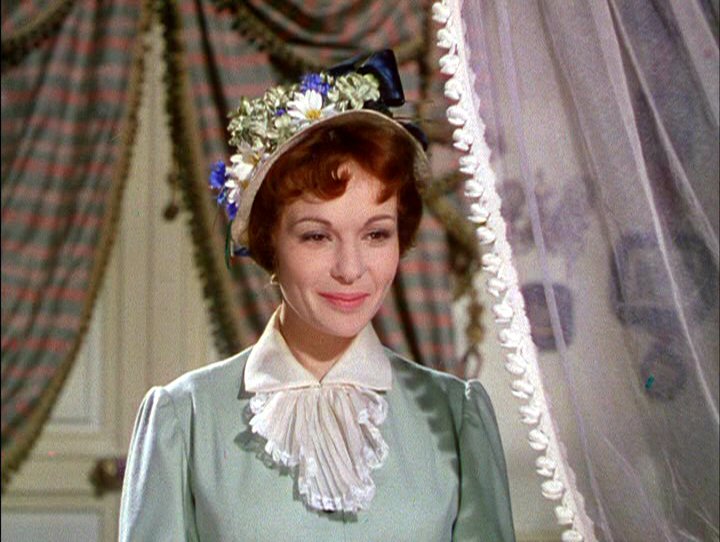
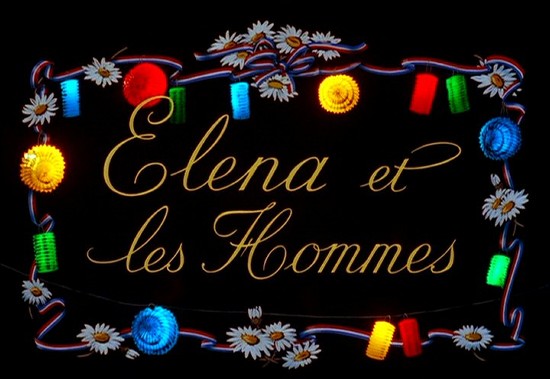
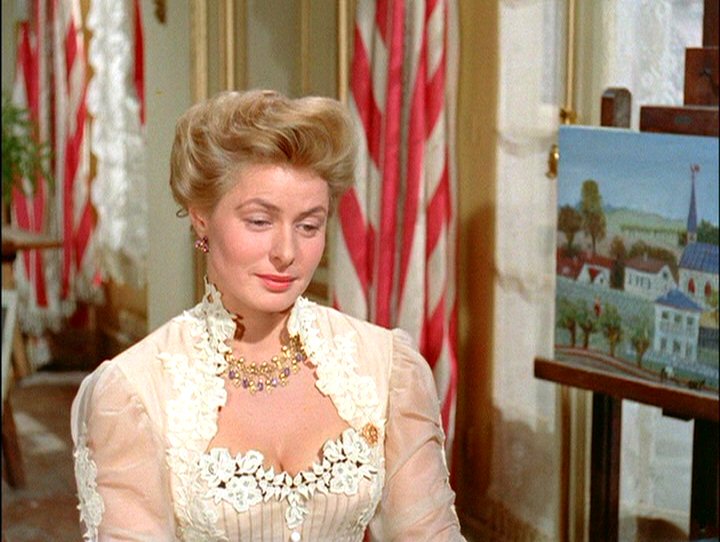
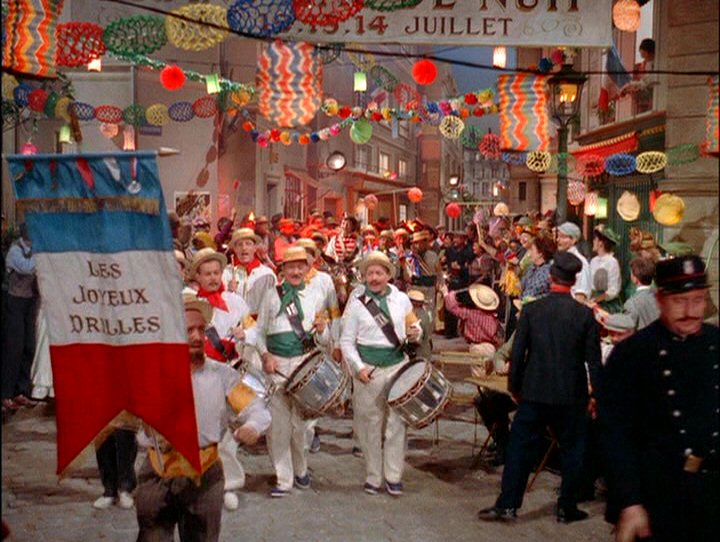
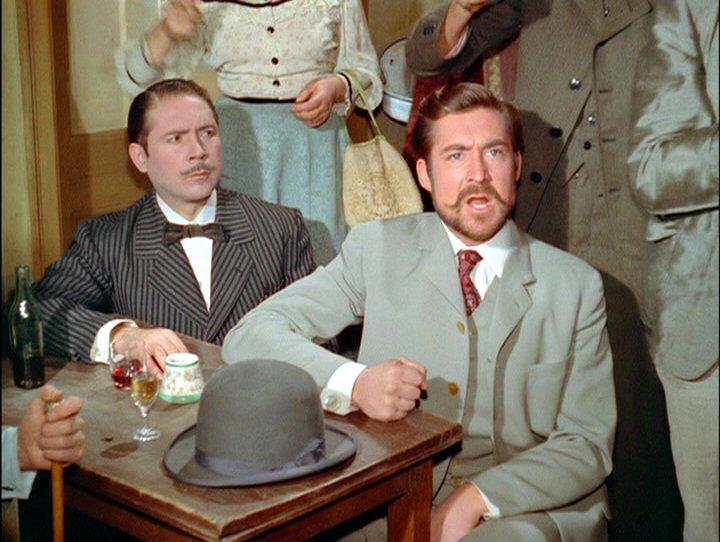
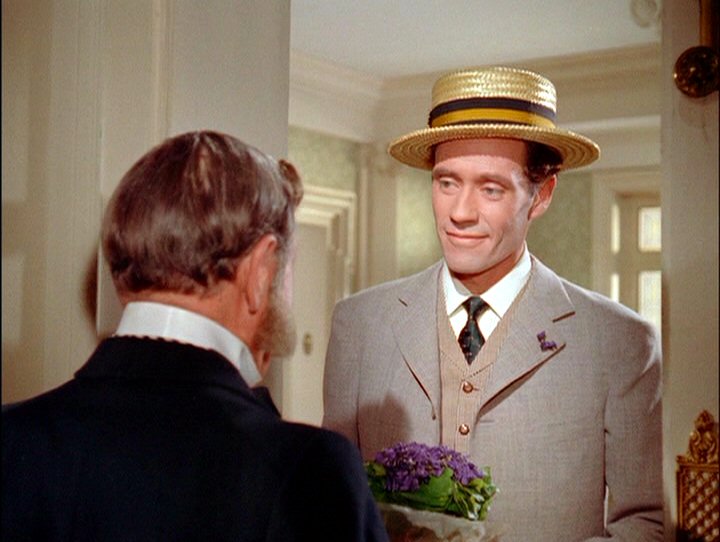
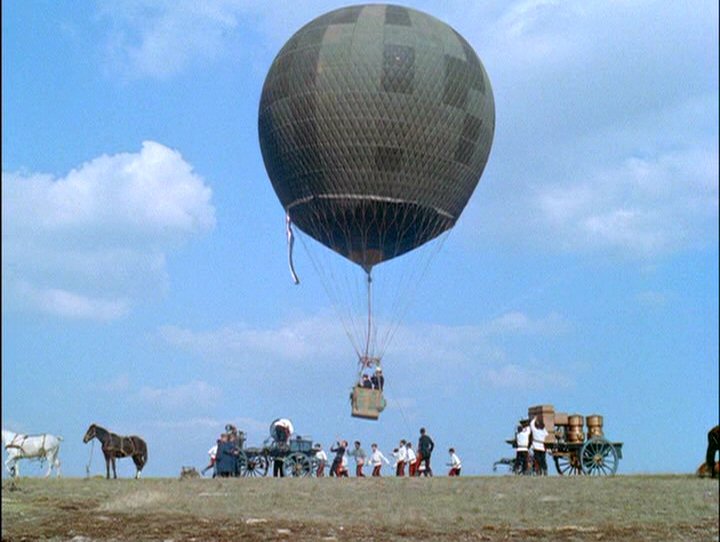
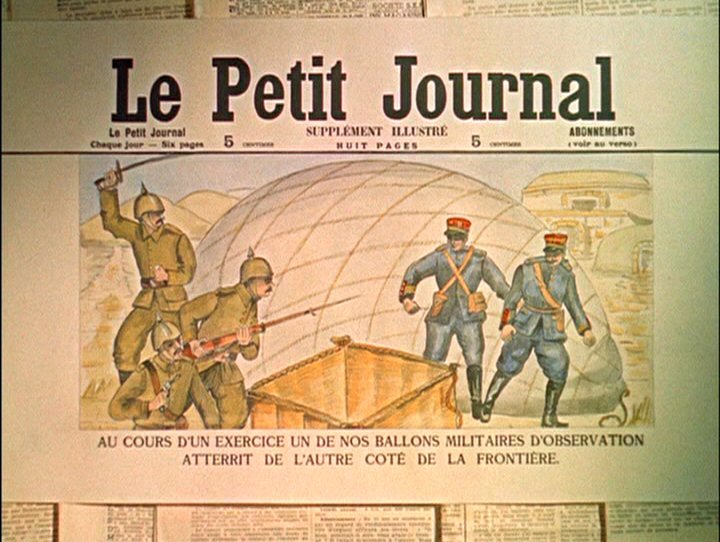
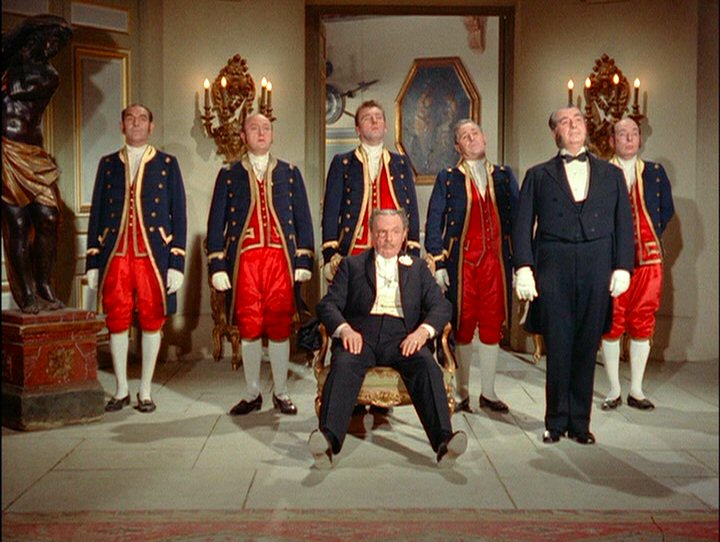
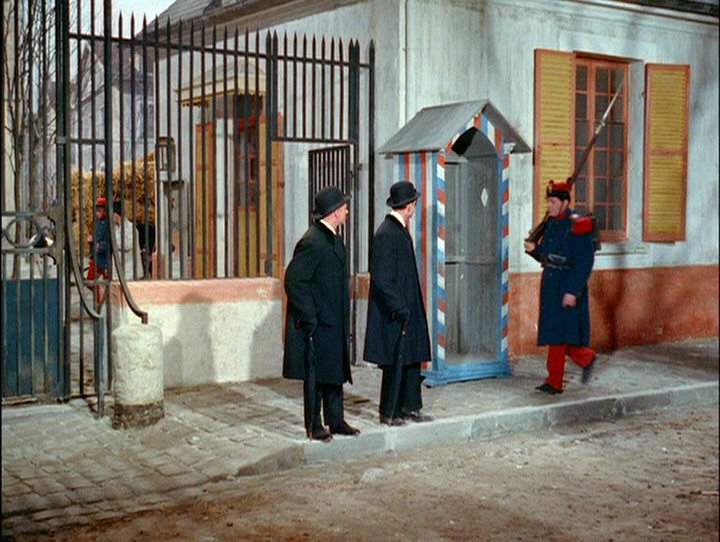
Set amidst the military maneuvers and Quatorze
Juillet carnivals of turn-of-the-century France, Jean Renoir’s delirious
romantic comedy stars Ingrid Bergman in her most sensual role as a beautiful,
but impoverished Polish princess who drives men of all stations to fits of
desperate love. out of out of
|
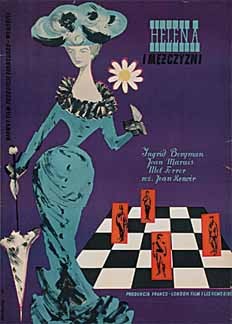
Poster
 |
|
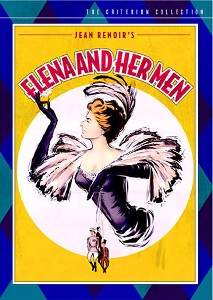
Cover (Can only be purchased in Renoir Boxset)
|
|
|
CLICK logo to order |
|
| Distribution | Criterion Collection - Spine # 244 - Region 0 - NTSC |
| Extras |
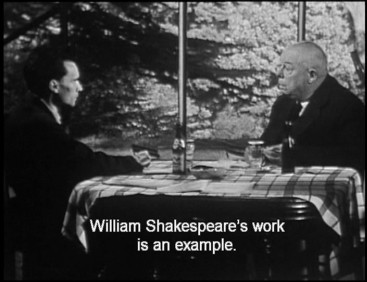
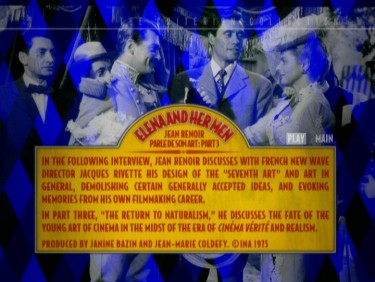
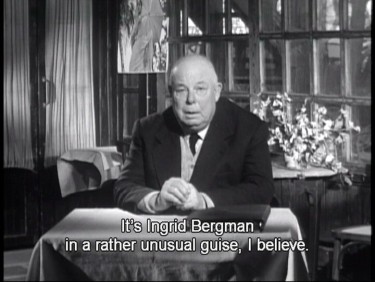
Introduction to the film by Jean Renoir Part two of Jean Renoir: a two-part 1993 BBC documentary by David Thompson, featuring reflections on Renoir from his family, friends, collaborators, and admirers |
| Runtime | 1:38:51 |
| Video |
1.33:1
Aspect Ratio Chapters : 24 |
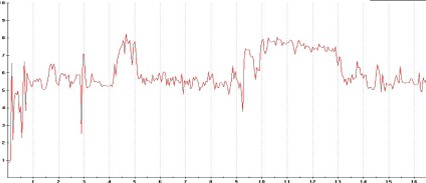
| Bitrate:
NOTE: The Vertical axis represents the bits transferred per second. The Horizontal is the time in minutes. |
|
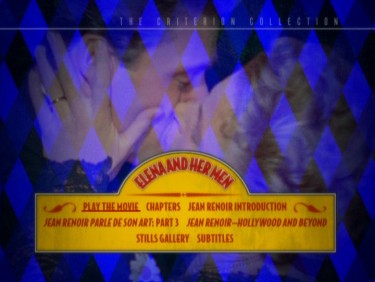
DVD Menus
 |
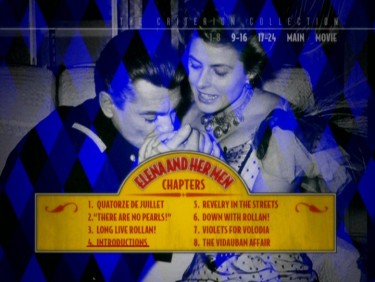 |
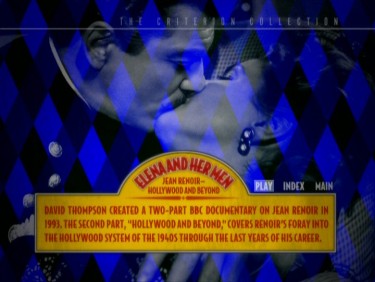 |
 |
 |
 |
Subtitle Sample
 |
Screen Captures
 |
 |
 |
 |
 |
 |
 |
 |
Recommended Reading in French Cinema (CLICK COVERS or TITLES for more information)
 |
|
|
|
 |
|
|
|
 |
 |
|
The Films in My Life |
French Cinema: A Student's Guide by Philip Powrie, Keith Reader |
Agnes Varda by Alison Smith | Godard on Godard : Critical Writings by Jean-Luc Godard | Notes on the Cinematographer by Robert Bresson |
Robert Bresson (Cinematheque Ontario Monographs, No.
2) by James Quandt |
The Art of Cinema by Jean Cocteau |
French New Wave
by Jean Douchet, Robert Bonnono, Cedric Anger, Robert Bononno |
French Cinema: From Its Beginnings to the Present by Remi Fournier Lanzoni |
Truffaut: A Biography by Antoine do Baecque and Serge Toubiana |
Check out more in "The Library"









Mail cheques, money orders, cash to: or CLICK PayPal logo to donate!
|
Gary Tooze
Mississauga, Ontario, CANADA |
|
Many Thanks...
