Nothing suffers more on
home video than avant-garde film, by its nature inclined to
explore the outer limits, innate qualities, and subtlest
effects of its medium. Yet nothing is more exciting, from
the perspective of the living-room cinematheque (a/k/a the
future of cinephilia) than the recent boon in experimental
DVDs. Sure, they suffer on the small screen—and Flaubert is
better in the original French—but that doesn't prevent
translations of Sentimental Education from blowing minds.
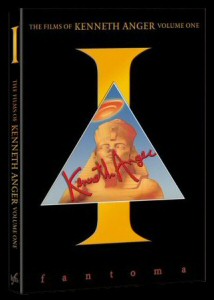
The latest blast from the avant-garde cannon, The Films
of Kenneth Anger: Volume One, arrives this week on DVD
in a terrific package from Fantoma. Proto-pop genius, gay
maverick, hardcore occultist, master of montage, and,
through his pioneering use of unauthorized pop songs and
intensity of vision, one of the most influential filmmakers
of the 20th century, Kenneth Anger is a cornerstone of the
American avant-garde and a gift that keeps on giving. This
long-overdue DVD crests a wave of fresh critical interest:
2004 saw the publication of an invaluable scholarly
monograph on his life and works by Alice L. Hutchison, and
2006 offered a screening of Anger's latest short, Mouse
Heaven (2002), in the Whitney Biennial.
Scrupulously restored and transferred in high definition,
the DVD is a dream come true for newbies, devotees,
students, scholars, artists, stoners, black magicians,
fetishists, and Martin Scorsese. "Like many people, I was
astonished when I saw Kenneth Anger's Scorpio Rising for the
first time," Scorsese writes in his introduction to the
accompanying booklet. "Every cut, every camera movement,
every color, and every texture seemed, somehow, inevitable,
in the same way that images of the Virgin in Renaissance
painting seem inevitable—in other words, pre-existing but
dormant, and brought back to life through some kind of
evocation."
"Some kind of evocation": in its vague way, an exact
definition of Anger's enchanting oeuvre. It's easy enough to
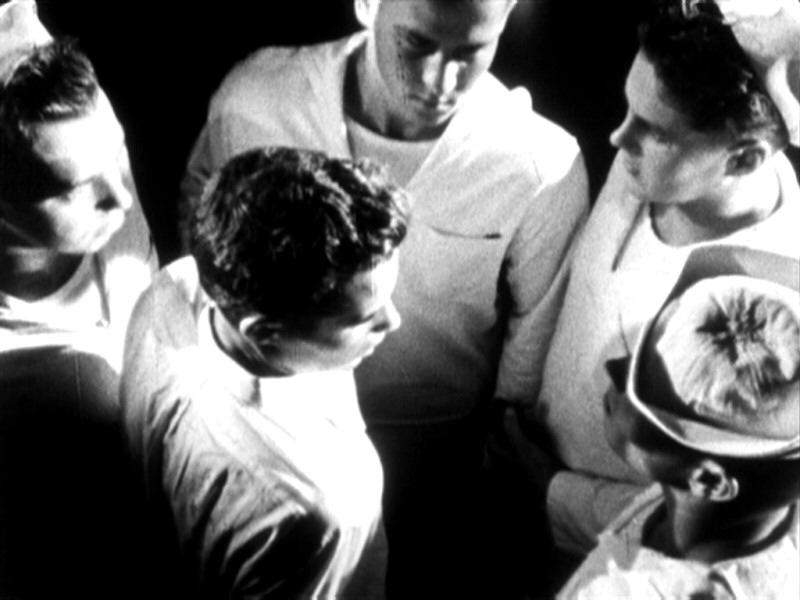
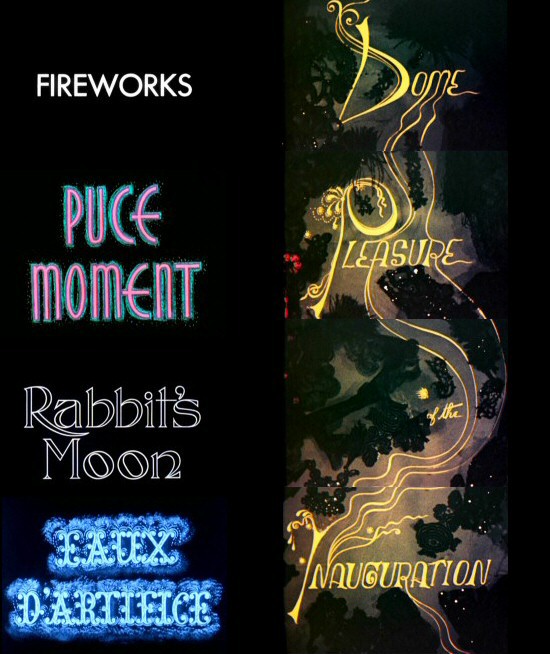
place Fireworks (1947), radical as it was for the time; here
is cinema's most exquisite fantasy of gay gang rape by hot
teenage sailors. On the sparse yet fascinating commentary
track, Anger claims his inspiration was the Los Angeles Zoot
Suit riots, but the influence of Cocteau is far more evident
on the film's brazenly oneiric and onanistic pulse of
images. Indeed, on discovering Fireworks at the Festival du
Film Maudit, the legendary poet awarded it a prize,
encouraging Anger to spend the next decade in France.
Rabbit's Moon (1950), a lunar pantomime rife with
autobiographical implications, derives from this period, as
does Anger's involvement with the Cinémathéque Française. At
the invitation of Henri Langlois, Anger set to work editing
the recently discovered original reels of Eisenstein's Que
Viva Mexico! This deep immersion in the theories and
practice of montage would have a direct impact on Anger's
future work, starting with the astonishing Eaux d'Artifice
(1953).
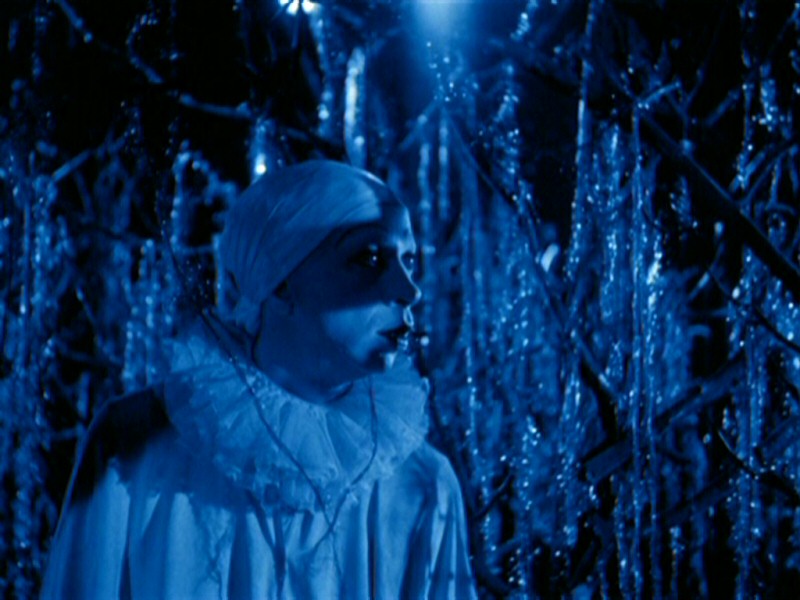
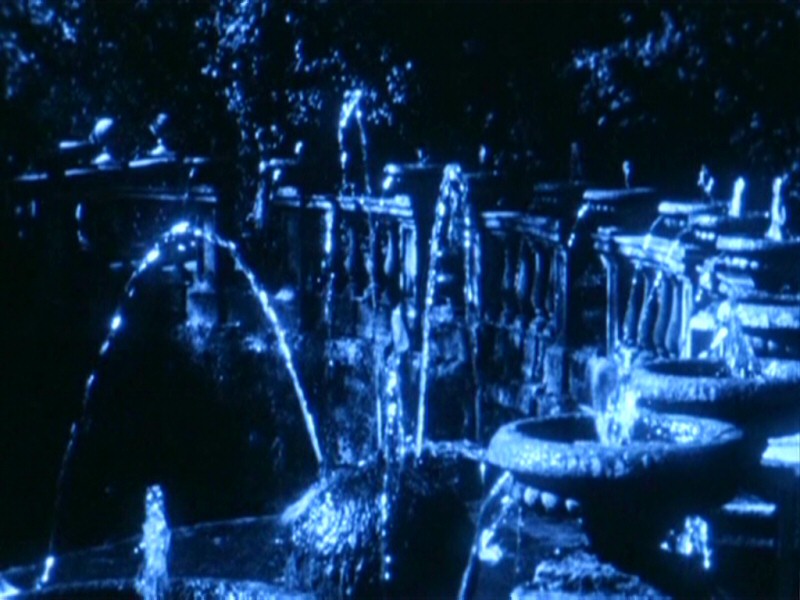
Shot in the famous water gardens of the Villa d'Este at
Tivoli, a marvel of 16th-century engineering and baroque
imagination, Eaux d'Artifice deploys two ingenious formal
strategies. Circus midget Carmilla Salvatorelli was
flamboyantly costumed and sent wandering the gardens, her
four-foot frame the only reference point of scale, resulting
in a splendidly subtle warping of perspective. The film was
shot on black-and-white film through a red filter, then
printed on color stock with a blue one, lending the image a
ghostly luminescence. Part trance film, part landscape
study, part rapturous abstraction, Eaux d'Artifice floats
along on sensuous dissolves and builds to one of the most
visionary (and moist) climaxes in the Anger oeuvre. Some
kind of evocation indeed: It is, somehow, his sexiest film.
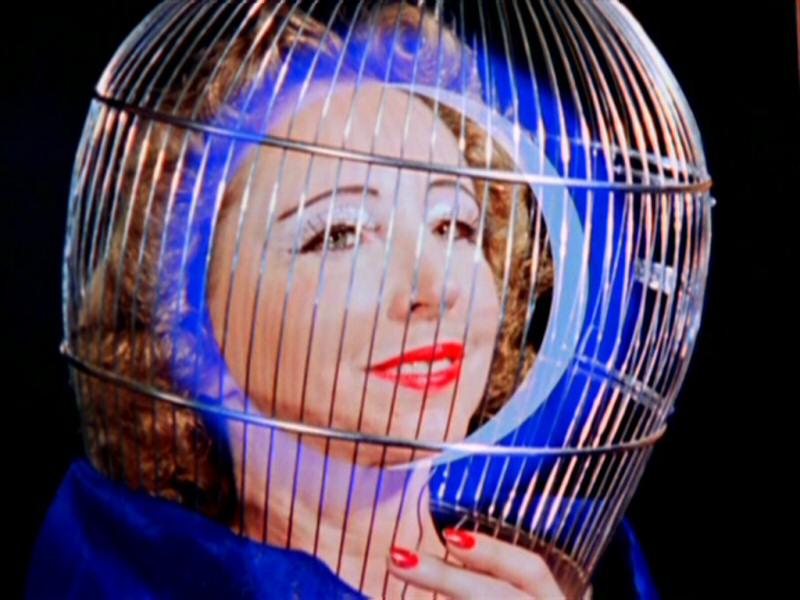
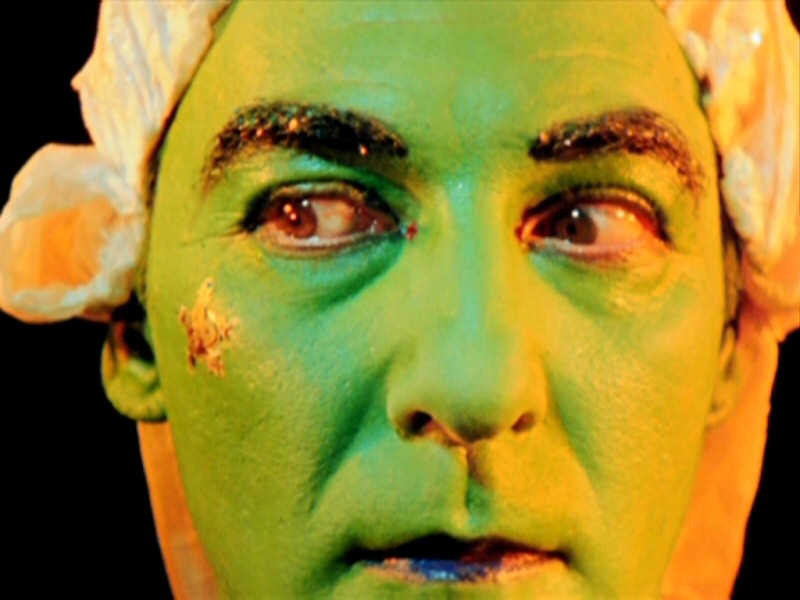
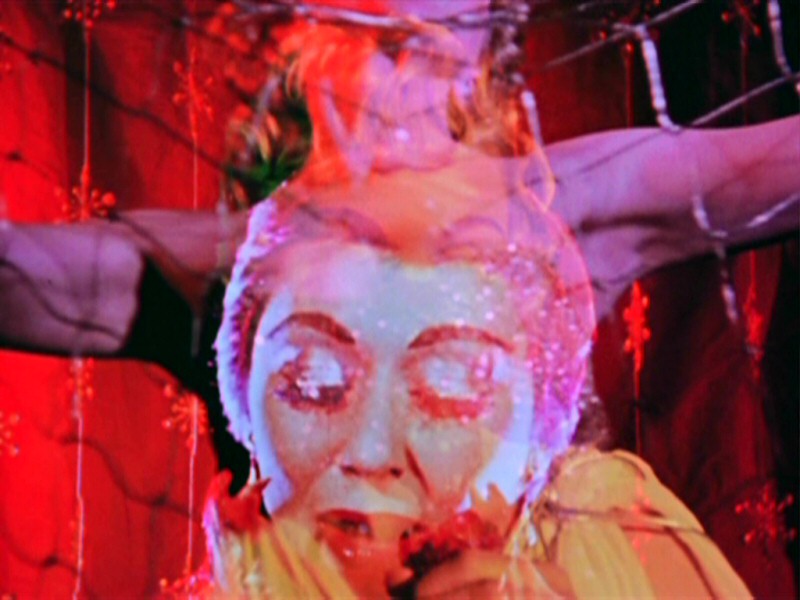
Inauguration of the Pleasure Dome (1954) has the coolest
title of any Anger film and many fans, though I've always
found it a tad tedious. An orgiastic fantasia of mythic
personages, crazy costumes, pancake makeup, hallucinatory
superimposition, and lysergic colors, Pleasure Dome posits a
model of pagan cine-ritual that would reach fuller
expression in later works.
For all his emphasis on magic, myth, symbol, and rite, Anger
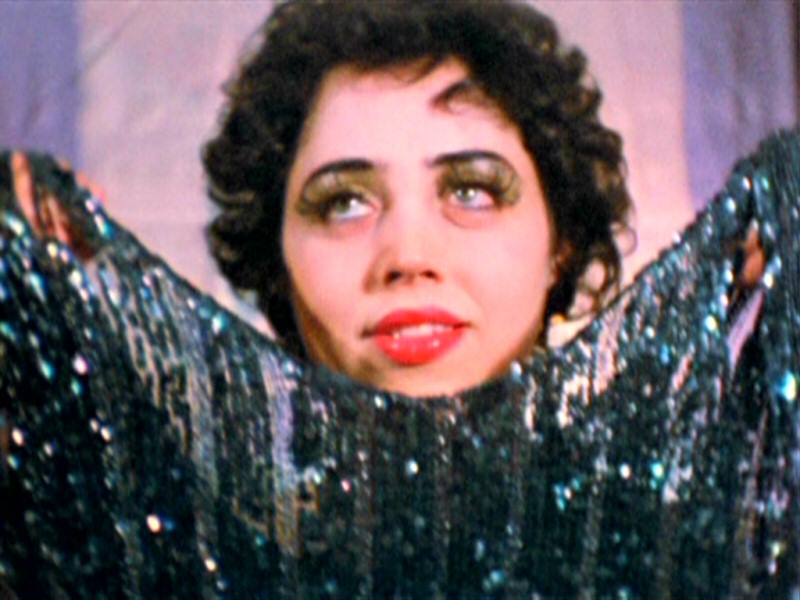
is as material a filmmaker as Brakhage. Puce Moment (1949)
opens with a voluptuous shuffle of evening gowns in
close-up, a rainbow shimmy of silk, chiffon, sequins, and
beads. Emerging from the dazzle is Yvonne Marquis, styled
like a Warholian Elizabeth Taylor, who proceeds to dress,
primp, and prepare for the day, finally exiting her
Hollywood Hills abode leading a pack of wolfhounds on leash.
Afragment of an abandoned feature about Hollywood women of
the 1920s, Puce Moment crystallizes Anger's feverish
obsession with the dream factory and his genius for wresting
master pieces from aborted projects.