




|
Search DVDBeaver |
S E A R C H D V D B e a v e r |

(aka 'Distant Voices, Still Lives')
Directed by
Terence Davies
UK 1988
|
Terence Davies's stunning debut
feature film Distant Voices, Still Lives was instantly recognised as a
masterpiece on its release in 1988 and the director hailed as one of Britain's
most gifted and remarkable filmmakers. Re-released in April 2007 as part of a
complete retrospective season of Terence Davies's films at BFI Southbank, it was
once again showered with critical acclaim. ***
Superlatives are in short supply to
describe the emotional power of Terence Davies’ fractured chronicle of the
life of a working-class family in 1940s and ’50s Liverpool. Drawing on his
own childhood, Davies turns his film on the pivot of a brutal patriarch’s
death and his daughter’s subsequent marriage, so splitting his film into two
episodes (which he filmed a year apart). The first, ‘Distant Voices’, is a
set of difficult memories of childhood fear and wartime suffering that drift
in and out of the wedding day, while its companion, ‘Still Lives’, portrays
the life of a happier widow, her two daughters, a son and their friends who
gather in pubs, sing and are beginning to suffer their own marriages. Pete
Postlethwaite is Tommy Davies, the violent, damaged and taciturn father;
Freda Dowie is Mrs Davies, his stoic wife and the suffering lynchpin of the
family; and Angela Walsh is Eileen, the daughter whose marriage blows a gust
of fresh air into the stale misery of her family but also threatens to
follow the same tragic pattern as her parents. |
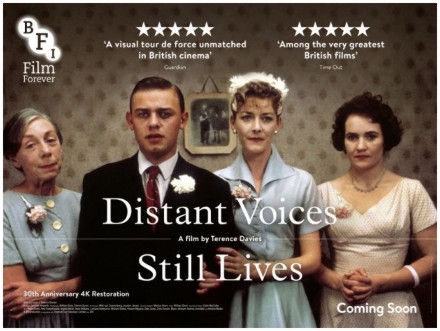
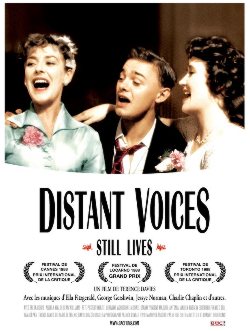
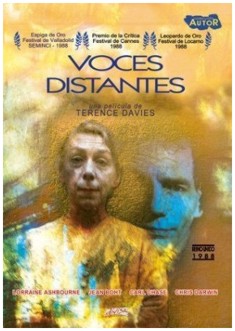
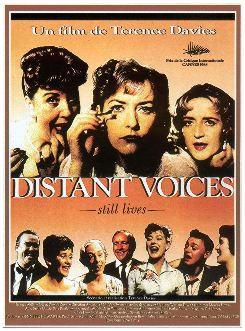
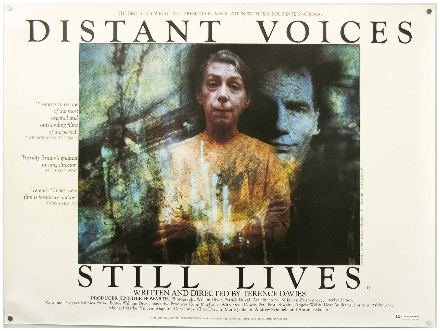
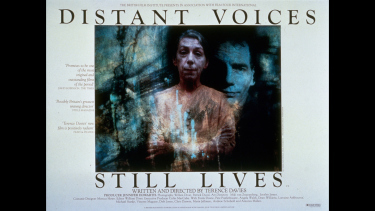
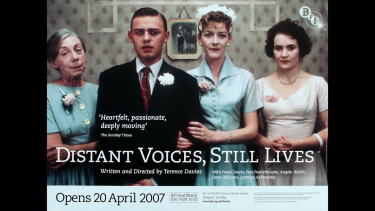
Posters
 |
 |
 |
 |
 |
 |
 |
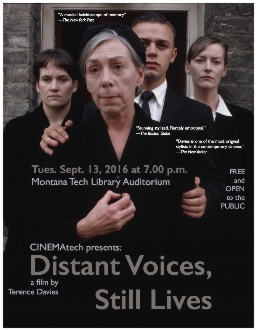 |
Theatrical Release: September 11th, 1988 - Toronto Film Festival
Reviews More Reviews DVD Reviews
Comparison
:BFI - Region 2 - PAL vs. Arrow - Region 'A' - Blu-ray vs. BFI - Region 'B' - Blu-ray
|
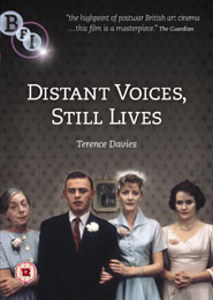
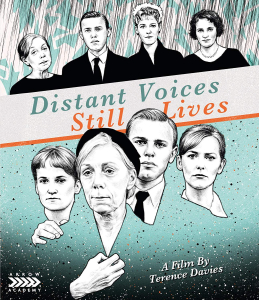
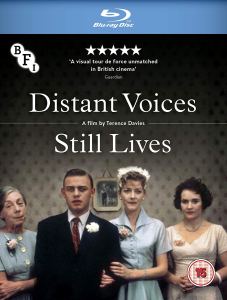
1) BFI - Region 2 - PAL LEFT2) Arrow - Region 'A' - Blu-ray MIDDLE
3)
BFI - Region
'B' -
Blu-ray
RIGHT
|
| Box Covers |
|
|
|
| Distribution | BFI Video - Region 2 - PAL | Arrow - Region 'A' - Blu-ray | BFI - Region 'B' - Blu-ray |
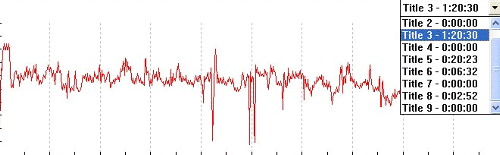
| Runtime | 1:20:30 (4% PAL Speedup) | 1:24:10.045 | 1:24:10.045 |
| Video | 1.78:1
Aspect Ratio Average Bitrate: 5.69 mb/s PAL 720x576 25.00 f/s |
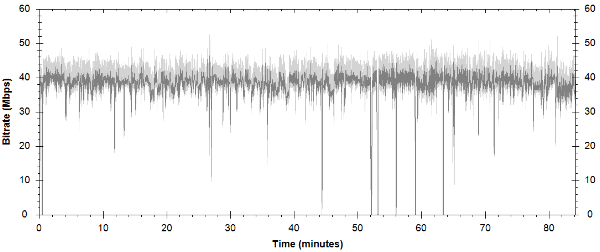
1080P Dual-layered Blu-ray Disc Size: 46,557,803,228 bytesFeature: 26,797,809,024 bytes Codec: MPEG-4 AVC Video Total Video Bitrate: 37.99 Mbps |
1080P Dual-layered Blu-ray Disc Size: 46,359,958,217 bytesFeature: 26,796,236,160 bytes Codec: MPEG-4 AVC Video Total Video Bitrate: 37.99 Mbps |
|
NOTE: The Vertical axis represents the bits transferred per second. The Horizontal is the time in minutes. |
|||
| Bitrate: |
|
||
| Bitrate: Arrow - Region 'A' - Blu-ray |
|
||
| Bitrate: BFI - Region 'B' - Blu-ray |
|
||
| Audio | English (Dolby Digital 2.0) |
LPCM Audio English 2304 kbps 2.0 / 48 kHz / 2304 kbps / 24-bit Dolby Digital Audio English 192 kbps 2.0 / 48 kHz / 192 kbps |
LPCM Audio English 2304 kbps 2.0 / 48 kHz / 2304 kbps / 24-bit Dolby Digital Audio English 192 kbps 2.0 / 48 kHz / 192 kbps |
| Subtitles | English, None | English (SDH), None | English (SDH), None |
| Features |
Release Information:
Edition Details: • Feature
commentary by director Terence Davies |
Release Information: Studio: Arrow
1080P Dual-layered Blu-ray Disc Size: 46,557,803,228 bytesFeature: 26,797,809,024 bytes Codec: MPEG-4 AVC Video Total Video Bitrate: 37.99 Mbps
Edition
Details: Reversible sleeve
featuring original and newly commissioned artwork by Jennifer Dionisio
Blu-ray
Release Date: October 23rd, 2018 Chapters 12 |
Release Information: Studio: BFI
1080P Dual-layered Blu-ray Disc Size: 48,693,955,920 bytes Feature: 28,593,420,288 bytes Codec: MPEG-4 AVC Video Total Video Bitrate: 34.49 Mbps
Edition
Details:
Blu-ray
Release Date: October 22nd 2018 Chapters 15 |





| Comments: |
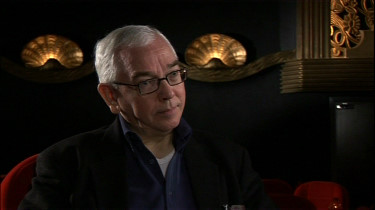
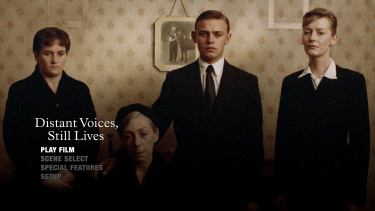
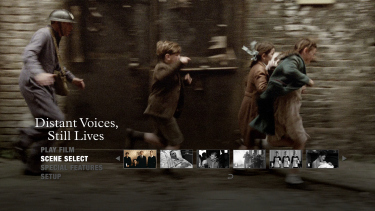
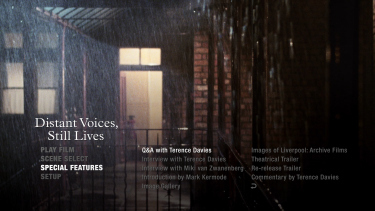
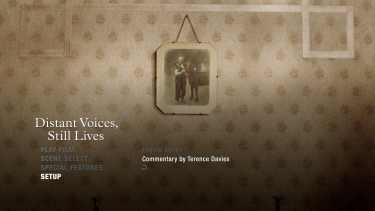
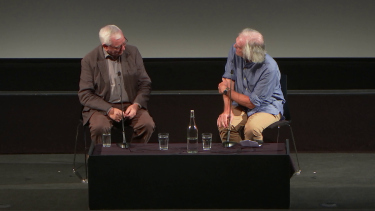
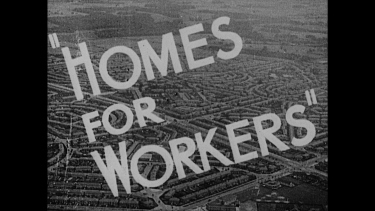
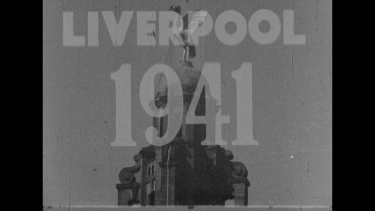
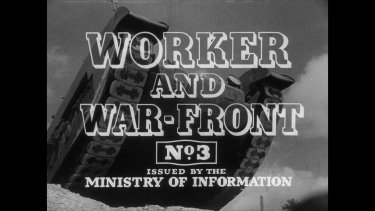
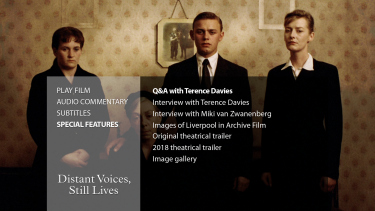
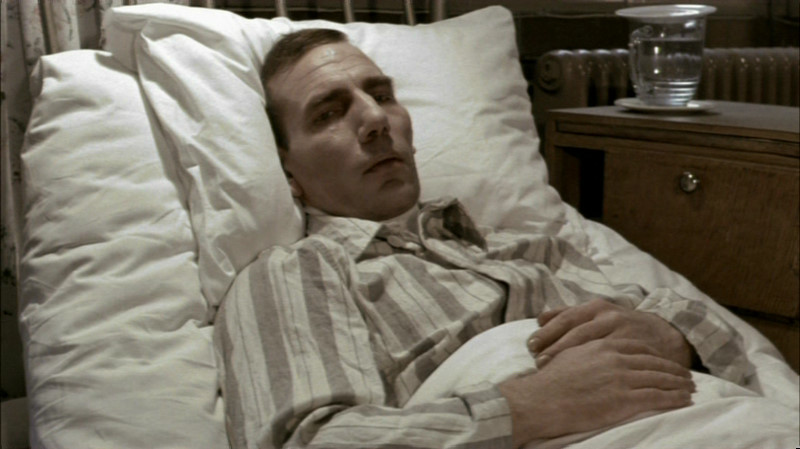
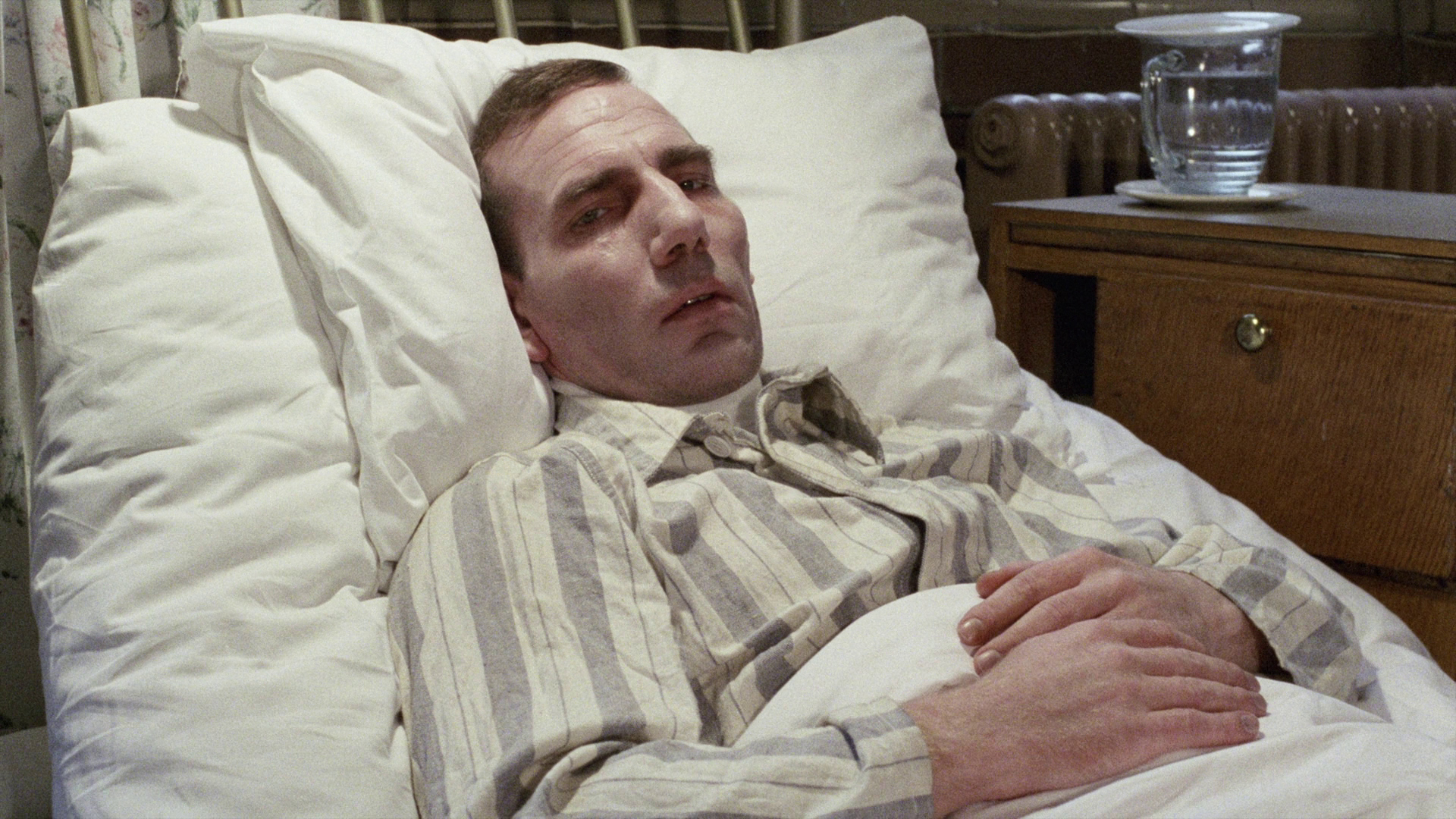
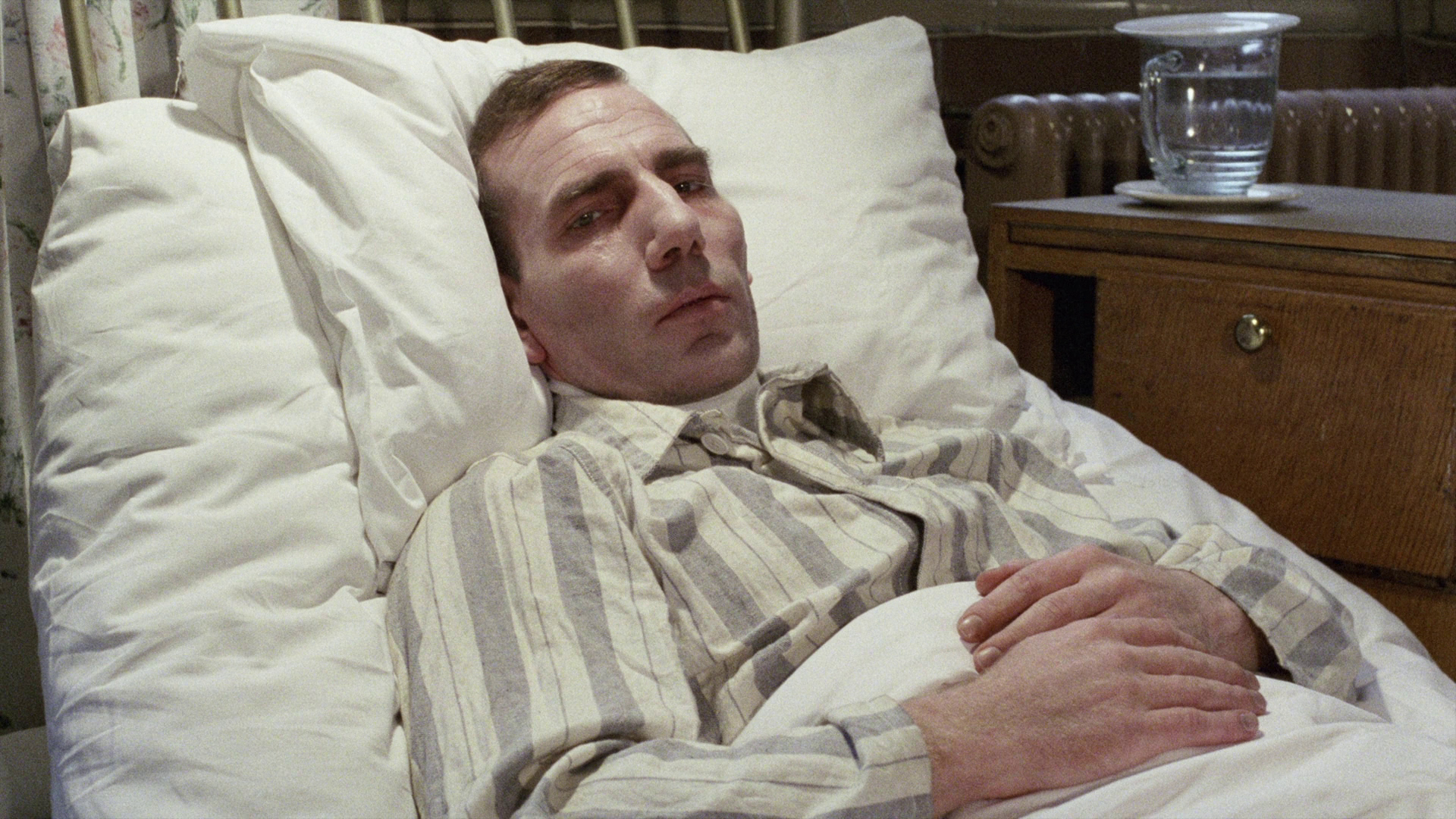
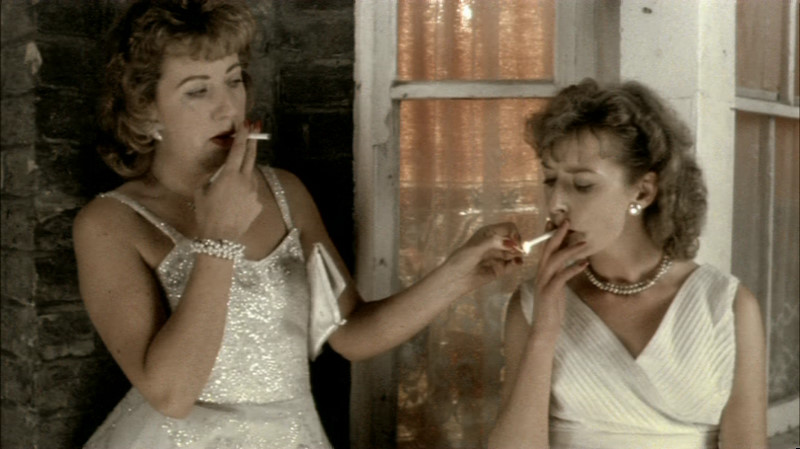
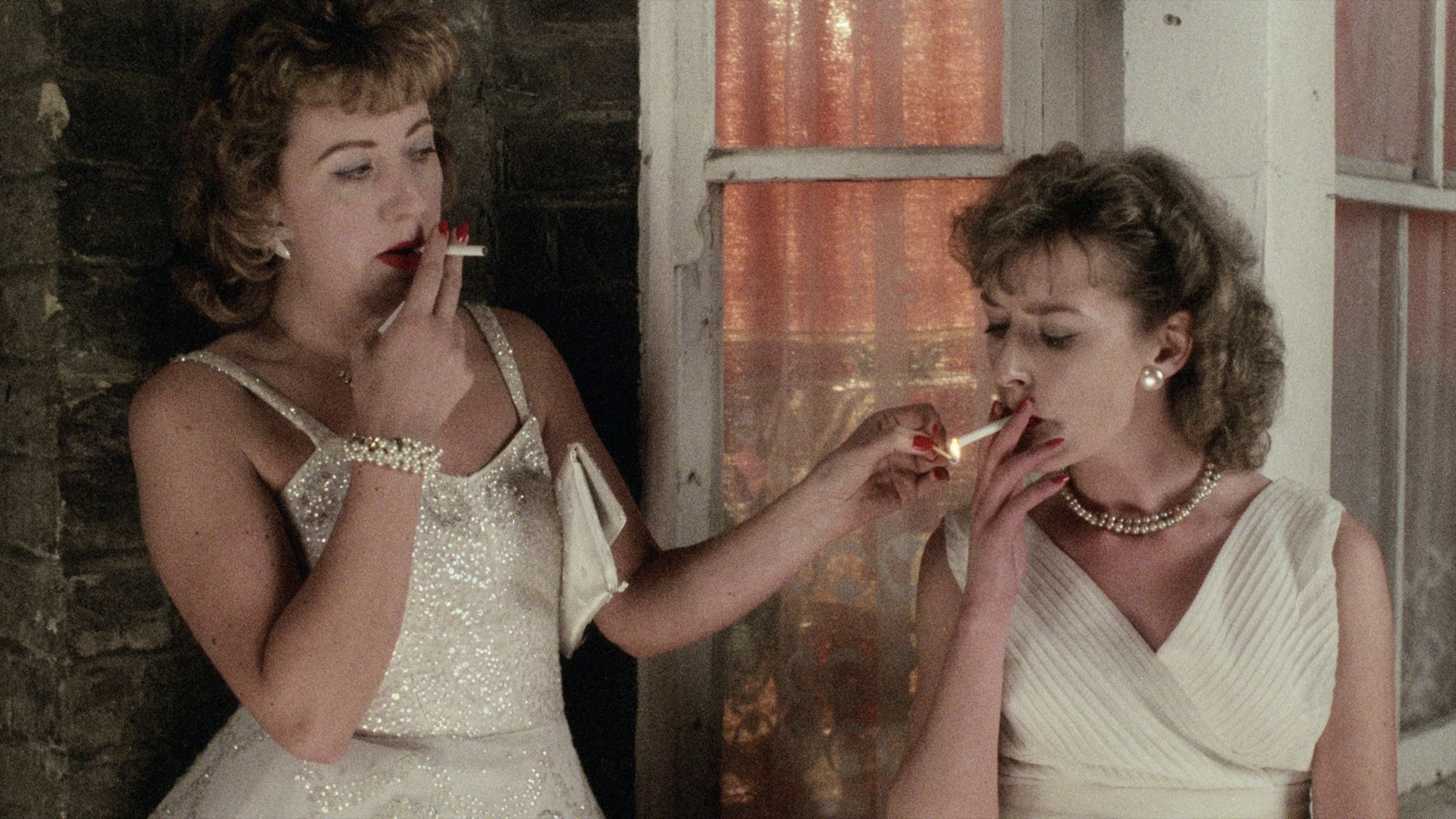
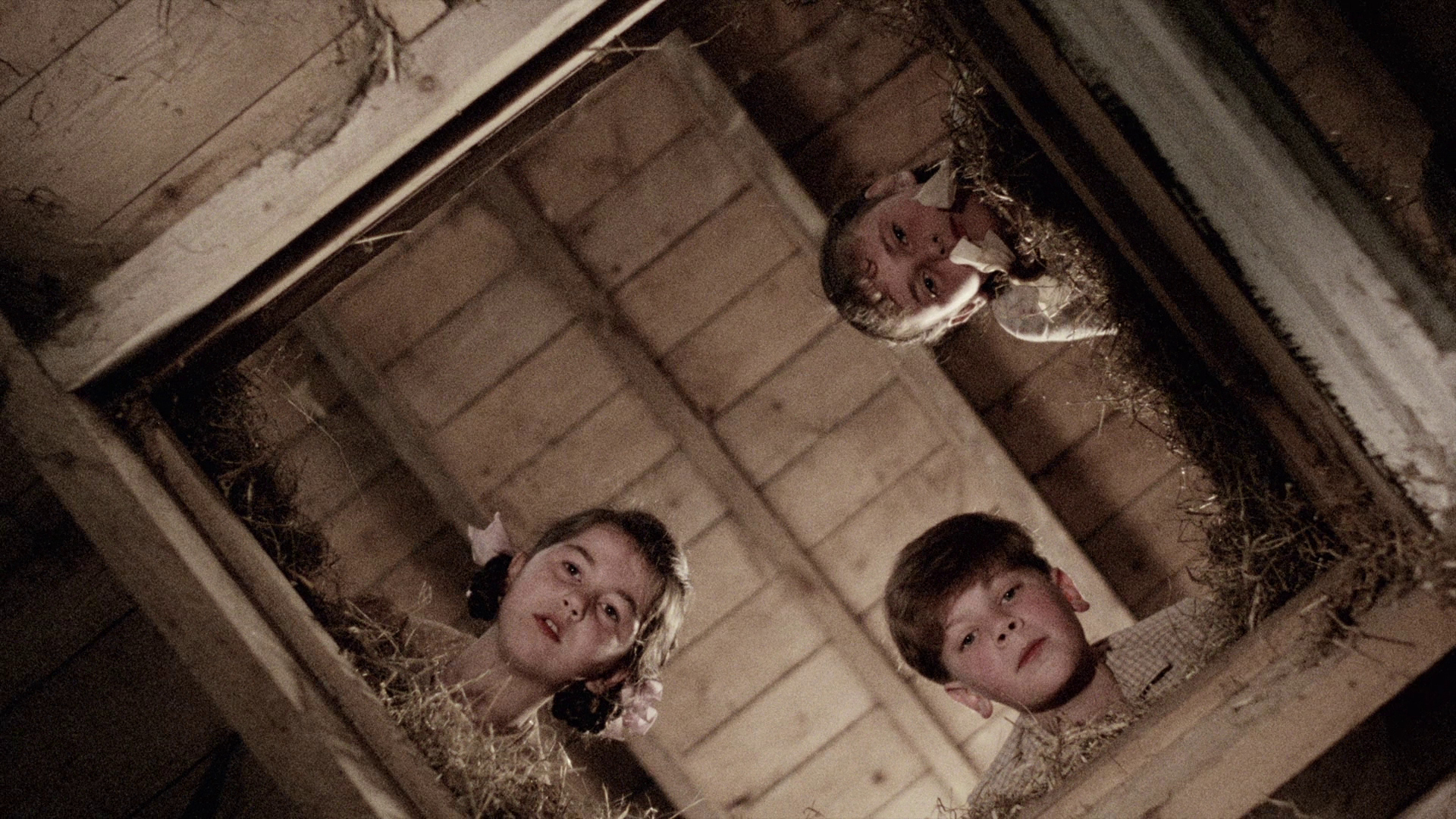
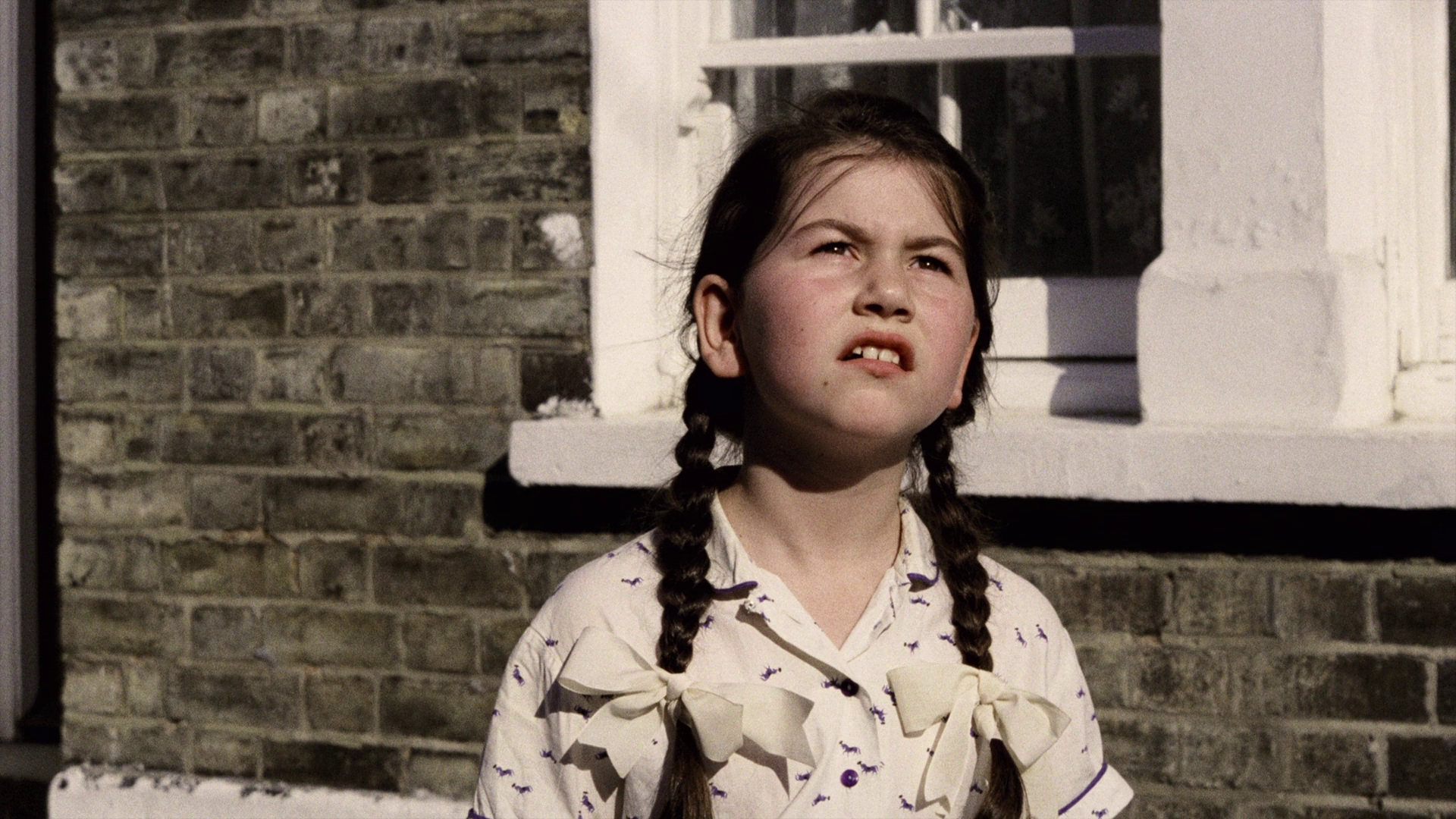
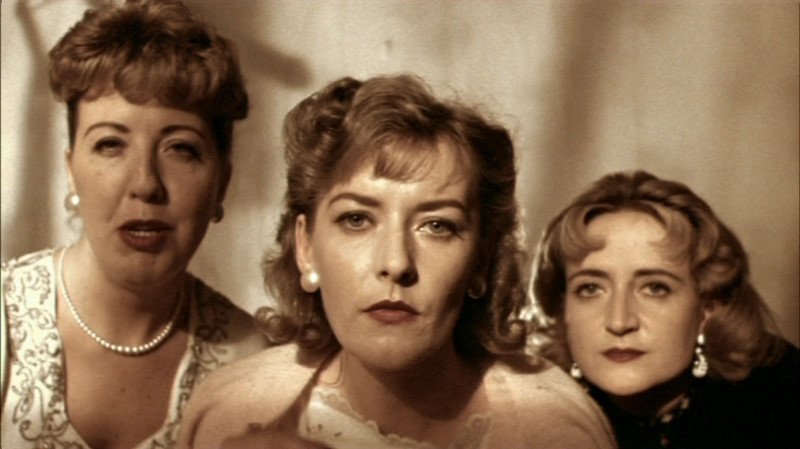
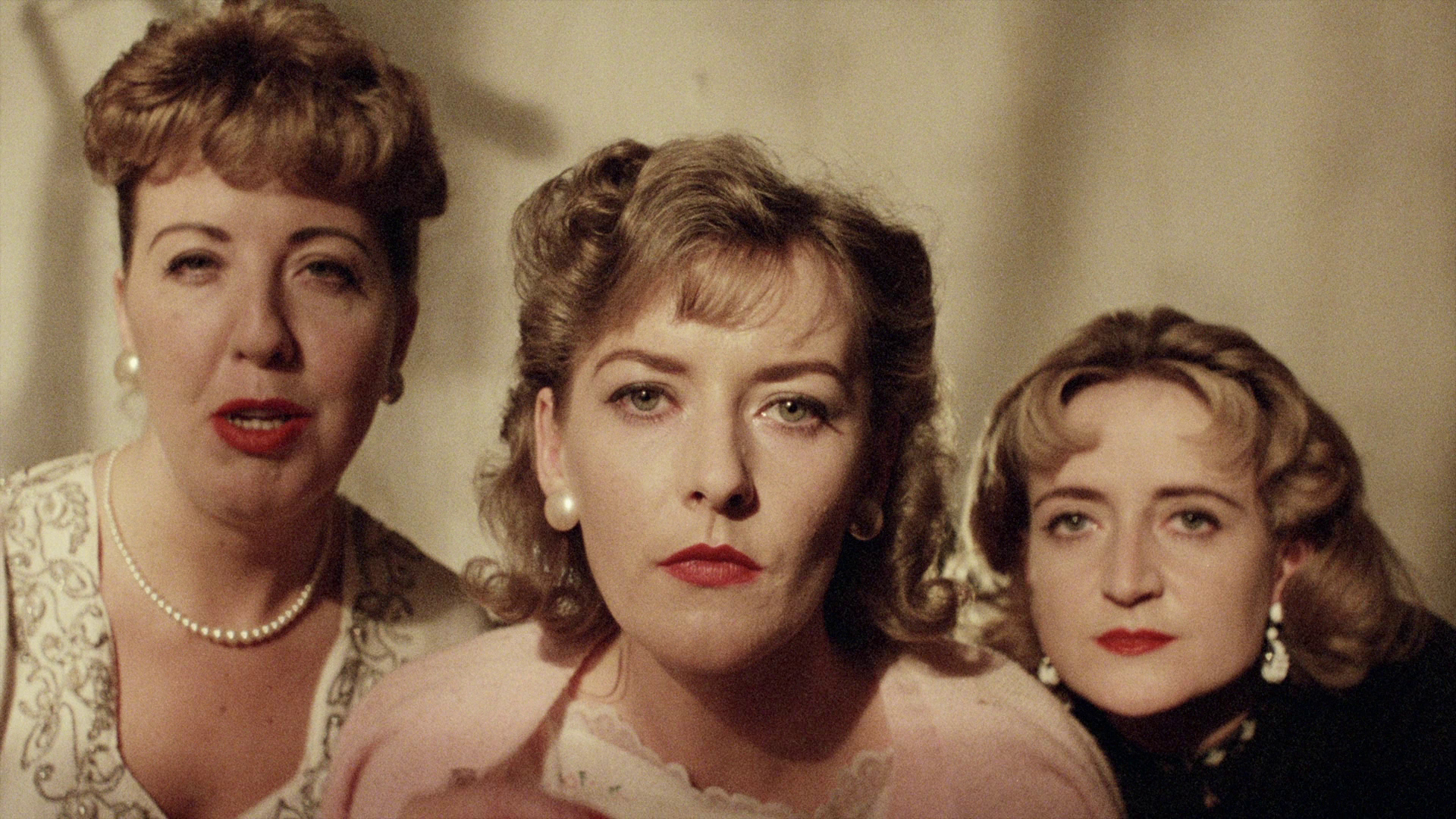
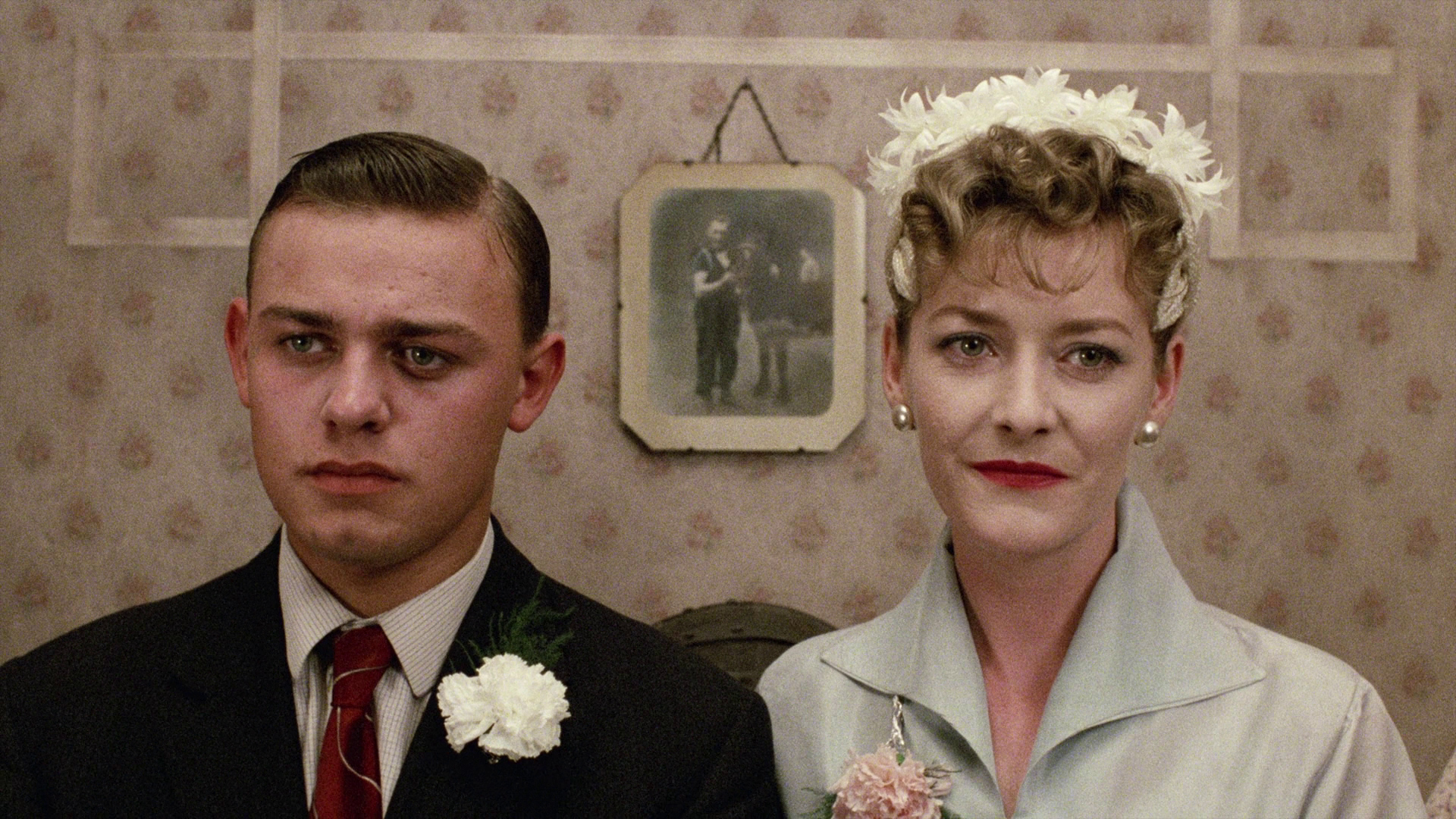
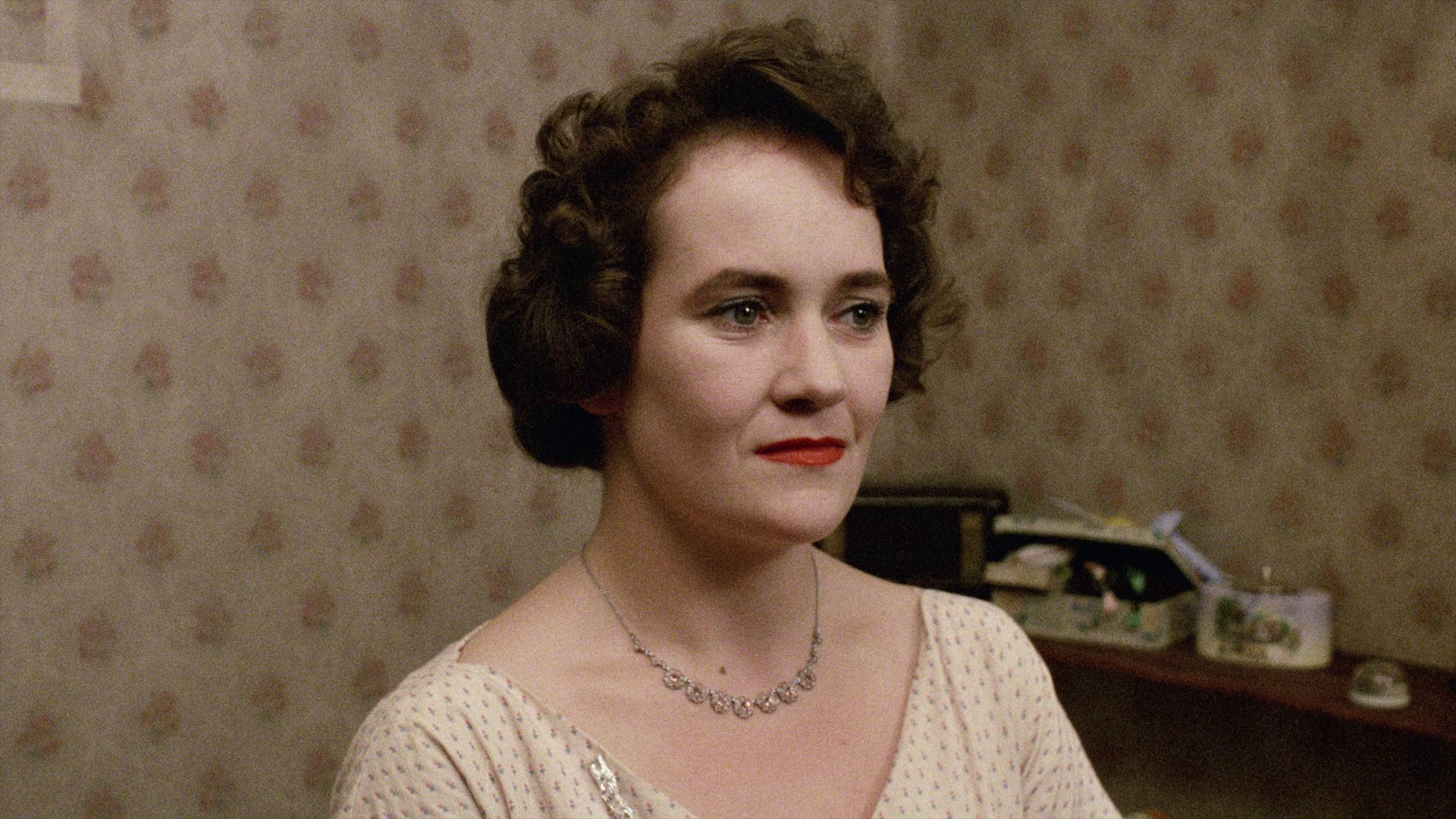
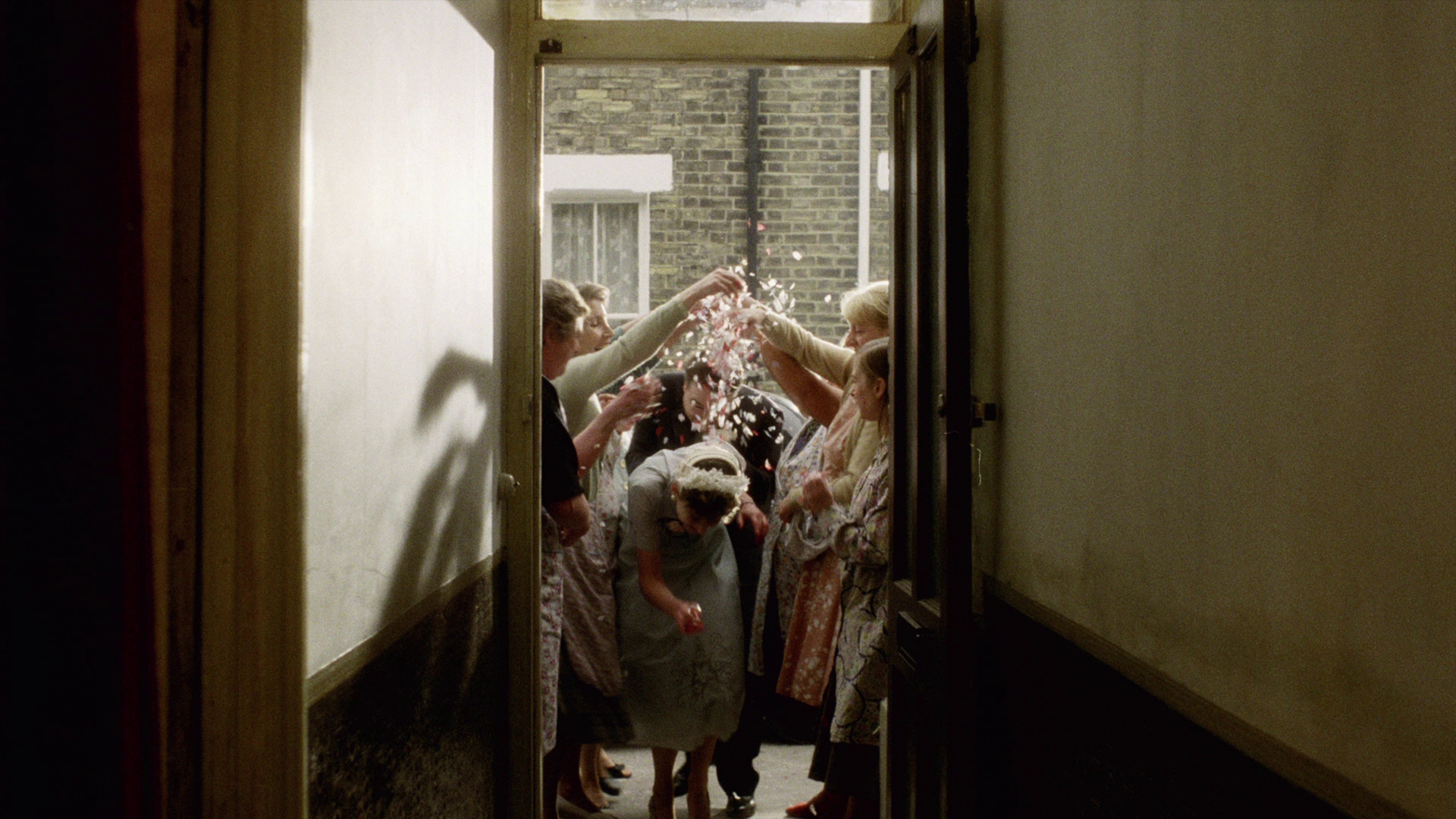
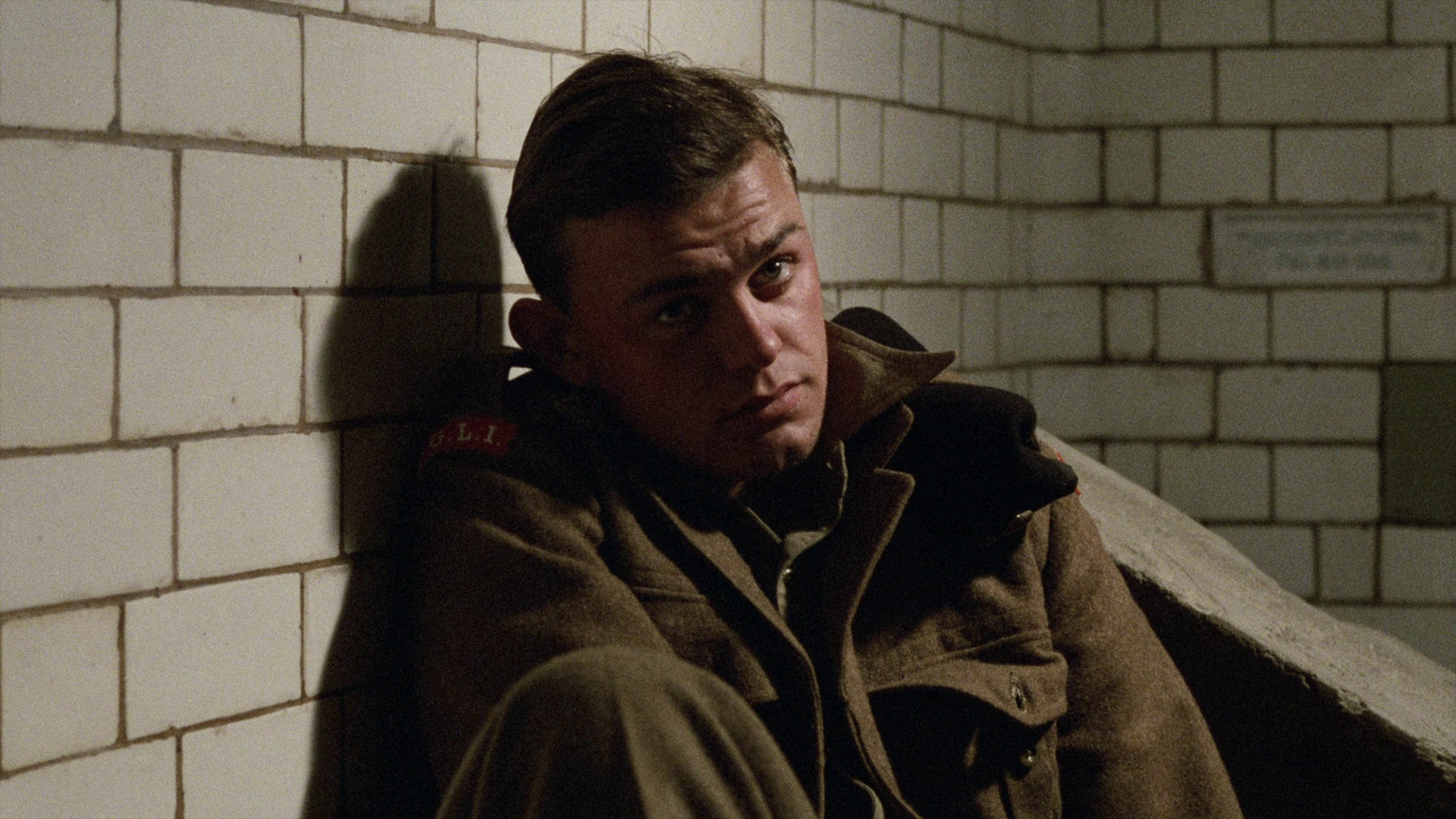
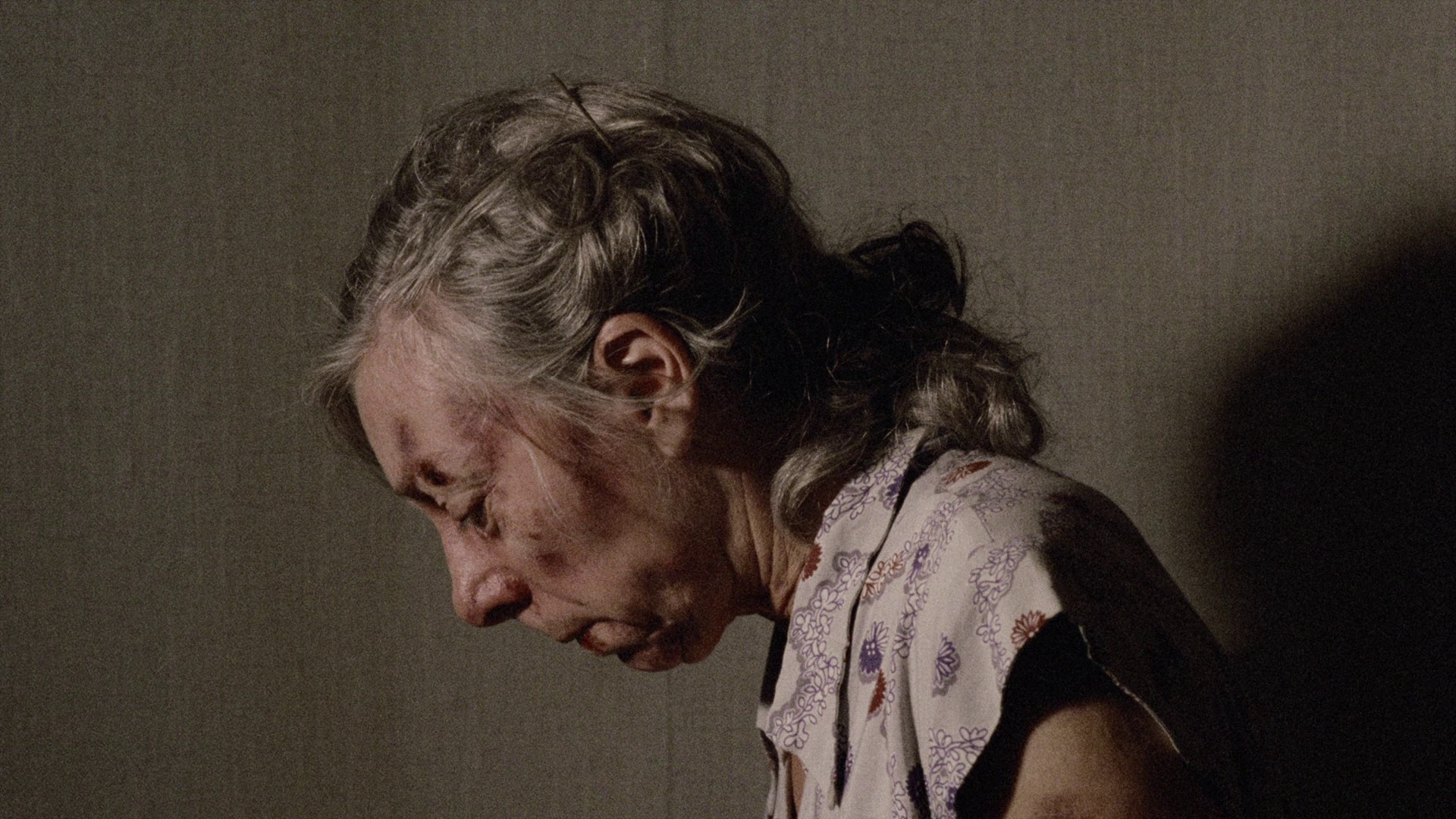
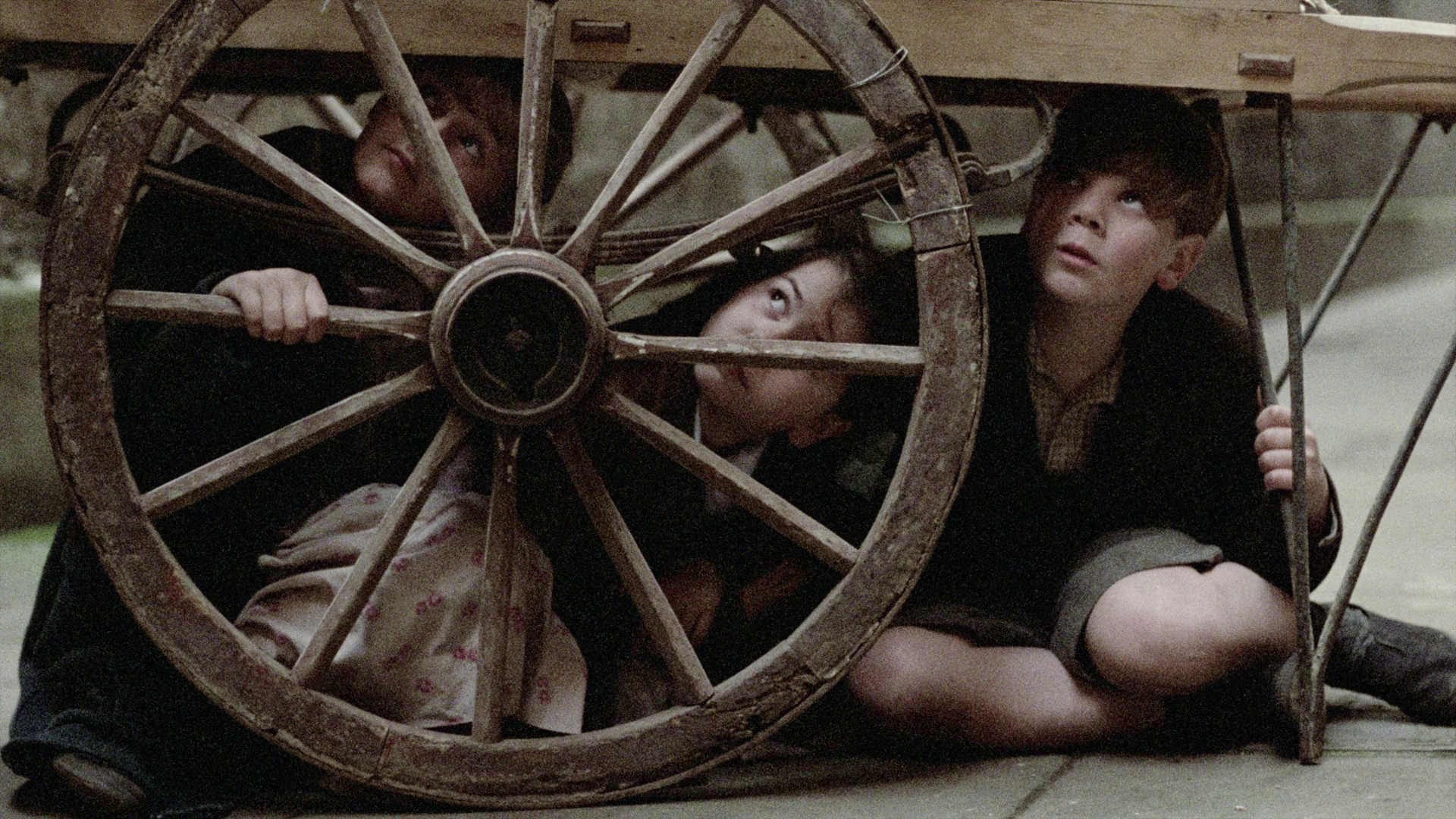
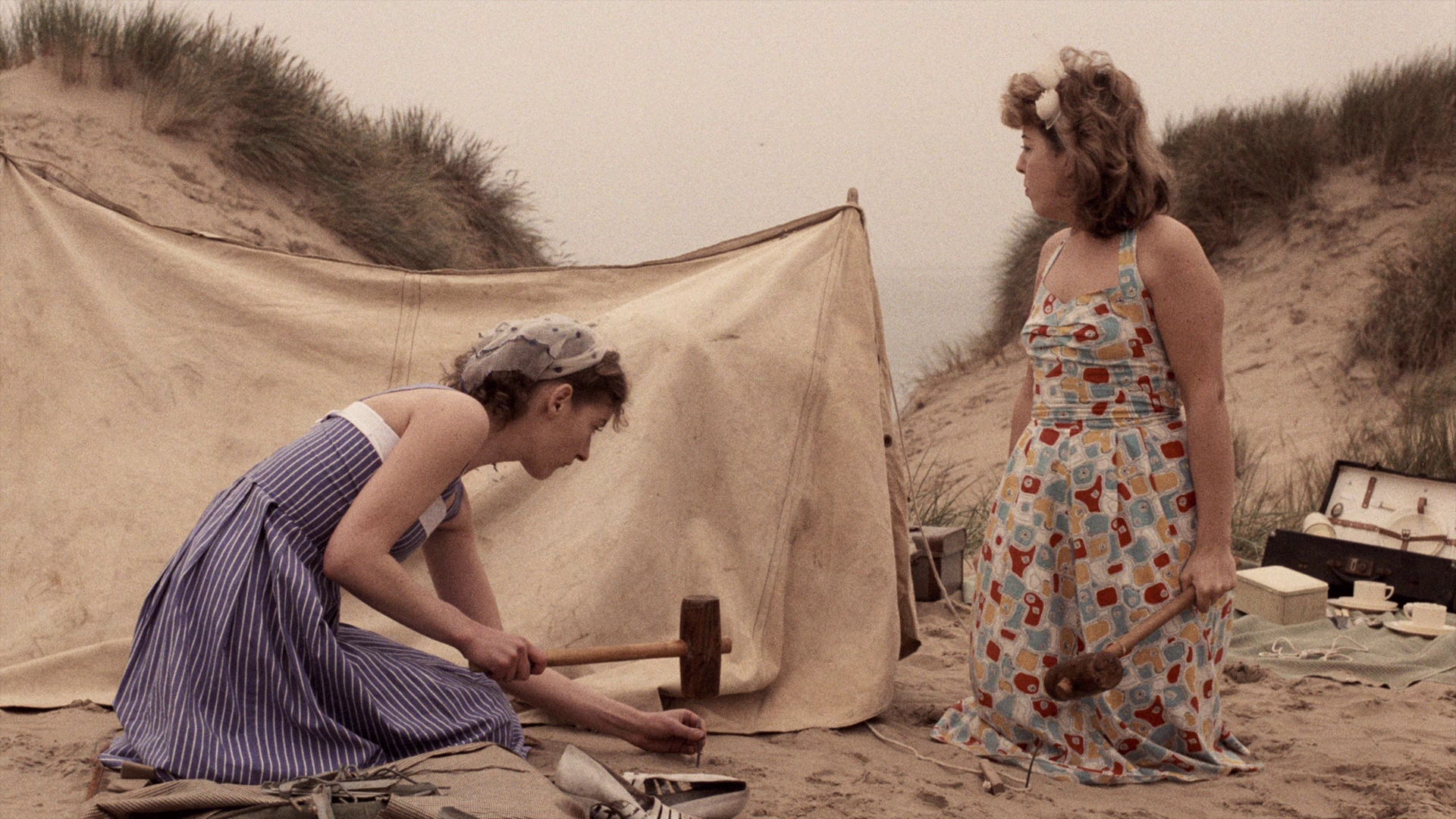
NOTE: The below Blu-ray captures were taken directly from the Blu-ray disc. ADDITION: Terence Davies' masterpiece "Distant Voices, Still Lives" has been restored in 4k resolution by the BFI under the supervision and approval of the director. This new transfer comes to us on Blu-ray thanks to Arrow Academy in the US and BFI in the UK. Both discs are the same 4K restoration/transfer and have the exact same running time to the 1/1000th of a second. They feature an impressive maxed out bitrate and look marvelous in-motion. The dual-layered Blu-rays show the intentional rich grain and more efficiently export the films style. Contrast levels replicate the filmmakers intentions with bleached-sepia cast. Colors are intentionally skewed to a certain visual palette and are faithfully recreated here on these Blu-rays.Both the Arrow and BFI discs have a 24-bit linear PCM 2.0 audio track. These identical tracks sound very clean, with easily audible dialogue as well as impressive ambient sounds. There are optional English subtitles on both of the Region-A and Region-B Blu-rays. The extras are identical on both Blu-rays. The film has an optional 2.5-minute introduction by Mark Kermode. There is the wonderful commentary from director Davies, recorded in 2007. There is also a 32-minute Q&A with Davies recorded after the UK premiere of the new restoration at BFI Southbank. Critic Geoff Andrew talks with the director in the 20-minute "Interview with Terence Davies". There is also a 6-minute interview with the film's art director, Miki van Zwanenberg. There is a fantastic extra here, entitled "Images of Liverpool in Archive Film". This over an hour of archival footage from Liverpool. This footage is divided into three sections, the 11-minute "Homes for Workers", the 40-minute "Liverpool 1941", and the 11-minute "Worker and War Front No. 3". These wonderful time-capsules reinforce how "Distant Voices..." got the look and feel of the era just right. Both the original trailer and the 2018 4k re-release trailers are both on the Blu-ray. There is also a fully illustrated booklets for both - on the BFI they include new writing on the film by critic Derek Malcolm and art director Miki van Zwanenberg, essays by Geoff Andrew and Adrian Danks, and full film credits. Arrow's Blu-ray offers a reversible sleeve featuring original and newly commissioned artwork by Jennifer Dionisio and for the first pressing has an illustrated collector's booklet featuring new writing on the film by critic Christina Newland plus archive essays. "Distant Voices, Still Lives" is an impressive story - told in two segments. The film is almost uncanny in its vivid recreation of pre-war England. This new 4k restoration is a revelation. You can absolutely throw out any old DVDs and immediately purchase this Blu-ray, either BFI's Region-B disc or Arrow Academy's Region-A. The extras are wonderful and only enhance the importance of this unique cinema. I look forward to more of Davies work (especially that Emily Dickinson adaptation, "A Quiet Passion"). Colin Zavitz *** Yet another fabulous DVD package from BFI. Such an impressive, and at times understated, film that it's hard imagining it not touching everyone to some degree. The film's image is often intentionally styled to produce effects - age or photographic moments (sepia tinted or heavily grained) but the quality looks as true to theatrical as one could imagine. The transfer looks unmanipulated and there are no visible damage marks. Audio was clean and clear and it is support by optional English subtitles. BFI have put some love in to this with many strong, relevant, extras. First a director commentary from Davis. He has a wonderfully soft-spoken accent and imparts production details that only the director would be aware of. There is also a 20 minute video interview with Davis by Geoff Andrew and a six minute intro from the Art Director Miki van Zwanenberg. BFI include the original trailer but I also got a lot out of the liner notes booklet with essays by Beryl Bainbridge (entitled Bittersweet Symphony) and Adrian Danks (The Art of Memory), plus an original review from the Monthly Film Bulletin and a Davis biography. In conclusion I'd say this is just about a perfect DVD package. Although I had heard of the film I had never had the privilege of seeing it. Magnificent... and BFI continue to impress as a company that cares by bring it to us with extensive effort, care and diligence on their part. Bravo! I strongly suggest owning this DVD. Very strongly. |
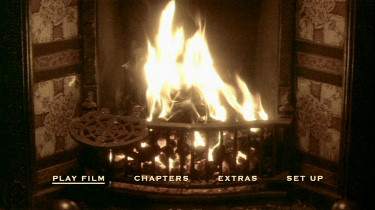
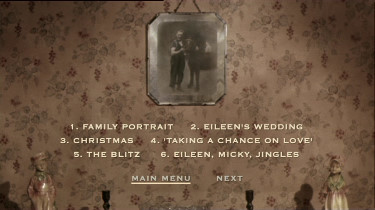
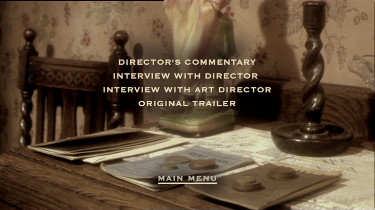
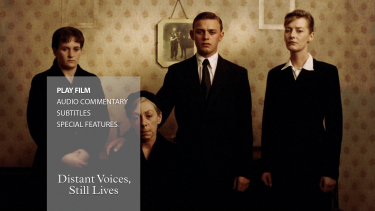
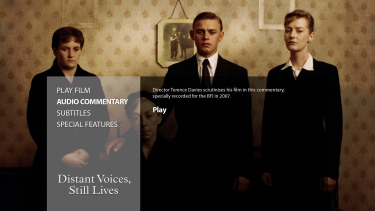
DVD Menus
 |
 |
 |
 |
 |
 |
Arrow - Region 'A' - Blu-ray
 |
 |
 |
 |
 |
 |
 |
 |
 |
 |
 |
 |
 |
 |
 |
 |
BFI - Region 'B' - Blu-ray
 |
 |
 |
CLICK EACH BLU-RAY CAPTURE TO SEE ALL IMAGES IN FULL 1920X1080 RESOLUTION
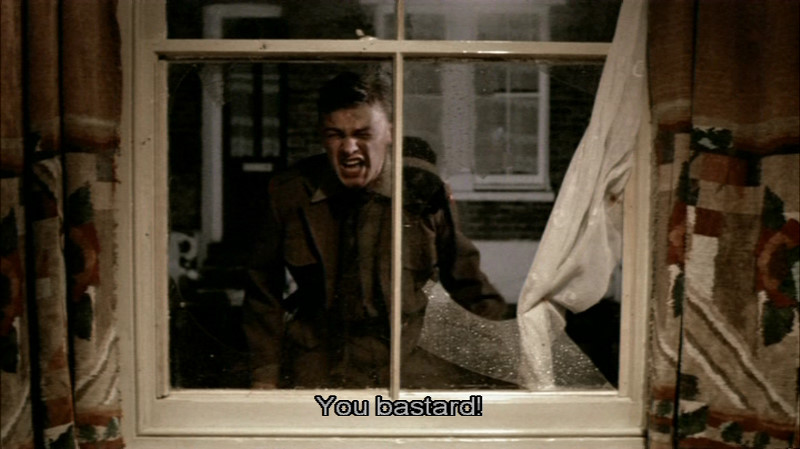
Subtitle Sample
|
1) BFI - Region 2 - PAL TOP2) Arrow - Region 'A' - Blu-ray MIDDLE
3)
BFI - Region
'B' -
Blu-ray BOTTOM
|
 |
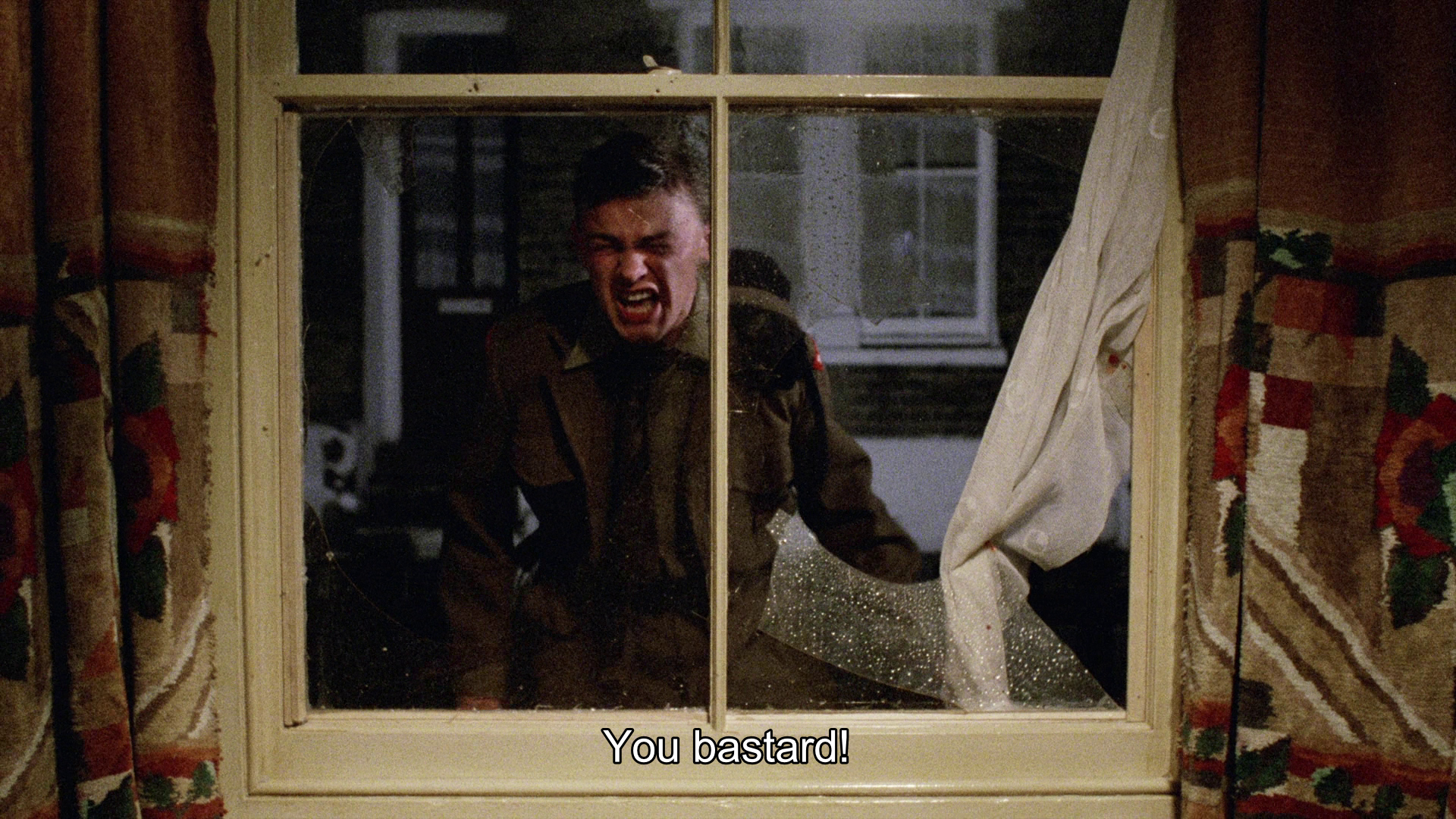 |
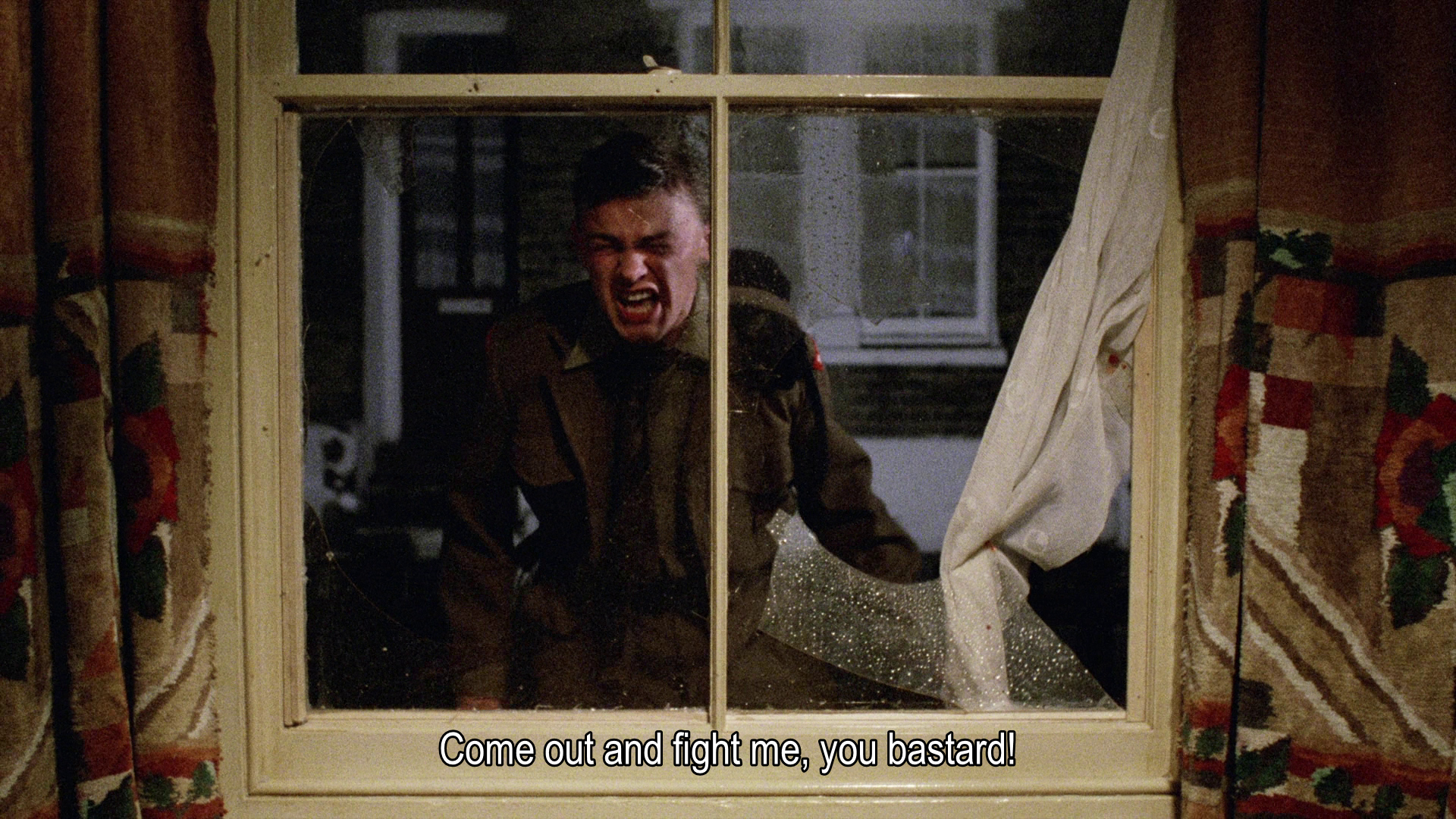 |
Screen Captures
|
1) BFI - Region 2 - PAL TOP2) Arrow - Region 'A' - Blu-ray MIDDLE
3)
BFI - Region
'B' -
Blu-ray BOTTOM
|
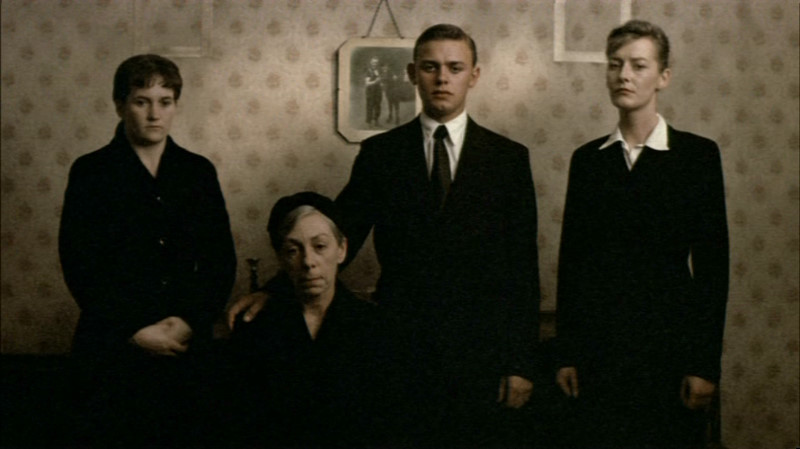 |
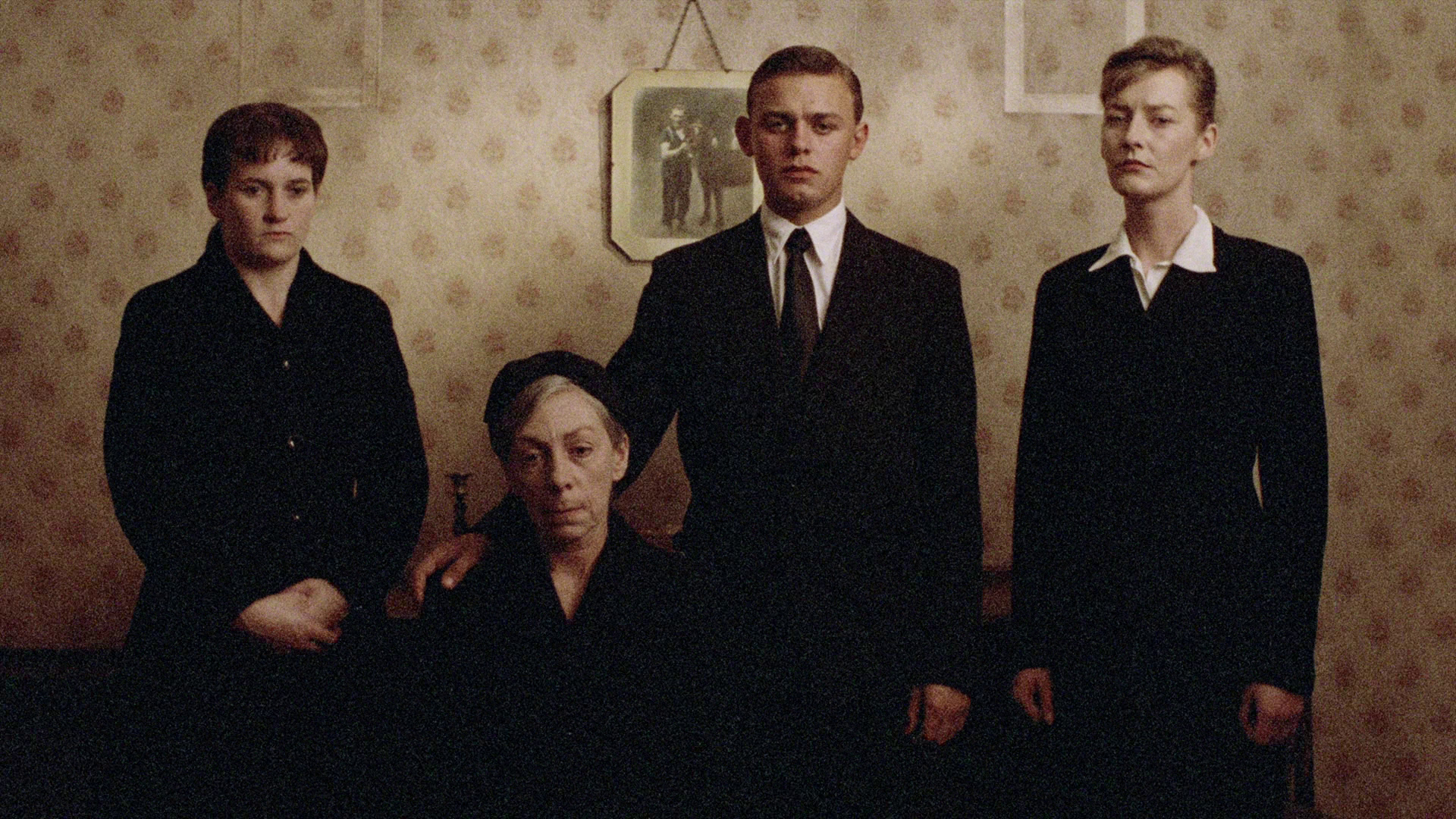 |
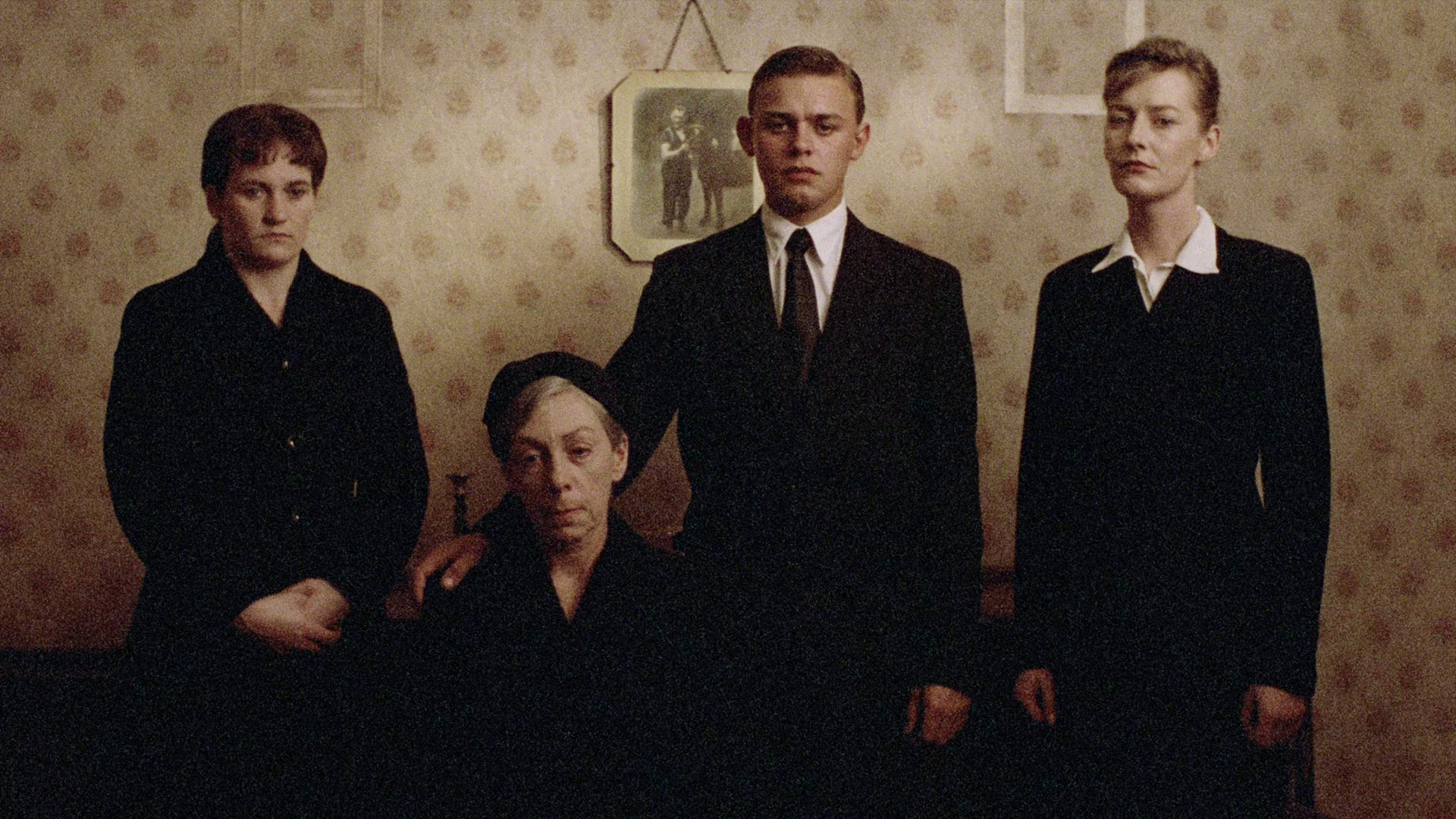 |
|
1) BFI - Region 2 - PAL TOP2) Arrow - Region 'A' - Blu-ray MIDDLE
3)
BFI - Region
'B' -
Blu-ray BOTTOM
|
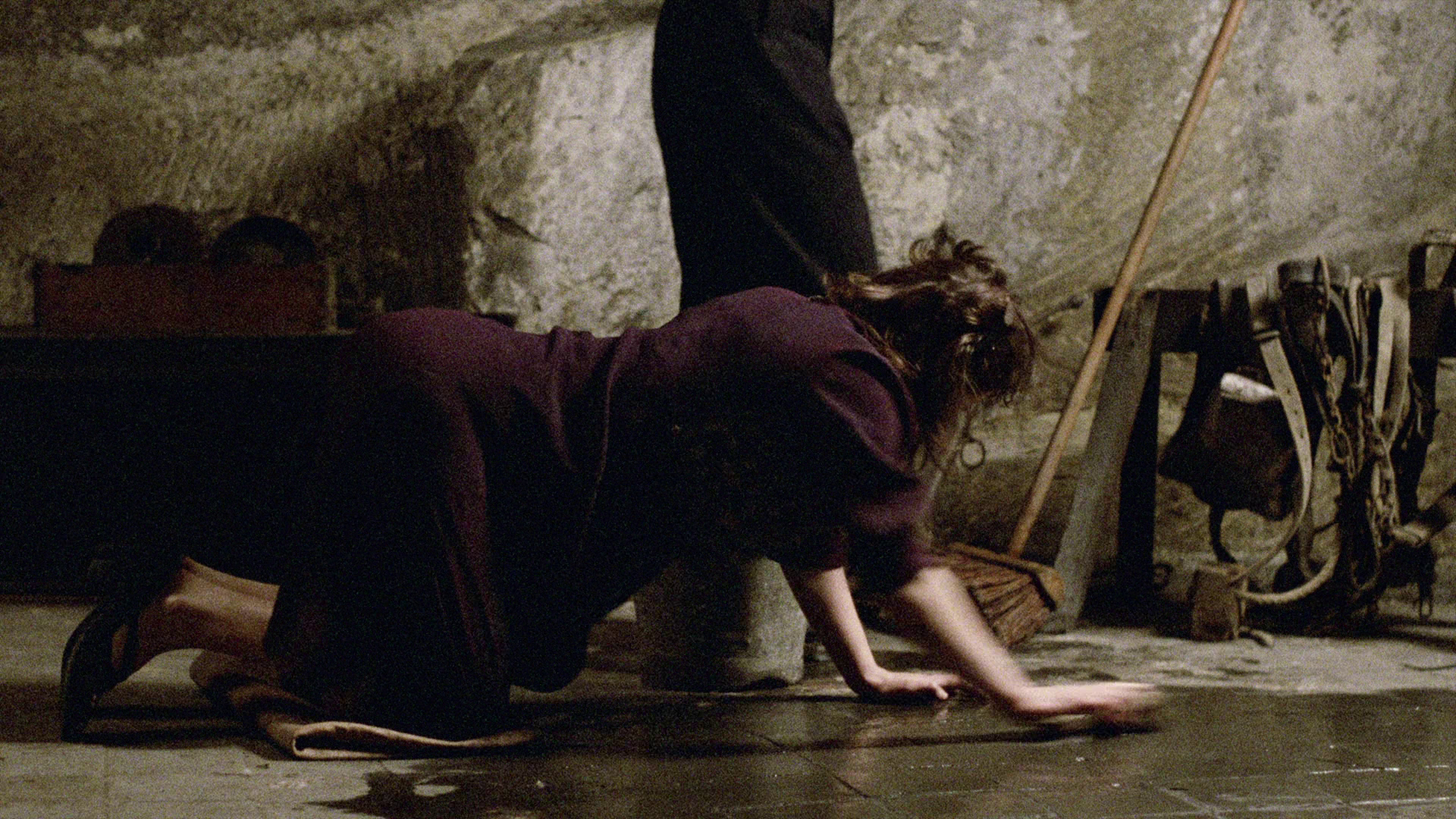
 |
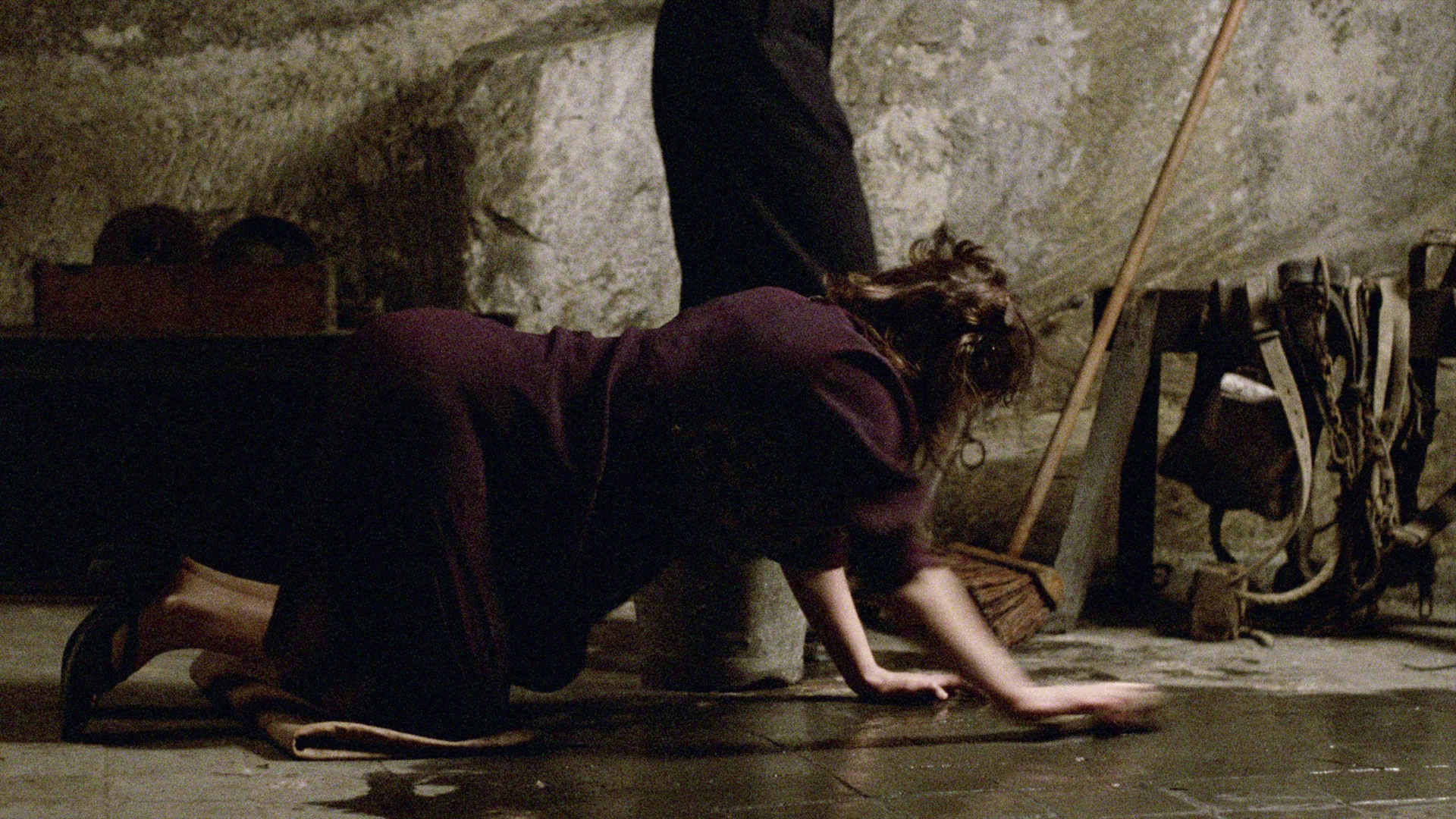
 |
 |
|
1) BFI - Region 2 - PAL TOP2) Arrow - Region 'A' - Blu-ray MIDDLE
3)
BFI - Region
'B' -
Blu-ray BOTTOM
|
 |
 |
 |
|
1) BFI - Region 2 - PAL TOP2) Arrow - Region 'A' - Blu-ray MIDDLE
3)
BFI - Region
'B' -
Blu-ray BOTTOM
|
 |
 |
|
1) BFI - Region 2 - PAL TOP2) Arrow - Region 'A' - Blu-ray BOTTOM
|
 |
 |
|
1) BFI - Region 2 - PAL TOP2) Arrow - Region 'A' - Blu-ray BOTTOM
|
 |
 |
|
1) BFI - Region 2 - PAL TOP2) Arrow - Region 'A' - Blu-ray BOTTOM
|
 |
 |
More Blu-ray Captures
 |
 |
 |
 |
 |
 |
 |
 |
 |
| Box Covers |
|
|
|
| Distribution | BFI Video - Region 2 - PAL | Arrow - Region 'A' - Blu-ray | BFI - Region 'B' - Blu-ray |
















Mail cheques, money orders, cash to: or CLICK PayPal logo to donate!
|
Gary Tooze
|
|
Thank You!
