|
An enormous, sincere thank you to our
phenomenal
Patreon
supporters! Your unshakable dedication
is the bedrock that keeps DVDBeaver
going - we’d be lost without you. Did
you know? Our patrons include a
director, writer, editor, and producer
with honors like Academy Awards for Best
Picture and Best Director, a Pulitzer
Prize-winning screenwriter, and a Golden
Globe-winning filmmaker, to name a few!
|






|
Search DVDBeaver |
S E A R C H D V D B e a v e r |

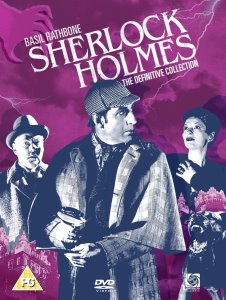 vs.
vs.
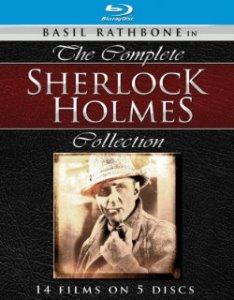
Sherlock Holmes - The Definitive Collection (7 Discs - 14 Films) vs.
Sherlock Holmes: Complete Collection [5 X
Blu-rays - 14 Films]
directed by Sidney Lanfield, Alfred L. Werker, John Rawlins, and Roy William
Neill
USA 19
|
The
character of Sherlock Holmes is to date the character most often portrayed on
screen. According to Guinness, per 1988, he had appeared in 193 films (today its
well over 200), and of all actors ever to portrait Sherlock Holmes, one stands
above the rest: Basil Rathbone. Thus, while the Granada adaptations of Sherlock
Holmes, starring Jeremy Brett, is considered near perfect adaptations of both
the novels and the character, Rathbone remains the iconographic Sherlock Holmes,
not only because he resembles the original Sidney Paget illustrations, but also
because Rathbone brought passion, intelligence and idiosyncrasies to the
character, thereby creating a visual icon of the worlds greatest detective,
which actors only dare dream of. Henrik Sylow |
Comparison
:|
Sherlock Holmes - The Definitive Collection (7 Discs) vs. Sherlock Holmes: Complete Collection [5 Blu-rays]
|
|
|
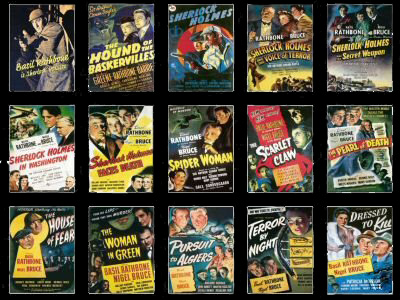
| CLICK logo to order |
|
|
| Distribution |
Sherlock Holmes - The Definitive Collection Optimum Classic Region 2 – PAL |
Sherlock Holmes: Complete Collection - Region 'A' - Blu-ray |
| Time: | Total Duration: 15:55:04 (4% PAL Speed-Up) | Total Duration: 14 films almost 17 hours - theatrical running time |
| Audio | English (Dolby Digital 2.0 Mono) | LPCM Audio English 1536 kbps 2.0 / 48 kHz / 1536 kbps / 16-bit |
| Subtitles | None | English, None |
|
Features |
Release Information:
Aspect
Ratio:
Edition Details: |
Release Information:
1080P Dual-layered Blu-ray Disc 1 Size: 49,480,282,894 bytesFeature Average: 18,314,975,232 bytes Codec: MPEG-4 AVC Video Total Video Bitrate: 24.99 Mbps
Edition Details:
• Disc 3: Sherlock Holmes and the
Spider Woman / The Scarlet Claw /
The Pearl of Death Standard (thicker) Blu-ray case inside cardboard slipcase |


|
Comments: |
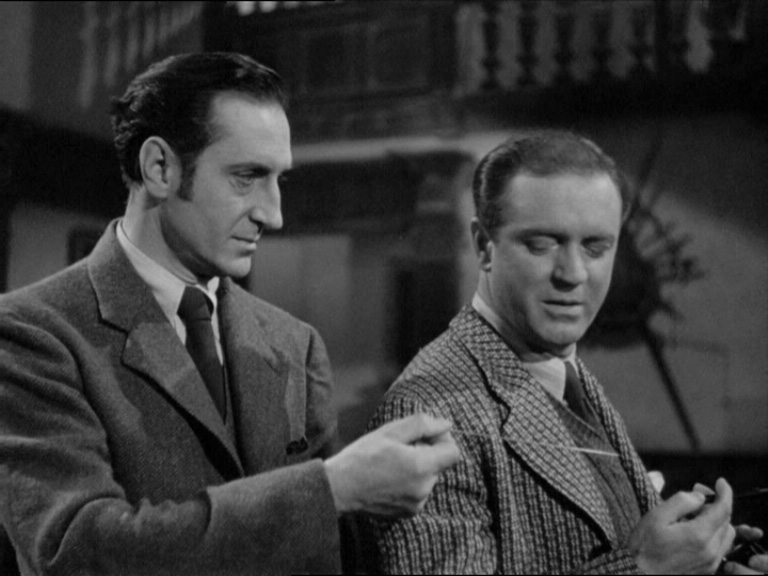
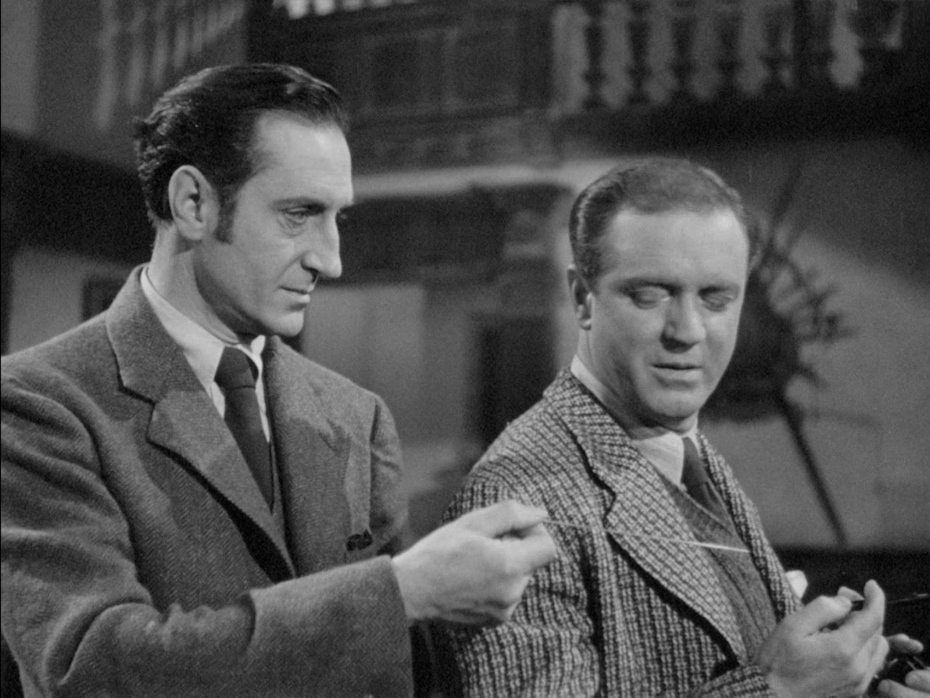
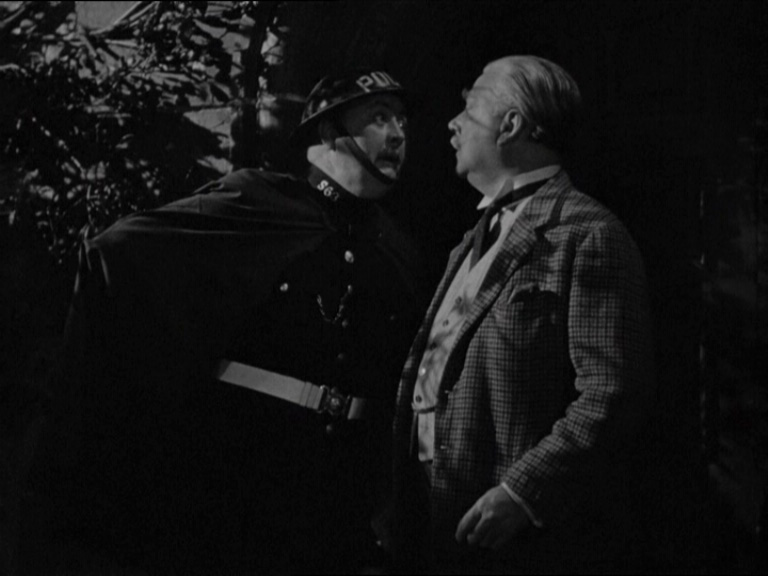
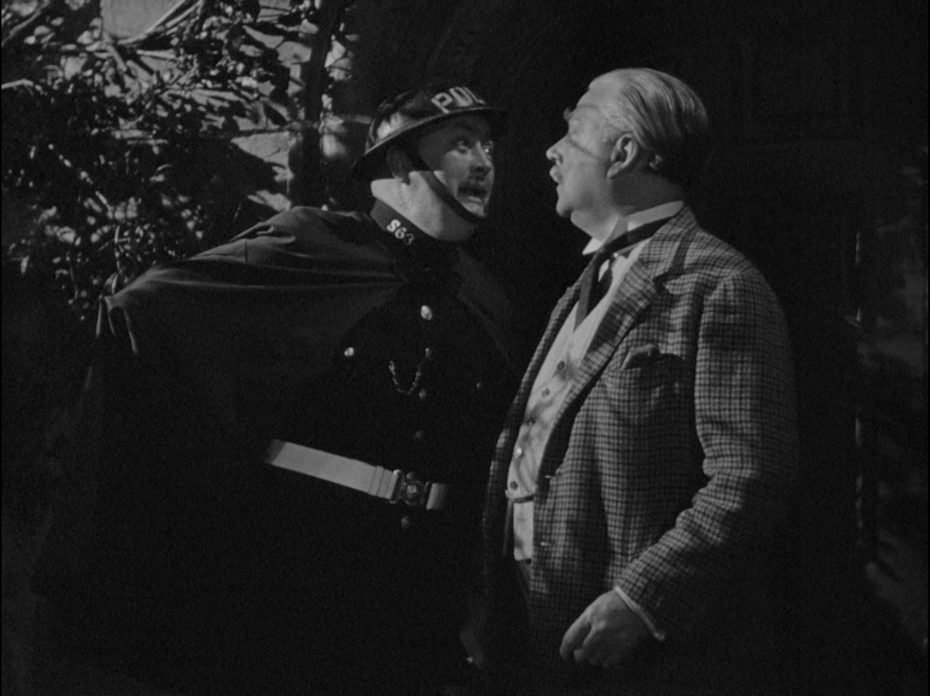
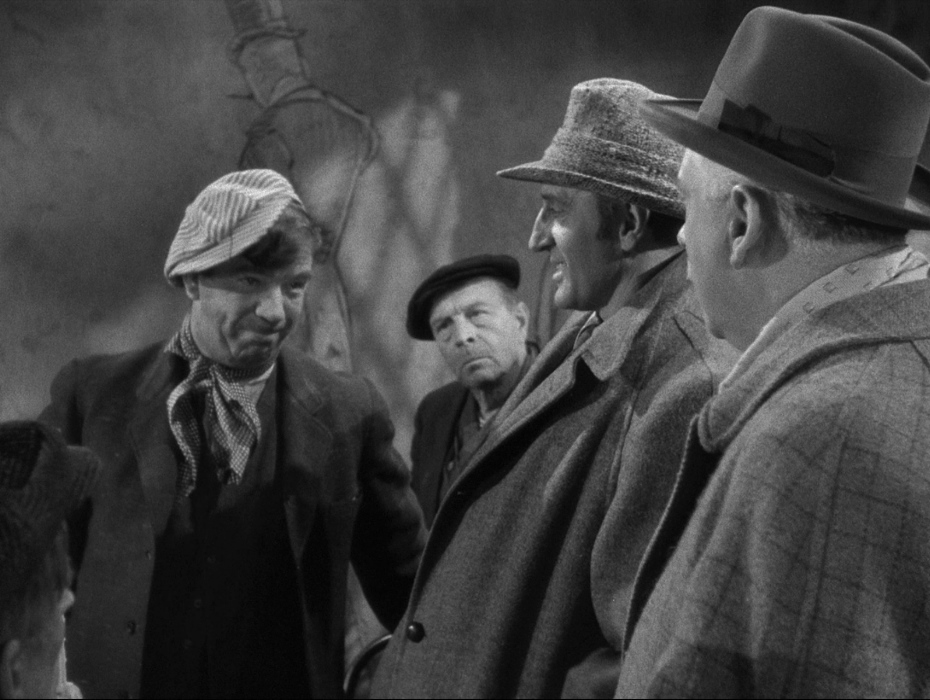
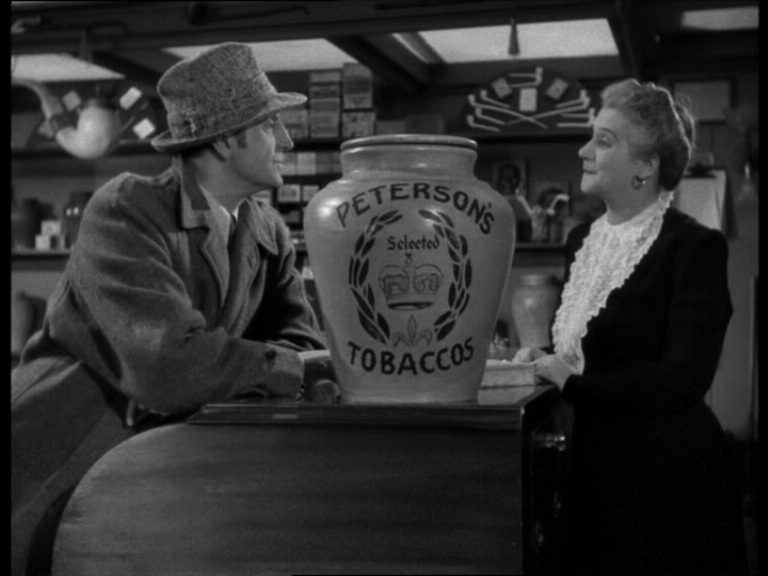
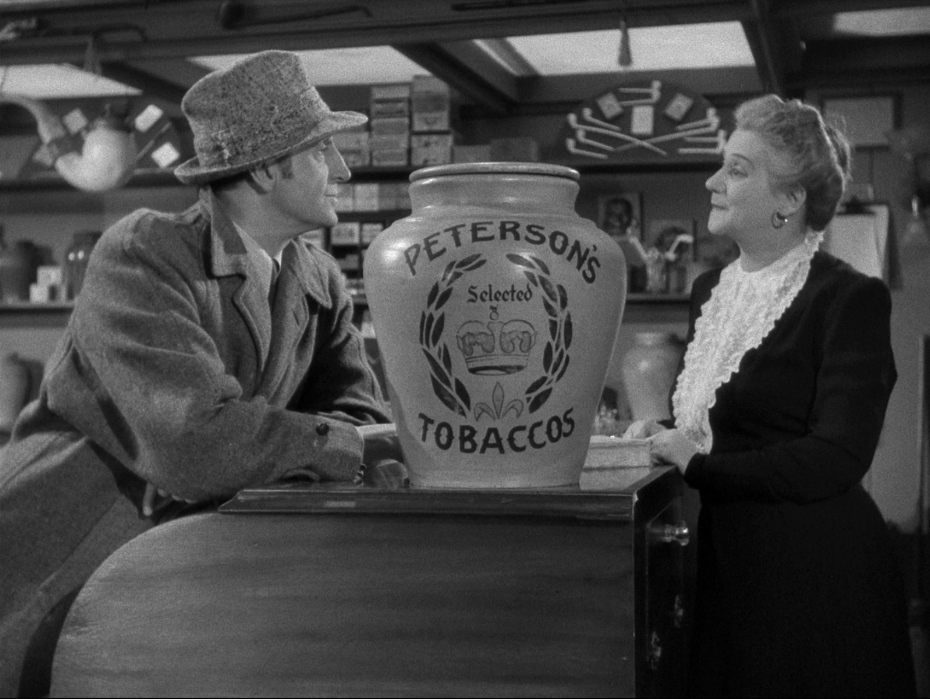
NOTE: The below Blu-ray captures were taken directly from the Blu-ray disc. ADDITION: MPI - Region 'A' Blu-ray - March 2011: Same 14 Basil Rathbone / Nigel Bruce - Sherlock Holmes films. Briefly - the image is very good - stronger than the captures indicate. The image is brighter (true - not manipulated), shows more detail (and more information in the frame). The biggest factor I noticed was the limited noise that was always an issue with the more compressed SD-DVDs. There is still noise but it is far less prevalent. The image is clean but when the very infrequent scratches appears they are of greater prominence as is all detail in the 1080P resolution transfers. Grain has been smoothed - maybe too much for some but overall I would say this is a success. MPI did these discs up properly - dual-layered - less than 4 hours (2-3 films) of feature per disc, decent bitrate and lossless linear PCM audio. The films, now in their theatrical running time (no PAL speedup) are quite old and hence imperfect in many senses but these presentations are far in advance on the DVD package. NOTE: We didn't link to 1080 resolution captures in this review. Extras are the same with the commentaries, photo galleries and trailers (on the last disc) and there is a minutes footage of Sir Arthur Conan Doyle. Holmes fans won't want to miss out - the entire 14 films on 5 Blu-rays. Something you can watch at any time - always charming - recommended! ***
ON THE DVD PACKAGE:
Prior released on Region 1 by
MPI Home Video as “The Complete Basil Rathbone Sherlock Holmes
Collection” on 14 individual DVDs, Optimum has now released a discount
version of that box set on Region 2 on 7 DVD, two features on each DVD.
Possible differences in the quality of the picture aside, the price of
the Optimum box is less than one third of the MPI box. Dearly missed are
subtitles. Some of the dialogue, especially the mumbling of Dr. Watson,
is hard to hear, and would benefit from subtitles. But they would also
allow those hard-of-hearing or deaf to enjoy the films. Henrik Sylow |

 out
of
out
of Recommended Reading (CLICK COVERS or TITLES for more information)
 |
 |
 |
 |
 |
 |
 |
 |
|
The Bedside, Bathtub & Armchair Companion
to Sherlock Holmes by Dick Riley, Pam McAllister |
Sherlock Holmes (Pocket Essentials: Film S.)
Mark Campbell |
The Ghosts of Baker Street : New Tales of
Sherlock Holmes (New Tales of Sherlock Holmes) by Martin H. Greenberg, Jon Lellenberg, Daniel Stashower |
The Complete Sherlock Holmes by Arthur Conan Doyle |
Sherlock Holmes on Screen: The Complete Film and TV
History by Alan Barnes |
Starring Sherlock Holmes by David Stuart Davies, Ian Richardson |
In and Out of Character by Basil Rathbone |
by Anthony Boucher, Denis Green, Basil Rathbone (Narrator), Nigel Bruce (Narrator) |

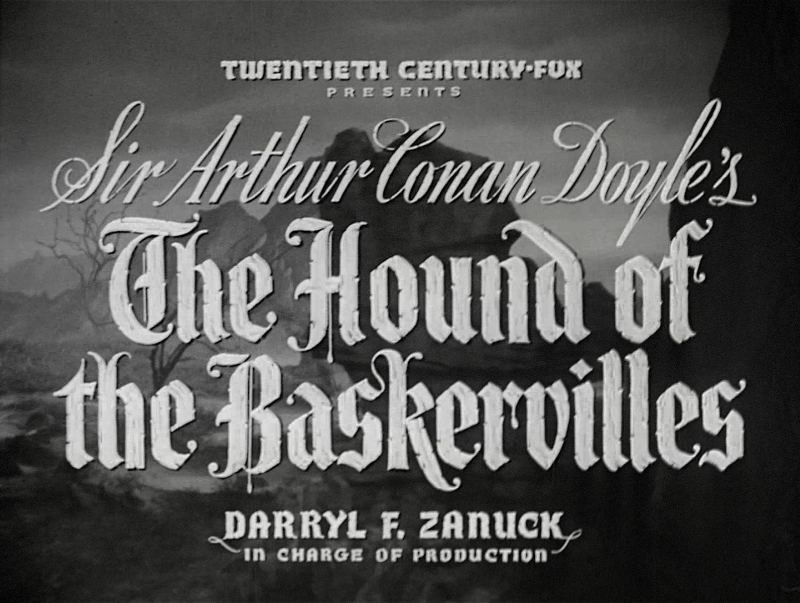
directed by Alfred L. Werker
USA 19
39
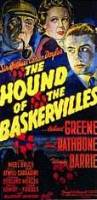
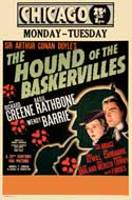
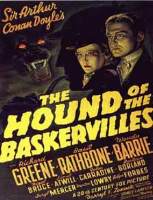
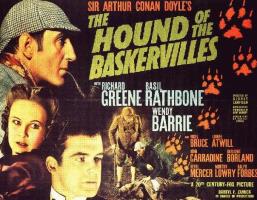
| Based upon the most famous Sherlock Holmes story, this the first entry in the Rathbone series, tells the story of how Holmes and Watson foils the plans to kill Sir Henry Baskerville by a vicious trained dog. |
Posters
 |
 |
 |
 |
Theatrical Release: March 31st, 1939 - USA
|
CLICK logo
to order
|
|
|
| Distribution |
Sherlock Holmes - The Definitive Collection Optimum Classic Region 2 – PAL |
Sherlock Holmes: Complete Collection - Region 'A' - Blu-ray |
| Optimum stats | |
| Runtime | 1:16:31 (4% PAL Speed-Up) |
| Video |
1.33:1
Aspect Ratio Chapters : 8 |
|
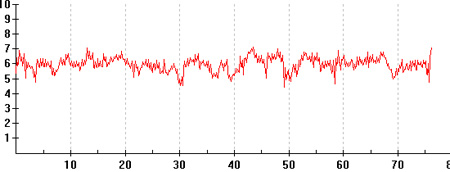
NOTE: The Vertical axis represents the bits transferred per second. The Horizontal is the time in minutes. |
|
| Bitrate:
|
|
|
Extras: |
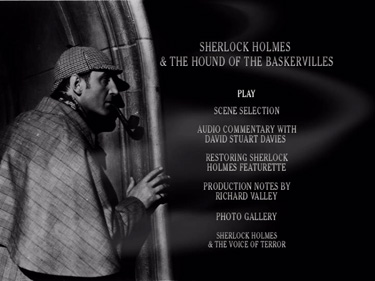
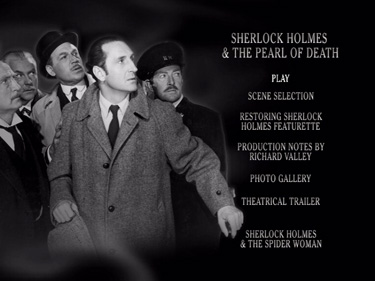
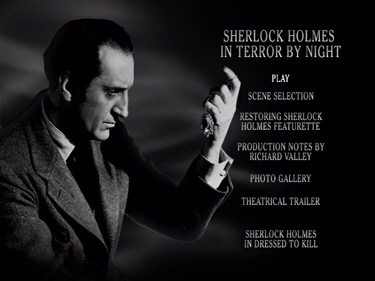
• Audio Commentary by David Stuart Davies • Restoring Sherlock Holmes (4:37) • Production Notes by Richard Valley (10 pages) • Photo Gallery |

DVD Menus
 |
 |
Screen Captures
|
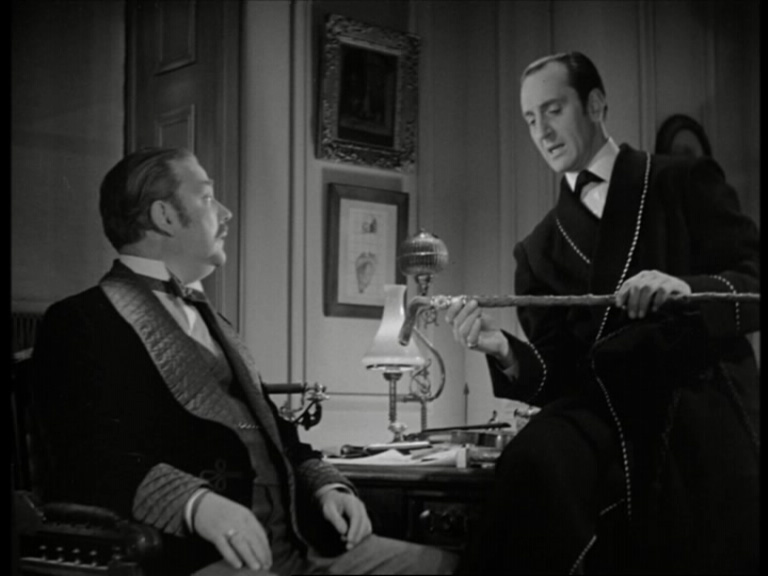
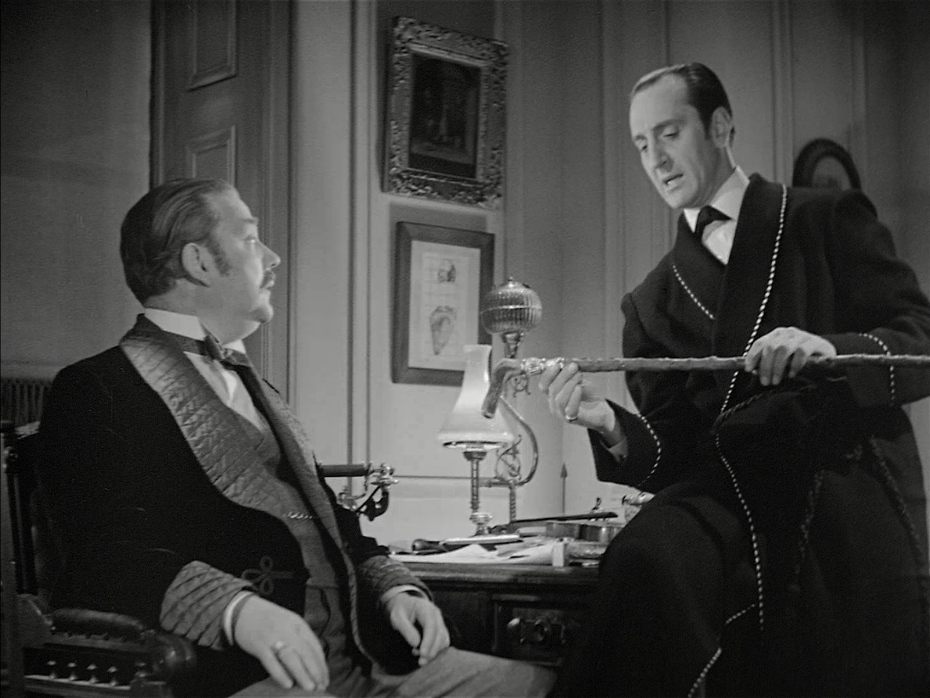
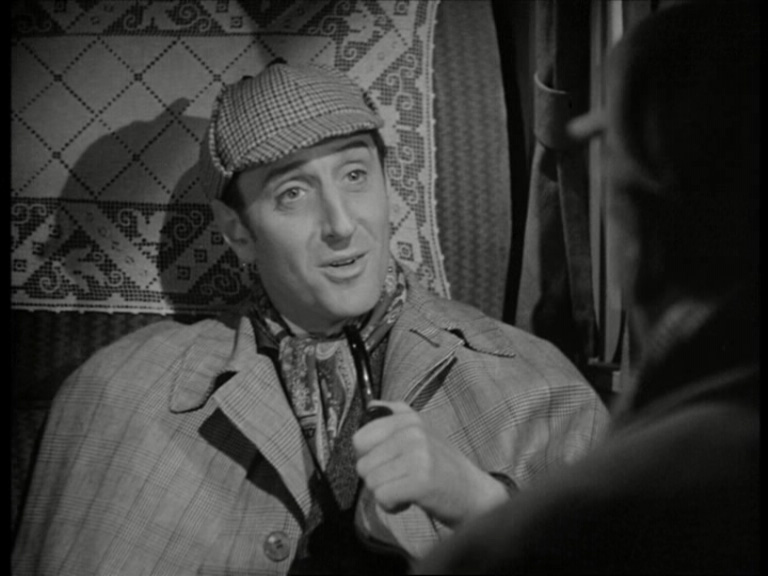
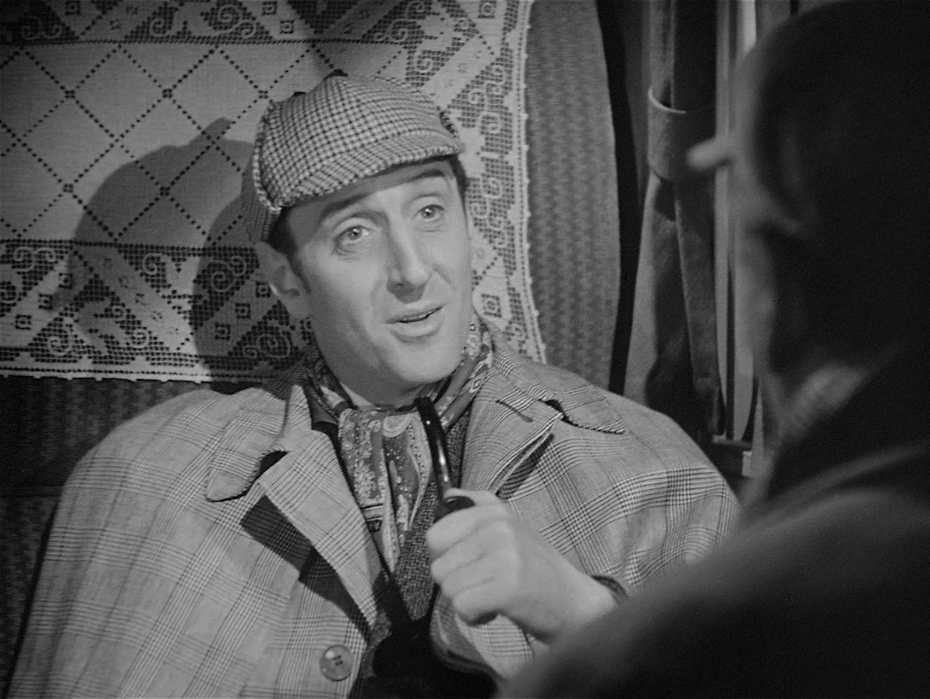
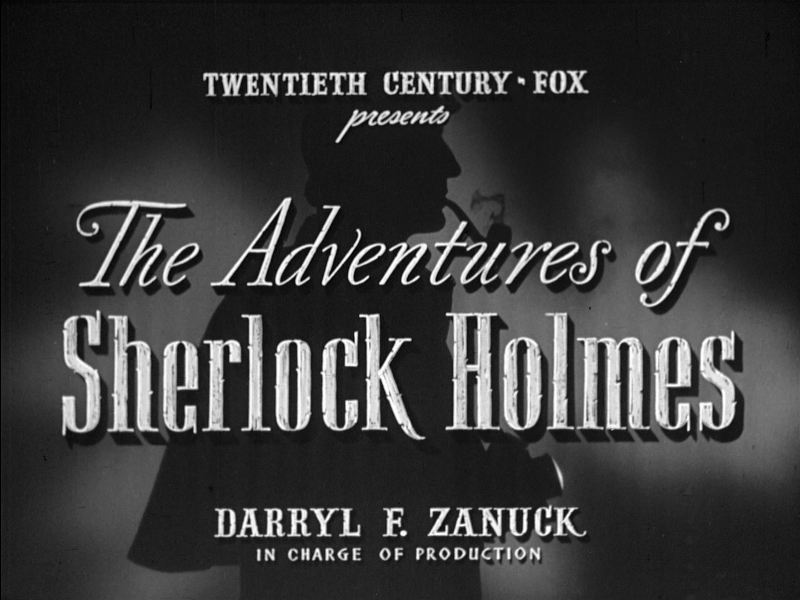
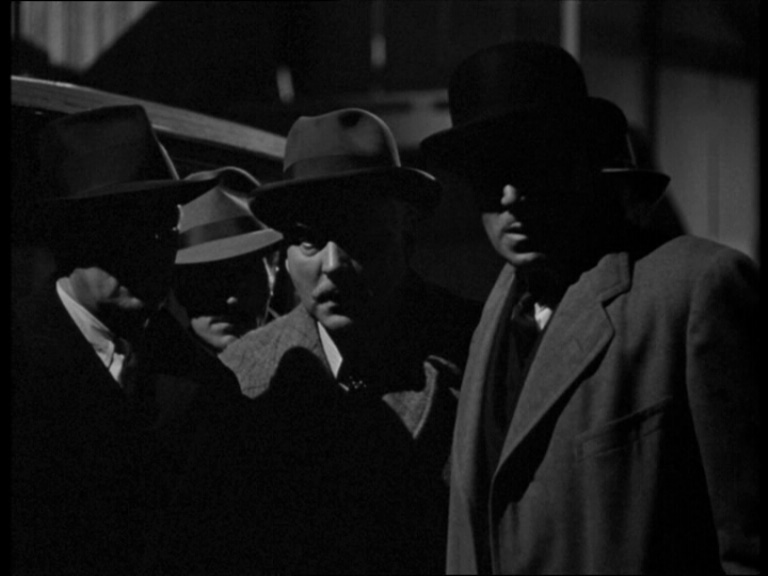
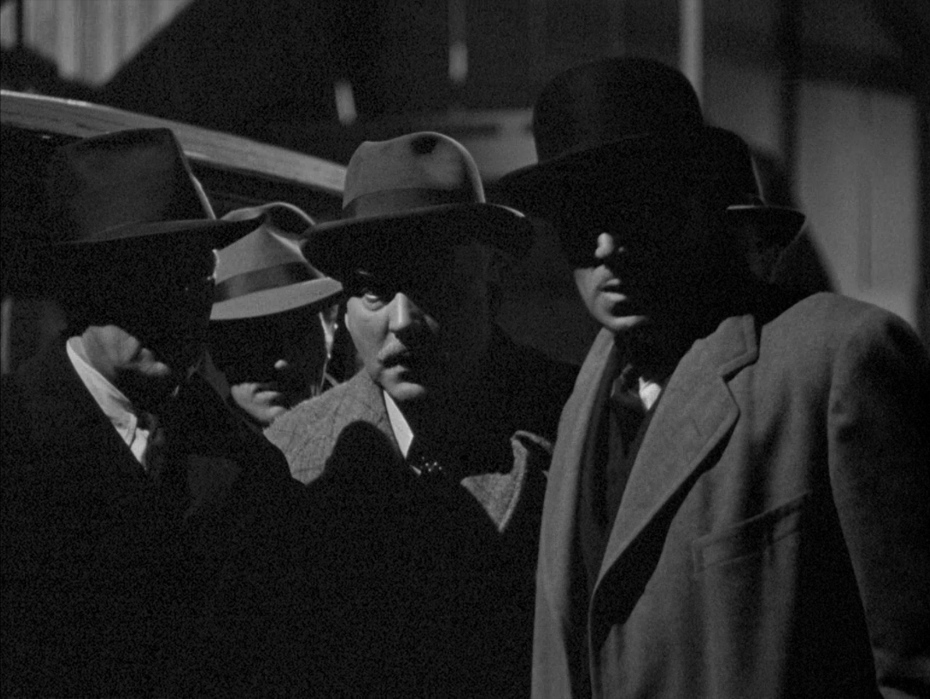
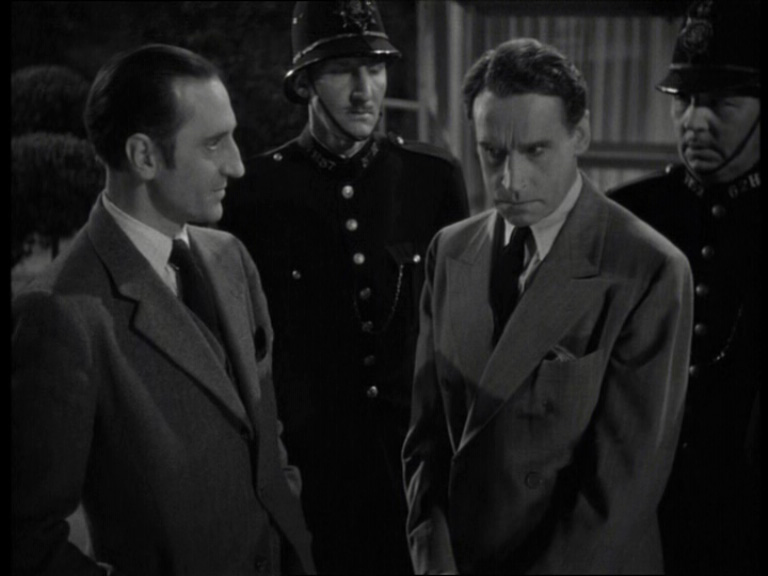
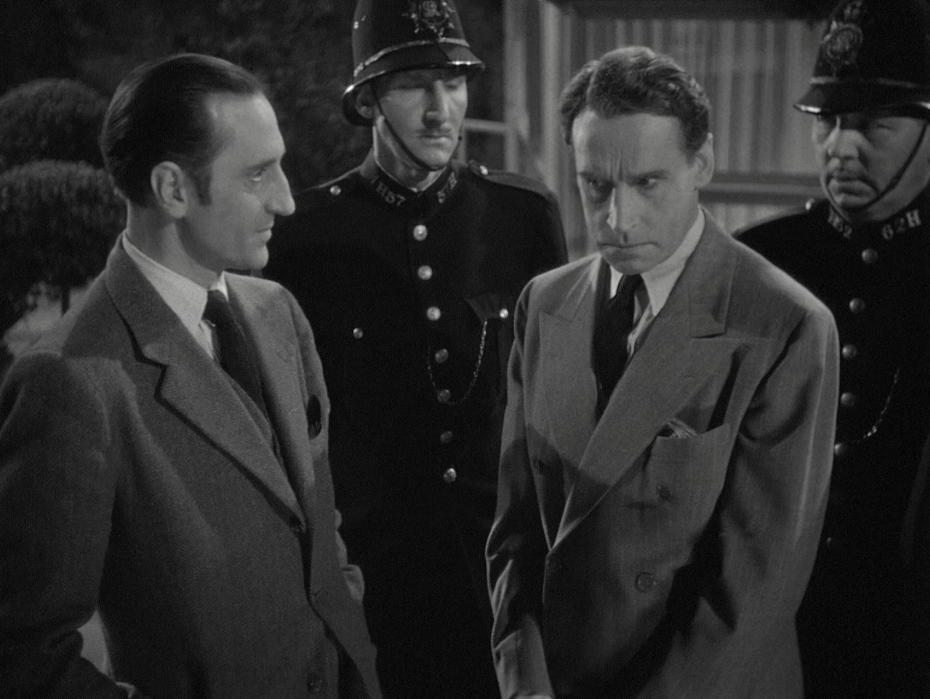
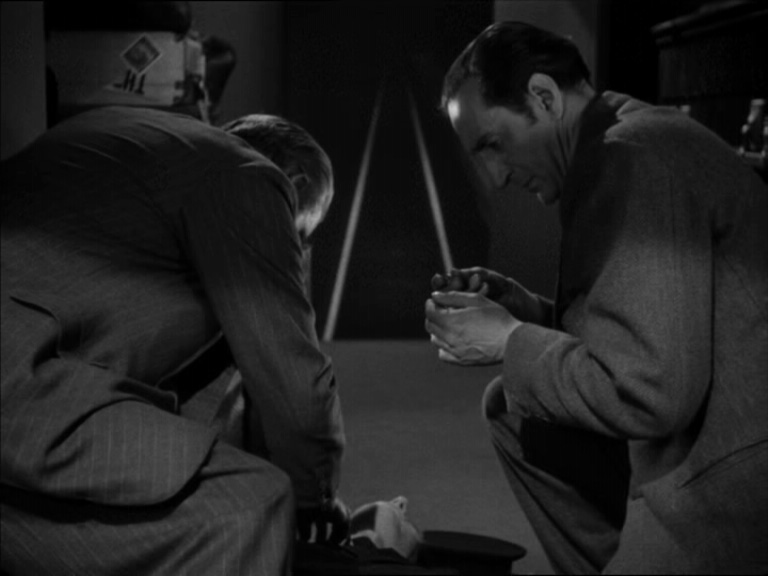
1) Optimum - Region 2 - PAL - TOP 2) MPI - Region 'A' - Blu-ray - BOTTOM |
 |
 |
 |
 |
directed by Alfred L. Werker
USA 1939
| Failing to put his archenemy, Professor Moriaty, behind bars for good, Moriaty concocts a fiendish plan to ruin the reputation of Holmes by sending him on a false trail, in order for himself to do the crime of the century: To steal the crown jewels. |
Poster
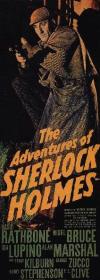 |
Theatrical Release: September 1st, 1939 - USA
|
CLICK logo
to order
|
|
|
| Distribution |
Sherlock Holmes - The Definitive Collection Optimum Classic Region 2 – PAL |
Sherlock Holmes: Complete Collection - Region 'A' - Blu-ray |
| Optimum stats |
| Runtime | 1:18:26 (4% PAL Speed-Up) |
| Video |
1.33:1
Aspect Ratio Chapters : 8 |
|
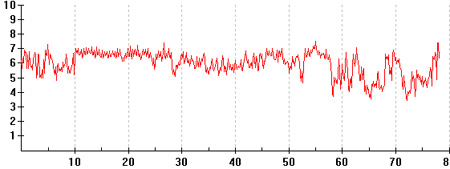
NOTE: The Vertical axis represents the bits transferred per second. The Horizontal is the time in minutes. |
|
| Bitrate:
|
|
| Extras: |
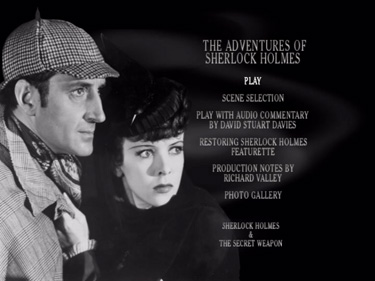
• Audio Commentary by Richard Valley *(misprint on menu – commentary noted as by David Stuard Davies) • Restoring Sherlock Holmes (4:37) • Production Notes by Richard Valley (14 pages) • Photo Gallery |
DVD Menus
 |
 |
Screen Captures
|
1) Optimum - Region 2 - PAL - TOP 2) MPI - Region 'A' - Blu-ray - BOTTOM |
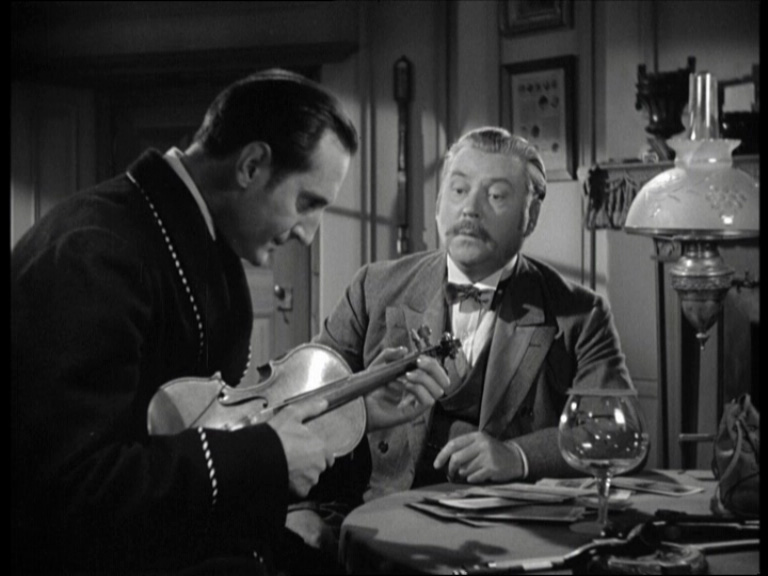 |
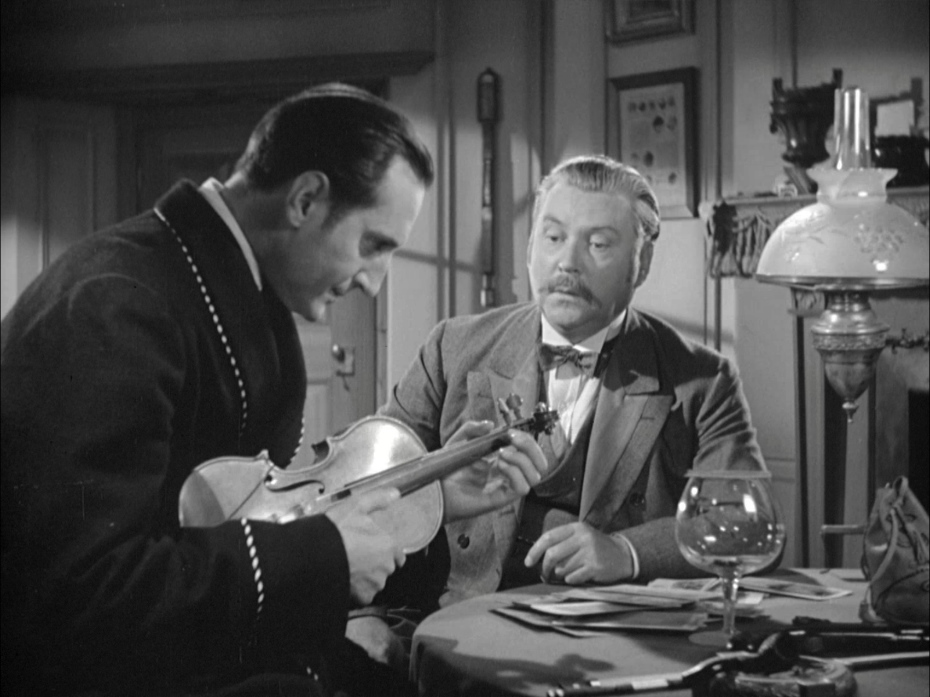 |
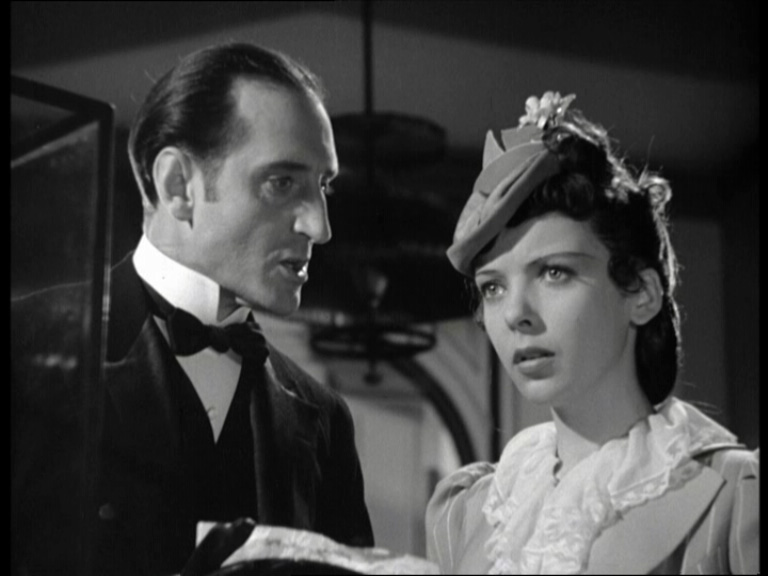 |
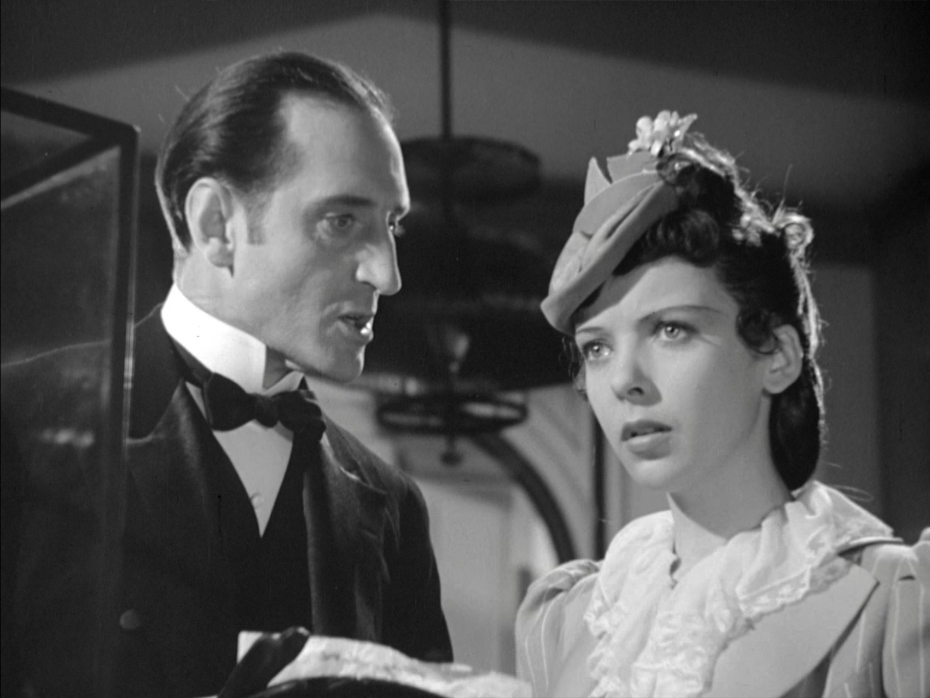 |
directed by John Rawlins
USA 1942
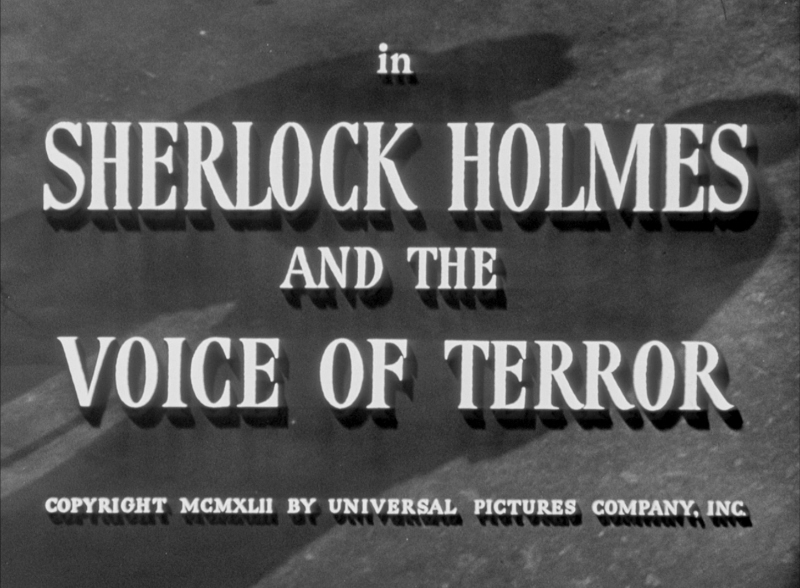
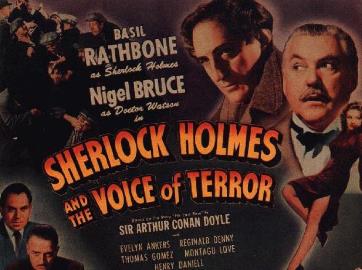
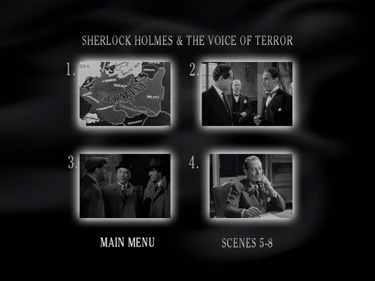
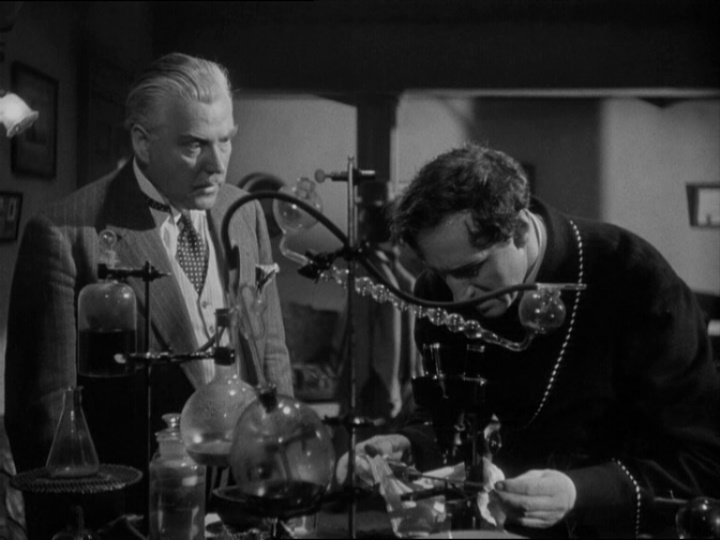
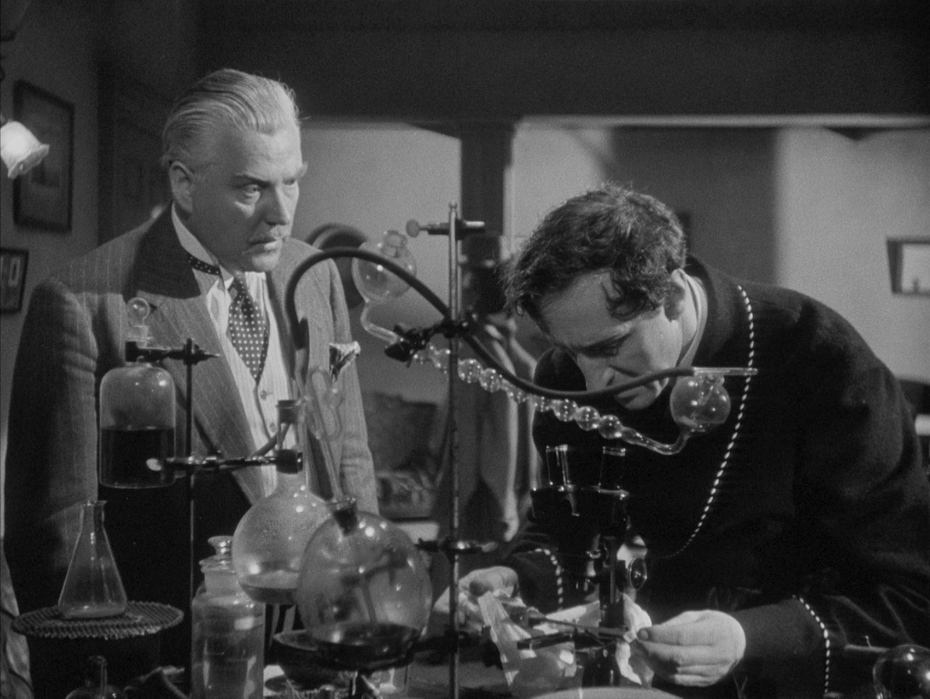
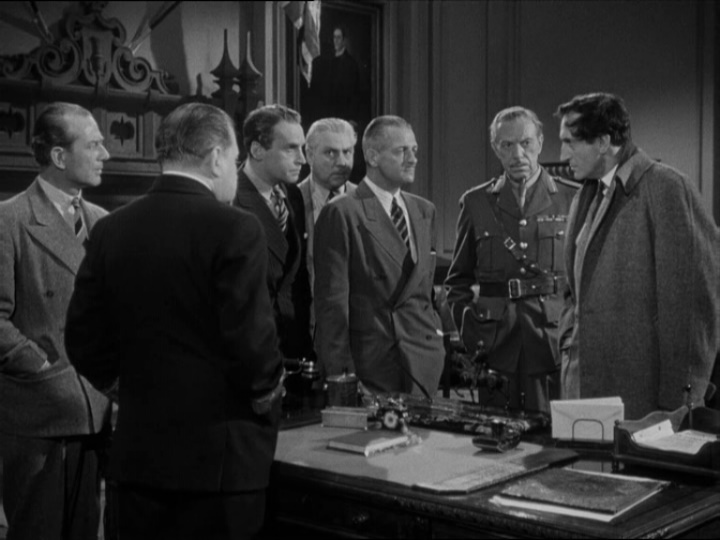
| When “The Voice of Terror” terrorizes the British public by broadcasting events of Nazi terrorism within the UK, the defense ministry is helpless, thus summons Sherlock Holmes to find the voice. Based loosely on Sir Arthur Conan Doyle’s story “His Last Bow”. |
Poster
 |
Theatrical Release: September 18th, 1942 - USA
|
CLICK logo
to order
|
|
|
| Distribution |
Sherlock Holmes - The Definitive Collection Optimum Classic Region 2 – PAL |
Sherlock Holmes: Complete Collection - Region 'A' - Blu-ray |
| Optimum stats |
| Runtime | 1:02:40 (4% PAL Speed-Up) |
| Video |
1.33:1
Aspect Ratio Chapters : 8 |
|
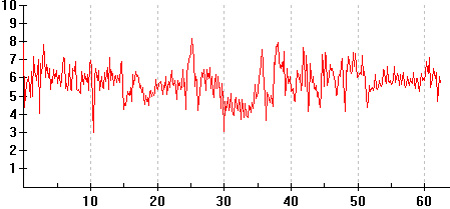
NOTE: The Vertical axis represents the bits transferred per second. The Horizontal is the time in minutes. |
|
| Bitrate:
|
|
|
Extras: |
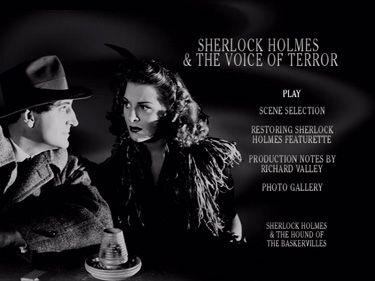
• Restoring Sherlock Holmes (4:37) • Production Notes by Richard Valley (8 pages) • Photo Gallery |
DVD Menus
 |
 |
Screen Captures
|
1) Optimum - Region 2 - PAL - TOP 2) MPI - Region 'A' - Blu-ray - BOTTOM |
 |
 |
 |
 |
directed by Roy William Neill
USA 1942
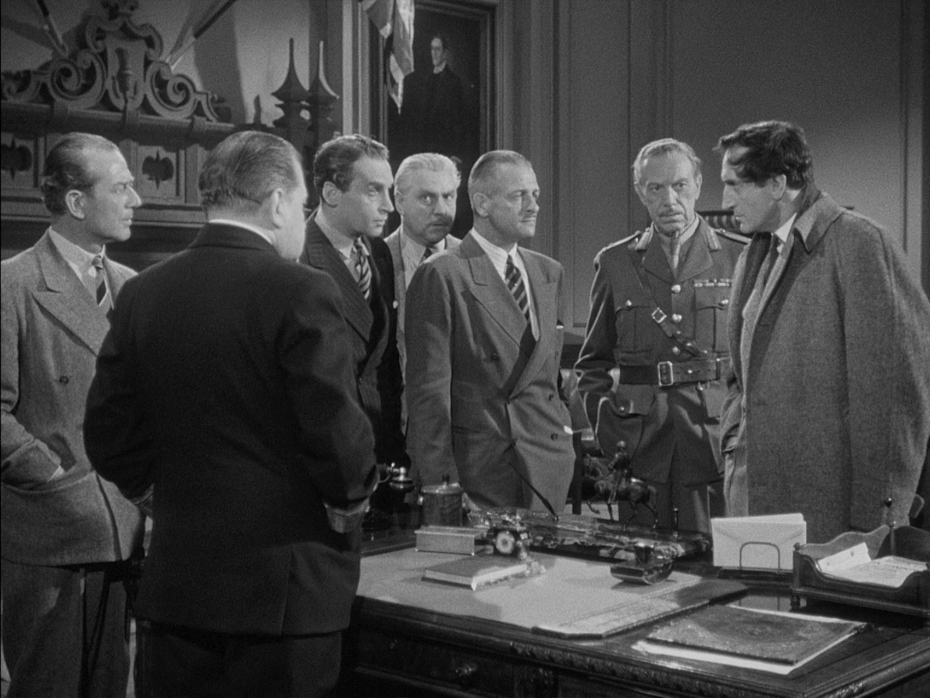
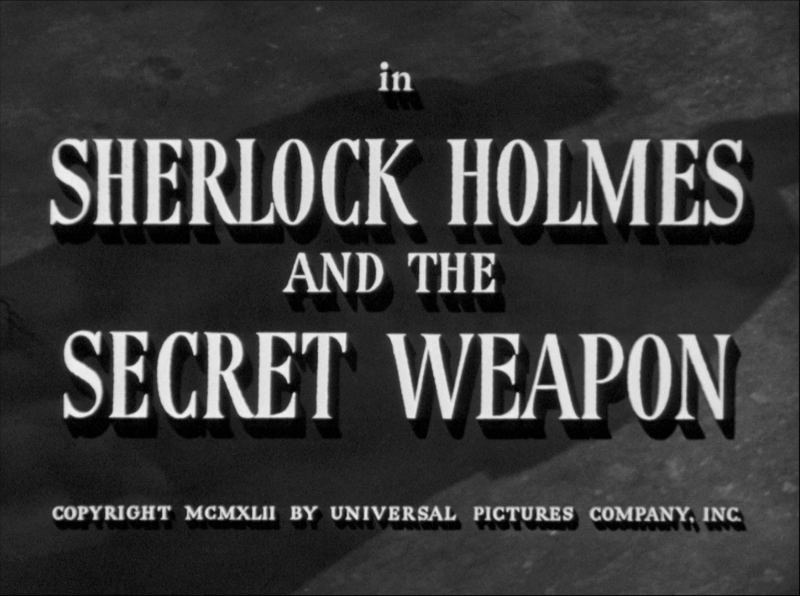
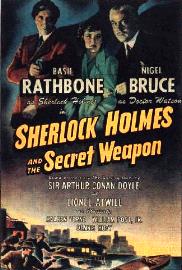
| On a secret mission for the defence ministry, Sherlock Holmes safeguards the inventor of a bombsight to London, only to discover that Professor Moriaty has stolen the secret and intends to sell it to Nazi agents. Now begins a race to foil Moriaty and to save the inventor of falling into Nazi hands. Loosely based upon the story “The Dancing Men”. |
Poster
 |
Theatrical Release: Dec 1942 - USA
|
CLICK logo
to order
|
|
|
| Distribution |
Sherlock Holmes - The Definitive Collection Optimum Classic Region 2 – PAL |
Sherlock Holmes: Complete Collection - Region 'A' - Blu-ray |
| Optimum stats |
| Runtime | 1:05:40 (4% PAL Speed-Up) |
| Video |
1.33:1
Aspect Ratio Chapters : 8 |
|
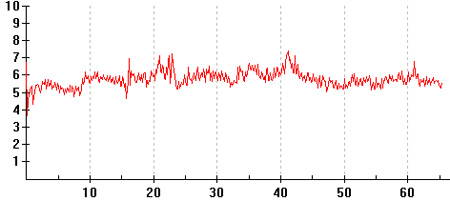
NOTE: The Vertical axis represents the bits transferred per second. The Horizontal is the time in minutes. |
|
| Bitrate:
|
|
|
Extras: |
• Restoring Sherlock Holmes (4:37) • Production Notes by Richard Valley (8 pages) • Photo Gallery |
DVD Menus
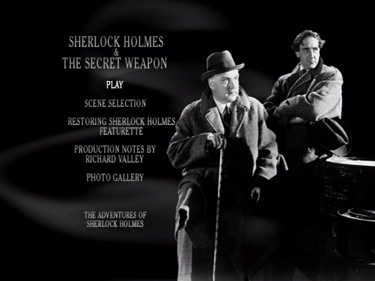 |
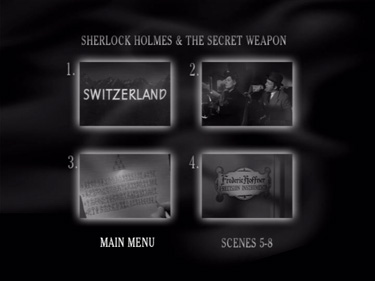 |
Screen Captures
|
1) Optimum - Region 2 - PAL - TOP 2) MPI - Region 'A' - Blu-ray - BOTTOM |
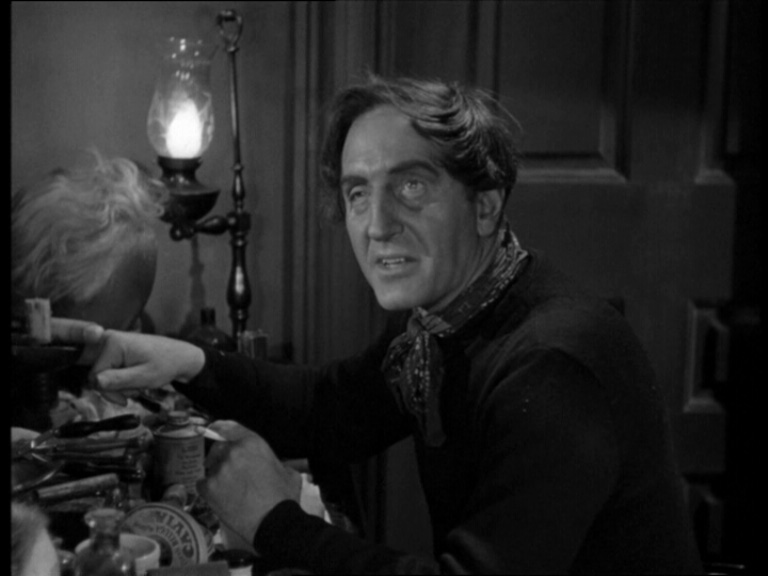 |
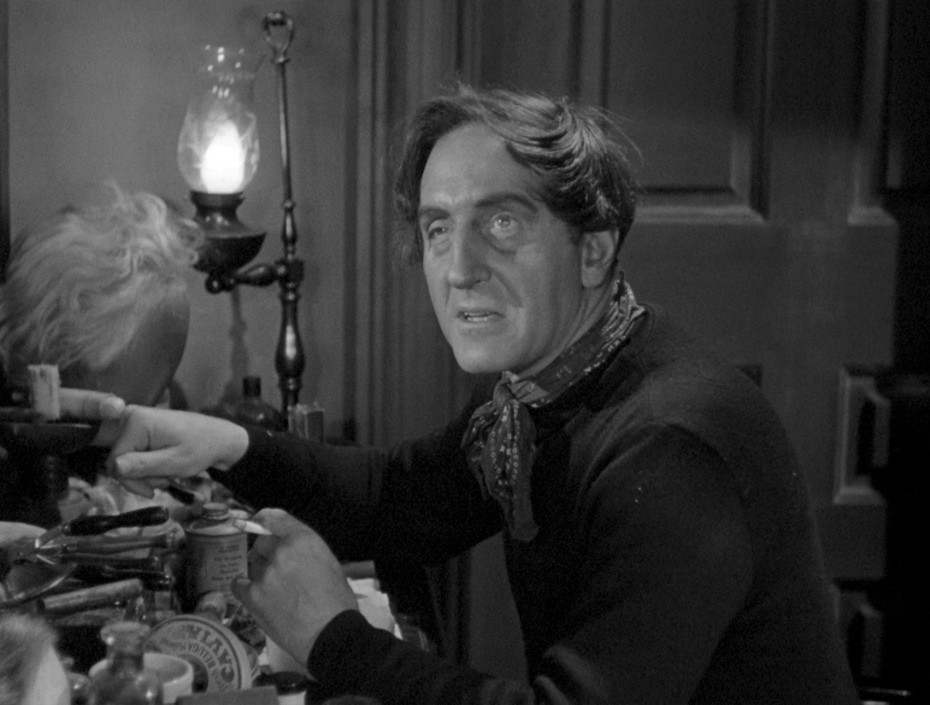 |
 |
 |
directed by Roy William Neill
USA 1942
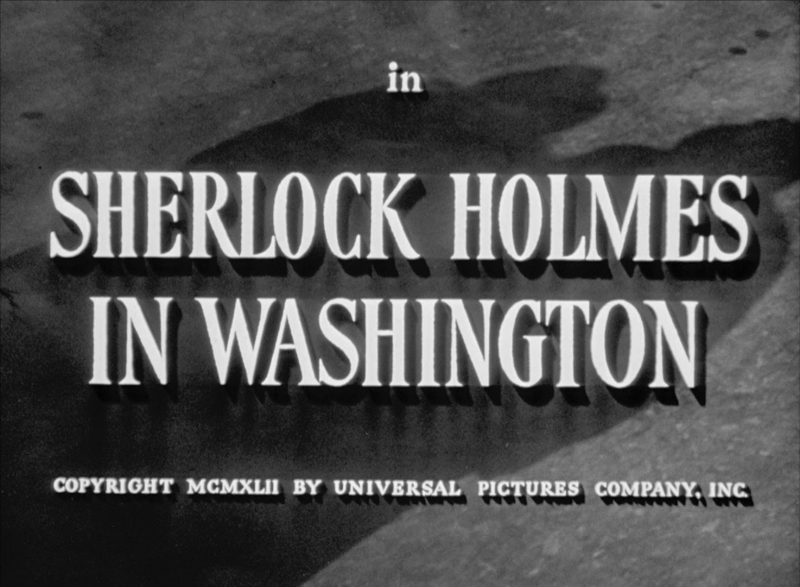
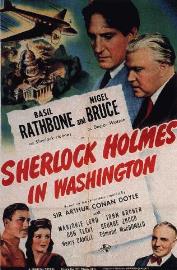
| When a secret agent, carrying, for the war, vital information, is kidnapped on his way to Washington, the ministry calls upon Sherlock Holmes to retrieve the documents and uncover the Nazi spies. |
Poster
 |
Theatrical Release: April 19th, 1942 - USA
|
CLICK logo
to order
|
|
|
| Distribution |
Sherlock Holmes - The Definitive Collection Optimum Classic Region 2 – PAL |
Sherlock Holmes: Complete Collection - Region 'A' - Blu-ray |
| Optimum stats |
| Runtime | 1:08:27 (4% PAL Speed-Up) |
| Video |
1.33:1
Aspect Ratio Chapters : 8 |
|
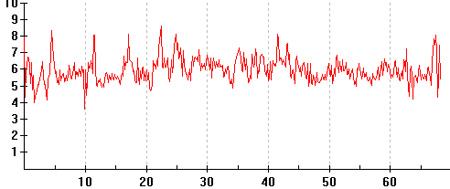
NOTE: The Vertical axis represents the bits transferred per second. The Horizontal is the time in minutes. |
|
| Bitrate:
|
|
|
Extras: |
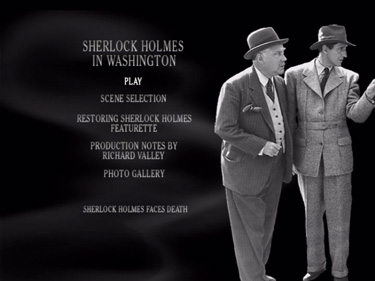
• Restoring Sherlock Holmes (4:37) • Production Notes by Richard Valley (7 pages) • Photo Gallery |
DVD Menus
 |
 |
Screen Captures
|
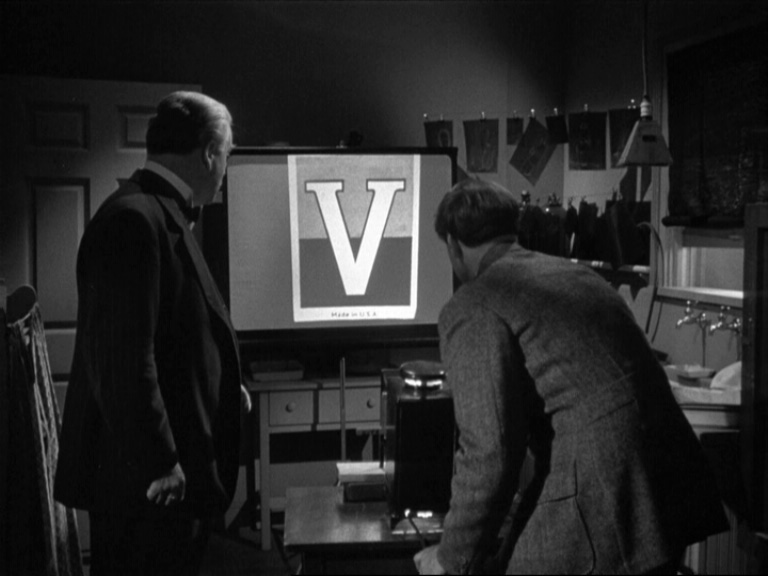
1) Optimum - Region 2 - PAL - TOP 2) MPI - Region 'A' - Blu-ray - BOTTOM |
 |
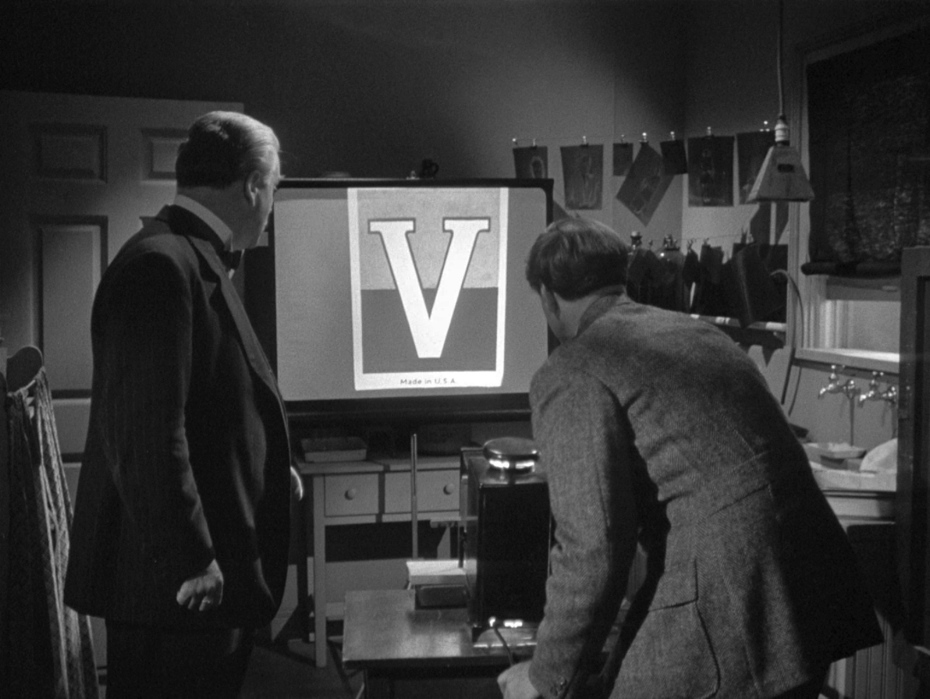 |
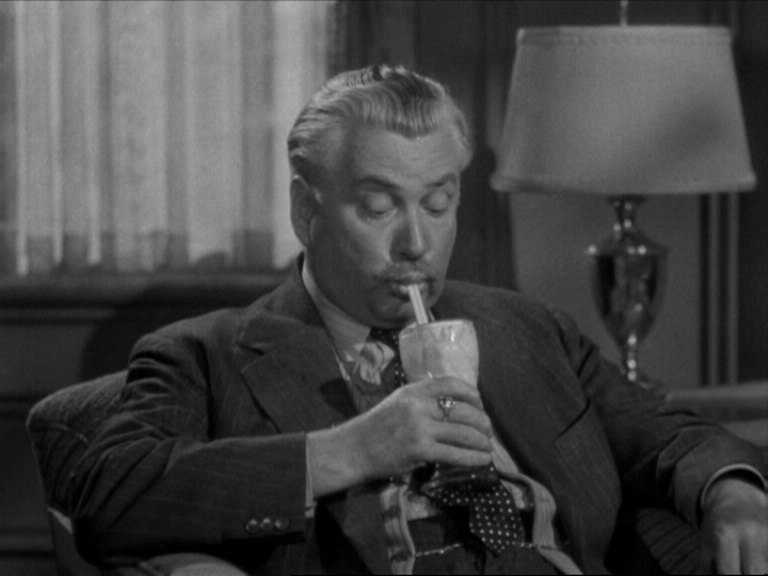 |
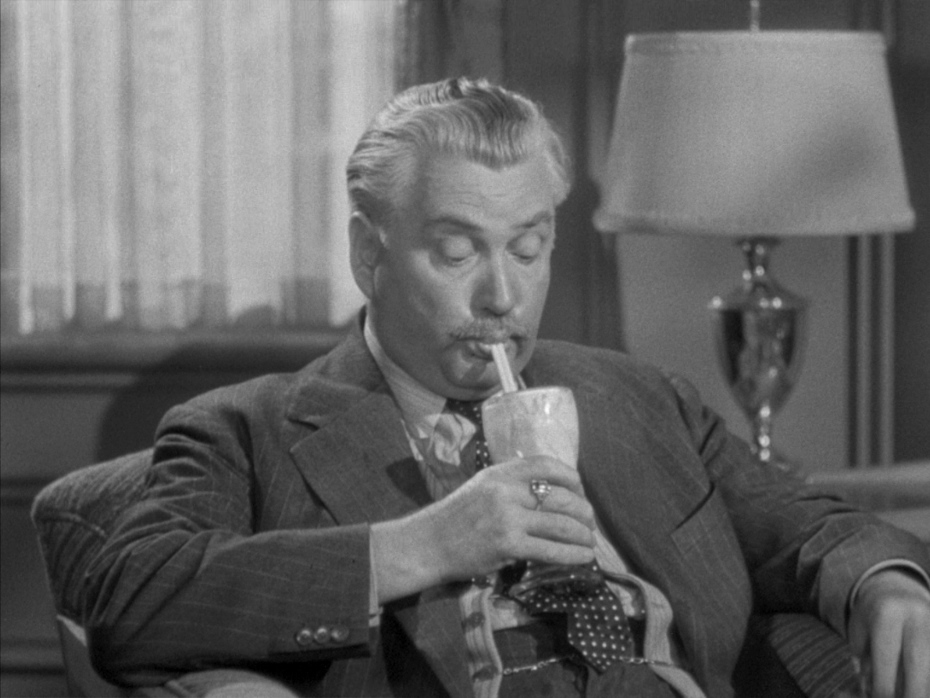 |
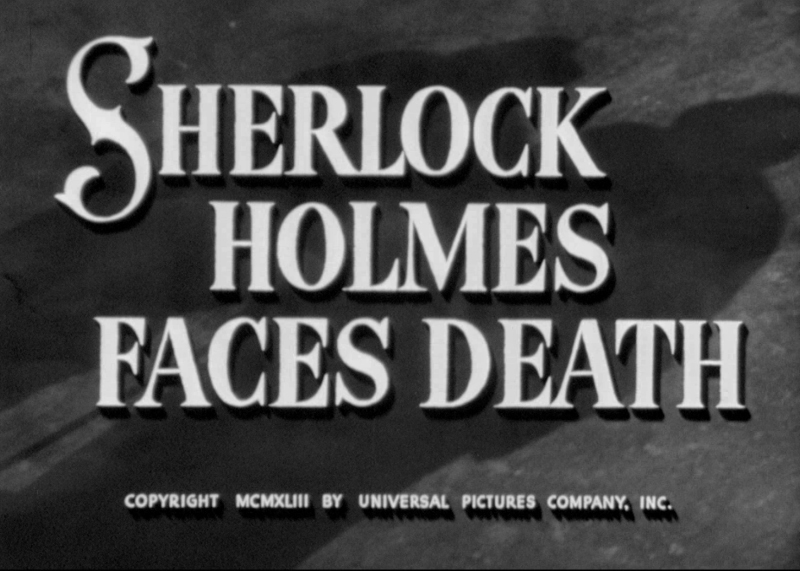
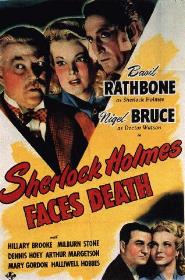
directed by Roy William Neill
USA 1943
While doing volunteer work at a convalescent home for retired officers, Doctor Watson discovers a series of strange murders and calls upon his friend, Sherlock Holmes, to help solve the crime.
Poster
 |
Theatrical Release: September 17th, 1943 - USA
|
CLICK logo
to order
|
|
|
| Distribution |
Sherlock Holmes - The Definitive Collection Optimum Classic Region 2 – PAL |
Sherlock Holmes: Complete Collection - Region 'A' - Blu-ray |
| Optimum stats |
| Runtime | 1:05:18 (4% PAL Speed-Up) |
| Video |
1.33:1
Aspect Ratio Chapters : 8 |
|
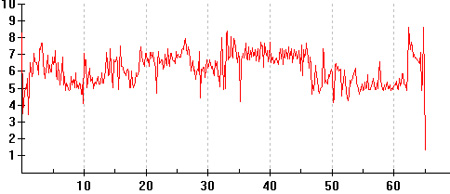
NOTE: The Vertical axis represents the bits transferred per second. The Horizontal is the time in minutes. |
|
| Bitrate:
|
|
|
Extras: |
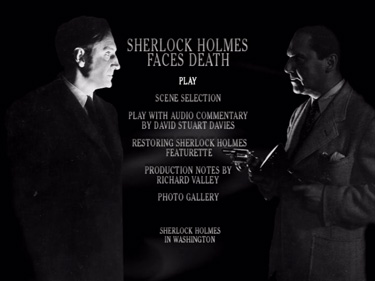
• Audio Commentary by David Stuart Davies • Restoring Sherlock Holmes (4:37) • Production Notes by Richard Valley (10 pages) • Photo Gallery |
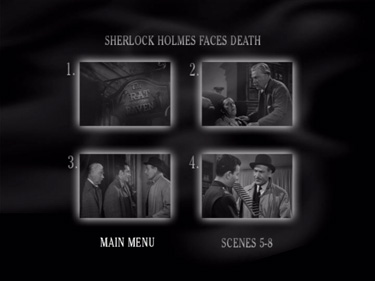
DVD Menus
 |
 |
Screen Captures
|
1) Optimum - Region 2 - PAL - TOP 2) MPI - Region 'A' - Blu-ray - BOTTOM |
 |
 |
 |
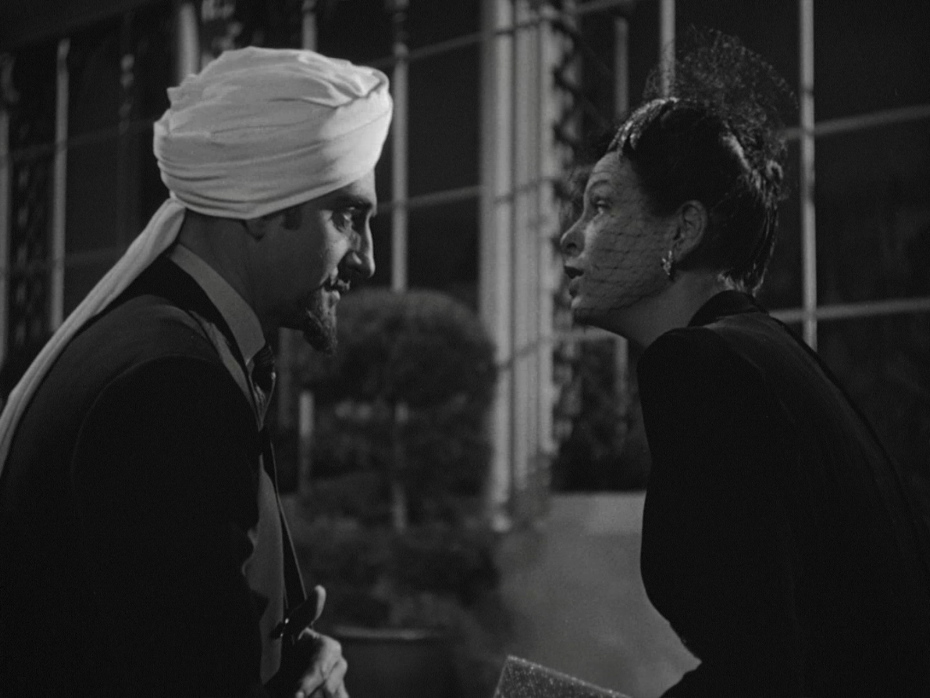
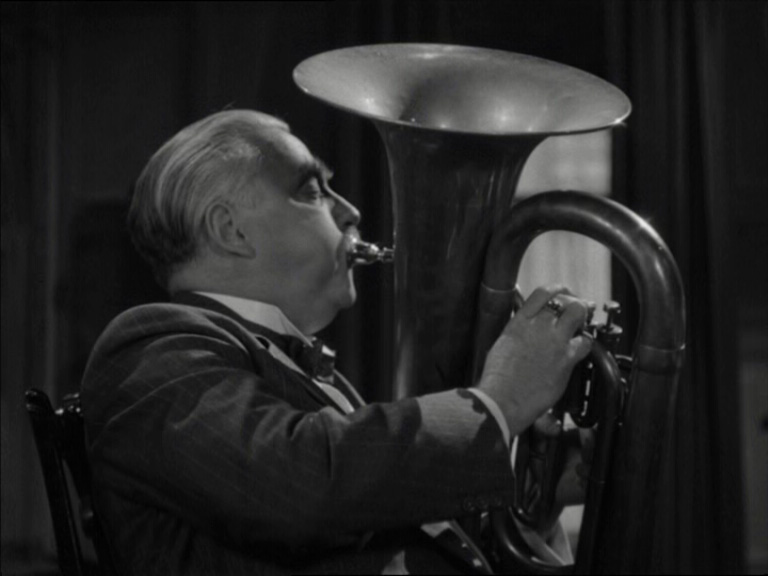
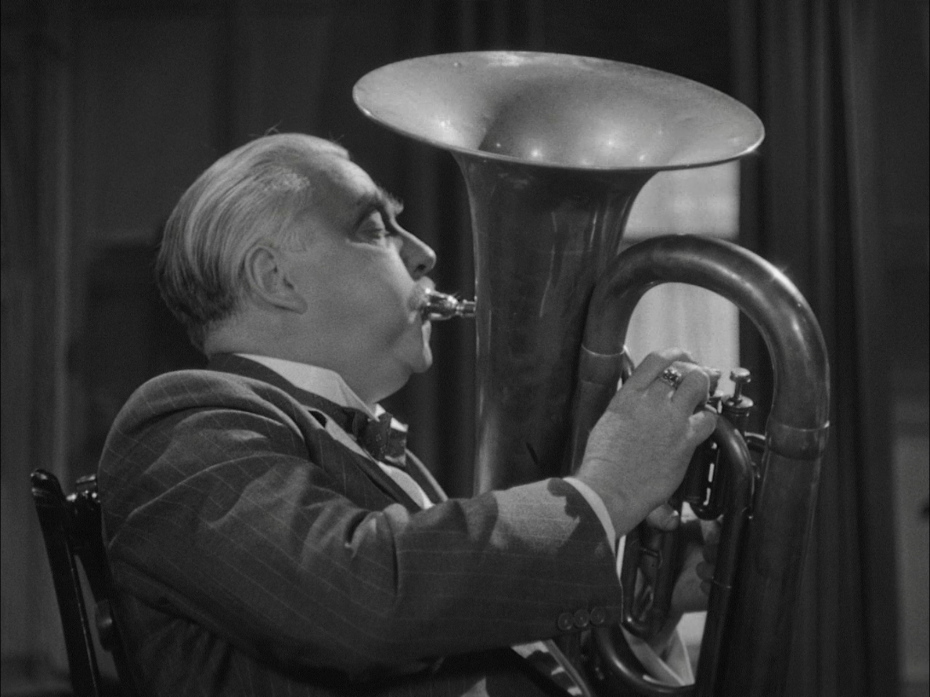
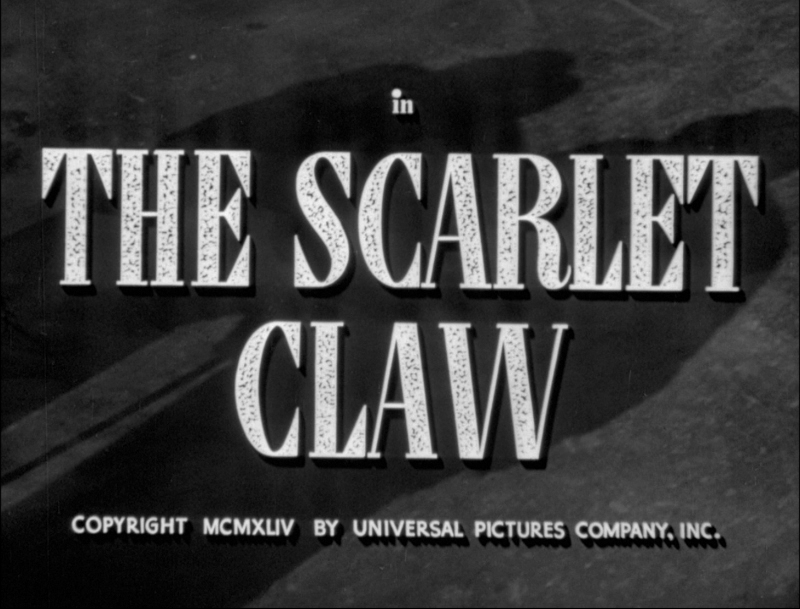
 |
directed by Roy William Neill
USA 1944
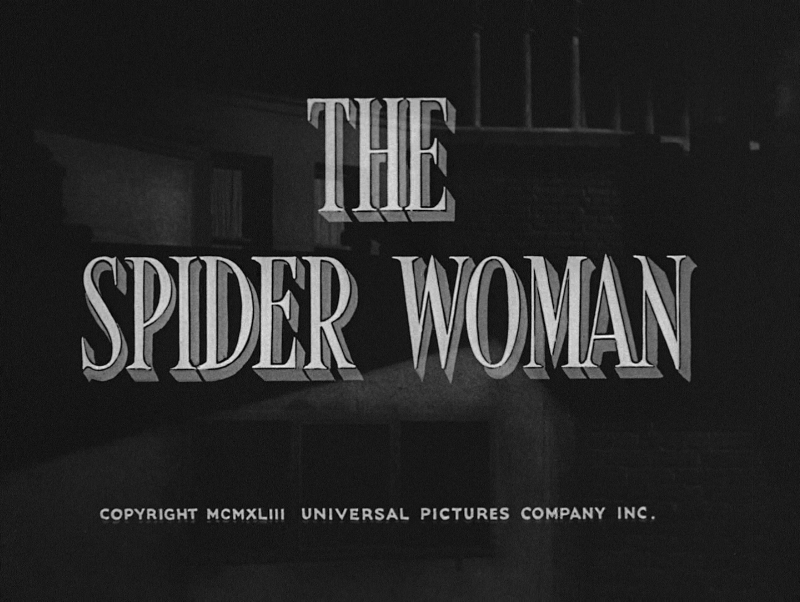
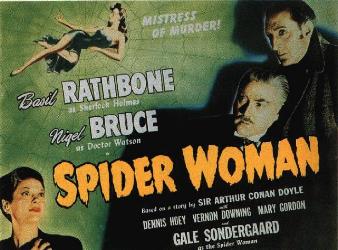
| When a series of “suicides” haunt London, the curiosity of Holmes leads him on the track of a sinister plot and the female Moriaty. Loosely based on a series of Sherlock Holmes stories, amongst others “The Sign of Four”, which was so successful, that the Spider Woman returned in a film of her own, “The Spider Woman Strikes Back” from 1946. |
Posters
 |
 |
 |
Theatrical Release: January 21st, 1944 - USA
|
CLICK logo
to order
|
|
|
| Distribution |
Sherlock Holmes - The Definitive Collection Optimum Classic Region 2 – PAL |
Sherlock Holmes: Complete Collection - Region 'A' - Blu-ray |
| Optimum stats |
| Runtime | 59:33 (4% PAL Speed-Up) |
| Video |
1.33:1
Aspect Ratio Chapters : 8 |
|
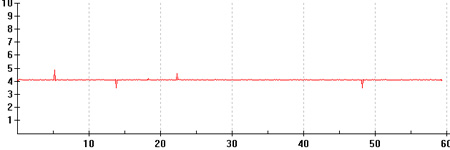
NOTE: The Vertical axis represents the bits transferred per second. The Horizontal is the time in minutes. |
|
| Bitrate:
|
|
|
Extras: |
• Restoring Sherlock Holmes (4:37) • Production Notes by Richard Valley (8 pages) • Photo Gallery |
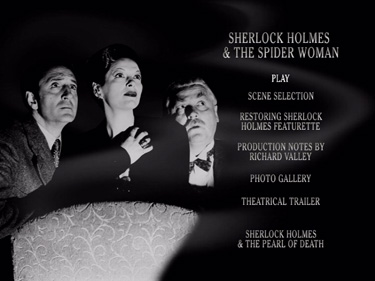
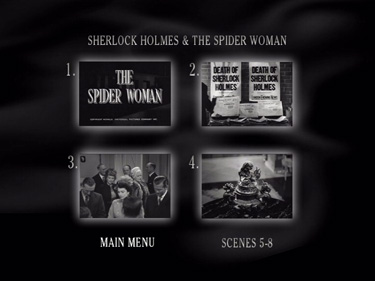
DVD Menus
 |
 |
Screen Captures
|
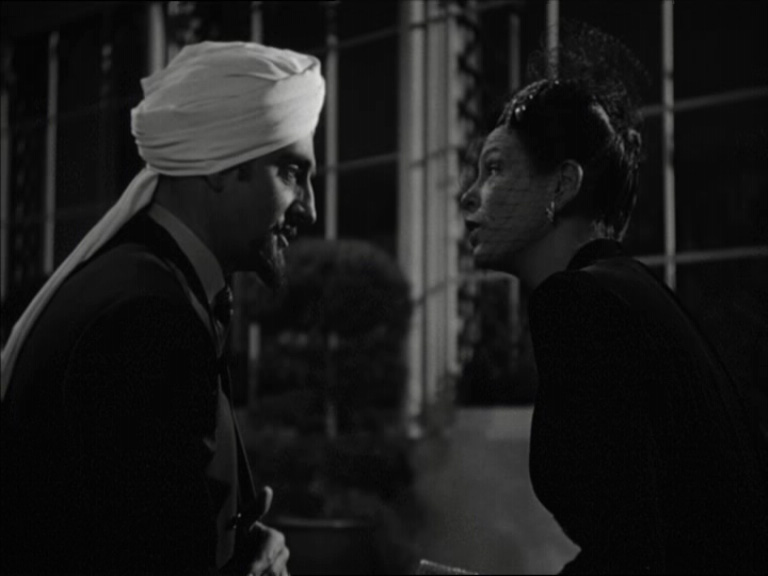
1) Optimum - Region 2 - PAL - TOP 2) MPI - Region 'A' - Blu-ray - BOTTOM |
|
|
 |
 |
 |
directed by Roy William Neill
USA 1944
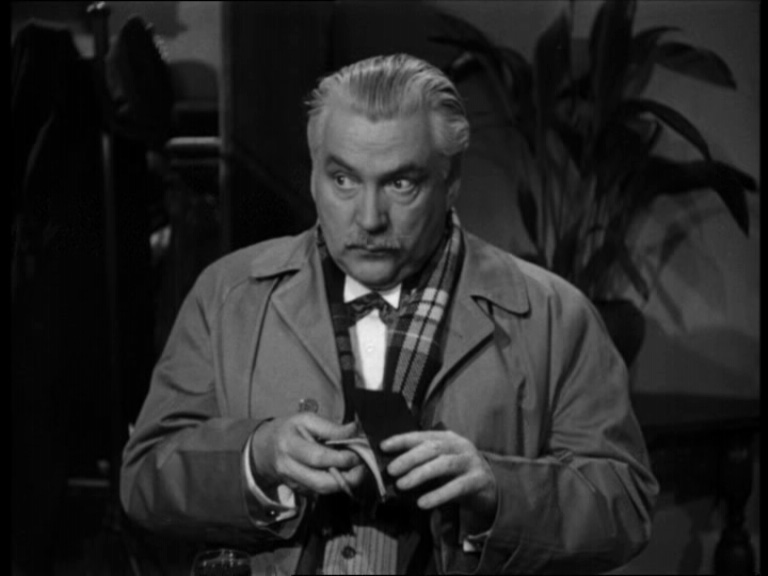
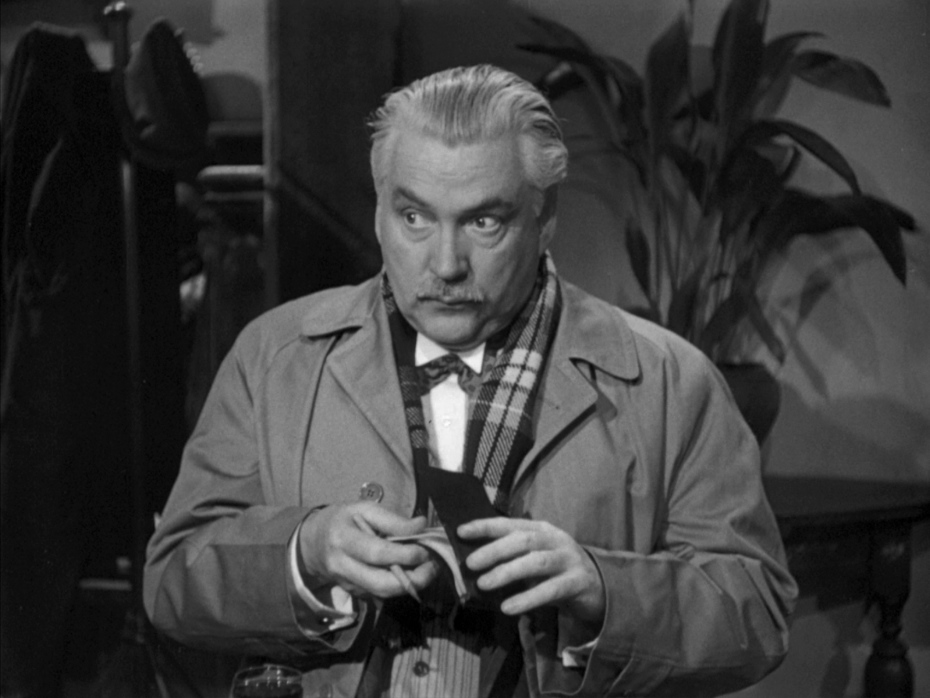
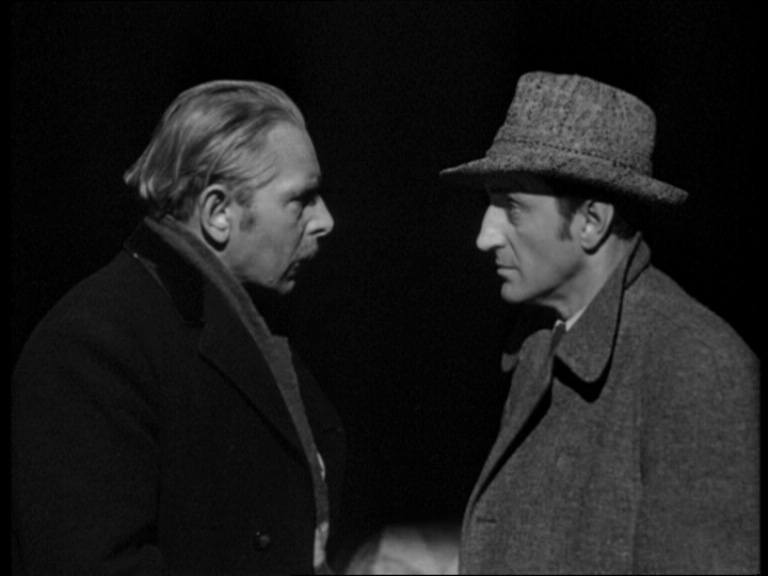
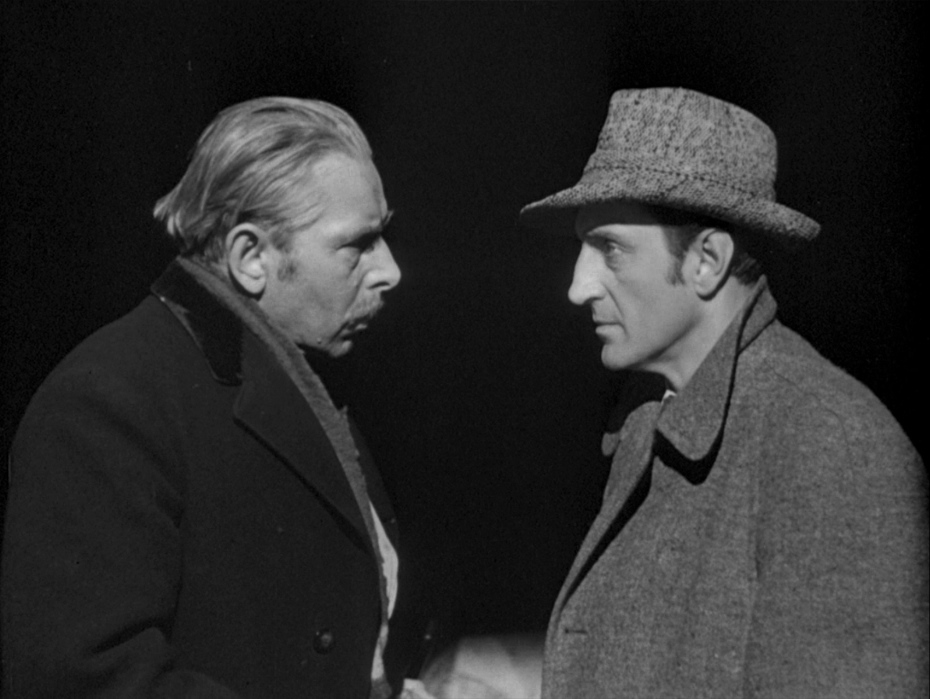
| While attending a seminar about the supernatural, Holmes and Watson comes upon a series of killings by what appears to be a ghost. A very liberal adaptation of “The Hound of the Baskervilles”, this is the best of the Universal Sherlock Holmes films. |
Poster
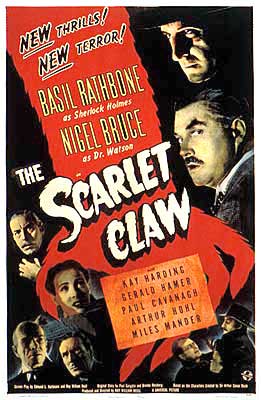 |
Theatrical Release: May 26th, 1944 - USA
|
CLICK logo
to order
|
|
|
| Distribution |
Sherlock Holmes - The Definitive Collection Optimum Classic Region 2 – PAL |
Sherlock Holmes: Complete Collection - Region 'A' - Blu-ray |
| Optimum stats |
| Runtime | 1:10:51 (4% PAL Speed-Up) |
| Video |
1.33:1
Aspect Ratio Chapters : 8 |
|
NOTE: The Vertical axis represents the bits transferred per second. The Horizontal is the time in minutes. |
|
| Bitrate:
|
|
|
Extras: |
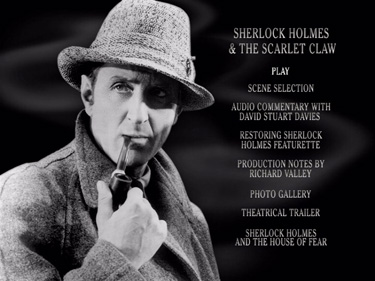
• Audio Commentary by David Stuart Davies • Restoring Sherlock Holmes (4:37) • Production Notes by Richard Valley (10 pages) • Photo Gallery • Theatrical Trailer (1:13) |
DVD Menus
 |
 |
Screen Captures
|
1) Optimum - Region 2 - PAL - TOP 2) MPI - Region 'A' - Blu-ray - BOTTOM |
 |
 |
 |
 |
directed by Roy William Neill
USA 1944
|
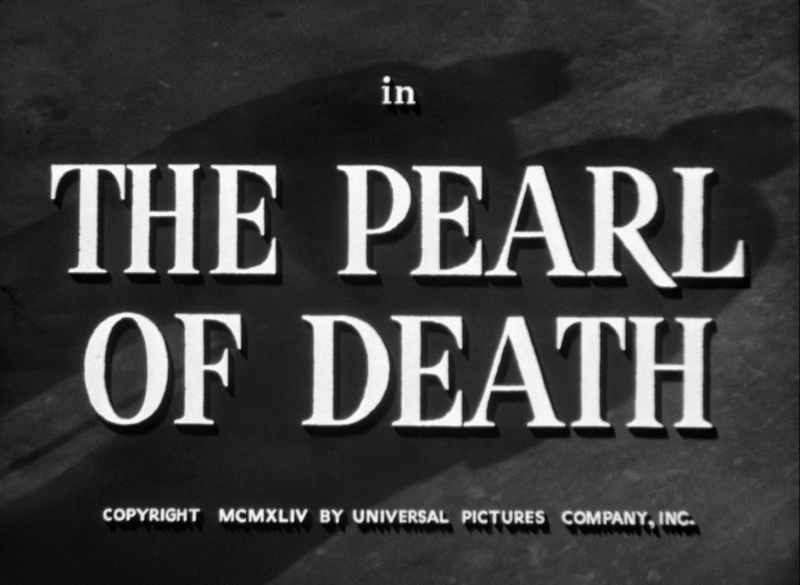
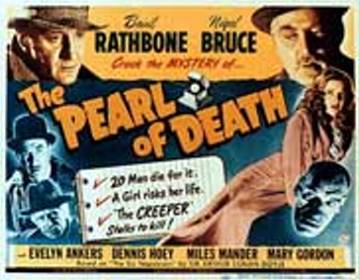
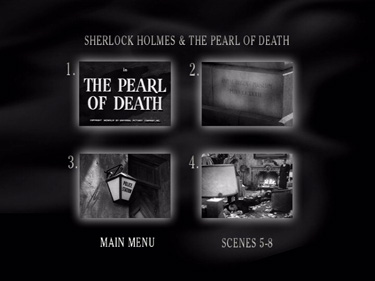
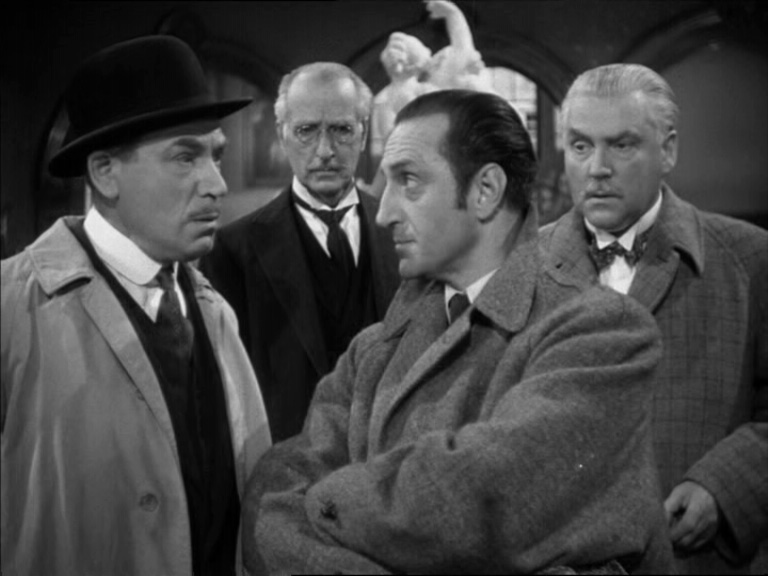
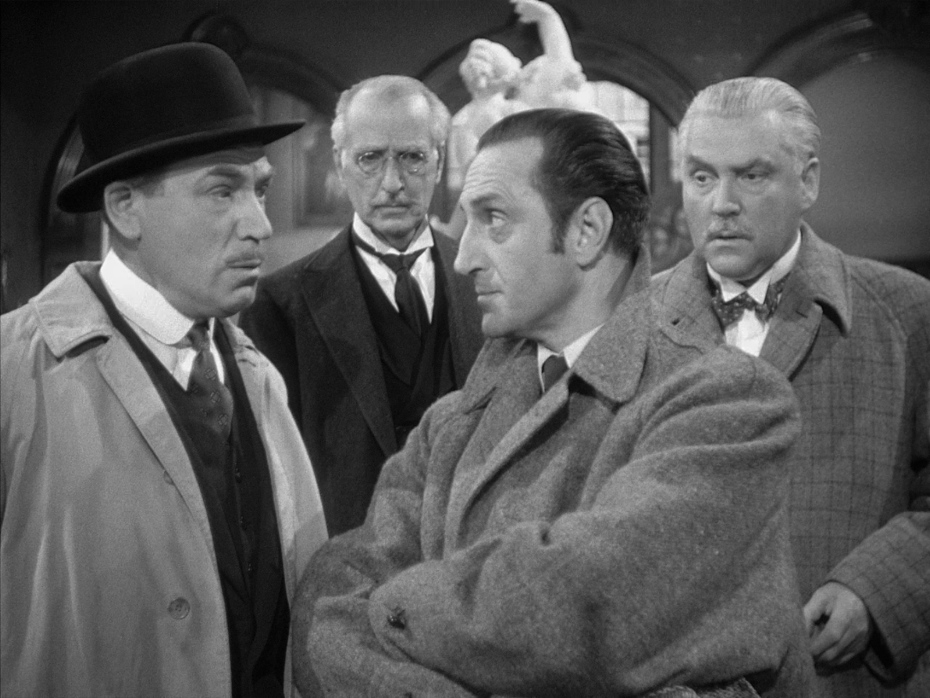
When a valuable pearl is stolen, because of Holmes showing-off, his reputation is at stake and he puts all efforts into recovering the pearl, which leads him to uncover a series of brutal murders and “The Creeper”. Loosely based on the story “The Six Napoleons”. |
Posters
 |
 |
Theatrical Release: August 1st, 1944 - USA
|
CLICK logo
to order
|
|
|
| Distribution |
Sherlock Holmes - The Definitive Collection Optimum Classic Region 2 – PAL |
Sherlock Holmes: Complete Collection - Region 'A' - Blu-ray |
| Optimum stats |
| Runtime | 1:05:44 (4% PAL Speed-Up) |
| Video |
1.33:1
Aspect Ratio Chapters : 8 |
|
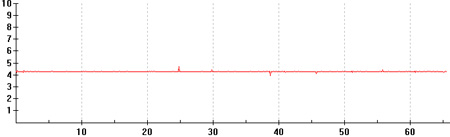
NOTE: The Vertical axis represents the bits transferred per second. The Horizontal is the time in minutes. |
|
| Bitrate:
|
|
|
Extras: |
• Restoring Sherlock Holmes (4:37) • Production Notes by Richard Valley (8 pages) • Photo Gallery • Theatrical Trailer (1:06) |
DVD Menus
 |
 |
Screen Captures
|
1) Optimum - Region 2 - PAL - TOP 2) MPI - Region 'A' - Blu-ray - BOTTOM |
 |
 |
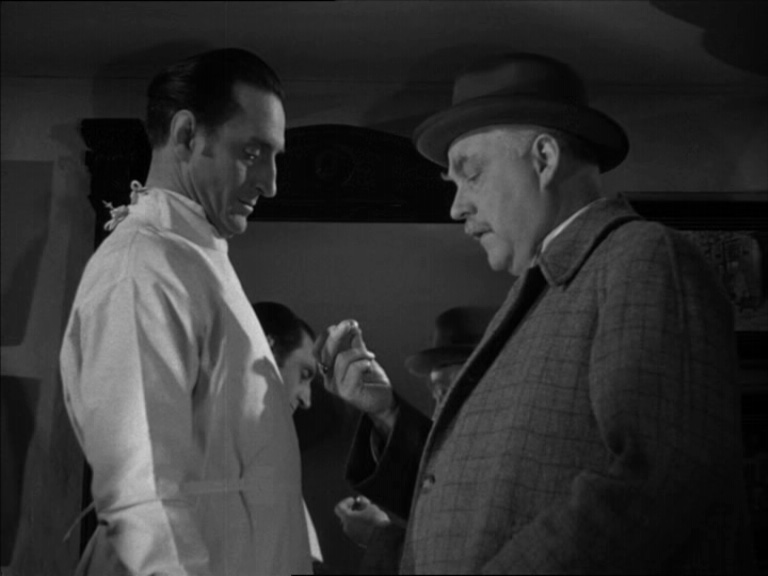 |
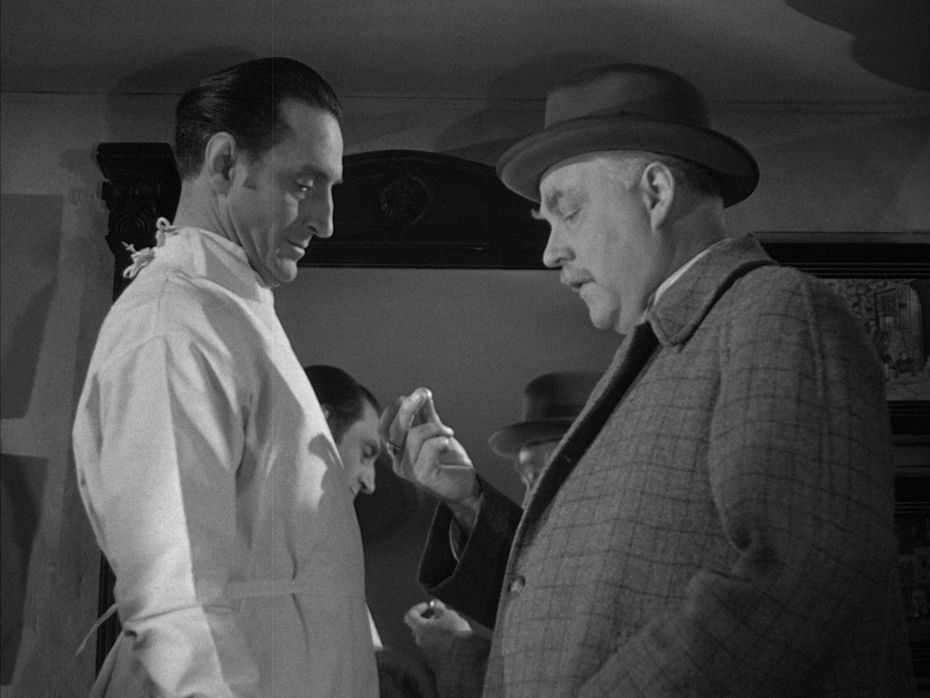 |
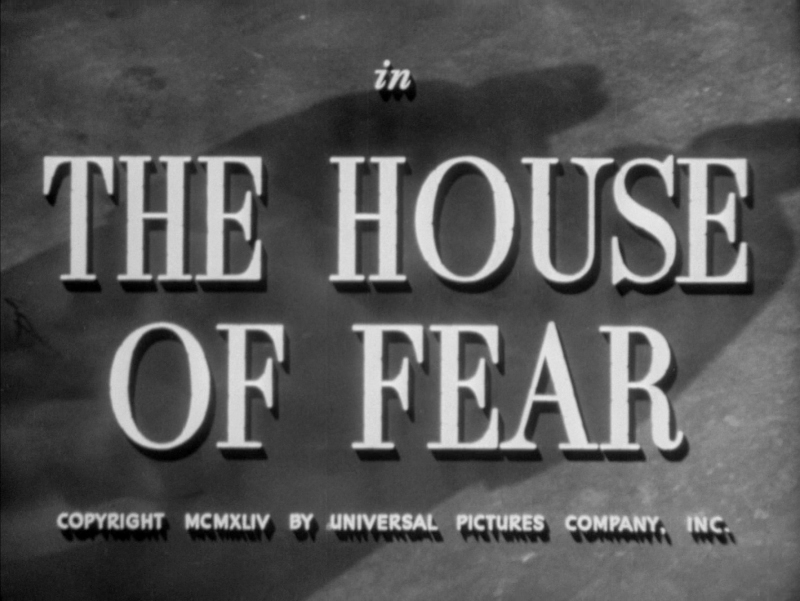
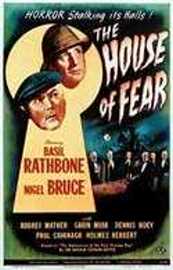
(AKA: The House of Fear)
directed by Roy William Neill
USA 1945
When the members of the Good Comrades Club, mysteriously die one by one after receiving an envelope containing the remaining number of members in orange pips, Holmes is called upon to solve the crime.
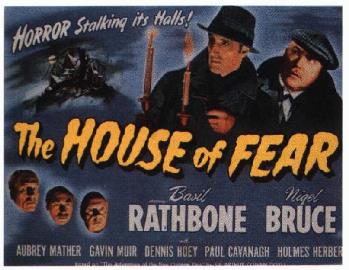
Posters
 |
 |
Theatrical Release: March 16th, 1945 - USA
|
CLICK logo
to order
|
|
|
| Distribution |
Sherlock Holmes - The Definitive Collection Optimum Classic Region 2 – PAL |
Sherlock Holmes: Complete Collection - Region 'A' - Blu-ray |
| Optimum stats |
| Runtime | 1:06:21 (4% PAL Speed-Up) |
| Video |
1.33:1
Aspect Ratio Chapters : 8 |
|
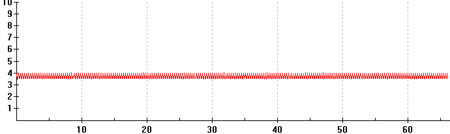
NOTE: The Vertical axis represents the bits transferred per second. The Horizontal is the time in minutes. |
|
| Bitrate:
|
|
|
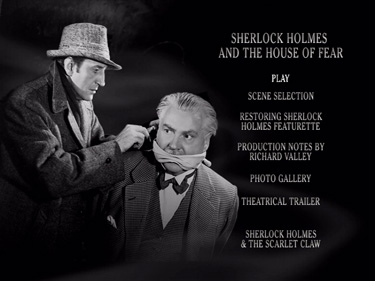
Extras: |
• Restoring Sherlock Holmes (4:37) • Production Notes by Richard Valley (10 pages) • Photo Gallery • Trailer (1:06) |
DVD Menus
 |
 |
Screen Captures
|
1) Optimum - Region 2 - PAL - TOP 2) MPI - Region 'A' - Blu-ray - BOTTOM |
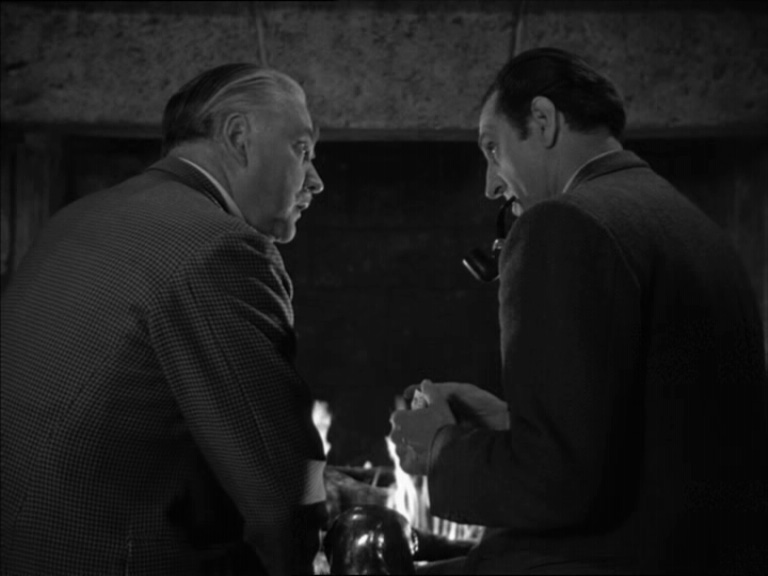 |
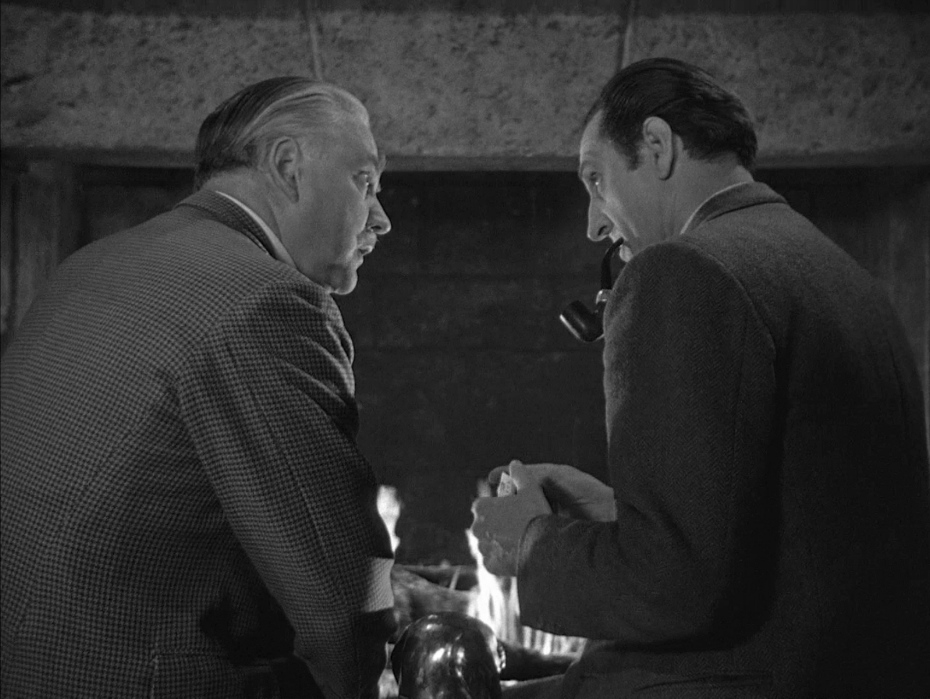 |
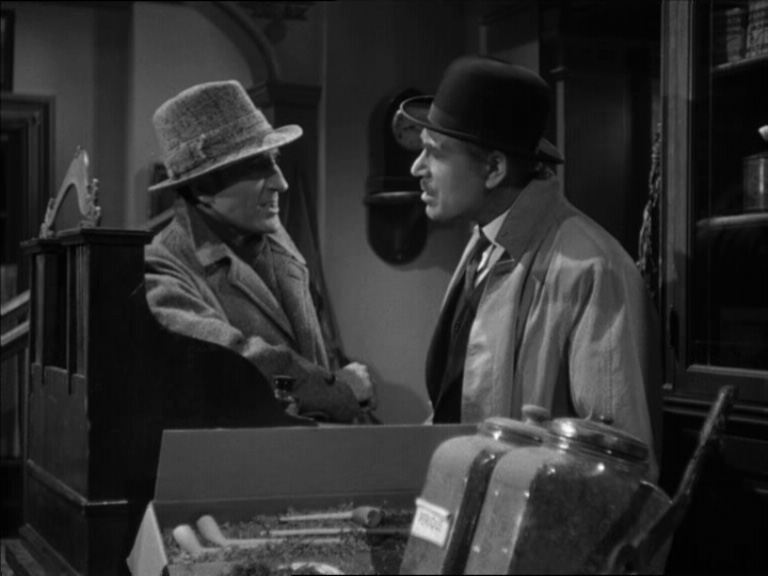 |
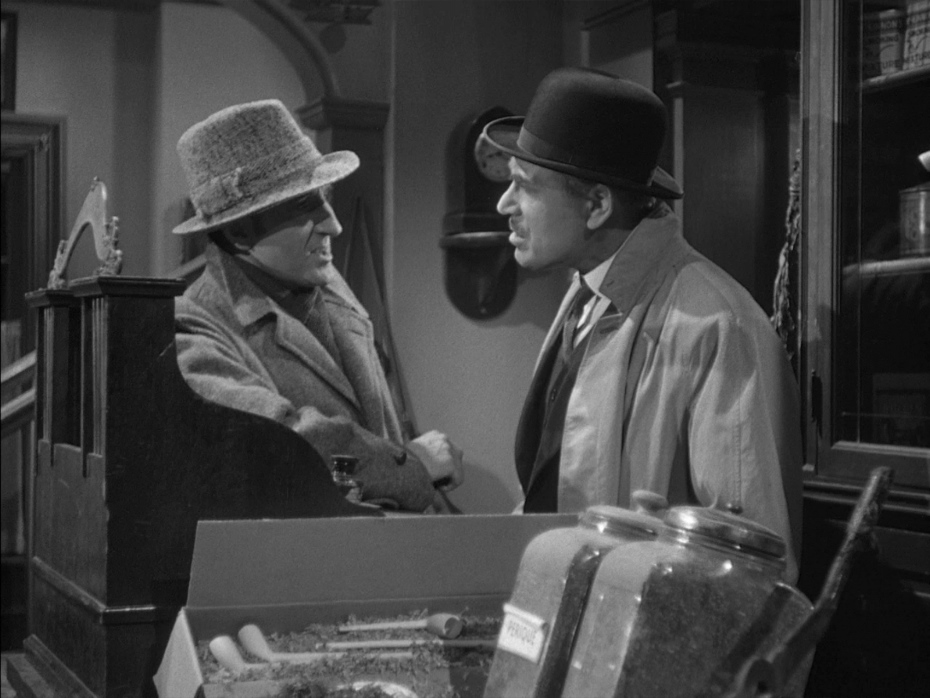 |
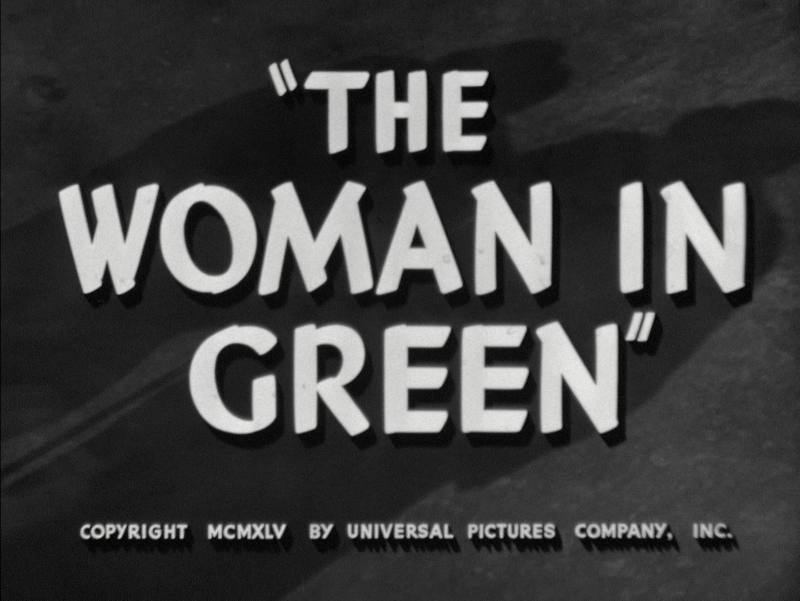
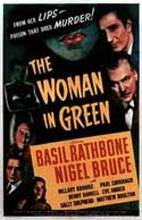
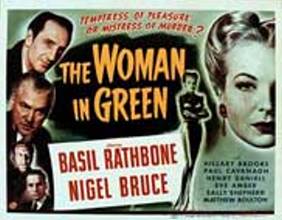
(AKA: The Woman in Green)
directed by Roy William Neill
USA 1945
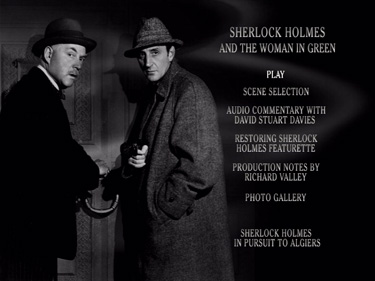
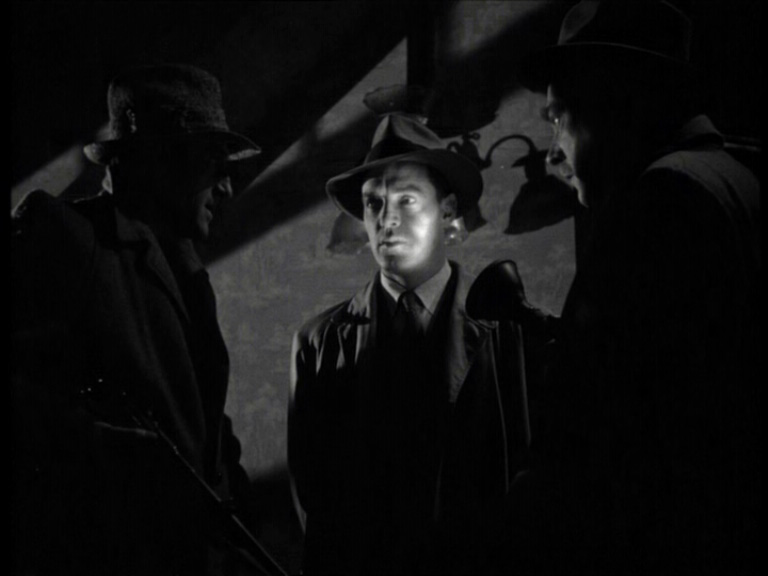
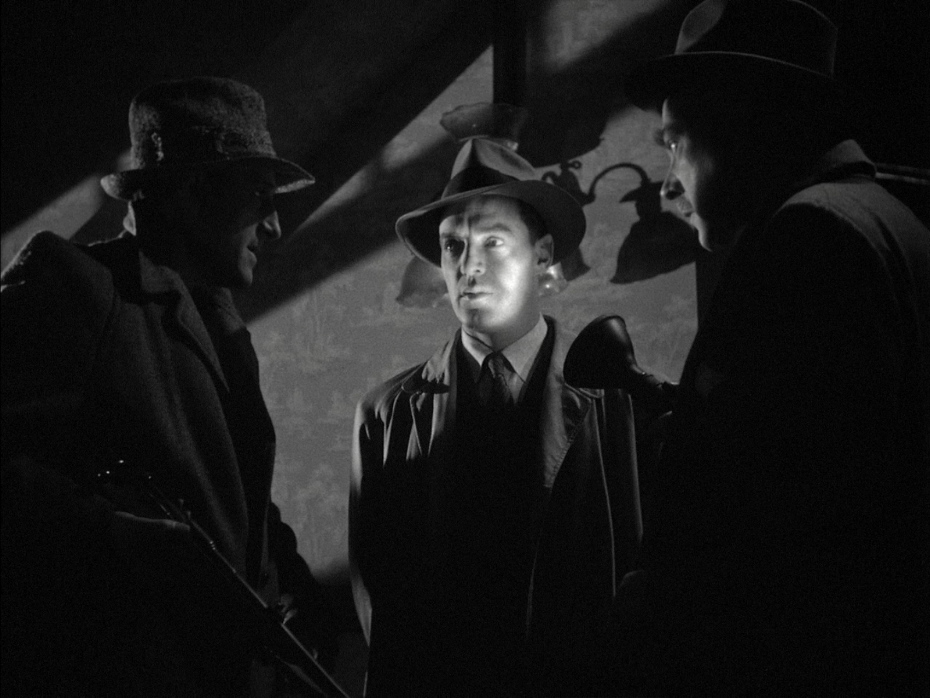
| A series of strange murders haunt London and the Yard seek the help of Holmes, who uncovers a devilish scheme, masterminded by Professor Moriaty. Soon Holmes finds himself within inches of his own life. |
Posters
 |
 |
Theatrical Release: June 27th, 1945 - USA
|
CLICK logo
to order
|
|
|
| Distribution |
Sherlock Holmes - The Definitive Collection Optimum Classic Region 2 – PAL |
Sherlock Holmes: Complete Collection - Region 'A' - Blu-ray |
| Optimum stats |
| Runtime | 1:04:52 (4% PAL Speed-Up) |
| Video |
1.33:1
Aspect Ratio Chapters : 8 |
|
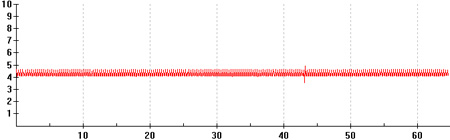
NOTE: The Vertical axis represents the bits transferred per second. The Horizontal is the time in minutes. |
|
| Bitrate:
|
|
|
Extras: |
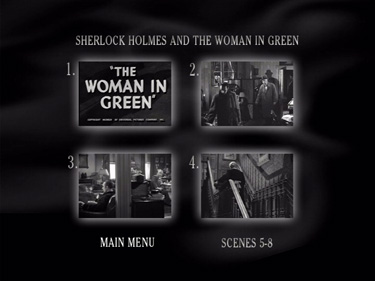
• Audio Commentary by David Stuart Davies • Restoring Sherlock Holmes (4:37) • Production Notes by Richard Valley (8 pages) • Photo Gallery |
DVD Menus
 |
 |
Screen Captures
|
1) Optimum - Region 2 - PAL - TOP 2) MPI - Region 'A' - Blu-ray - BOTTOM |
 |
 |
 |
 |
directed by Roy William Neill
USA 1945
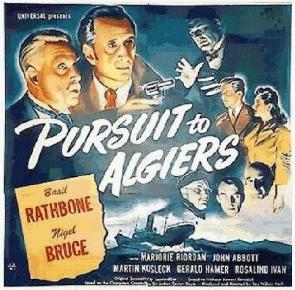
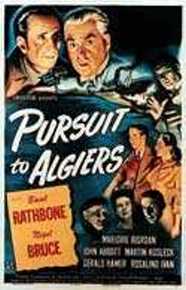
Holmes and Watson are employed to safeguard the heir to the throne of Ruritania to Algiers. But assassins insist on making the task difficult.
Posters
 |
 |
Theatrical Release: October 6th, 1945 - USA
|
CLICK logo
to order
|
|
|
| Distribution |
Sherlock Holmes - The Definitive Collection Optimum Classic Region 2 – PAL |
Sherlock Holmes: Complete Collection - Region 'A' - Blu-ray |
| Optimum stats |
| Runtime | 1:02:28 (4% PAL Speed-Up) |
| Video |
1.33:1
Aspect Ratio Chapters : 8 |
|
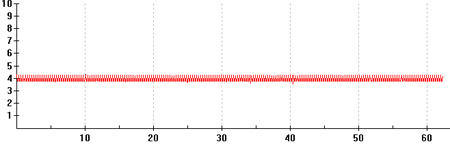
NOTE: The Vertical axis represents the bits transferred per second. The Horizontal is the time in minutes. |
|
| Bitrate:
|
|
|
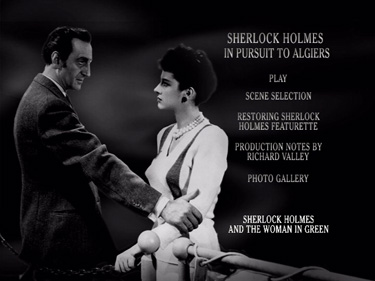
Extras: |
• Restoring Sherlock Holmes (4:37) • Production Notes by Richard Valley (10 pages) • Photo Gallery |
DVD Menus
 |
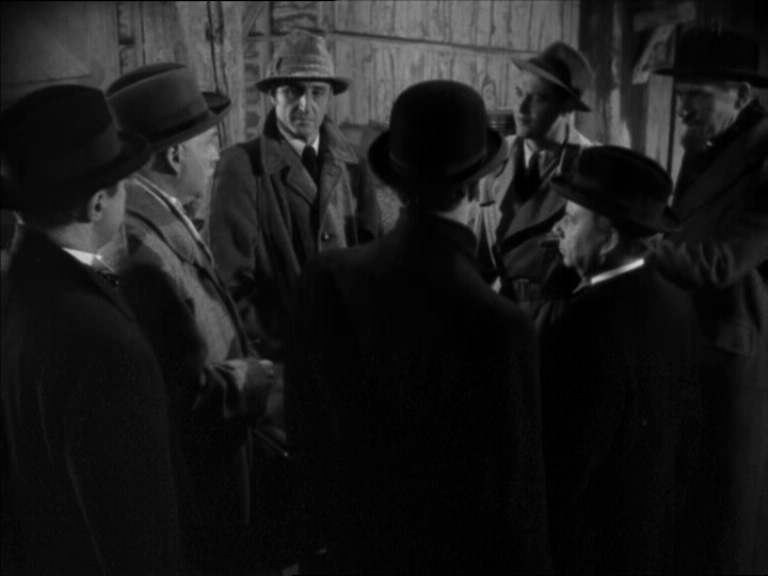
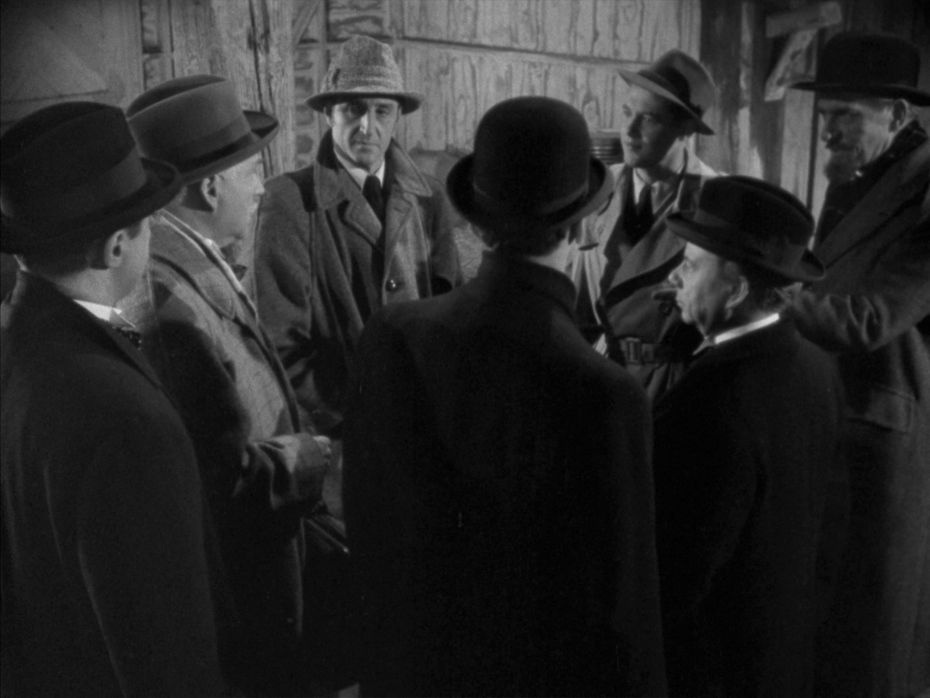
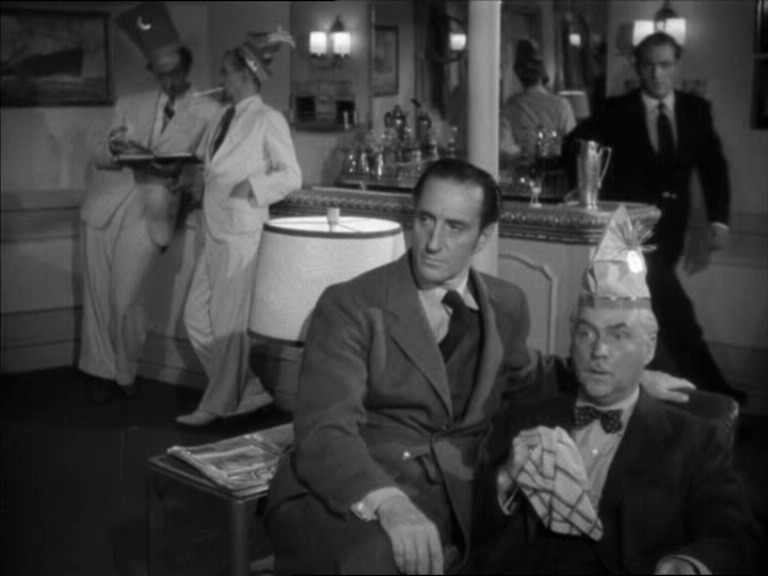
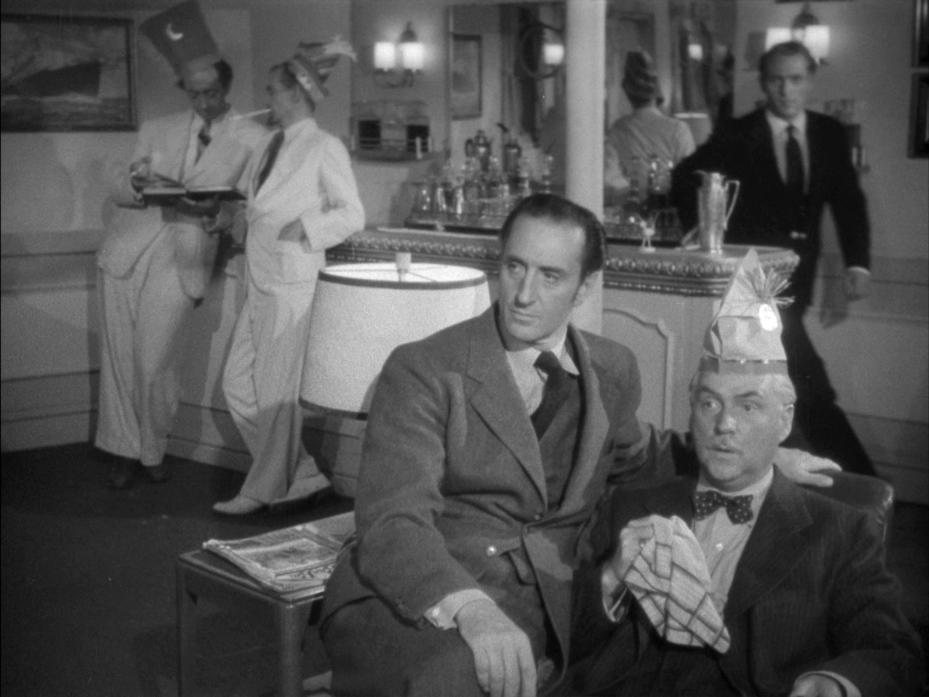
 |
Screen Captures
|
1) Optimum - Region 2 - PAL - TOP 2) MPI - Region 'A' - Blu-ray - BOTTOM |
 |
 |
 |
 |
directed by Roy William Neill
USA 1946
|
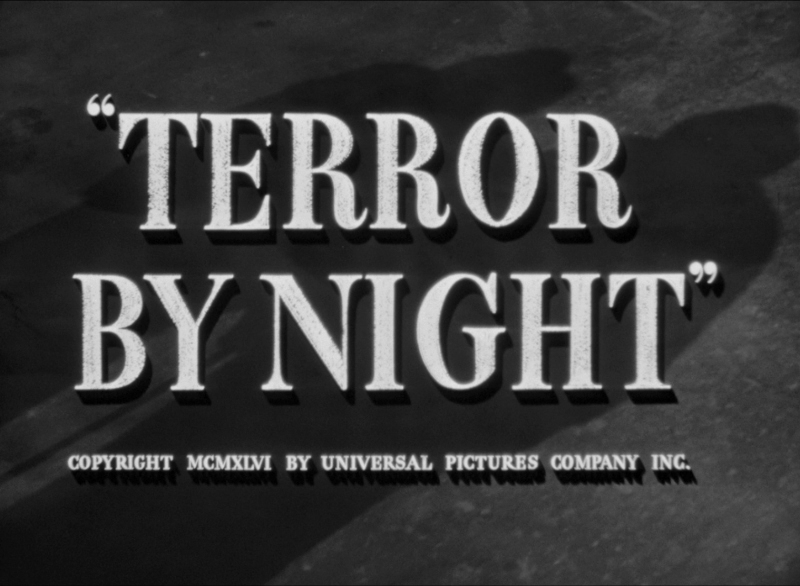
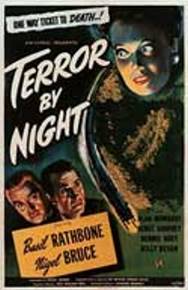
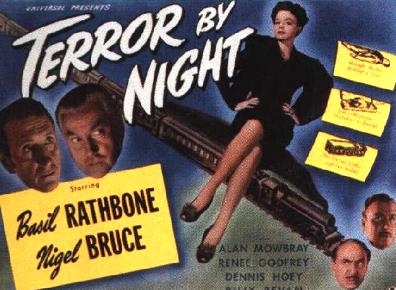
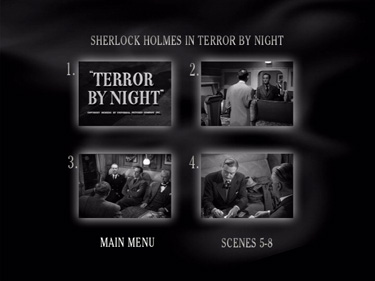
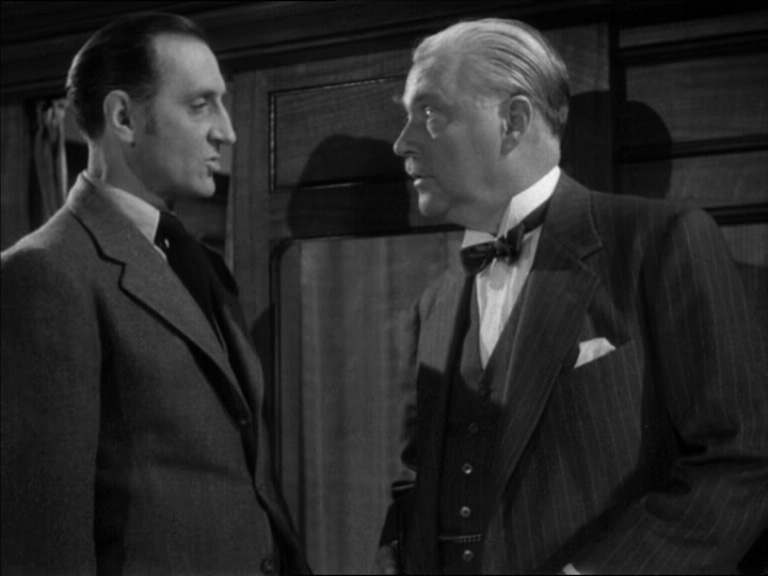
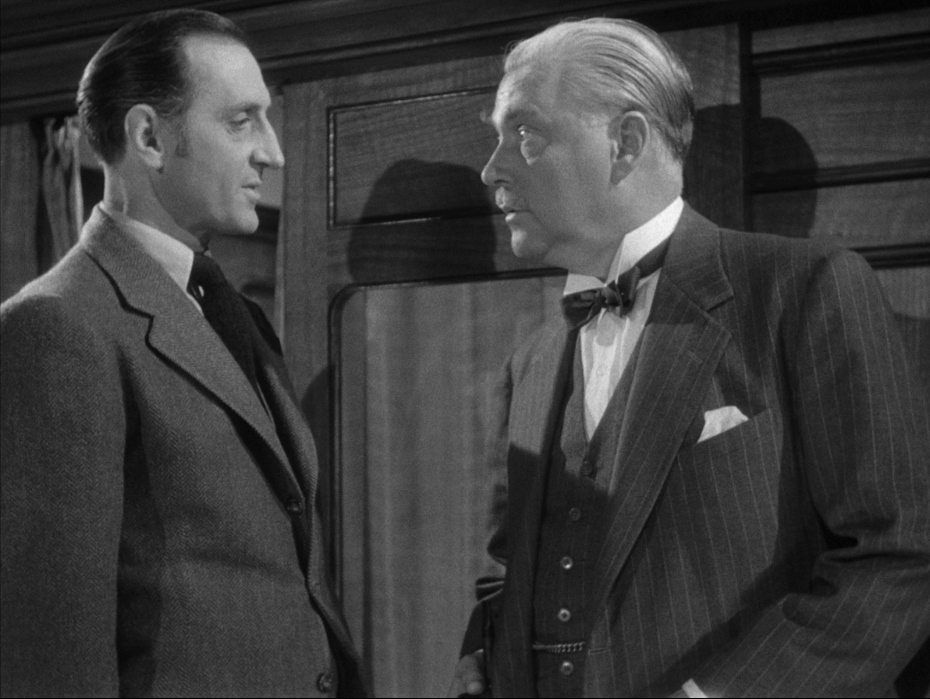
Holmes is hired by Lady Carstairs to escort her, and the Star of Rhodesia, a 700-karat diamond, from London to Edinburgh. The voyage has hardly begun, before her son is murdered and the diamond is stolen. Along with Watson and Lestrade, Holmes investigates the crime, while the train is passing thru the night, and comes face to face with Moriaty’s second in command, Colonel Sebastian Moran. |
Posters
 |
 |
Theatrical Release: February 1st, 1946 - USA
|
CLICK logo
to order
|
|
|
| Distribution |
Sherlock Holmes - The Definitive Collection Optimum Classic Region 2 – PAL |
Sherlock Holmes: Complete Collection - Region 'A' - Blu-ray |
| Optimum stats |
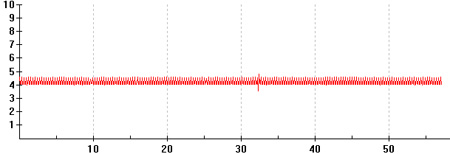
| Runtime | 57:16 (4% PAL Speed-Up) |
| Video |
1.33:1
Aspect Ratio Chapters : 8 |
|
NOTE: The Vertical axis represents the bits transferred per second. The Horizontal is the time in minutes. |
|
| Bitrate:
|
|
|
Extras: |
• Restoring Sherlock Holmes (4:37) • Production Notes by Richard Valley (8 pages) • Photo Gallery • Theatrical Trailer (1:34) |
DVD Menus
 |
 |
Screen Captures
|
1) Optimum - Region 2 - PAL - TOP 2) MPI - Region 'A' - Blu-ray - BOTTOM |
 |
 |
 |
 |
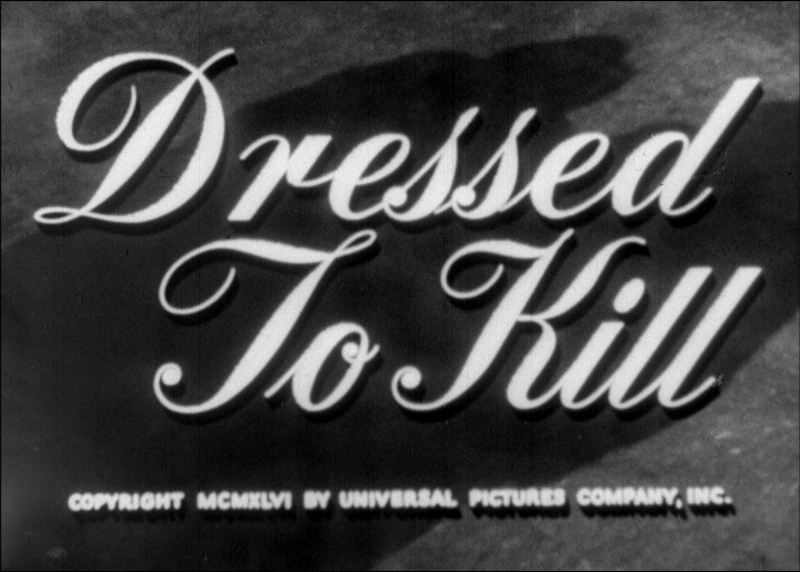
(AKA: Sherlock Holmes and the Secret Code)
directed by Roy William Neill
USA 1946
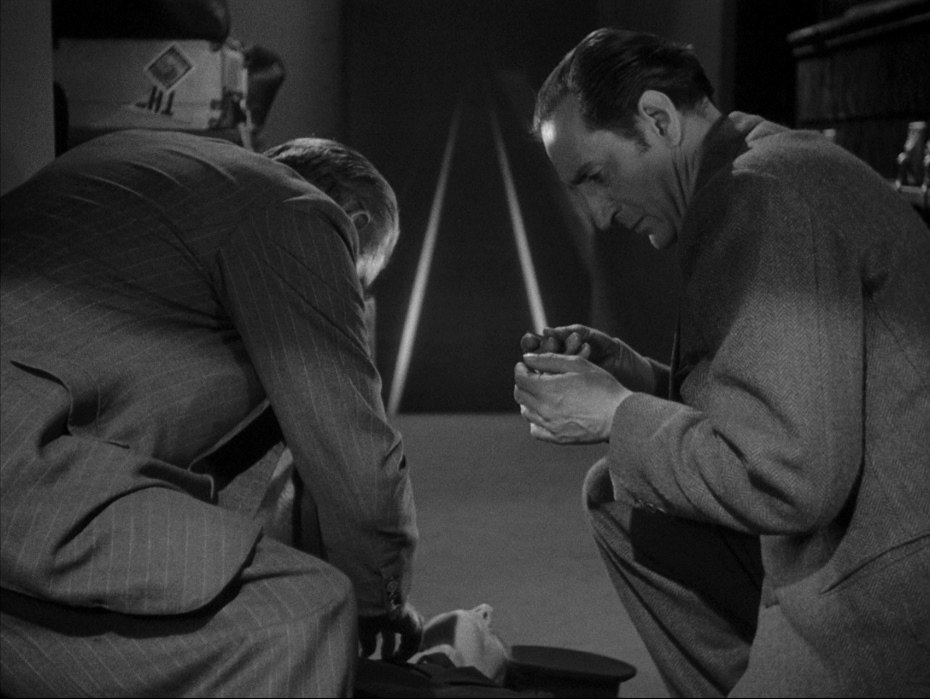
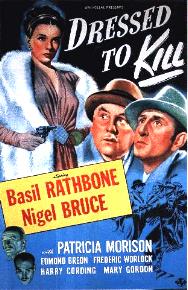
| When one of Watson’s school friends is murdered over a cheap music box, Holmes begins to investigate and soon he is on the track of some stolen £5 printing plates, stolen from the Bank of England. The last entry in the Rathbone series, both its UK and US title is rather cryptic and has really nothing to do with the plot itself. |
Poster
 |
Theatrical Release: June 7th, 1946 - USA
|
CLICK logo
to order
|
|
|
| Distribution |
Sherlock Holmes - The Definitive Collection Optimum Classic Region 2 – PAL |
Sherlock Holmes: Complete Collection - Region 'A' - Blu-ray |
| Optimum stats |
| Runtime | 1:08:57 (4% PAL Speed-Up) |
| Video |
1.33:1 Aspect Ratio Chapters : 8 |
|
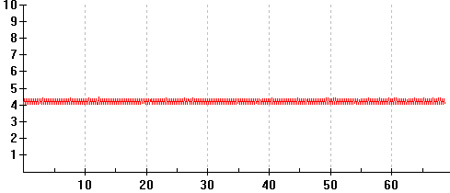
NOTE: The Vertical axis represents the bits transferred per second. The Horizontal is the time in minutes. |
|
|
Bitrate:
|
|
|
Extras: |
• Restoring Sherlock Holmes (4:37) • Production Notes by Richard Valley (8 pages) • Photo Gallery • Theatrical Trailer (1:22) |
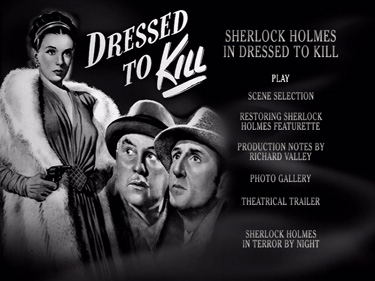
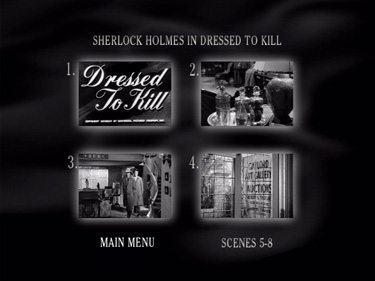
DVD Menus
 |
 |
Screen Captures
|
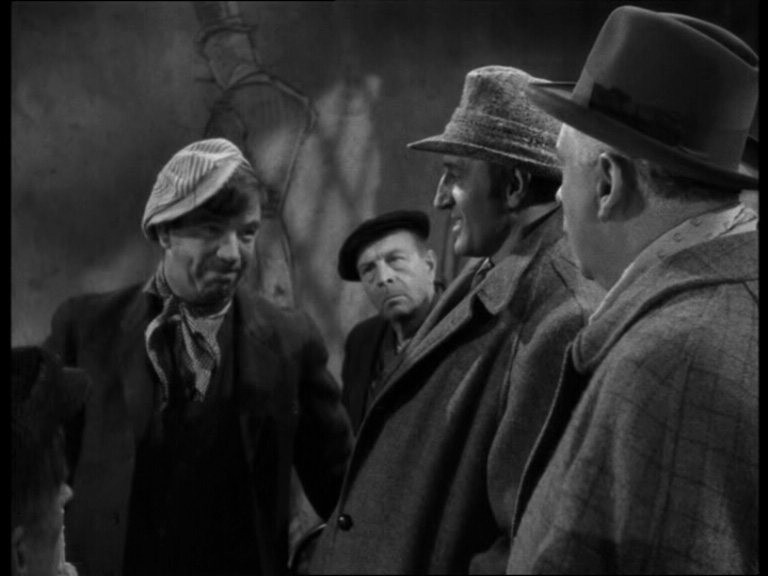
1) Optimum - Region 2 - PAL - TOP 2) MPI - Region 'A' - Blu-ray - BOTTOM |
 |
 |
 |
 |
|
CLICK logo
to order
|
|
|
| Distribution |
Sherlock Holmes - The Definitive Collection Optimum Classic Region 2 – PAL |
Sherlock Holmes: Complete Collection - Region 'A' - Blu-ray |
Recommended Reading (CLICK COVERS or TITLES for more information)
|
|
|
|
|
|
|
|
|
|
The Bedside, Bathtub & Armchair Companion
to Sherlock Holmes by Dick Riley, Pam McAllister |
Sherlock Holmes (Pocket Essentials: Film S.)
Mark Campbell |
The Ghosts of Baker Street : New Tales of
Sherlock Holmes (New Tales of Sherlock Holmes) by Martin H. Greenberg, Jon Lellenberg, Daniel Stashower |
The Complete Sherlock Holmes by Arthur Conan Doyle |
Sherlock Holmes on Screen: The Complete Film and TV
History by Alan Barnes |
Starring Sherlock Holmes by David Stuart Davies, Ian Richardson |
In and Out of Character by Basil Rathbone |
by Anthony Boucher, Denis Green, Basil Rathbone (Narrator), Nigel Bruce (Narrator) |
|
Search DVDBeaver |
S E A R C H D V D B e a v e r |
















CLICK PayPal logo to donate!
|
Gary Tooze
|
|
Many Thanks...