




|
Search DVDBeaver |
S E A R C H D V D B e a v e r |

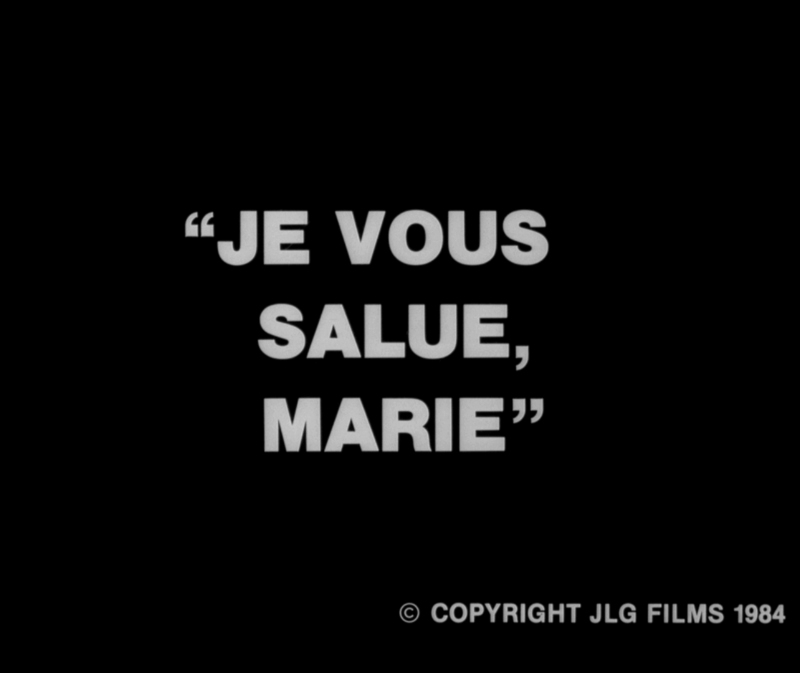
(aka 'Hail Mary')

and
Anne-Marie Miéville
France 1985
|
Before “Hail Mary” ever reached theaters
in 1985, the film had already generated enough controversy to earn Godard a
stern reprimand from Pope John Paul 2, as well as a pie in the face at the
Cannes Film Festival (which one upset Godard more, I have no idea.) Godard was
accused of making a film that sullied the reputation of the Virgin Mary and
offended Christians throughout the world. As is usual in such cases, the most
vigorous protesters had not bothered with the formality of actually seeing the
movie. |
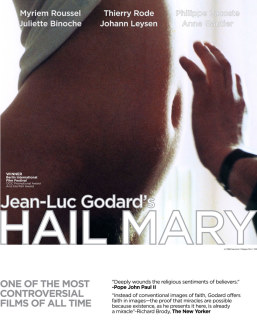
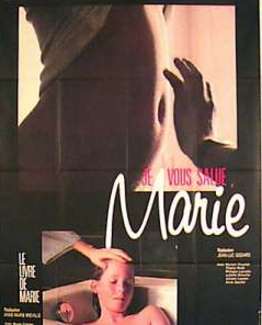
Posters
 |
 |
Theatrical Release: January 23rd, 1985
Reviews More Reviews DVD Reviews
Comparison:
New Yorker - Region 1 - NTSC vs. Cohen Media Group - Region 'A' - Blu-ray
|
1) New Yorker - Region 1 - NTSC LEFT2) Cohen Media Group - Region 'A' - Blu-ray RIGHT |
Big thanks to Christopher Long for the DVD Review!
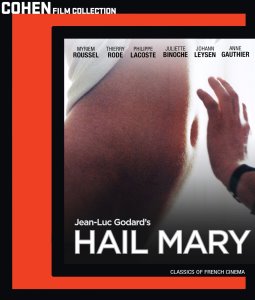
| Box Cover |
|
|
| Distribution | New Yorker Video - Region 1 - NTSC | Cohen Media - Region 'A' - Blu-ray |
| Runtime | 1:15:51 | 1:48:19.117 (includes 'Book of Mary') |
| Video | 1.33:1
Aspect Ratio Average Bitrate: 7.93 mb/s NTSC 720x480 29.97 f/s |
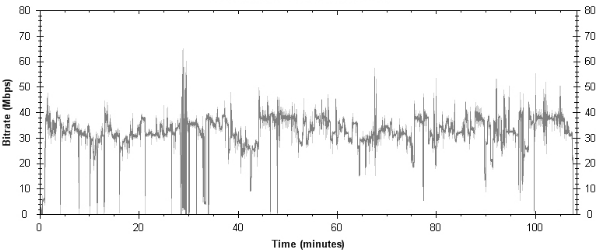
1080P Dual-layered Blu-rayDisc Size: 47,703,021,801 bytes Feature: 30,922,132,032 bytes Video Bitrate: 32.23 MbpsCodec: MPEG-4 AVC Video |
|
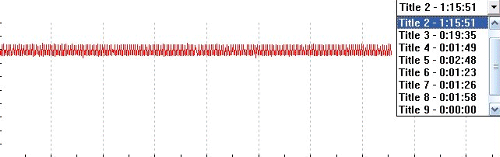
NOTE: The Vertical axis represents the bits transferred per second. The Horizontal is the time in minutes. |
||
| Bitrate: |
|
|
| Bitrate: Blu-ray |
|
|
| Audio | French (Dolby Digital 2.0) |
LPCM Audio French 2304 kbps 2.0 / 48 kHz / 2304 kbps / 24-bit Commentary: LPCM Audio English 1536 kbps 2.0 / 48 kHz / 1536 kbps / 16-bit |
| Subtitles | English, None | English, None |
| Features |
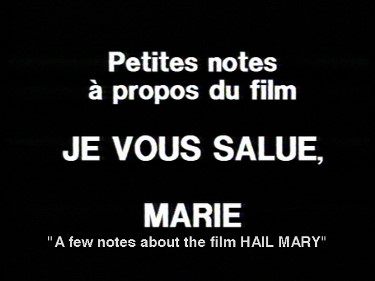
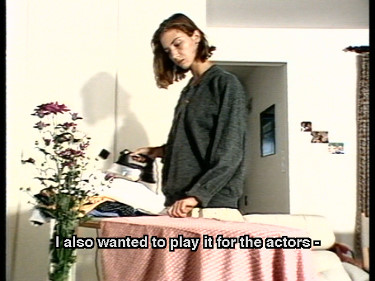
Release Information: Edition Details: • "Notes About Hail Mary" featurette (19:35)
• The Book of Mary (26:38) |
Release Information: 1080P Dual-layered Blu-rayDisc Size: 47,703,021,801 bytes Feature: 30,922,132,032 bytes Video Bitrate: 32.23 MbpsCodec: MPEG-4 AVC Video
Edition Details:
• JLG/PR - a conversation with Pierre Rissient (2010 - 18:41) • Original French trailer (1:53) • 2013 Re-release trailer (1:44)
•
16-page liner notes
booklet with essays |





| Comments: |
NOTE: The below Blu-ray captures were ripped directly from the Blu-ray disc.
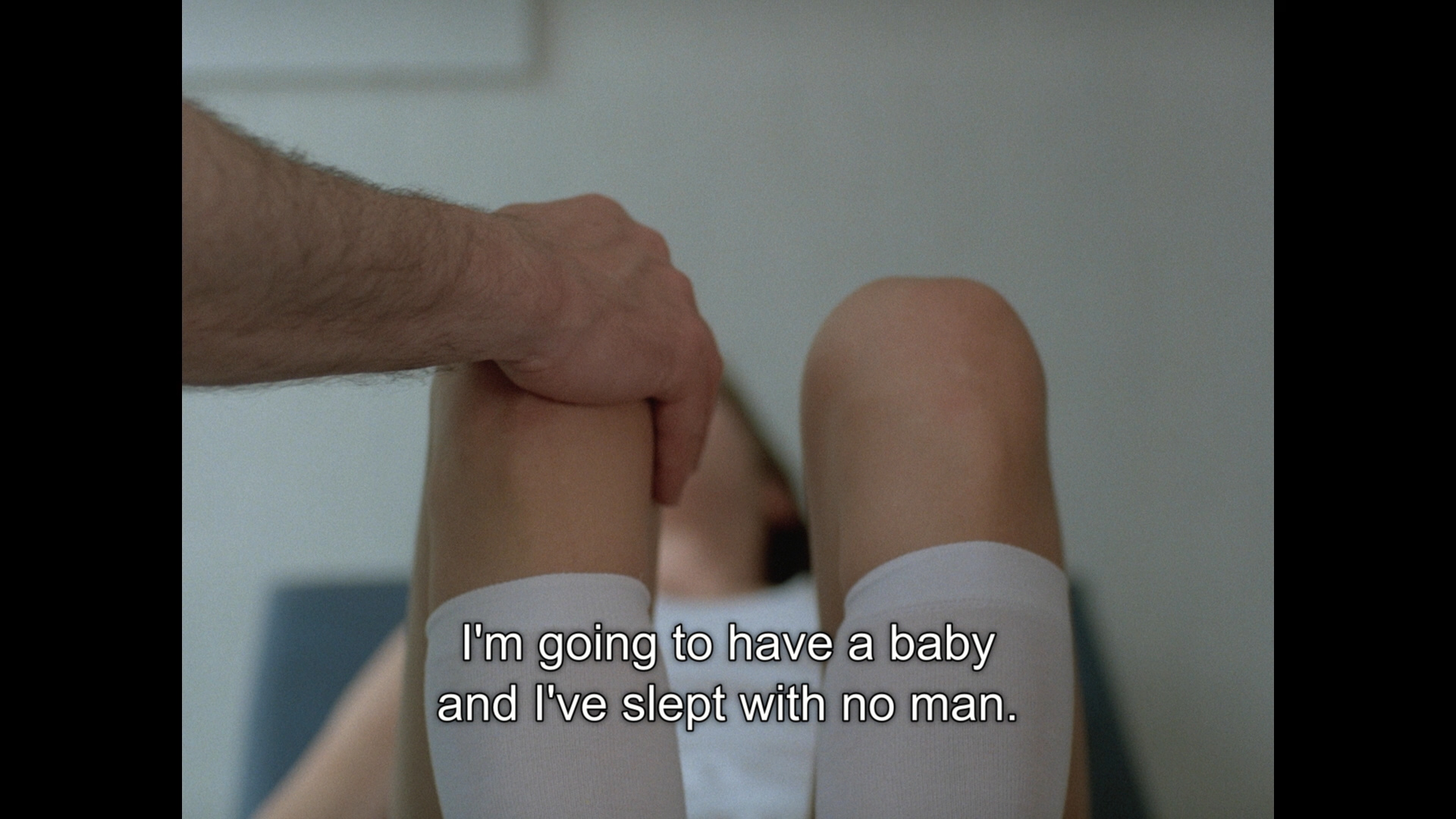
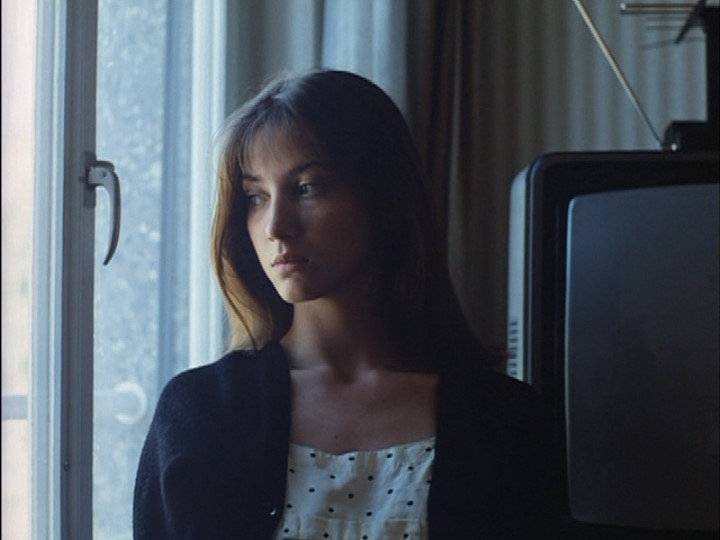
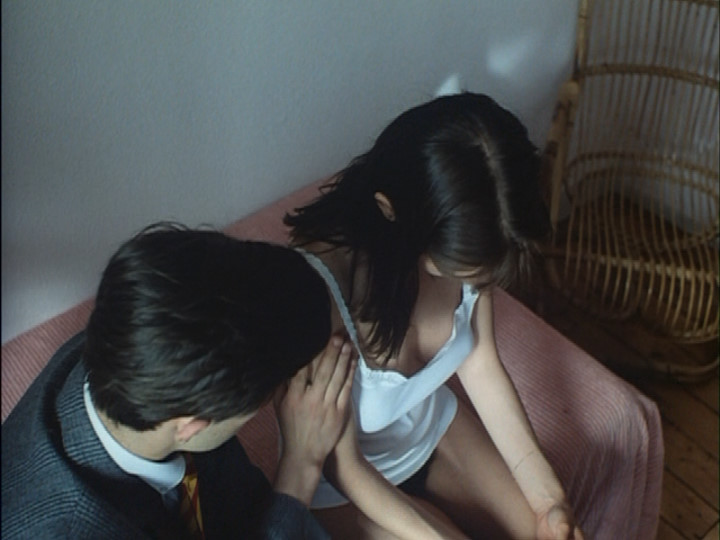
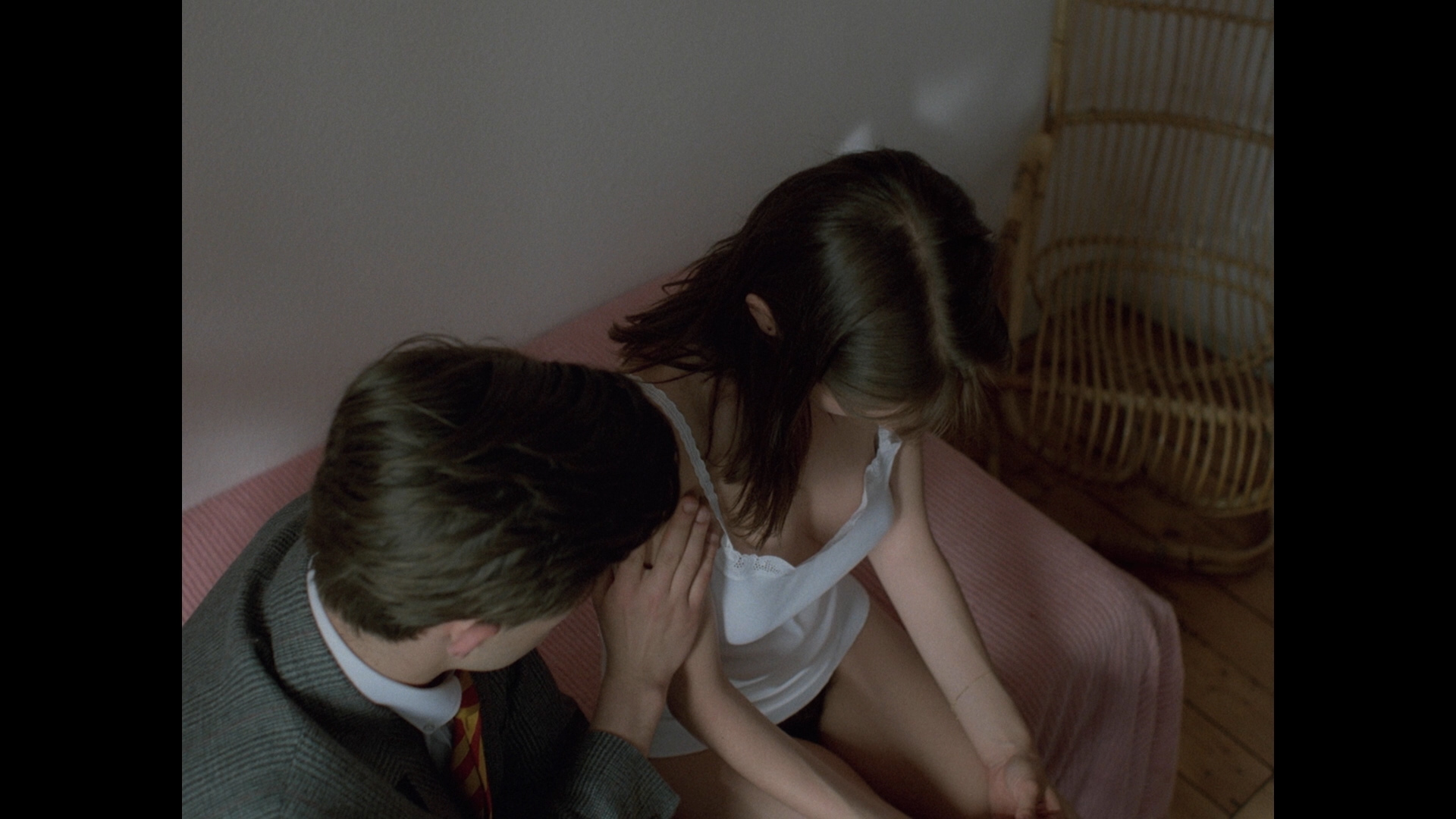
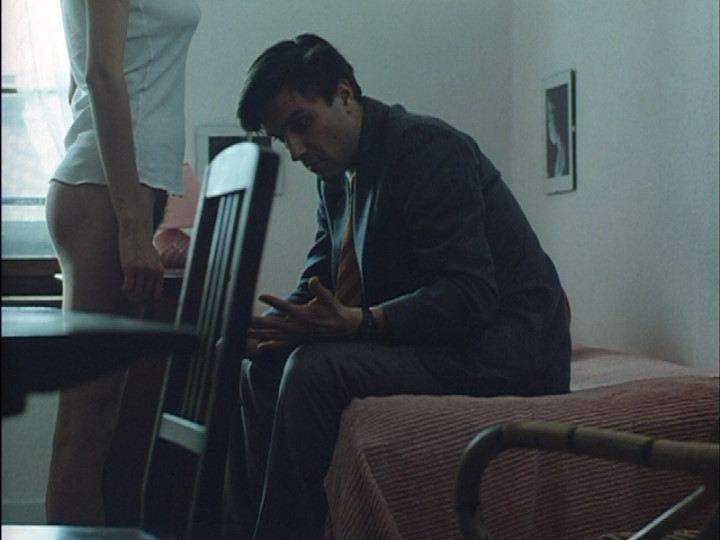
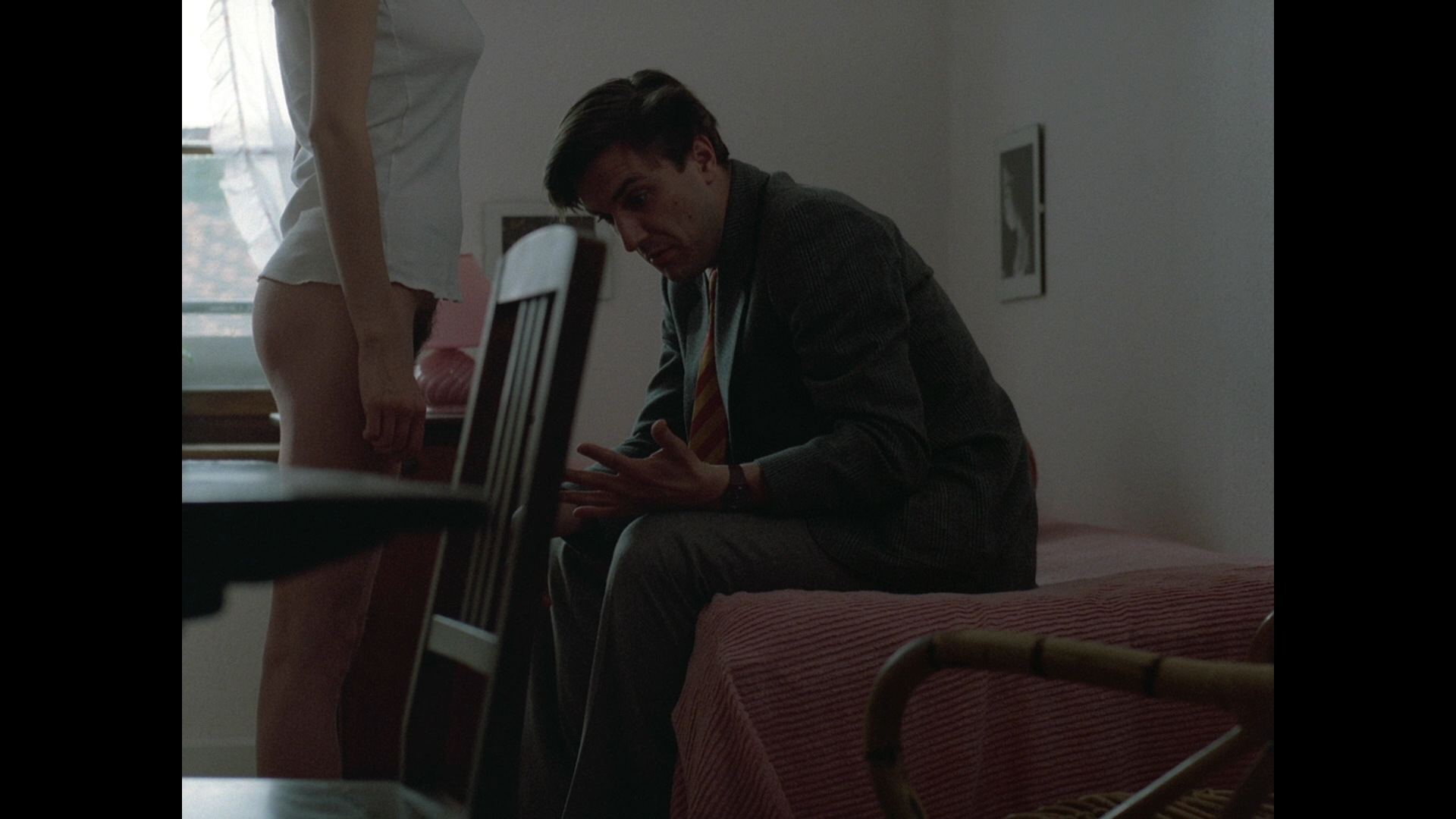
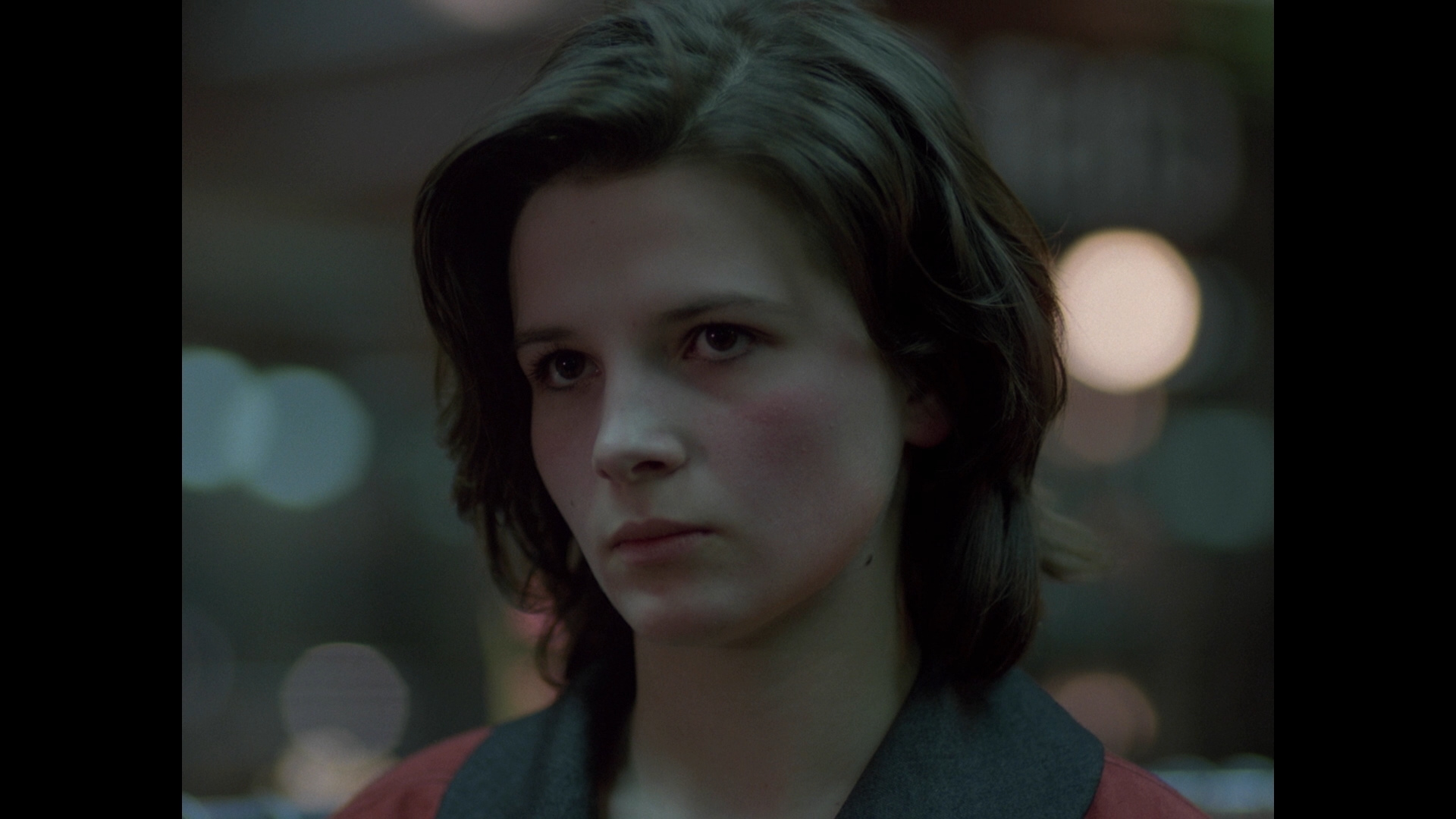
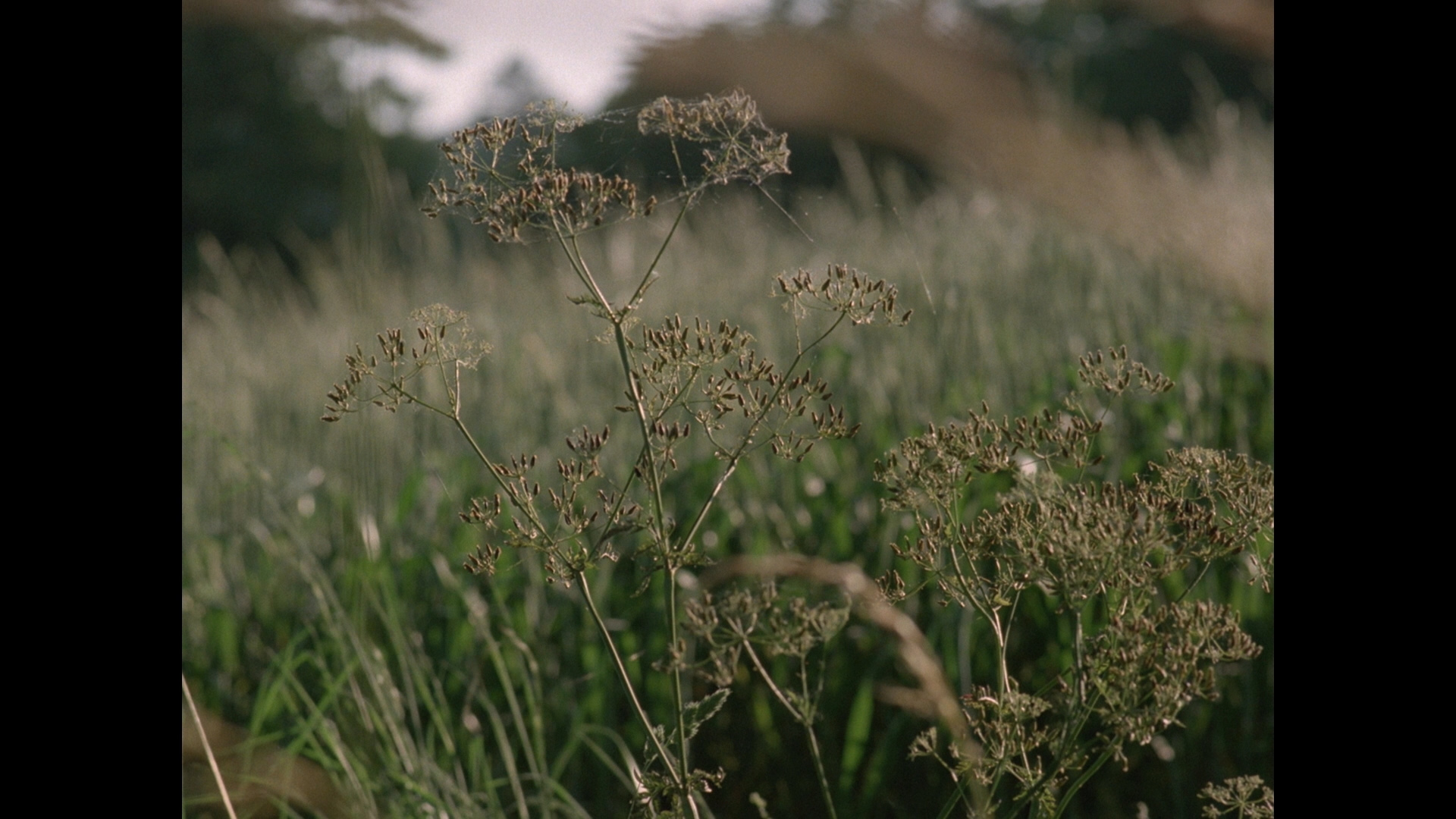
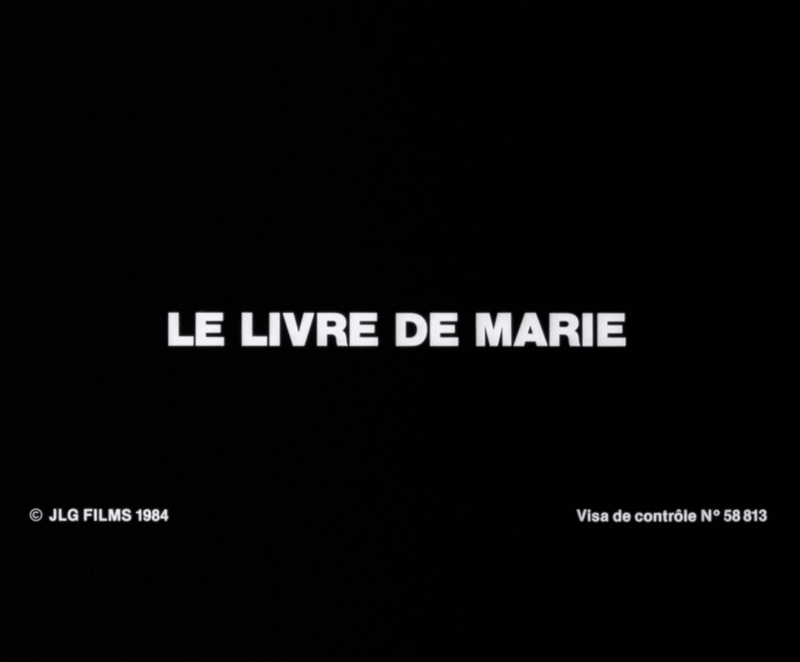
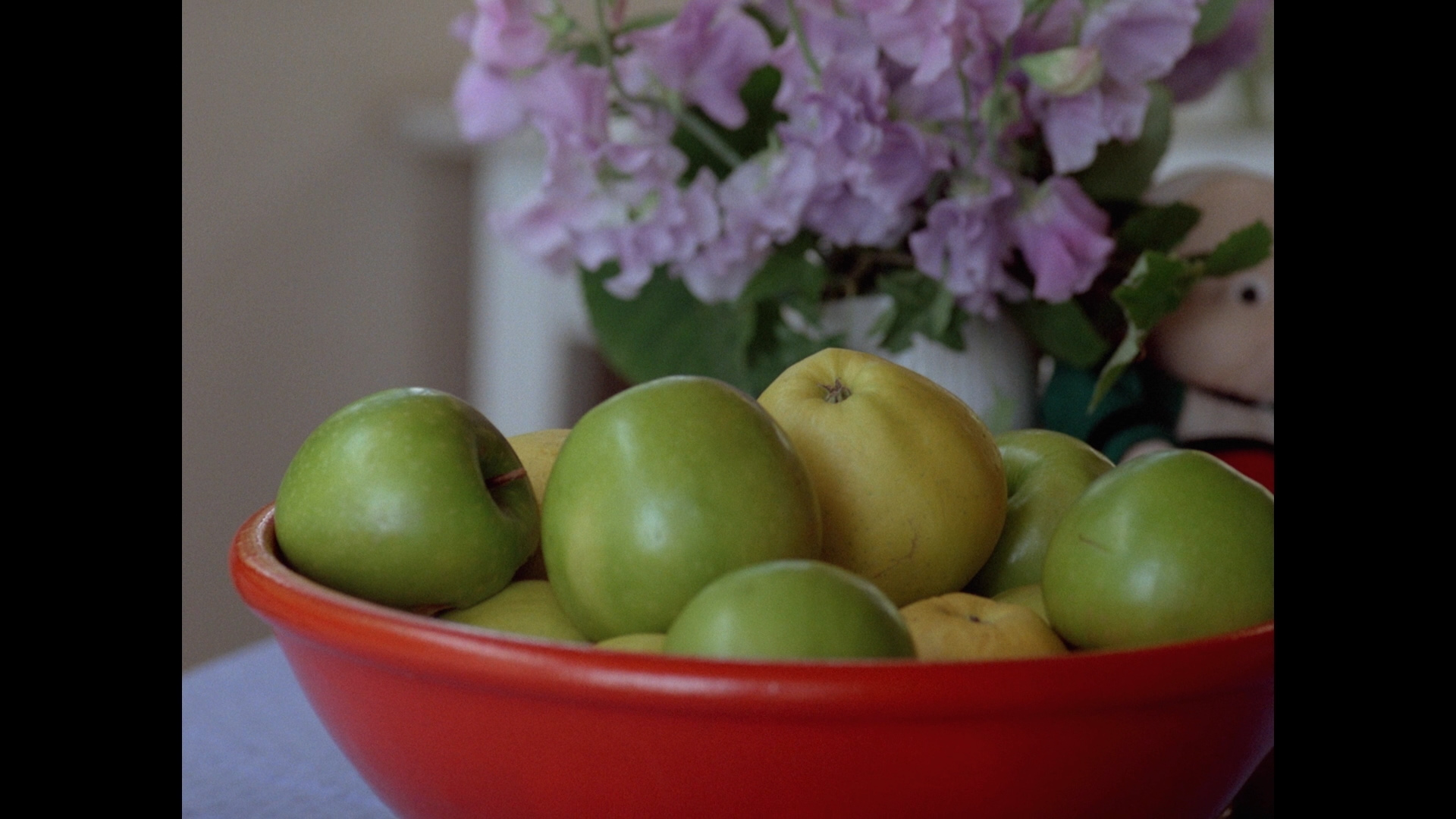
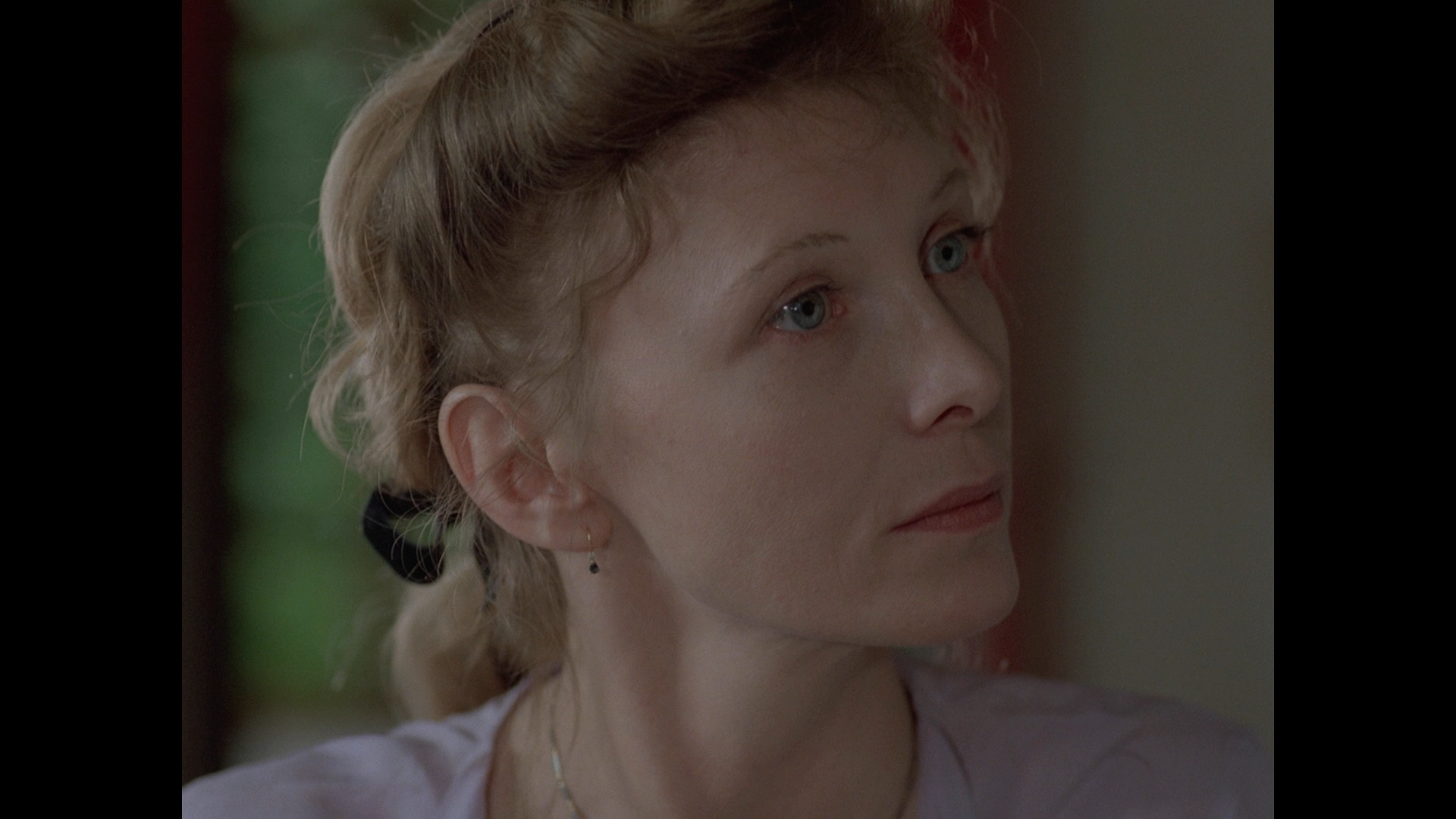
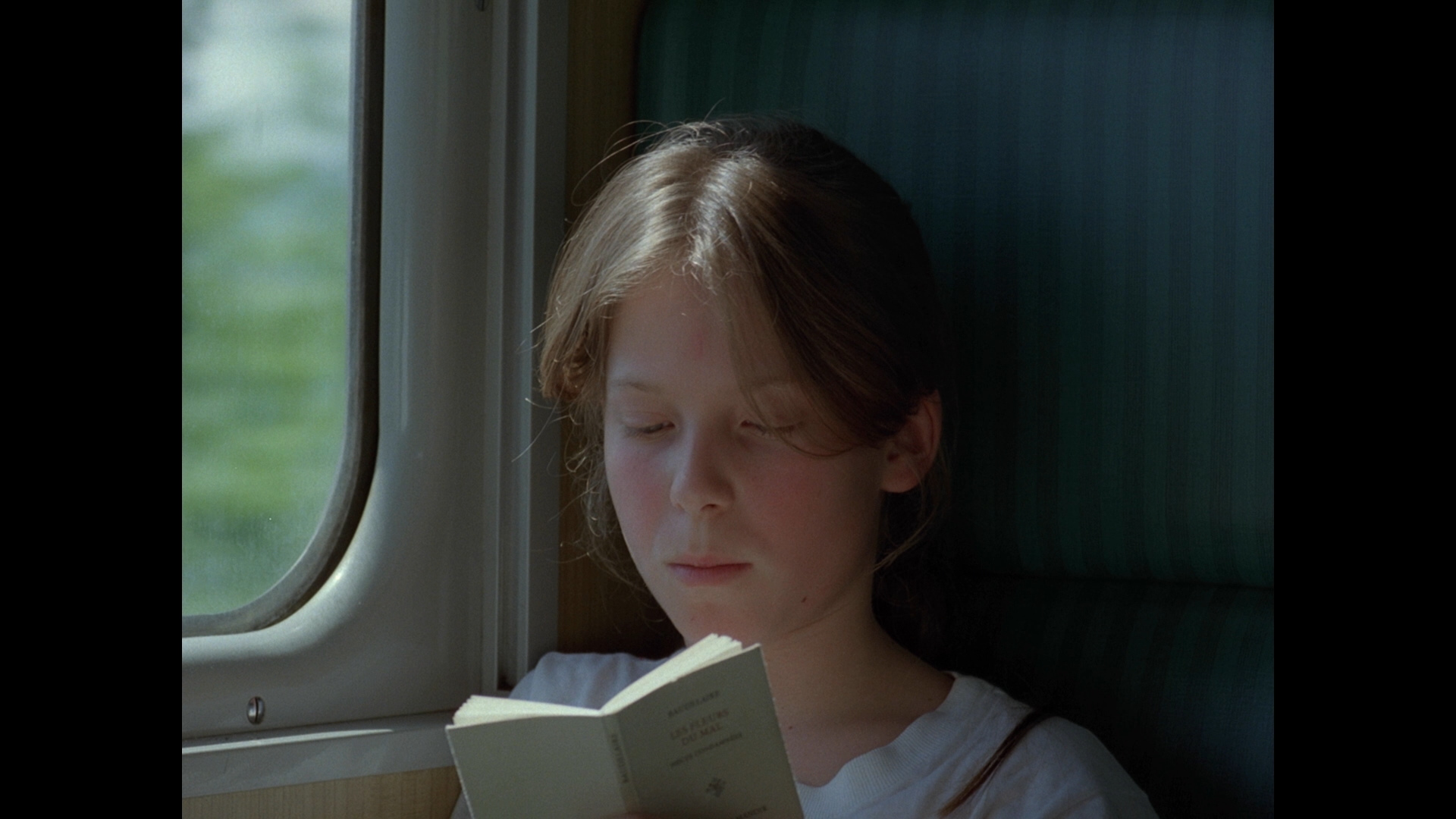
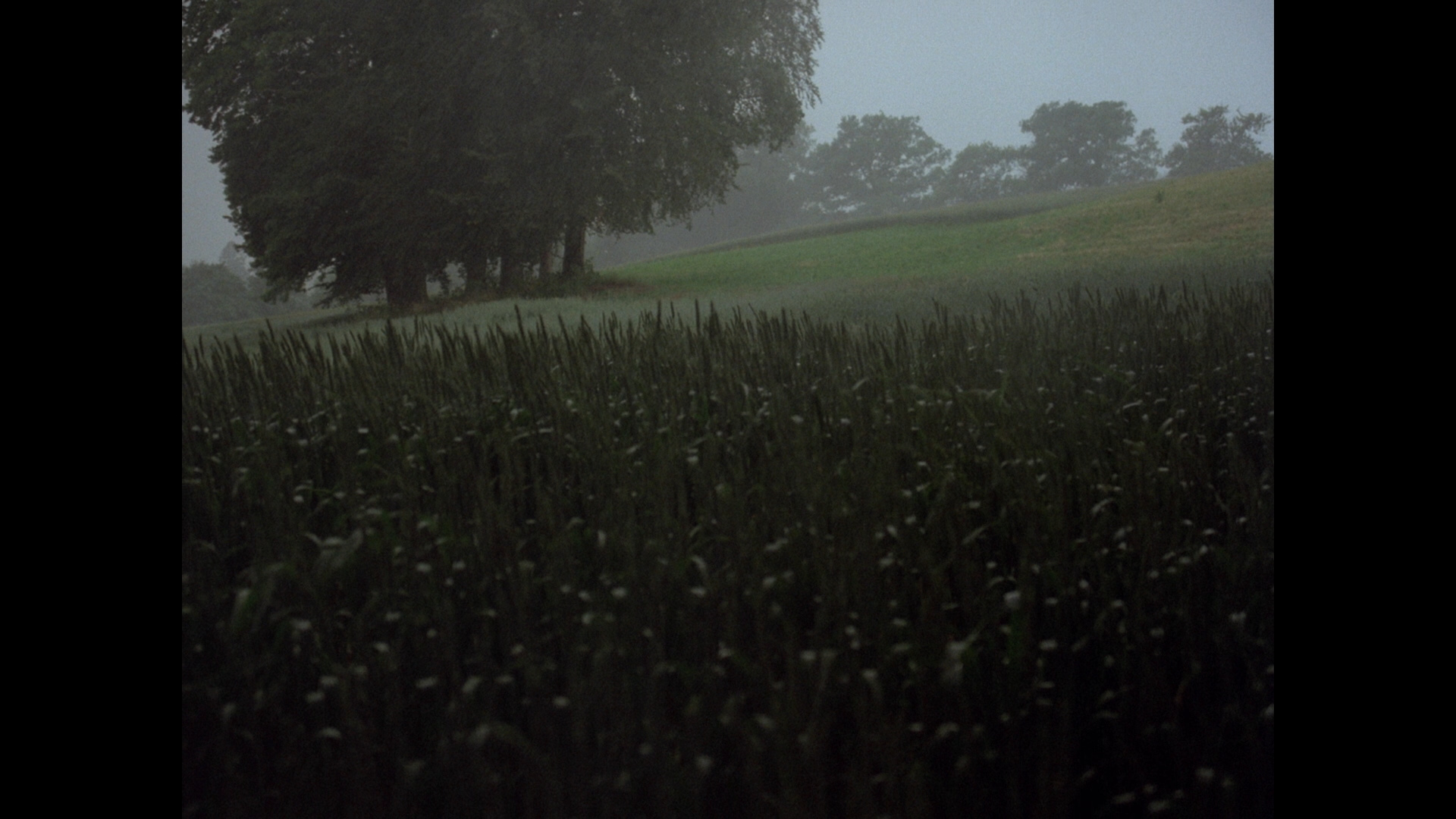
ADDITION: Cohen Media Group - Region 'A' - Blu-ray (January 2014): Cohen's new 1080P transfer has both Mieville's Book of Mary and Godard's Hail Mary playing consecutively. There is some inconsistency in the visuals but there are some impressive scenes showcasing depth - absent in the flat SD - and displaying more information in the frame. Close-ups export some impressive detail. This is dual-layered with a very high bitrate and supplies an excellent, overall, presentation.
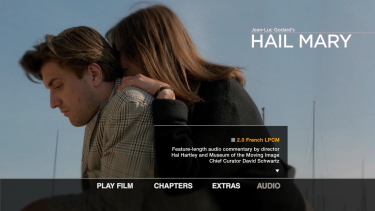
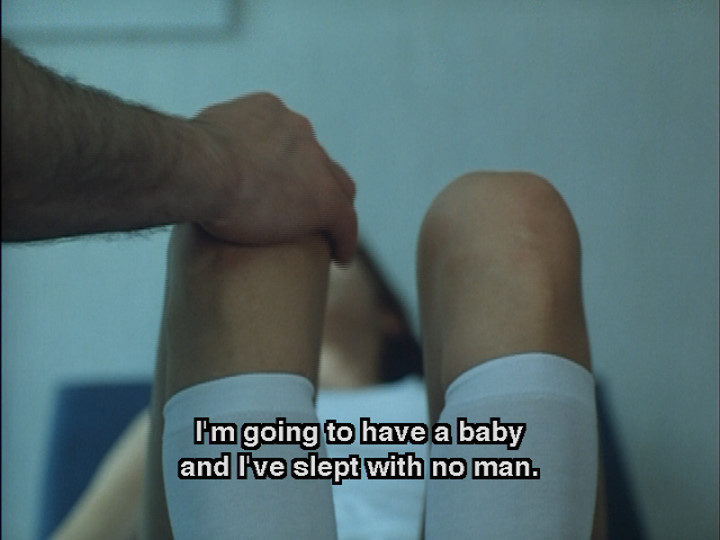
Cohen transfer the film's audio via a linear PCM 2.0 channel track at reasonable 2304 kbps in original French. Notable is the music -Bach's Partitas, Dvorak even Coltrane. Mieville using Chopin and Mahler. The lossless benefit is also noted in the sequence where Mary dances and sings (in The Book of Mary). The quality is very strong - crisper and with more depth than the older DVD. There are optional English subtitles.
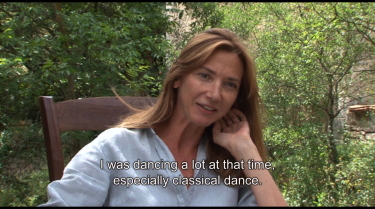
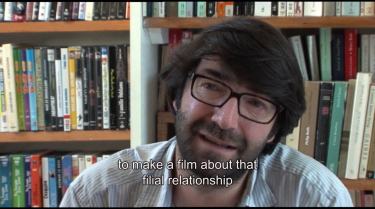
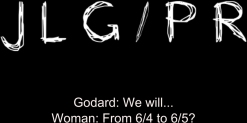
Cohen pile on the supplements with a feature-length audio commentary with Hal Hartley and Museum of the Moving Image Curator David Schwarz imparting essential, and interpretational, information on all facets of the film. The director Hartley was interesting to hear his opinions. Also included are the 20-minute long Note of Hail Mary (Godard's Video notebook) from 1983 - also found on the NY'er. There are three, seperate, 2010 'conversations' running almost 50-minutes in total (and with English subtitles) with actress Myriem Roussel, Antoine de Baecque (historian, film and theater critic and a French publisher) and Pierre Rissient (director, writer, producer.) There are also original French, and 2013 re-release, trailers and the package contains a 16-page liner notes booklet with multiple essays. Cohen are continuing to distinguish themselves as an impressive Blu-ray producer - this is a fabulous package and I embraced Godard's film like never before with the help of the vastly improved a/v and the extensive supplement extras. This is easy to put in the 'must own' category for Godard fans. Strongly recommended! ***
ON THE NY'er DVD: Another NY'er interlaced transfer that doesn't really look that bad, especially if viewing through a CRT (tube). Detail is better than anticipated and colors (skin tones) look very good. Separated, but included, is Anne-Marie Miéville’s “Book of Mary” (27 min.) plus a featurette 'Notes About Hail Mary' at 20 minutes. Audio and optional English subtitles (although not listed in the menu they were removable on my system) are fine and we thank NY'er for bringing this out as many have fans have patiently waited for its release. With an update of the Virgin birth relocated to contemporary Paris - one couldn't ask for a more enticing premise. Surely a 'must-own' for Godard fans. |
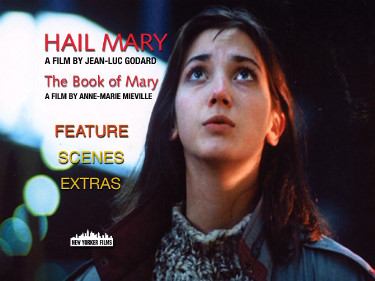
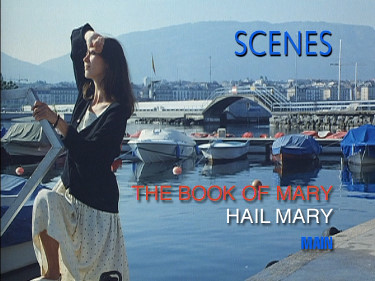
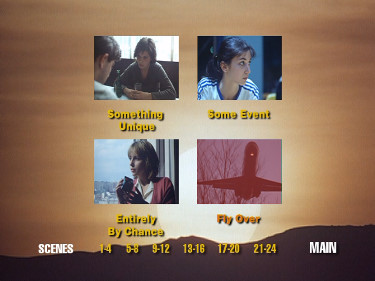
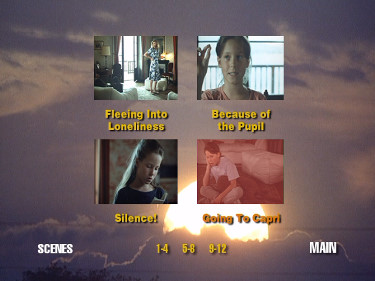
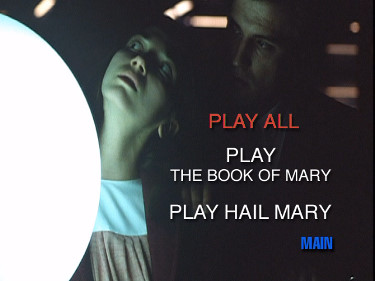
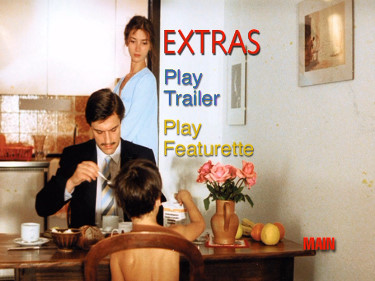
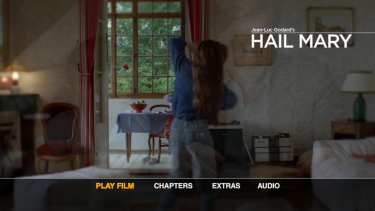
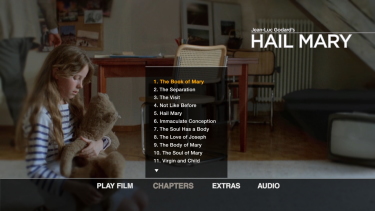
DVD Menus
 |
 |
 |
 |
 |
 |
 |
 |
Cohen Media Group - Region 'A' - Blu-ray
 |
 |
 |
|
 |
 |
 |
 |
 |
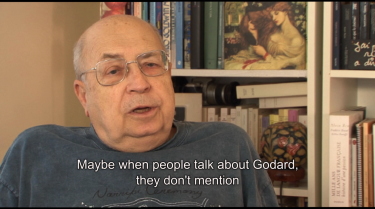 |
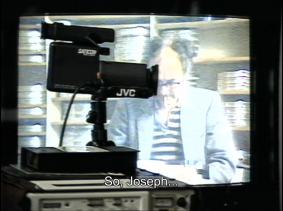
CLICK EACH BLU-RAY CAPTURE TO SEE ALL IMAGES IN FULL 1920X1080 RESOLUTION
Subtitle Sample
|
1) New Yorker - Region 1 - NTSC TOP2) Cohen Media Group - Region 'A' - Blu-ray BOTTOM |
 |
 |
|
1) New Yorker - Region 1 - NTSC TOP2) Cohen Media Group - Region 'A' - Blu-ray BOTTOM |
 |
 |
|
1) New Yorker - Region 1 - NTSC TOP2) Cohen Media Group - Region 'A' - Blu-ray BOTTOM
|
 |
 |
|
1) New Yorker - Region 1 - NTSC TOP2) Cohen Media Group - Region 'A' - Blu-ray BOTTOM |
 |
 |
|
1) New Yorker - Region 1 - NTSC TOP2) Cohen Media Group - Region 'A' - Blu-ray BOTTOM |
 |
 |
|
1) New Yorker - Region 1 - NTSC TOP2) Cohen Media Group - Region 'A' - Blu-ray BOTTOM |
 |
 |
|
1) New Yorker - Region 1 - NTSC TOP2) Cohen Media Group - Region 'A' - Blu-ray BOTTOM |
 |
 |
More Blu-ray Captures
 |
 |
 |
 |
 |
'Book of Mary' Blu-ray Captures
 |
 |
 |
 |
 |
 |
 |
| Box Cover |
|
|
| Distribution | New Yorker Video - Region 1 - NTSC | Cohen Media - Region 'A' - Blu-ray |


















CLICK PayPal logo to donate!
|
Gary Tooze
|
|
Thank You!
