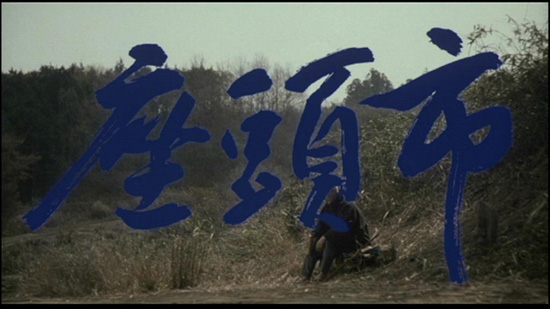
(aka "Zatoichi" or "Zatoichi - Den blinde samurai (Denmark)")
directed
by Kitano Takeshi
Japan 2003
When Kitano was asked to make another ”Zatoichi” film, he
instantly turned it down, because, as he later said, “Zatoichi and Shintaro
Katsu are pronounced in the same breath. If I had attempted to imitate Katsu,
the audience would have rebelled, so I decided, that I had to do something
completely new.”
Having been given complete control and freedom, Kitano began to reinvent
Zatoichi: “Just like in soccer, which basically is one ball and 22 men chasing
it, so is Zatoichi basically Zatoichi and a bunch of bad guys.”
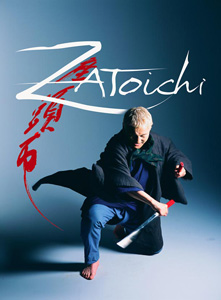
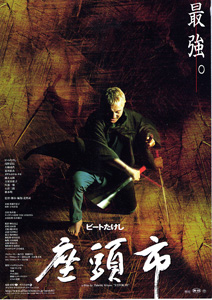
The first thing he changed was the character of Zatoichi himself. Originally
black bushy hair and with a beard, Kitano made him clean shaven and blond. Even
his sword cane was both redesigned and changed in color from wood to bright red.
Then he made the “evil swordsman” sympathetic, added a caring and moral nature,
promoted him to lead-ish man and cast the hottest actor in Japan, Tadanobu
Asano, for the part. So going thru the characters, altering each and everyone of
them – even adding a few news ones, like the traveling geishas.
While changing just about every element of Zatoichi, the biggest and boldest
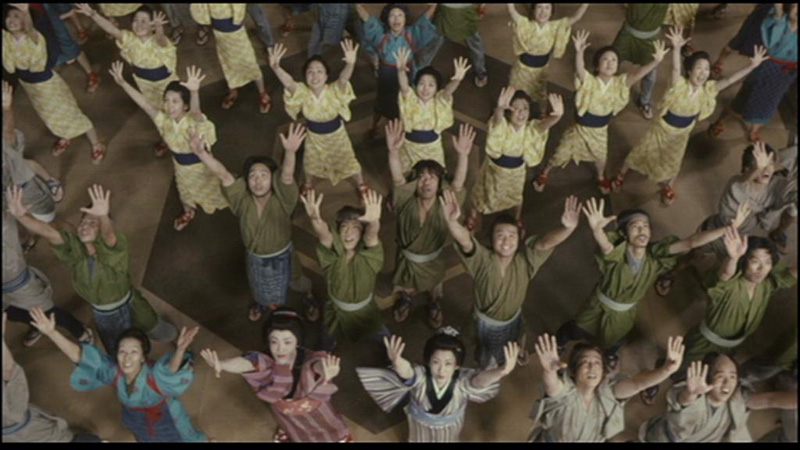
change was the ending. Normal for jidei-geki is that the peasants will celebrate
their freedom at the end. Kitano took this and made it into an almost ten
minutes tap dance sequence, where not only the peasants dance, but the cast
joins them. The dance itself is a contemporized version of Takatsuki, a
classical Kabuki tap form, where the dancers originally wore Japanese wood
clogs. Not only of incredible emotional force, this ending is also a wonderful
homage to both jidei-geki and Kabuki theatre. A stroke of genius, this shows why
Kitano is amongst the greatest living filmmakers.
The story itself is as straight forward as any Zatoichi, as any chambara, as any
jidei-geki. Stealing from here and there, Zatoichi is as usual wandering the
country side, when he comes to a small town, where the peasants are caught
between two rival gangs. When the Ginzo gang hires a Ronin, he soon takes
control of the town. Zatoichi has to clean up.
Far from being just simple chambara, Kitano explores the motif of pretending:
duality by wearing a “mask”. Just like the film itself, nothing is what it
seems. For instance, the Hattori, the “evil swordsman”, is a Ronin, who is
forced to become a hit man for Ginzo in order to buy medicine for his sick wife.
This dimension of the story not only adds complexity, but makes additional
viewings even more enjoyable, as the more we get to know a character, the more
we see of the real character.
Winning the Silver Lion for best director in Venice and going around the world,
leaving nothing but rave reviews and praise in its wake, “Zatoichi” is nothing
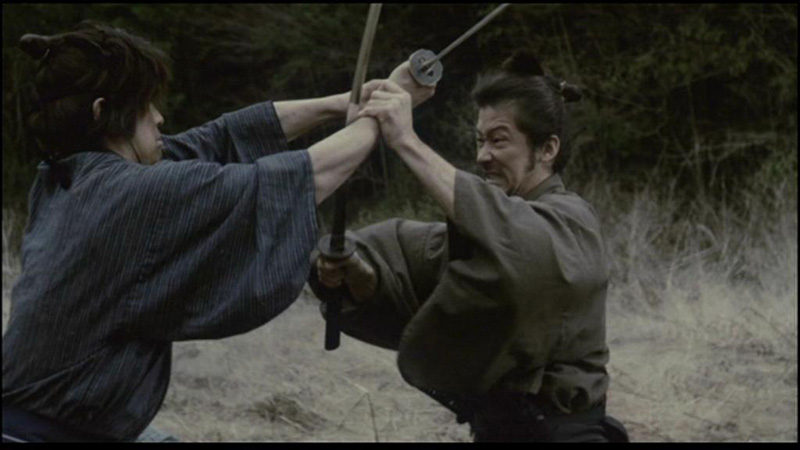
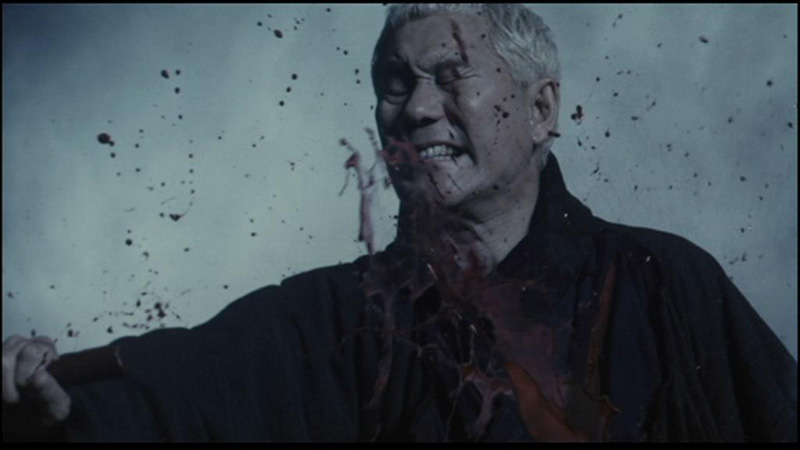
less than an experience, with great (and extremely bloody) swordfights and an
ending, that will put a huge smile on your face. It may be Kitano Light, but it
is still unmistakably a film by the master.
 out of
Henrik Sylow of kitanotakeshi.com
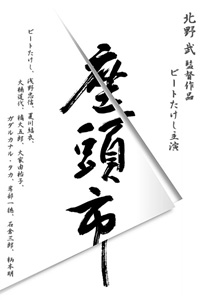
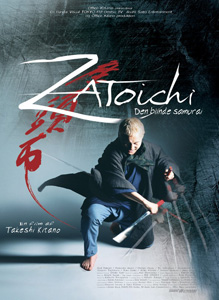
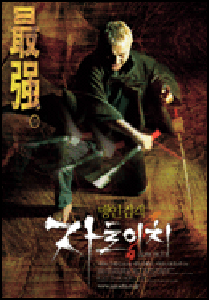
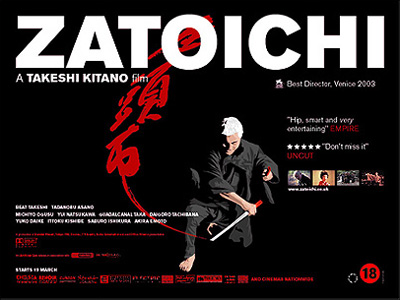
Posters
 |
 |
 |
 |
 |
 |
Theatrical Release: September 2, 2003 (Venice International Film Festival)
Reviews More Reviews DVD Reviews
DVD Review: Bandai Visuals - Region 2 - NTSC
Big thanks to Henrik Sylow for the Review!
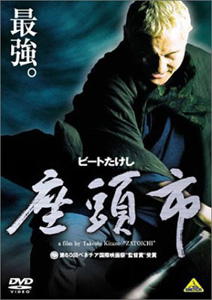
| DVD Box Cover |
|
CLICK to order from:
|
| Distribution |
Bandai Visuals Region 2 - NTSC |
|
| Runtime | 1:55:56 | |
| Video |
1.78:1 Aspect Ratio
16X9 enhanced |
|
|
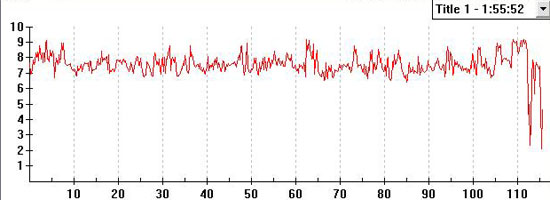
Bitrate:
NOTE: The Vertical axis represents the bits transferred per second. The Horizontal is the time in minutes. |
|
|
| Audio | 2.0 Dolby Digital Japanese, 5.1 Dolby Digital Japanese | |
| Subtitles | English, Japanese, None | |
| Features |
Release Information: Studio: Bandai Visuals Aspect Ratio:
Edition Details: Chapters 14 |
|
| Comments |
This is the 2 Disc Special
Edition of "Zatoichi" (First Print). Once it is sold out, only single discs
editions will be available (identical with Disc 1 on this set). The picture is spot on: great contrasts, great colors (NOTE: it is 1.78:1 and not the theatrical ratio of 1.85:1). The sound is very impressive for a period piece, as both the rears and LFE working for a living. The only negative remark this DVD set will get, is the lack of English subtitles on Disc 2, which makes the 'making of' documentaries less attractive and comprehensive for non Japanese speaking viewers. |
|


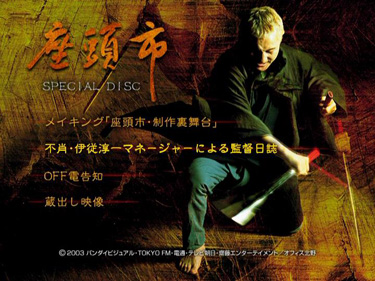
DVD Menus
|
|
|
|
|
|
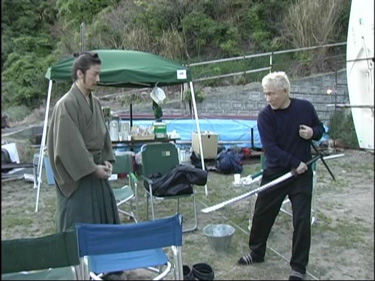
 |
 |
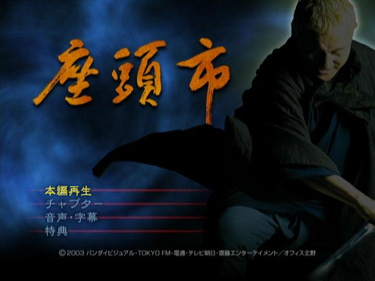
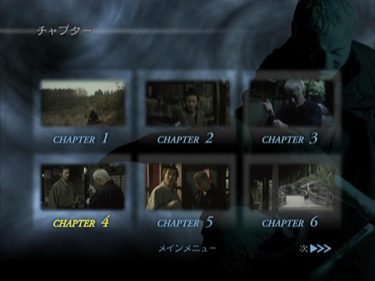
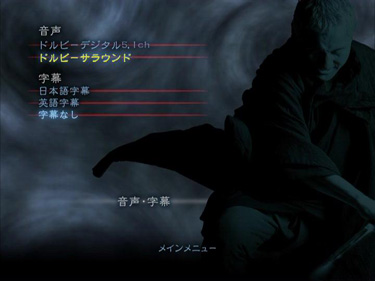
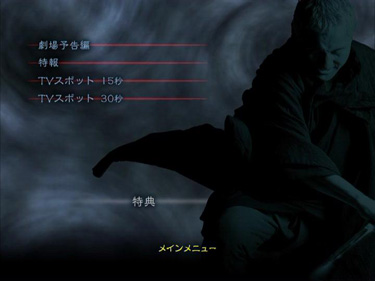
Subtitle Samples
|
|
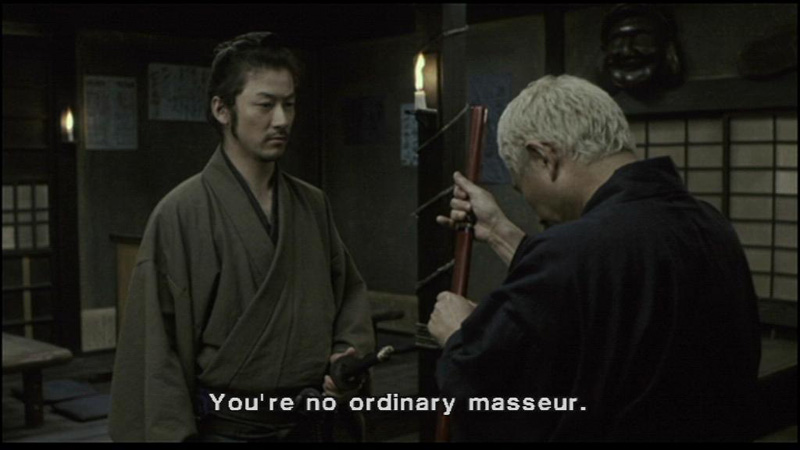
Screen Captures
|
|
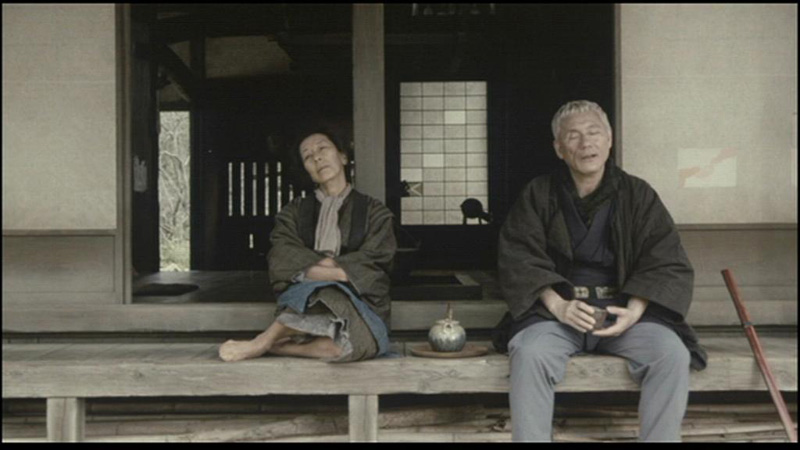
|
|
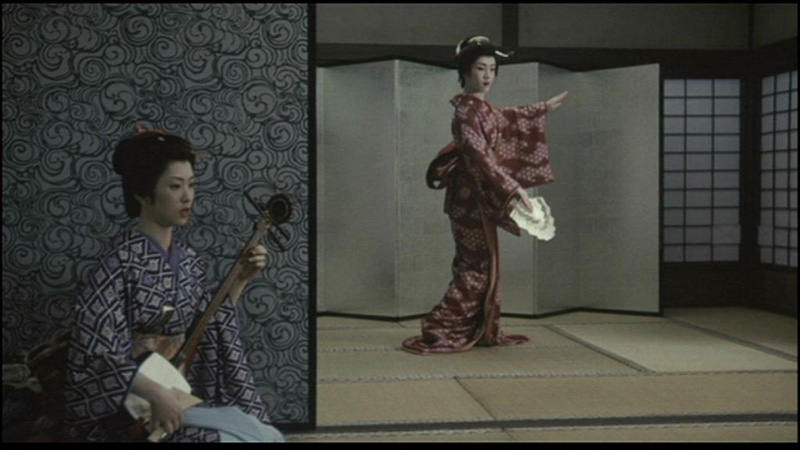
|
|
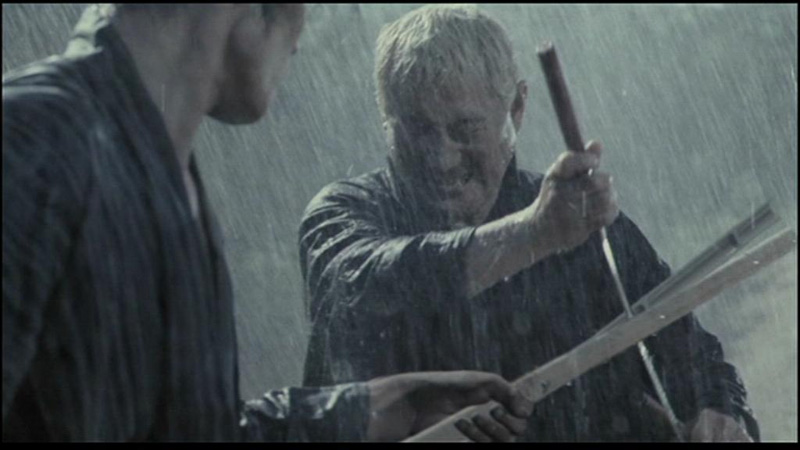
|
|
|
|
|
|